Author: Muhammad Ahsan Jamal

  • How to block a URL in Chrome: 8 effective & proven methods [tried & tested]

    How to block a URL in Chrome: 8 effective & proven methods [tried & tested]

    Have you ever tried opening a website in Chrome only to wish you could block it forever? Whether it’s distracting socials, sketchy sites, or pages you just shouldn’t see at work or home, unwanted URLs are a daily headache for millions.

    In fact, organizations now block roughly 100 million malicious URLs every single day to protect users from threats like malware and URL phishing.

    But here’s the catch!

    Without the right tricks, Chrome won’t stop you from visiting those sites, leaving you stuck clicking away or stressing over digital distractions. 

    That’s why learning how to block URLs isn’t just a neat skill; it’s essential for productivity, safety, and peace of mind. 

    Ready to fix this once and for all? Let’s dive into the effective strategies to block a website in Chrome that actually work.

    Proven methods to block a URL in Chrome

    Before we jump into all the possible ways you can block a URL in Chrome, let’s start with the easiest and most user-friendly option for most people. 

    If you don’t want to mess with settings or techy stuff, using a browser extension like “BlockSite” makes the whole process quick and painless.

    Method #01: Using a Chrome extension named BlockSite (recommended for most users)

    BlockSite makes blocking URLs in Chrome super simple, no matter if you’re trying to avoid distractions or keep certain content away.

    BlockSite Extension
    1. Install the extension: Open Chrome and head to the Chrome Web Store. Search for BlockSite – Block Websites & Stay Focused and click Add to Chrome. This will install the extension right into your browser.
    2. Open BlockSite: Once installed, you’ll see its icon near the address bar (if you don’t, click the puzzle 🧩 icon and pin it). Next, click the icon to launch BlockSite.
    3. Skip extras or log in: You might be asked to accept data permissions or choose a subscription plan. You can grant permissions, skip the paid plan, and still block URLs just fine with the free version.
    4. Add the URL to block: Go to the Block Sites tab and type or paste the URL you want to block. Then hit the plus (+) button or Add Item. BlockSite will now stop Chrome from opening it.
    5. Block while browsing: If you’re already on the site you want gone, just click the BlockSite icon and choose Block this site. Super easy!
    6. Manage blocked sites: Want to unblock something later? Just go back to the BlockSite dashboard and remove it from your list.

    You’ll learn even more effective methods next!

    Method #02: Using Developer Tools (advanced/temporary)

    If you’re comfortable opening Chrome’s built-in tools and want a quick, temporary way to block specific URL requests, the Developer Tools Network blocking feature is handy.
    Chrome Developer Tools
    1. Open the page you want to block something on: Go to the site where the URL you wish to block loads.
    2. Open Developer Tools: Press Ctrl + Shift + I on Windows/Linux or Cmd + Option + I on Mac. This opens the DevTools panel.
    3. Go to the Network tab: At the top of DevTools, click Network. This lets you see all network requests (such as images, scripts, and APIs).
    4. Reload the page: Refresh the page to have Chrome log every request in the Network panel. This causes the URL you want to block to appear in the list.
    5. Find the URL request: Scroll through the list and look for the specific URL (or resource) you want to block.
    6. Block it: Right-click on that request and choose Block request URL (or “Block request domain” if you want to block everything from that domain). Chrome will add it to the Network Request Blocking list.
    7. Keep DevTools open: As long as DevTools stays open and the “Enable network request blocking” option is checked, Chrome won’t load that URL. An excellent choice for testing or temporary blocking.

    This method is incredible for debugging or testing things on a page without installing anything extra. Just remember it’s not a permanent block, and only works while DevTools is active. 

    Ready for the next method? Let’s go!

    Method #03: Using Google Admin Console (for enterprise/education)

    If your organization or school manages Chrome using Google Workspace (formerly G Suite), the Google Admin Console lets you block specific URLs for users across all managed Chrome browsers and ChromeOS devices.

    This is super useful for stopping access to distracting or harmful sites without relying on individual extensions.

    Google Admin Console

    Here’s how to do it:

    1. Sign in to the Admin Console: Open your browser and go to admin.google.com. Log in with your administrator account. (Note: you’ll need admin rights to make these changes.)
    2. Head to Chrome settings: From the main dashboard, go to Devices → Chrome → Settings → Users & browser settings. This is where most Chrome policies live for managed users.
    3. Select who this applies to: On the left side, choose the organizational unit (OU) you want the block rule to apply to, e.g., a whole department or student group.
    4. Find URL blocking: Scroll down (or use the search box) to find “URL Blocking” under the Content section.
    5. Add the URLs you want to block: In the Blocked URLs field, type or paste the links you want to block; each on its own line. You can enter up to 1,000 URLs here.
    6. Optionally allow exceptions: If you want to allow some sites even if they’re on the blocklist, use the Blocked URL exceptions field. This lets you create safe exceptions.
    7. Save your changes: Click Save at the bottom or top to apply the policy. Chrome will start blocking those URLs for users in that OU (usually within a few minutes).

    This Admin Console method is ideal when you’re managing many users, like in a business or school, and want a centralized way to enforce rules across the board.

    Method #04: Using the hosts file

    Want a system-level way to block a URL in Chrome (and all other browsers) without extensions? 

    Editing your computer’s hosts file is a classic, no-extra-software method. It works by telling your operating system to redirect a particular website to your own computer (which doesn’t serve that site), so the site never loads when you try to visit it.

    Hosts File

    Here’s how to block a URL in Chrome (PC) step-by-step:

    🪟 On Windows (10/11)

    1. Open Notepad as admin: Search for Notepad, right-click it, and choose Run as administrator. This is essential to save changes later.

    2. Open the hosts file: In Notepad, go to File → Open, then navigate to:

    C:\Windows\System32\drivers\etc

    If you don’t see anything, change the file type dropdown to All Files (.)

    3. Add the sites you want to block: At the bottom of the file, type:

    127.0.0.1 example.com

    127.0.0.1 www.example.com

    Replace example.com with the site’s address you want to block (include both “www” and “non-www” lines).

    4. Save the file: Hit Ctrl+S to save. You might need to confirm administrator access.

    5. Restart Chrome: Close and reopen your browser. If the site still loads, you can flush your DNS cache (search “cmd” → run as admin, then enter ipconfig /flushdns).

    🍎 On Mac (macOS)

    1. Open Terminal: Hit Command + Space, type Terminal, and hit Enter.

    2. Edit the hosts file: Type this.

     sudo nano /etc/hosts

    Press Enter, then type your password when prompted.

    3. Add the block entries: At the end of the file, add:

    127.0.0.1 example.com

    127.0.0.1 www.example.com

    Replace example.com with the site you want to stop people from reaching.

    4. Save and exit: Press Control + O to save and Control + X to exit. Then flush the DNS cache:

    sudo dscacheutil -flushcache

    sudo killall -HUP mDNSResponder

    💡 Quick tip: This method blocks sites on a system level, but it doesn’t stop someone from using a VPN or proxy to bypass it. And in rare cases, Chrome might ignore the hosts file if Secure DNS is enabled. When you want to undo it later, just remove the lines you added or comment them out with a # and save again.

    Next up, let’s look at how to block URLs directly via parental controls.

    Method #05: Using parental controls

    If you want to block specific URLs on Chrome without extensions, and especially if you’re doing this for kids or other users, built-in parental controls are a solid way to go. 

    These tools let you filter sites, block particular URLs, and manage what content can be viewed, and unlike browser extensions, they usually work across all browsers on that device.

    Parental Controls - Google Chrome

      Here’s how to do it step-by-step:

      1. Decide which parental control tool to use:

      • On Chromebooks and Android devices, Google Family Link is the go-to option.
      • On Windows 11, you can use the built-in Family Safety controls.
      • On macOS/iPhone/iPad, Apple’s Screen Time lets you block sites at the system level (applies to Chrome too).

      2. Set up a child account (if needed): For tools like Google Family Link or Windows Family Safety, you’ll usually create a child profile first. This lets you apply restrictions to that account without affecting your own.

      3. Open the parental control settings:

      • Google Family Link: Open the app → select your child’s profile → go to Manage settings → Filters on Google Chrome → Manage sites.
      • Windows Family Safety: Go to Settings → Accounts → Family & other users, choose the child account, then adjust Content filters → Blocked sites and add URLs.
      • Screen Time on Apple devices:Go to Settings → Screen Time → Content & Privacy Restrictions → Web Content → Limit Adult Websites or Allowed Websites Only, and add the URLs you want to block.

      4. Add the URLs you want to block: Inside the parental control dashboard, there’s usually an option like “Blocked sites” or “Never allow” where you paste the complete website addresses you don’t want the user to access.

      5. Save and test: Once you save the changes, try opening those sites in Chrome. They should now be blocked according to your settings. If you’re on a child’s account, they won’t be able to access the blocked pages without permission.

      Note: Tools like Google Family Link also let you switch to only allowing approved sites, which is even stricter than just blocking a few URLs. Using parental controls gives you a more reliable block than a browser extension, especially if the user isn’t tech-savvy and might uninstall the blocker themselves.

      Method #06: Using match pattern with Chrome

      If you’re a bit more technical and want to block groups of URLs instead of typing every single address, using URL match patterns can be effective.

      Match patterns let you define wildcard rules (like “block everything from this domain or path”) that extensions can use to block sites in Chrome. 

      Note: This isn’t something built directly into Chrome’s basic settings, so you’ll use an extension that supports URL patterns to block links based on rules you define.

      URL Match Patterns

      Follow along with these steps:

      1. Choose a blocker extension that supports patterns: Search the Chrome Web Store for a URL-blocking extension that lets you enter pattern rules (some blockers call them wildcards or pattern filters). Many extensions let you block based on text or pattern matches.

      2. Install the extension: Click Add to Chrome → Add extension. Once installed, pin it next to your address bar so it’s easy to open.

      3. Open the extension’s settings: Click the extension icon and go to its options or settings page. This is usually where you add URLs or patterns you want to block.

      4. Learn the match pattern basics: Chrome match patterns generally follow a simple rule:

        <scheme>://<host>/<path>

        Scheme is usually http, https, or * (to match both),

        host can be exact (example.com) or use wildcards (*.example.com),

        and path often ends with /* to match anything under that path.

        5. Enter your patterns: In the blocker’s field, add patterns like:

        • *://*.example.com/*: Blocks any secure/insecure page on example.com or its subdomains
        • https://site.com/path/*: Blocks everything under that specific path

        These patterns tell the extension which sites to catch when you or someone else tries to open them.

        6. Save and test: Hit Save or Apply, depending on the extension. Try visiting a page that fits your pattern. If it’s blocked, your rule works!

        7. Tweak as needed: You can add more patterns or edit existing ones. If a site still loads, adjust your pattern (for example, include a wildcard, such as *, to catch subdomains).

        💡 Quick tip: Using patterns lets you block many pages at once without typing every URL individually. This is the perfect option if you want to block an entire blog, shopping site, or any group of pages that follow the same structure. Just make sure the extension you choose supports this type of pattern input.

        Method #07: Using Chrome’s SafeSearch feature

        If your goal is less about blocking specific URLs and more about filtering out inappropriate or explicit content from your Google Search results in Chrome, then SafeSearch is a simple built-in way to do it. 

        It doesn’t block websites outright, but it does help keep search results cleaner by filtering out adult or offensive content (great for kids, work, or just a safer browsing feel).
        Chrome’s SafeSearch Feature

        Here’s a stepwise walkthrough:

        1. Open Google in Chrome: Launch Chrome and go to www.google.com.
        2. Go to SafeSearch settings: On desktop, scroll down the page and click Settings, then Search settings. Alternatively, you can visit www.google.com/preferences directly.
        3. Turn on SafeSearch: In the SafeSearch filters section, check the box next to “Turn on SafeSearch” to filter out explicit content from Google Search results.
        4. Save your settings: Scroll to the bottom and click Save to apply the change.
        5. Lock SafeSearch (optional): If you’re doing this for kids, you can lock SafeSearch, so others can’t turn it off. You’ll need to be logged in to your Google account to do it.

        Note: Just keep in mind that SafeSearch only affects Google Search results. It won’t stop people from visiting a site directly by typing its URL or clicking a link. This is a simple way to make Chrome searches safer before moving on to more advanced blocking techniques!

        Method #08: Using the BlockList URL feature

        If you’re managing Chrome across a business, school, or any organization, you can use Chrome’s URLBlocklist/URLAllowlist policies to block specific websites for all users. 

        This method isn’t something you do in the ordinary Chrome settings. It’s for admins who need a central, enforceable block using Group Policy (GPO) on Windows or JSON policy files on other systems.

        BlockList URL Feature

        Here’s how to get it done:

        1. Get the Chrome policy templates (for GPO): First, download the latest Chrome Enterprise policy templates from Google’s official bundle. These include the ADMX/ADML files you’ll use in the Group Policy Editor.
        2. Load the ADMX templates into GPO: Open Group Policy Management Editor → go to Administrative TemplatesAdd/Remove Templates and import the Google Chrome ADMX files. Once loaded, you’ll see a Google → Google Chrome section under policies.
        3. Configure URLBlocklist via GPO: Under Google → Google Chrome, find Block access to a list of URLs. Enable the policy and add the URLs you want to block (one per line). Chrome will prevent users from visiting these sites.
        4. Use URLAllowlist to make exceptions (Optional): Still in GPO, enable Allow access to a list of URLs and add URLs that should be accessible even if they match the block pattern. This override sits above the block rules!
        5. Deploy and refresh policies: Apply the GPO to your target machines/users. On managed devices, users may need to restart Chrome, and you can verify it by checking chrome://policy in the browser. It should show “URLBlocklist” and URLAllowlist” with status “OK.”

        Now, using JSON policy files (for macOS, Linux, or managed devices)

        If you’re not using Group Policy, e.g., on macOS, Linux, or Chrome managed outside of Active Directory, you can define the same settings in a “JSON file”.

        Here’s what to do:

        1. Create a JSON file in the managed policy folder: For Chrome on Linux/macOS, place a file inside /etc/opt/chrome/policies/managed/ (or the equivalent managed directory).

        2. Add your blocklist/allowlist entries: Make the policy JSON look like this:

        {

        “URLBlocklist”: [

          “https://badsite.com”,

          “https://anotherbad.com”

          ],

          “URLAllowlist”: [

          “https://goodsite.com”

          ]

          }

          This tells Chrome to block sites in “URLBlocklist” and allow those in “URLAllowlist”, with the allowlist taking precedence.

          3. Restart Chrome: Once the file is in place and properly formatted, restart Chrome to apply the changes.

          Note: Blocking URLs this way is enforceable from the admin side. Users can’t easily remove the block because it’s based on your organization’s policies. And if you’re using both blocklist and allowlist together, remember that allowlist entries will override blocklist rules when a URL matches both. This approach is perfect for schools, workplaces, or any environment where you need a consistent, managed block across many users.

          How to block a URL in Chrome (Android)

          Chrome on Android doesn’t let you block sites directly inside the browser. One of the best ways to filter and block websites (including specific URLs) is by configuring your phone’s Private DNS with a service like “NextDNS”.

          This makes all your device’s DNS lookups go through NextDNS, where you can set up blocklists that stop unwanted sites from resolving.
          NextDNS

          Here’s how to set up Private DNS with NextDNS:

          1. Sign up for a NextDNS account: Go to https://nextdns.io/ and create a free account. Once you’re signed in, make a configuration profile (for example, “Android”). After you do that, NextDNS will give you a unique DNS-over-TLS (DoT) endpoint. It looks like xxxxxx.dns.nextdns.io.
          2. Add URLs you want to block in the NextDNS dashboard: In your NextDNS account online, use the Blocklists, Denylist, or Custom rules settings to add the websites or domains you want to prevent from loading on your phone. NextDNS lets you block entire domains (like example.com) and also more advanced rules if needed.
          3. Open Android Settings: On your Android phone, open Settings → Network & internet → Private DNS. (The exact path can vary slightly on different brands, but it’s usually under “Network & Internet”.)
          4. Choose “Private DNS provider hostname”: Tap Private DNS provider hostname and paste in the NextDNS endpoint you copied from the NextDNS dashboard (xxxxxx.dns.nextdns.io).
          5. Save and exit: Tap Save to apply the change. Your phone will now use NextDNS for all DNS lookups, including in Chrome. Any sites you’ve blocked in your NextDNS settings won’t load in the browser.
          6. Test it: Try visiting a blocked URL in Chrome. If everything’s set up correctly, the site should fail to load (or be filtered) because NextDNS is now handling and blocking those DNS requests based on your rules.

          ✔️ Why this works: Android’s Private DNS feature (available on Android 9 and later) lets you specify a secure DNS provider, and when you set it to a service like NextDNS with blocklists configured, you essentially filter and block sites before the browser even tries to load them.

          Note: Some networks or carriers may interfere with custom DNS, so if you have connection trouble, check your DNS hostname spelling or switch back to “Automatic” and try again. This setup works for all apps and browsers on your Android device (not just Chrome) and gives you a flexible way to block unwanted URLs without a separate app continuously running in the background.

          How to block a URL in Chrome (iPhone)

          Because iOS doesn’t let you block sites directly inside Chrome, the best solution is to use an app like “Freedom,” which can block websites system-wide (including in Chrome) by starting a blocking session with your custom site list.
          Freedom - Screen Time Control

          Using Freedom to block URLs on iPhone:

          1. Download Freedom from the App Store: Open the App Store, search for “Freedom: Screen Time Control”, and install it on your iPhone. This app is designed to block distracting apps and sites across your device.

          2. Sign in or create an account: Open the Freedom app and log in with your email. If you don’t have an account yet, you can create one right from the app.

          3. Give screen time permissions: Freedom uses Apple’s Screen Time settings to block apps and websites. When prompted, tap Allow Screen Time and follow the iOS prompts to grant the app the permissions it needs. This step is required for the app to block URLs inside browsers like Chrome.

          4. Create a blocklist:

          • Tap the Blocklists tab in the app.
          • Tap Add New Blocklist to make a custom list.
          • On the blocklist screen, scroll until you see options to add websites.
          • Enter the exact, unique URL you want to block (e.g., example.com).
          • Add more URLs if needed, then tap Save.

          5. Start a blocking session:

          • Go to the Start Session tab.
          • Choose the blocklist you just created.
          • Pick your session length (how long the block should stay active).
          • Tap Start. Freedom will now block the sites in that list on your iPhone (including in Chrome) for the duration of the session.

          6. Test it in Chrome: Open Chrome and try to visit one of the blocked URLs. Freedom should stop the site from loading and show a block screen instead.

          Note: Freedom uses your iPhone’s Screen Time system and, optionally, a local VPN or profile to enforce blocks, so please make sure you grant the permissions it requests. You can edit or add new blocklists at any time and start new sessions to keep unwanted sites blocked whenever you need.

          How to block a website in Chrome without an extension

          Chrome doesn’t have a built-in “block this site” option or button, so if you prefer not to use an extension, you’ve still got a few solid workarounds. 

          These methods work outside Chrome itself and will prevent certain sites from loading even when no extension is installed.

          1. Edit your computer’s hosts file (system-level block)
          2. Use parental controls or supervised accounts
          3. SafeSearch & content filtering (lighter filtering)
          4. Block sites at your router or network level
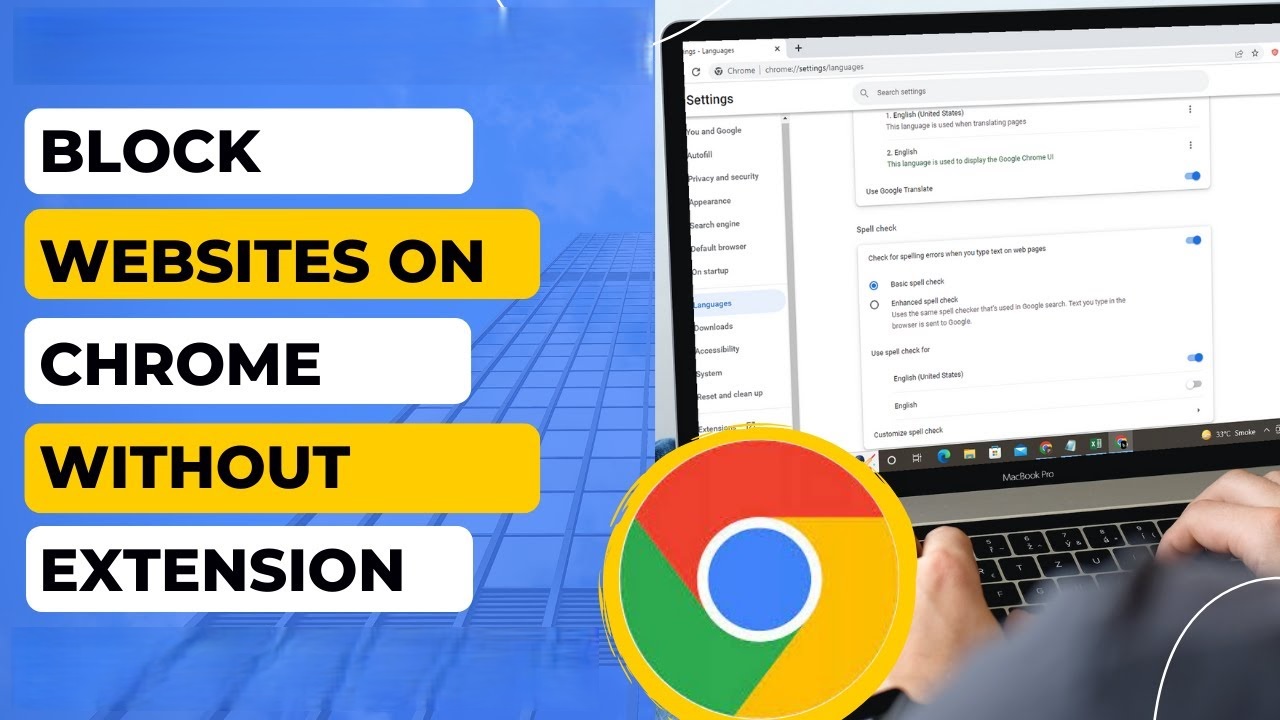
          How to block a website in Chrome without an extension

          Here’s how to block sites at your router or network level:

          If you want to stop a site for everyone on your Wi-Fi, you can log into your router settings and use its website blocking or parental control tools.

          1. Find your router’s admin page (often something like 192.168.1.1).
          2. Log in with your credentials.
          3. Look for “Website Block,” “URL Filtering,” or “Parental Controls”.
          4. Add the URLs you want to block.

          This stops access on all devices connected to that network (including Chrome) without touching the browser itself.

          Why block URLs in Google Chrome?

          Blocking specific URLs in Chrome isn’t just a random tech trick; it’s something a lot of people do for clear, practical reasons. 

          No matter if you’re trying to stay focused, protect yourself or others from harmful sites, or manage access across a group of users, blocking URLs gives you control over what can be loaded in your browser.

          What happens when you block a URL in Google Chrome?

          When you block a URL in Chrome (whether using tools, settings, or network rules) here’s what typically happens:

          Access is prevented

          Chrome simply won’t load the blocked website. Instead of letting the page load, the browser will stop the request and display an error or a blocking message. This is the core result of URL blocking! You attempt to visit the address, and Chrome stops it from opening.

          Distractions and unwanted content are kept away

          By stopping particular sites from loading, you won’t be pulled into time-wasting or inappropriate pages. Many people use this to stay productive or to protect family members, especially kids, from content they shouldn’t see.

          Security threats are lowered

          Blocking malicious or phishing URLs stops Chrome from attempting to connect to sites known for malware or risky content. Many URL filtering systems will redirect blocked requests to a warning or safe page instead of letting Chrome navigate normally.

          In short, blocking a URL in Chrome changes the browsing experience at the network access level. Chrome doesn’t complete the connection to the blocked address, keeping you away from whatever page or content you don’t want to see.

          Best practices for blocking URLs effectively in Chrome

          When you’re blocking URLs, you want to think not just about how to block them, but also where and how well each method works. Whether it’s just in your browser, across your whole device, or even for everyone on your network.

          MethodScopeDifficultyBest For
          Browser extensions (BlockSite, StayFocusd, etc.)Chrome onlyEasyPersonal use, quick setups
          Edit hosts fileEntire computer (all browsers)MediumSystem-wide block without extensions
          Router/network-level blockAll devices on the networkMediumFamilies or shared networks
          DNS filtering (OpenDNS, CleanBrowsing, NextDNS)All devices using that DNSMediumISP-independent network-wide filtering
          Parental controls/Family LinkDevice or account levelEasyParents managing kids’ browsing
          Chrome managed policies (e.g., Admin/Group Policy/JSON)Managed environmentsAdvancedBusinesses, schools, large deployments
          SafeSearch / content filtersSearch results onlyVery easyLight filtering (explicit content)

          Quick tips to block URLs effectively:

          Combine methods: For instance, use DNS filtering at the network level plus Chrome extensions on personal devices for stronger coverage.

          Use strong permissions: Set passwords or admin restrictions, so others can’t easily turn off blocks (especially handy with parental controls or extensions).

          Test your blocks: After setting up any method, try accessing the blocked URL in Chrome to make sure the block is working as expected.

          Keep rules updated: Whether it’s a blocklist in a DNS service or a router, check it occasionally to remove outdated blocks or add new ones.

          Wrapping up

          Blocking URLs in Chrome doesn’t have to be confusing anymore. If you’re trying to stay focused, keep someone safe, manage access across devices, or set rules for an entire network, there’s a method that fits your needs. 

          From browser tools and system settings to DNS filtering and parental controls, this guide walked you through every practical approach you can use right now. 

          The goal is simple: give you control over what loads (and what doesn’t) in Chrome, so your browsing stays intentional and safe.

          If you’re also looking to take complete control of the links you share, give Replug a try now! It’s a reliable link management platform and URL shortener that lets you create branded short links in seconds and track every click with ease.

          Frequently asked questions

          How do you block a specific URL in Chrome?

          You can block a specific URL in Chrome by using a site-blocking tool (like extensions such as BlockSite), managing network filters (like NextDNS), editing system settings (hosts file), or using admin policies for work/school accounts. 

          Chrome itself doesn’t have a built-in single URL blocker for everyday users, so most people use extensions or system/network-level settings to stop access.

          How do I block a specific URL path?

          Blocking a specific path (e.g., example.com/page) is more difficult than blocking a whole domain. Most browser tools focus on domains rather than page paths. 

          Some advanced blockers or pattern-based tools (like Requestly or extension pattern rules) let you block parts of a URL using wildcards or filters, but Chrome’s default settings won’t do this on their own.

          How to block a URL in Chrome on a Chromebook?

          On a Chromebook, you can block URLs using supervised or managed settings in Google Family Link for kids, or via the Google Admin console if the device is part of a school/business domain. In the Admin console, you can add sites to a URL Blocklist to block access.

          How do I permanently block a URL?

          Permanent blocks require system- or admin-level controls such as setting router filters, using DNS services that block domains at the network level, editing the OS hosts file, or applying managed policies (e.g., Google Admin URLBlocklist). Browser extensions can also “permanently” block for you as long as they stay enabled.

          How do I unblock a URL once it’s blocked?

          To unblock a URL, just remove it from whatever block list you used, e.g., in the extension’s settings, in your DNS block list, or in the Admin/hosts file/router filter you set up. After that, refresh Chrome, and the site will load again.

          How to block a URL on your kid’s phone?

          Use parental controls: 

          – On Android, use apps like Google Family Link or DNS-based filters.
          – On iPhone, use Screen Time (Settings → Screen Time → Content & Privacy Restrictions → Web Content → Never Allow) to add the URL you want blocked.

          How to block a URL in Incognito mode?

          Chrome blocks extensions from working in “Incognito” by default. To block URLs in Incognito mode, enable your blocking extension under chrome://extensions → Details → Allow in Incognito. Then your block list will apply even in private browsing.

          Can I block URLs for specific users only?

          Yes, in managed environments (like schools or businesses), you can block URLs only for specific users or groups via tools like Google Admin console or Windows Group Policy. Personal Chrome profiles don’t have that feature natively, so you’ll need supervised accounts to target individual users.

          Are Chrome extensions safe for URL blocking?

          Most extensions (like BlockSite) are safe, but you should only install ones from trusted sources, check reviews, and review the permissions they ask for. Some low-quality or third-party extensions might misuse data, so always pick well-known blockers with a good reputation.

          Why should I block certain URLs on Chrome?

          Blocking URLs helps you stay focused, protect kids or others from harmful content, prevent security risks, and manage network use. It’s a simple way to control what content is accessible in your browser or across devices.

        1. 10 best A/B testing tools for click & conversion analytics

          10 best A/B testing tools for click & conversion analytics

          What are A/B testing tools?

          A/B testing tools allow users to compare two or more products, designs, or items side by side to determine which one receives more attention from the audience. This testing can be applied to a variety of elements such as written copy, advertisement design, email subject lines, and anything else is presented to an audience.

          Marketers do A/B testing to observe the clicks, conversions, and reach to analyze the outcome of the campaign. The goal is to assess the results and compare the performance of two or more elements to determine the best performing one.

          Have you ever thought about why marketers rave about “What is A/B testing?” Well, most beginners hear the term “A/B testing” and fail to comprehend what it is and how they can utilize it.

          Since link management is a crucial area of online marketing, A/B testing of URLs is imperative to a successful digital marketing campaign.

          This article will highlight the A/B testing tools in two sections.
          a) The first section showcases the best A/B testing tools with A/B testing as their prominent feature.
          b) The second section showcases URL trackers with the A/B testing feature.
          This will help you figure out what A/B testing is and how experts use A/B testing in modern-day digital marketing.

          Before I dig deeper into A/B testing tools, let me give you an overview of the A/B testing.

          Why should we do A/B tests?

          Over time, I learned that every content marketer, affiliate marketer, and the digital marketer does A/B testing in some form or shape.

          It could be a blog’s sidebar banner, email copy, Facebook image ad, YouTube thumbnail, or URL performance tracking – A/B testing is crucial to analyzing the audiences’ liking.

          Therefore, marketers need to conduct A/B testing at some point in their marketing journey.

          However, if you need some crystal clear reasoning for trying the A/B testing, here are seven reasons for using A/B testing:

          i. Increased Conversions

          It can help increase conversions by providing insights into what works best for your audience. By testing different variations of elements such as copy, CTA’s design, and layout, you can determine what resonates with your target audience and increase conversions.

          ii. Improved User Experience

          By conducting A/B tests, you can make informed decisions about what works and what doesn’t, ultimately leading to an improved user experience. As a result, the customer satisfaction goes up.

          iii. Data-driven Decisions

          It provides data-driven insights into what is and isn’t working, allowing you to make informed decisions about your marketing strategy. By relying on data instead of intuition, you can be more confident in your decision-making.

          iv. More Engagement

          A/B tests can help you determine what resonates with your target audience and increase engagement. By testing different elements of your content, you can find what resonates with your audience and create more engaging content.

          v. Better Understanding of Customer Needs

          By conducting A/B tests, you can gain a better understanding of what your customers want and need. This information can help you create better products and services that meet their needs.

          vi. Optimized Marketing Spend

          By using split testing, you can optimize your marketing spend by determining what is most effective. This can help you maximize your return on investment and save money in the long run.

          vii. Better ROI

          Ultimately, the goal of this strategy is to increase ROI. By making data-driven decisions, you can optimize your marketing strategy, increase conversions, and improve overall performance, leading to a higher return on investment.

          Also Read: 7 Ways to Increase CTR for Better Conversion on the Website

          5 Best A/B Testing Tools

          If you are looking for a tool with A/B Testing as their primary feature then take a look at five of the best A/B testing tools in the market:

          1. Optimizely

          Optimizely-

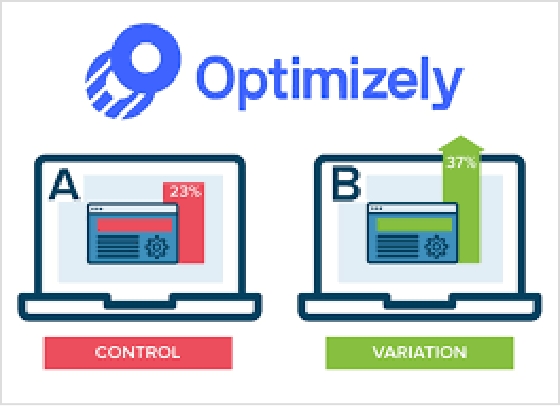
          The first tool in our A/B testing tools list is Optimizely. It is a complete CRO suite with a number of tools to take your digital marketing campaign to the next level.  Optimizely allows marketers and webmasters to optimize websites and landing pages.

          It’s a powerful marketing and engagement tools hub that allows users to implement visual editing without coding, page optimization, audience segmentation, and advanced targeting.

          Moreover, it’s one of the industry’s leading platforms to deliver personalized messages and product recommendations to multiple segments of the audience.

          Optimizely has mainly focused on large enterprise-level clientele. It goes all-in on offering web optimization and experimentation. However, customers could also utilize mobile apps and messaging services to run experiments.

          As far as the pricing is concerned, it’s quoted upon application.

          2. Omniconvert

          Omniconvert

          Omniconvert is a SAAS platform that provides businesses with a variety of software tools to help them transform data into effective growth strategies. The main features of Omniconvert are split URL testing, A/B testing, personalization, stacked tests, overlays and popups, advanced segmentation, and unlimited CSS & JS editor.

          One of their main conversion optimization sections/features is Explore, which Omniconvert proudly refers to as “the CRO tool for developers,” thanks to its many specialist features.

          One of the most notable features of Explore is the unlimited CSS and JS editor, which provides complete control over the coded variations in use. This feature allows developers to optimize the code for loading times, which is crucial when tests are running.

          Additionally, Explore is equipped with a CDN cache bypass, which ensures that all tests run live immediately. This feature is particularly important because cached versions of a site can skew results and lead to unreliable data.

          Another fantastic feature of Explore is stacked testing. Once a winning variation has been identified, it is automatically set as the default for continued testing, ensuring reliable data collection over time.

          These features all work together to create a platform that is ideal for developers looking to optimize and improve their digital brand’s conversion rate.

          The pricing starts at $167 per month.

          3. VWO Testing

          VWO-AB-Testing-

          Another great A/B testing tool is VWO. It offers a comprehensive set of conversion rate optimization (CRO) tools that assist brands and marketers in optimizing their website pages and content. It includes various testing tools such as A/B testing, multivariate, and split URL experiments, a visual editor for creating variations without coding, and advanced targeting and segmentation options.

          VWO also has unique features like behavioral segmentation and asynchronous coding, which improves the performance of tests and avoids common issues with A/B testing software.

          Overall, VWO is a great option for those looking for an almost-enterprise CRO system at a more reasonable cost.

          The pricing for plans with an A/B testing feature starts at $199 per month.

          4. AB Tasty

          AB Tasty-AB-Testing-Tool

          AB Tasty is a robust A/B testing tool that provides a wide range of testing tools and features that make it a suitable option for those looking for an efficient and user-friendly platform.

          In addition to traditional A/B split and multivariate testing options, the platform also offers funnel testing, which allows you to experiment with changes across several pages at once.

          Moreover, to ensure the validity of test results, AB Tasty provides a real-time view of your tests, enabling you to make informed decisions based on the insights derived from your tests.

          What sets AB Tasty apart from other A/B testing tools in the market is its intuitive drag-and-drop editor. Although other A/B testing platforms have editors like this, AB Tasty’s editor is more efficient and user-friendly, enabling you to work seamlessly without getting in the way of your workflow.

          To get the prices, ask for a quote.

          5. Adobe Target

          Adobe-Target-

          Adobe Target is a high-end personalization platform designed for enterprise use and comes equipped with the A/B testing feature. It also provides features like automated personalization, mobile app optimization, and recommendations based on customer data and behavior.

          The platform follows a three-step process for experimentation, where you create a variant, target a specific audience segment, and customize your goals and settings for the test.

          It is popular among enterprise brands due to the self-learning algorithms in Adobe Target. These algorithms continually analyze visitor behavior and content to produce optimal results, adjusting content in real time for customer satisfaction.

          Request a demo to get the quote.

          5 Best URL shorteners for AB Testing

          A/B testing can also be conducted through URL shorteners as well as which URLs perform better. Therefore, A/B testing is a crucial marketing technique used to improve conversions and engagement in digital marketing. Here are five of the best URL shorteners with A/B testing features:

          1. Replug

          Replug-URL-Shortener- Best-Ab-Testing-Tool

          Replug is the best A/B testing tool amongst other URL shorteners available online. In addition to its reliable short URL generator, it also offers several other amazing features such as branded URLs, URL tracking, UTM codes, bio links, SMS marketing, QR code marketing, lead generation, and retargeting.

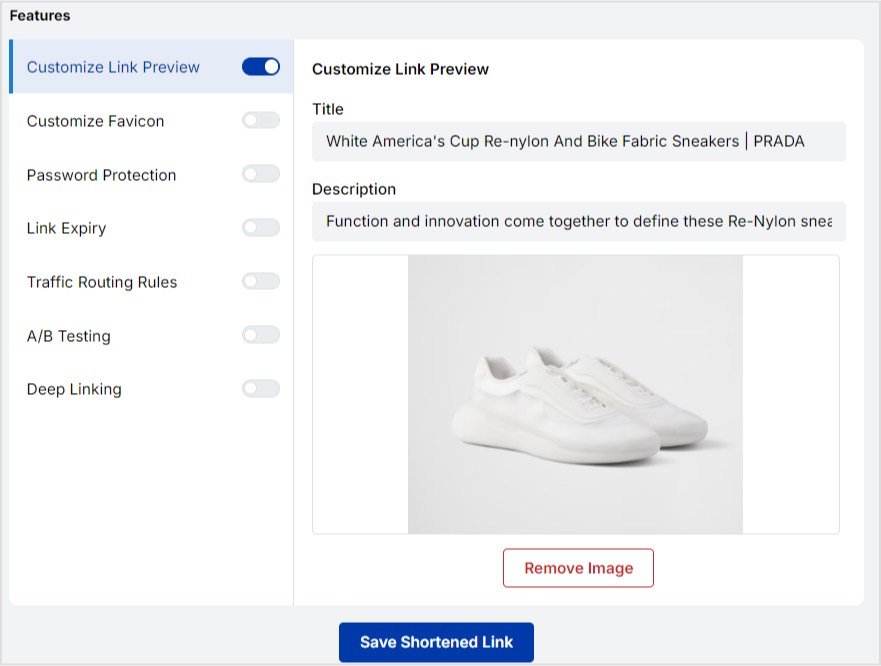
          It’s a complete link management suite to manage your short URLs and elevate your social media engagement and marketing. Additionally, Replug has a Chrome extension for managing your short links without logging in to your Replug account.

          As far as the pricing goes, the Replug Basic plan costs $15 per month (on annual pricing) and the next up is the Professional plan which costs $39 per month. However, the Agency plan is priced at $63 per month. You can start with a 14-day free trial account with no credit card required. Register here!

          2. Sniply

          Sniply-AB-Testing

          Sniply is also a URL shortener for marketers, influencers, and bloggers. It comes with a URL analytics feature to track your target audience through URL tracking. The key features include custom URL shortening, click tracking, call-to-actions, CTA tracking, custom domains, link customization, A/B testing, content discovery, and more.

          The call-to-action buttons that appear associated with the URL campaigns show up when users click on the short links and visit the destination pages. It allows marketers and bloggers to drive extra website traffic from social media by sharing even others’ content.

          Furthermore, the users could test the different variations of destination URLs for CTAs to analyze the performance.

          3. Pixelfy

          Pixelfy-AB-Testing

          Pixelfy is yet another popular URL shortener tool that offers several URL management features such as URL shortening, deep linking, A/B testing, campaign tracking, QR codes, retargeting, and analytics.

          Social media influencers and bloggers could track clicks on their short links and analyze the link campaign performance. Furthermore, the A/B testing feature plays an integral role in evaluating different links to see which ones work best. l

          Moreover, users could use geo-targeting to target users based on countries or regions and use the retargeting feature to connect with the audience that clicks on the short URLs on social media platforms.

          4. ClickMeter

          ClickMeter-AB-Testing

          ClickMeter is a powerful short link tool that helps digital marketers, affiliate bloggers, and social media influencers with creating, monitoring, and tracking URLs for understanding audience behavior and improving conversion rates.

          Other features include URL shortening, branded domains, A/B test link rotation, and conversion tracking. Furthermore, ClickMeter works best for marketers and bloggers with content-heavy blogs and websites monetized with multiple affiliate marketing programs.

          Moreover, it also helps social media influencers and gurus that use social media marketing channels to engage the audience and promote their products across different social networks.

          5. Cutly

          Cuttly-AB-testing

          Cuttly is a well-known link management tool that offers URL management services. The features it provides are URL shortening, A/B testing, QR code generator, UTM tracking, custom domain, advanced targeting, API access, and real-time analytics.
          While this tool provides extensive link management solutions, users can monitor clicks on shortened URLs and measure the effectiveness of their marketing campaigns.

          Furthermore, this platform has a rather user-friendly interface, which makes it easier for beginner marketers and bloggers to play around with it.

          A/B testing tools FAQs

          Let me answer some of the burning questions about A/B testing:

          Which tool is used for A/B testing?

          A/B testing has a wide spectrum when it comes to online marketing. There are different types of A/B testing that marketers perform, for instance, A/B testing on images, links, CTAs, etc.

          Therefore, it’s essential to determine what the goal is and what you want to achieve with your A/B testing, then you could choose the right tool for the job.

          How long should we run ab testing?

          It’ll be unfair a cap the A/B testing campaign to a specific period because it may vary from campaign to campaign.

          However, it’s important to run the A/B testing for at least a few weeks and give all the cases equal time, attention, and exposure to find the best results.

          How do A/B testing tools work?

          The basic idea is the same for every type of A/B testing tool. However, the only difference is what you’re trying to achieve with your testing.

          The way A/B testing tools work is that they allow users to test two cases, meaning let the cases expose to the audience and track the performance to see which ones get more attention.

          For instance, Replug’s A/B testing feature helps users drive traffic to multiple web sources to see how visitors react to it.

          What questions can A/B testing help me answer?

          It mostly depends on several factors and the questions may be different for each person or brand. However, the fundamental purpose of A/B testing remains the same – it helps people identify which option the audience likes the best, for instance, case A or case B.

        2. Link management made simple: The ultimate guide for 2026

          Link management made simple: The ultimate guide for 2026

          Link management can feel like herding cats. One team member uses a raw UTM link, someone else pastes a long tracking URL, and pretty soon, you have no idea which click came from where. Yet every click carries power.

          Studies show branded short links can lift click-through rates by around one-third compared with generic links, meaning messy URLs are leaving real money on the table.

          Across channels, a single brand may share hundreds of links every month. Without proper link management, tracking performance, protecting online reputation, and staying consistent is almost impossible.

          This guide walks through what link management is, how it works, and how tools like Replug help you keep every link organized, on brand, and trackable.

          First up is the foundation: what exactly is link management, and why does it matter so much in 2026?

          What is link management?

          Link management is the process of creating, organizing, branding, and tracking all the URLs your marketing team shares.

          The main goal is simple: control every link so you can improve performance, keep your brand consistent, and understand what really drives results. Instead of treating links as throwaway items, link management treats them as small but powerful marketing assets.

          It matters because links sit everywhere, i.e., on ads and landing pages, newsletters and transactional emails, social posts and bio links, QR codes and print materials, influencer campaigns and partner content, etc.

          When they are random and untracked, reporting becomes disordered and growth slows. But if they are planned and measured, you get clean data, a better user experience, and more confident decisions.

          Key aspects of link management:

          • Customization and branding turn ugly, long URLs into short, branded links that look professional and build trust. People are more likely to click when they recognize your brand name. This is especially helpful on crowded feeds where every character counts.
          • Performance tracking adds click data to every link so you know which channels, posts, and campaigns work best. You can see sources, locations, devices, and trends effortlessly. That information guides smarter content and budget choices.
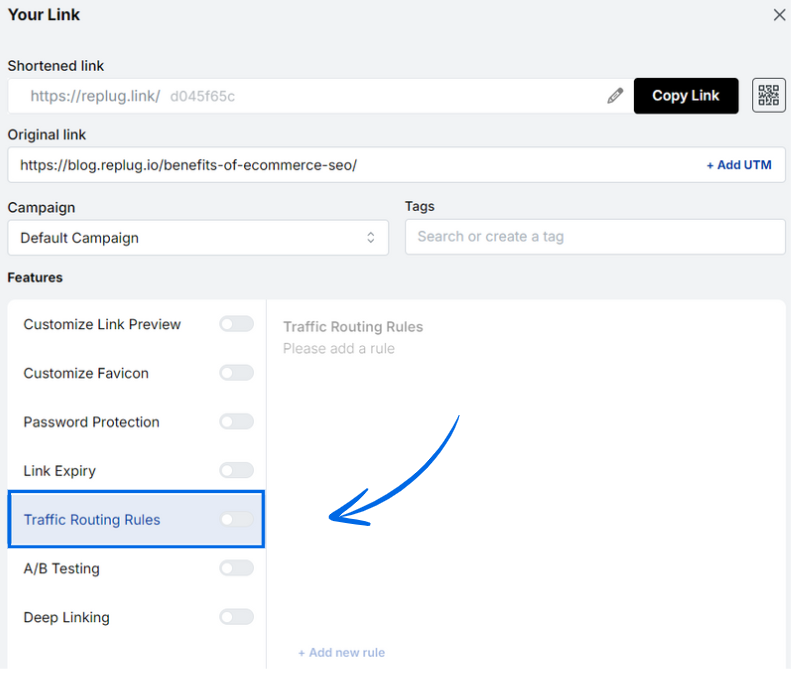
          • Organization keeps your growing library of links searchable and tidy. With tags, folders, and campaigns, you can quickly pull reports by client, product, or promotion. That structure saves time for marketing teams and agencies.
          • Efficiency comes from using one place to create, edit, and manage links instead of scattered spreadsheets. New team members can follow the same process, which reduces mistakes and duplicated work.
          • Flexibility means you can update destinations, pause links, or redirect traffic without changing the visible URL. You keep the same shared link while adapting offers, pages, and tests as your strategy changes.

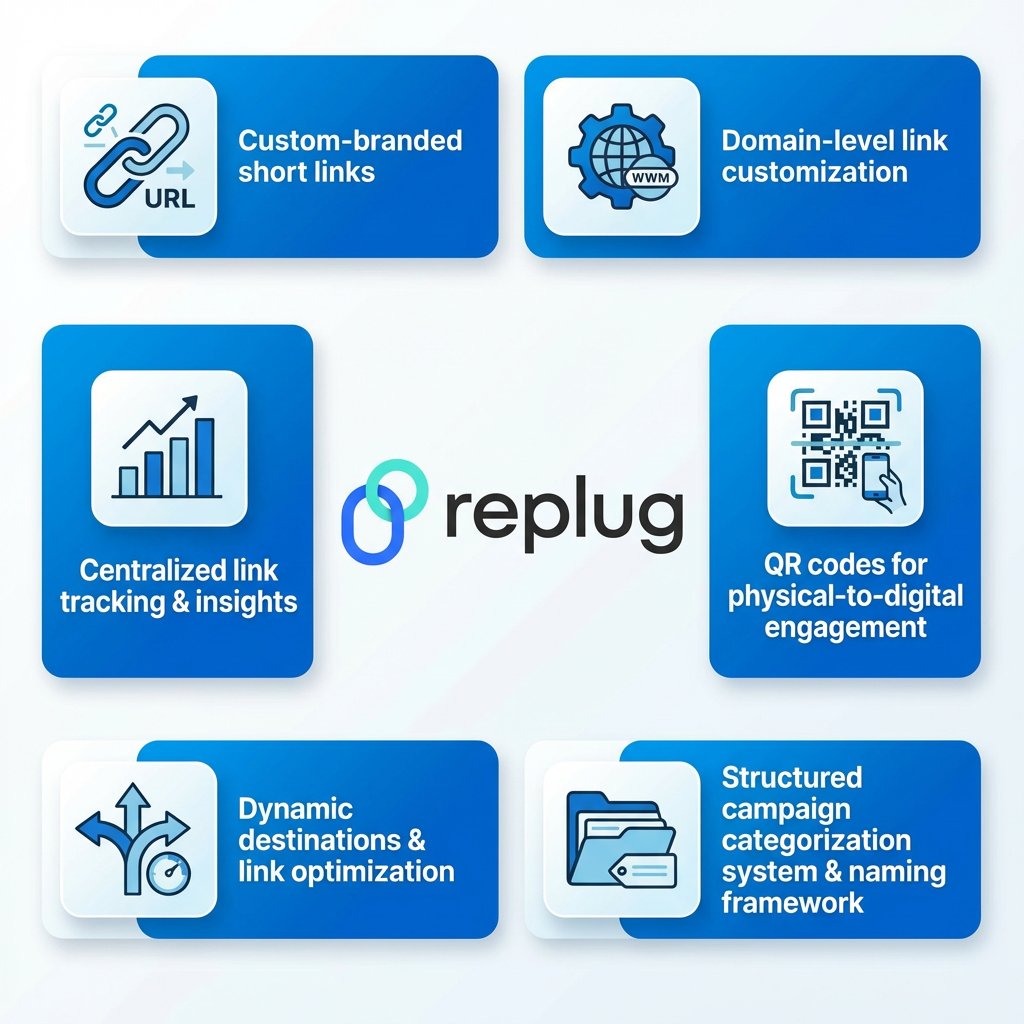
          Core link management features

          Modern link management tools and platforms do far more than shorten URLs. They give you control over every part of the click path: from the domain your audience sees, to the page they land on, to the data you record along the way.

          These core features are what separate true link management from a basic shortener tool.

          Core link management features

          Custom-branded short links

          Custom-branded links replace random characters with your own domain and meaningful slugs. Instead of a generic service name, people see something like yourbrand.link or go.youragency.com.

          This builds trust and signals a professional approach. Branded links also help protect your online reputation because scammers usually rely on generic domains.

          Protecting a brand’s reputation effectively involves more than just link formatting; it necessitates the use of real-time threat intelligence to monitor for domain spoofing and malicious activity.

          Good branded link practices include:

          • Keeping slugs human-readable (for example, /spring-sale instead of /x7Fg4)
          • Matching naming with your campaign structure
          • Avoiding misleading language that might feel spammy

          Domain-level link customization

          With domain-level control, you can manage multiple custom domains and workspaces from a single dashboard. Agencies can keep each client on a separate domain, while bigger companies can split links by product line or region.

          This setup keeps reporting clean and prevents confusion when many teams work in the same account.

          In Replug, this kind of setup makes it easy to:

          • Keep client or department activity clearly separated
          • Enforce naming and branding rules per workspace
          • Share access only with the people who should see each domain

          Centralized link tracking & insights

          Centralized tracking pulls all click data into a single analytics view. It is a practice backed by research on how to unlock the power of data linkage to enable more informed, evidence-based decision-making.

          You see which campaigns are winning across email, social, ads, QR codes, and influencers. In Replug, you can filter by campaign, country, device, or referrer, so you can quickly answer questions like which platform drives the highest conversion rate this month.

          Centralized link analytics also help you:

          • Compare paid vs. organic results without jumping across tools
          • Identify content that keeps working long after launch
          • Spot suspicious traffic spikes or bots before they skew decisions

          Dynamic destinations & link optimization

          Dynamic links let you change where a URL sends people without editing the link they already have. You can route traffic based on date, location, device, or A/B tests.

          For example, you can:

          • Send mobile users to app deep links and desktop users to your main site
          • Send visitors from different countries to localized pages
          • Split traffic between two landing pages and keep the better performer for long-term use

          With Replug, these rules are managed from a single dashboard, so your team can adapt campaigns without asking developers to change hard-coded URLs.

          Structured campaign categorization system & naming framework

          A clear naming framework is the quiet hero of modern link management. When every link follows the same style or pattern for campaigns, sources, and content, reporting becomes far easier.

          Tags and folders mirror your real marketing structure, such as clients, quarters, or product launches.

          Replug supports:

          • Tags for grouping by campaign, product, or channel
          • Folders and workspaces for clients or internal teams
          • Bulk actions, so cleaning up old campaigns and links stays simple

          Over time, this structure turns your link library into a searchable archive rather than a pile of random URLs.

          QR codes for physical-to-digital engagement

          Smart QR codes bridge offline experiences with online tracking. A single short link can generate a dynamic QR code for packaging, flyers, events, or in-store displays.

          Because the QR code points to your managed link, you can change the destination later and still keep all scans tracked in the same analytics view.

          Practical uses include:

          • Product packaging that leads to how-to videos or upsell pages
          • Event badges that link to schedules, maps, or feedback forms
          • Print ads that direct readers to time-limited offers

          Major advantages of effective link management

          When link management is set up well, it touches nearly every part of your marketing. You get better data, smoother experiences, and more predictable results from the same content and spend. These benefits add up fast for social media managers, agencies, and in-house teams.

          Major advantages of effective link management

          Improved SEO & site authority

          Clean internal and external links help search engines crawl your site more easily. When redirects are tidy and old links are updated instead of left broken, you avoid wasting link equity.

          Over time, this supports stronger site authority, which works alongside your link-building services packages instead of fighting against them.

          Some SEO-friendly link practices are:

          • Redirecting outdated campaign URLs to relevant evergreen pages
          • Avoiding endless redirect chains that slow pages down
          • Updating links in high-traffic content when pages move

          Better user experience & navigation

          Short branded URLs and accurate redirects create smoother paths for visitors. People reach the right page the first time, rather than encountering 404 errors or confusing chains.

          That simple experience lowers frustration, especially on mobile, and supports repeat visits and word of mouth.

          With a managed link setup, you can:

          • Fix mis-typed or outdated links without editing every post
          • Guide users from generic links to the most relevant product or article
          • Keep printed materials useful long after the original campaign ends

          Centralized control & efficiency

          With link management in one place, you do not need dozens of random documents to store URLs. Team members know exactly where to create, edit, and search links. This central control is especially helpful for agencies dealing with many clients or brands with several departments posting content every day.

          Centralization helps you:

          • Reduce duplicate links that distort your reporting
          • Speed up onboarding for new team members
          • Keep permissions and access under control

          Advanced analytics & data tracking

          Click data from every channel feeds into one precise analytics view. You can see which posts, ads, or emails lead to meaningful actions instead of guessing.

          Replug takes this further with conversion tracking and UTM support, so you can connect clicks to leads and sales rather than just counting traffic.

          Consistent branding & more efficient marketing

          Branded links show your name across all channels, from TikTok bios to email signatures. That steady presence supports online reputation and makes your content easier to recognize.

          When every link follows the same style, your team spends less time reworking assets and more time testing new ideas.

          Consistent link branding can:

          • Make affiliate and partner promotions feel less intrusive
          • Help customers spot genuine offers vs. scams
          • Tie together campaigns across different networks and devices

          Improved collaboration & increased conversions

          Shared workspaces, tags, and standardized naming make it easier for teams and agencies to collaborate. Designers, writers, and media buyers can all use the same links with confidence.

          That alignment speeds up launches, reduces broken URLs, and creates more chances to guide clicks toward high-converting offers.

          This is especially useful when:

          • Multiple agencies work on the same brand
          • Different regions handle their own campaigns under one domain
          • Subject-matter experts contribute content, but marketing owns tracking

          Flexibility & redirecting

          Campaigns change often. A link that promoted a flash sale last week might now need to go to a general category page.

          With proper link management, you update the destination once you’re inside the platform, and all existing clicks follow the new path. No need to edit old posts, ads, or QR codes.

          This flexible control helps you:

          • Keep promotions current without chasing old placements
          • React quickly when products sell out or prices change
          • Direct crisis communication traffic to updated information

          Optimized resource allocation

          When you know which channels and campaigns drive the best results, budget planning becomes far easier. Underperforming sources are simple to spot.

          Teams that sell link-building service packages can use this data to clearly demonstrate value to clients and adjust tactics without guesswork.

          You can:

          • Allocate more spend to channels that drive revenue, not just clicks
          • Reduce waste in campaigns that bring low-quality traffic
          • Prioritize content formats that lead to conversions or signups

          Common link management challenges

          Even with great tools, link management can get messy without a proper plan. As your number of campaigns and teammates grows, problems tend to show up in the same places. Knowing these issues ahead of time helps you avoid them or fix them quickly.
          Common link management challenges

          Scalability & organization

          What works for 10 links might fall apart at 10,000 links. Without folders, tags, or a clear naming style, older URLs become hard to find. New team members may create duplicate links or forget to add link tracking.

          In such a case, a platform like Replug helps by providing dedicated workspaces, search, and bulk actions that scale with your marketing.

          To stay organized as you grow:

          • Agree on naming standards from the start
          • Train every new collaborator on how to create links
          • Schedule periodic cleanups to archive or retire old campaigns

          Quality & relevance

          Outdated or low-quality destinations waste traffic. Maybe a blog post is no longer accurate, or a product is out of stock. If no one regularly reviews links, people keep clicking and end up on weak pages.
          A review schedule plus clear ownership for each campaign keeps links pointing to content that still matches your message.

          A simple checklist for link quality:

          • Is the destination page still live and accurate?
          • Does it reflect your brand and current pricing or offers?
          • Does it give visitors a clear next step?

          Time-consuming process

          Manually building UTMs, shortening URLs, and pasting them across platforms takes significant time. It also increases the risk of small typing mistakes.
          Automation within a link management platform, such as RSS-based link creation or browser extensions, speeds up daily work so you can focus on strategy rather than copy-paste tasks.
          Replug can help by:

          • Auto-generating branded short links from new content
          • Applying saved UTM templates for common campaigns
          • Integrating with tools you already use for publishing

          Broken links & redirects

          Any site update or migration can create broken links. Without central tracking, you might not notice until a customer complains. Tools that monitor click errors and allow fast redirect updates fix this problem.

          Replug supports easy redirect changes so you can keep traffic flowing even as your site structure changes.

          You can:

          • Create replacement destinations for popular but outdated URLs
          • Track 404 patterns to spot recurring issues
          • Update QR code targets without reprinting materials

          Tracking & ROI

          If some links are tracked and others are not, reports become unreliable. It is hard to prove the return on ad spend, influencer fees, or content production.

          Standardizing link creation and using a single platform for tracking keeps your numbers clean. That makes it much easier to show a clear ROI to executives or clients.

          Algorithm compliance

          Social and ad platforms can change rules for link formats or tracking parameters. If your links look spammy or break guidelines, reach may drop.

          Good link management includes watching platform updates, keeping links user-friendly, and avoiding tricks that might trigger filters or harm performance over time.

          Practical tips:

          • Avoid excessive redirect chains that slow loading
          • Keep link text and preview content honest
          • Test links in “preview” modes of ad platforms before scaling

          Internal linking complexity

          Large sites often face tangled internal link structures. Old pages might still receive traffic from many internal URLs, and cleaning them up manually is hard.

          Using tracked short links for key internal paths gives you clearer data on how people move through your site and makes later changes easier.

          This approach lets you:

          • Analyze how users move between content clusters
          • Retire or merge pages without losing insight
          • Route visitors toward higher-value sections of your site

          Lack of insight from untracked links

          Every untracked link is a blind spot. You may be paying for content promotion or influencer work without seeing a direct impact.

          By swapping raw URLs for managed, trackable links, you get visibility across campaigns. This is also a core part of true link management that goes beyond vanity metrics.

          Even simple steps like standardizing links in email signatures or support replies can reveal surprising patterns in how customers find key pages.

          Examples of how businesses use link management in 2026

          Different teams use link management in different ways, but they all share the same goal: make every click count. Here are common use cases that show how marketers, agencies, and creators put these tools to work in real campaigns.

          Branded & shortened links for trust

          Brands use short, branded URLs across social bios, paid ads, and print. A clean link with their name feels far safer than a random string. This trust boost often leads to higher click-through rates, especially on platforms where audiences are cautious about spam or phishing attempts.

          For example:

          • A SaaS company uses go.example.com/free-trial in all ads
          • A retailer adds a branded short link to product packaging for care tips
          • A creator uses one consistent bio link across platforms, updated behind the scenes

          Tracking marketing campaigns

          Every paid and organic campaign gets its own tracked link. Social media managers create separate URLs for each post style or audience, then compare results in one dashboard. This helps them decide which creative and copy styles to scale and which to retire.

          With Replug, teams can:

          • Auto-attach UTM parameters based on campaign presets
          • Group links by theme (product launch, event, seasonal sale)
          • Export reports for clients or internal stakeholders in a few clicks

          “Pay-by-link” for invoicing & sales

          Service businesses send customers secure payment or checkout links instead of long invoices. With link management, those pay-by-link URLs are branded, trackable, and easy to update if the offer changes. Teams can see how many invoices were opened, which helps with follow-up and cash flow planning.

          This method works well for:

          • One-off services or consulting sessions
          • Deposits for events or bookings
          • Fast-checkout offers in DMs or live chats

          SMS & reminder automation

          Short links are perfect for SMS, WhatsApp, and reminder messages where character limits matter. A hospital, gym, or salon can send appointment reminders with a link that tracks confirmations and no-shows. Over time, they can test different reminder timings and wording for better response rates.

          Typical flows include:

          • “Confirm/cancel” appointment pages
          • Post-visit feedback forms
          • Renewal or rebooking offers sent after a visit

          Dynamic redirects for campaigns

          Retailers and SaaS companies use a single evergreen promo link that changes its destination over time. During a holiday sale, it leads to a special offer page, then it switches back to a general pricing page. Because the visible link stays constant, they can reuse it in ads, QR codes, and emails without confusion.

          Dynamic redirects make it easier to:

          • Run flash sales without creating new URLs every time
          • Test new offers while keeping old posts and videos active
          • Retire discounts while preserving clean redirect paths

          In-person selling with QR codes

          At events, pop-up stores, or trade shows, sales teams use QR codes tied to tracked links. People scan from banners, product tags, or display screens and land on targeted landing pages. Later, one can see which booth or event layout produced the most scans and signups.

          This data helps you:

          • Compare performance between locations or dates
          • Refine booth design or signage based on real engagement
          • Follow up with different offers depending on where the scan happened

          Personalized customer journeys

          Marketers create slightly different links for segments such as new leads, returning buyers, or VIP members. Each group lands on a page that matches their stage, not a generic homepage. Over time, this kind of routing tends to raise conversion rates and customer lifetime value.

          In Replug, you can:

          • Duplicate a base link and adjust destinations per segment
          • Track how each audience responds to similar offers
          • Fine-tune upsell and cross-sell flows based on results

          Customer experience

          Support teams include branded short links in help articles, chat replies, and follow-up emails. Because each link is tracked, they see which resources customers actually use. That insight guides improvements in documentation and helps reduce repeat tickets.

          For example, you can:

          • Identify which FAQs get the most traffic from support replies
          • Spot gaps where customers keep asking for help
          • Test new help-center layouts by routing traffic through managed links

          Event promotions

          Event organizers create a set of tracked links for each promotion channel: email, partners, paid social, influencers, and local posters with QR codes. After the event, they know exactly which channels drove registrations and check-ins, which shapes budgets for the next run.

          Data from event links can reveal:

          • Which partners brought the highest-intent attendees
          • How early-bird vs. last-minute offers performed
          • Which content pieces led people to sign up, not just click

          A/B testing

          Marketing teams use link rotation or A/B testing to route traffic from a single short link to multiple variants. A link management platform like Replug can distribute clicks across several landing pages or offers, then show which one performs best. Once a winner emerges, the team routes all traffic to that winner without changing the shared URL.

          This makes it easier to test:

          • Long-form vs. short-form landing pages
          • Different price points or bundles
          • Alternate headlines, hero images, or calls to action

          Top link management tools to streamline your workflow (2026)

          There are many tools that can shorten links, but fewer that truly support full link management. The best choice depends on your team size, tech stack, and reporting needs.

          Here is a quick comparison of leading options, with Replug at the center for marketers who want data, branding, and conversion features in one place.

          ToolBest forHighlights
          ReplugMarketers and agencies needing full controlBranded links, advanced analytics, retargeting pixels, CTA overlays, A/B testing, dynamic QR codes, and white-label options for agencies.
          BitlySimple use cases and basic link trackingEasy-to-use interface with custom domains, basic analytics, and integrations with popular social and automation tools.
          RebrandlyBrands focused on domain level customizationStrong focus on custom domains and branded links, plus team features for managing multiple brands from one account.
          LinklyMarketers wanting detailed traffic rulesGood for geo targeting, device targeting, and affiliate-style routing, plus link tracking for paid campaigns.
          Dub.coProduct teams and startupsOpen source background, API friendly, and flexible tracking options for technical users who like customization.
          BL.INKLarger organizations with data needsEnterprise features, detailed reporting, and governance controls suited for bigger teams with strict compliance rules.
          TinyURLQuick public shortening with minimal setupVery simple shortener for one-off links, with some options for branded domains and tracking on paid plans.
          PrettyLinksWordPress-based businessesWorks as a WordPress plugin that manages affiliate links and redirects directly from the site admin area.

          Link management vs. link tracking: Key differences explained!

          People often use the terms “link management” and “link tracking” as if they mean the same thing. In practice, tracking is only one part of the wider management picture.

          Understanding the difference helps you choose tools and workflows that support both daily work and long-term growth.

          AspectLink managementLink tracking
          DefinitionComplete process for creating, organizing, branding, routing, and measuring links across channelsRecording and analyzing clicks and related metrics on specific URLs
          ScopeCovers link creation, naming rules, redirects, branding, access control, and reportingFocuses mainly on click counts, sources, and basic performance data
          GoalGive teams central control over every link so campaigns stay organized and on brandShow how many people clicked a link and where they came from
          ActionsCreate links, edit destinations, group by campaigns, assign tags, manage QR codes, and share accessPlace tracking parameters, read reports, compare click results between links
          ComponentsCustom domains, short links, QR codes, folders, tags, UTM builders, and analytics in one platformTracking pixels, analytics reports, and sometimes simple shorteners or redirect tools

          In simple terms, link tracking tells you what happened, whereas link management gives you the tools and structure to do something about it.

          Earn success in your marketing campaigns with Replug’s link management tool

          Replug is an all-in-one link management platform built for marketers, agencies, and creators who care about data and branding.

          At its core, Replug works as a custom URL shortener powered by advanced routing, retargeting, and analytics. That means every link you share can carry your domain, your message, and rich performance data.

          Inside Replug, you can:

          • Create branded short links in seconds
          • Organize them with tags, folders, and campaigns
          • Track every click in a clean, filterable dashboard
          • Add retargeting pixels for ad platforms
          • Run A/B tests on up to ten destinations from a single link
          • Layer on call-to-action overlays to capture leads from curated content
          • Generate dynamic QR codes and deep links that connect offline and in-app experiences to the same reporting
          Replug Branded Short Links CTA
          A complete link management solution
          for marketing professionals & agencies.
          Try Replug for free

          Many professionals trust Replug to manage links for social media, email, paid ads, and influencer work. If you are ready for true link management instead of scattered spreadsheets, the Replug link management tool gives you the control and insight needed to improve results without adding extra tools. Try it now!

          Summing up

          Links might look small, but they carry the weight of your campaigns, content, and brand trust.

          When link management is messy, reporting falls apart, and it is hard to prove what actually works. But when it is organized, branded, and backed by strong analytics, every click turns into a clear signal you can act on.

          By using features such as custom domains, dynamic redirects, QR codes, and centralized tracking, you make life easier for your team and clearer for your audience. Tools like Replug bring these pieces together so you can plan, test, and refine with confidence.

          Start treating your links as real marketing assets, and your campaigns in 2026 will feel far more controlled and predictable.

          Frequently asked questions

          Is link management legit?

          Yes, link management is a standard practice used by brands, agencies, and creators of all sizes. It gives structure to how you create, track, and update URLs. When done correctly, it improves user trust and makes your reporting far more accurate.

          What is the LMP link management protocol?

          LMP usually refers to the Link Management Protocol used in computer networking, not marketing. It helps network devices coordinate the setup and maintenance of links. For marketers, link management is more about URLs, tracking, and analytics than low-level network behavior.

          What is link asset management?

          Link asset management means treating each URL as a small digital asset. You track where it is used, how it performs, and when it should change or expire. This approach keeps your campaigns tidy and avoids wasted clicks on outdated or broken pages.

          What is a link management platform?

          A link management platform is a tool that centralizes link creation, branding, tracking, and organization. Replug is one example, offering custom domains, analytics, retargeting, and QR codes in one dashboard. These platforms replace chaotic spreadsheets with a single source of truth for all your links.

          What is branded link management?

          Branded link management focuses on using your own domains and naming style for every short link. Instead of generic service URLs, you share links that clearly show your unique brand name. This supports online reputation, improves click-through rates, and makes your content easier to recognize.

          What is link management in computer networks?

          In networking, link management refers to how devices set up, monitor, and adjust physical or logical connections. It deals with things like link health, capacity, and failover. While the term is similar, this is separate from marketing-focused link management for URLs.

          Would it be possible to automate link creation?

          Yes, many platforms support automation through integrations, RSS feeds, or browser extensions. Replug, for example, can generate short links automatically from new content or imports. This saves time and makes it easier to keep tracking consistently across large campaigns.

          Is it possible to integrate link management with my existing stack?

          In most cases, yes! Modern link management tools connect with social schedulers, email platforms, ad managers, and analytics tools, hassle-free. Replug also supports integrations and web-based widgets, so your links and data flow smoothly into systems you already use.

          How does link management differ from basic link shorteners?

          Basic link shorteners primarily replace long URLs with shorter ones and provide minimal statistics. Link management, on the other hand, covers branding, routing rules, QR codes, collaboration, and deep analytics. It is designed for teams that run ongoing campaigns rather than one-time personal links.

          How do teams use link management in real workflows?

          Teams use link management to standardize UTM tags, create branded links for every campaign, and track results across channels. Agencies bake it into client reporting, while in-house marketers use it to test offers, protect online reputation, and refine content. With a platform like Replug, these tasks happen in one place rather than across many separate tools.

        3. How to get more followers on TikTok: 25+ pro tips for TikTok users in 2026!

          How to get more followers on TikTok: 25+ pro tips for TikTok users in 2026!

          If you’re trying to grow on TikTok in 2026, you’re not alone, and you’re definitely in the right place.

          TikTok now has nearly 2 billion active users globally, and the average user opens the app more than 15 times a day, spending around ~58 minutes scrolling through their feed. That’s a massive, highly engaged audience just waiting to discover your content.

          But here’s the thing: With roughly 23 million videos uploaded every single day, standing out takes more than just posting and hoping for the best. It takes a high-impact strategic approach.

          No matter if you’re starting from zero or stuck at a plateau, the provided useful and proven tips will give you a real, actionable game plan.

          But first, let’s talk about why growing your TikTok followers count actually makes a difference at present.

          Why growing your TikTok following matters in 2026

          Having more followers on TikTok isn’t just about the numbers looking good on your profile. It actually affects how far your content travels, how people perceive you, and yes, how much money you can make from the platform.

          Initial algorithm testing

          Here’s something a lot of people don’t realize. TikTok now shows your new videos to your existing followers first before deciding whether to push them to a wider audience. 

          So the bigger and more engaged your following, the better your chances of passing that initial test and landing on the “For You Page”.

          Searchability & credibility

          Think about it for a second: when you land on someone’s profile, and they have a solid follower count, you instantly trust them more. 

          A strong follower base creates instant credibility and signals to new visitors that your content has already been validated by others. This ultimately makes them far more likely to hit that “follow” button themselves.

          Creator monetization

          Growing your following also unlocks real income opportunities. To qualify for TikTok’s Creator Rewards Program, you need at least 10,000 followers and 100,000 authentic video views in the last 30 days. So hitting those follower milestones is literally the key that opens the monetization door.

          Brand sponsorships

          And if you’re dreaming of brand deals, follower growth is what gets brands to notice you. In 2026, a creator with just 50,000 engaged followers in a profitable niche can already command anywhere from $500 to $2,500 per sponsored video (and that number only goes up from there).

          Tips on how to get more followers on TikTok

          Growing on TikTok doesn’t happen by accident. It takes the right mix of strategy, consistency, and knowing how the platform actually works.

          Tips on how to get more followers on TikTok

          Here are some solid tips to help you start gaining real followers in no time:

          Tip #01: Optimize your TikTok profile

          Your TikTok profile is basically your first impression, and you’ve got about 7-10 seconds to make it count.

          • Choose a short, memorable username that matches your niche, and consider working a keyword into your display name (like “Jake | Budget Travel”). 
          • In addition, keep your bio clear and focused. Research suggests a well-optimized TikTok bio can improve follower conversion rates by up to 40%
          • And don’t sleep on pinning your best videos at the top. They act like a trailer that convinces new visitors to hit “follow”.

          Related: 500+ engaging TikTok bio ideas for your profile to get more followers fast (copy & paste)

          Tip #02: Define a specific content niche

          Trying to appeal to everyone on TikTok usually means connecting with no one. In 2026, TikTok’s algorithm rewards niche authority and consistency far more than random, broad content.

          When you pick a specific topic, e.g., fitness, book reviews, cooking on a budget, or whatever, the algorithm knows exactly who to show your videos to. This makes growth a whole lot faster and more targeted.

          Tip #03: Focus on creating scroll-stopping hooks

          Keep in mind that your “hook” is everything on TikTok! 

          According to TikTok for Business data, 63% of the highest-performing videos hook viewers within the first three seconds. And if viewers don’t stop scrolling within that window, your video essentially dies. 

          Open with a bold claim, a surprising fact, or a question your audience genuinely wants answered. Don’t save the good stuff for later.

          Tip #04: Upload high-quality content regularly

          Good content posted consistently beats perfect content posted once in a while. Posting 3–5 times per week is a solid baseline, and data shows videos between 21–34 seconds tend to get the highest completion rates. 

          TikTok also rewards accounts that post consistently, so think of it less like “going viral once” and more like showing up reliably for your target audience.

          Tip #05: Provide unique value through content

          There’s a ton of content on TikTok, so the question you should always be asking is: why would someone save, share, or follow this?

          Whether you’re teaching something, entertaining people, or solving a real problem, make sure your videos give viewers something they actually walk away with. 

          Content that gets saved and shared sends the algorithm a strong signal that your stuff is worth pushing out to more people, thus enhancing your chances of gaining more followers.

          Tip #06: Follow the latest TikTok trends

          Jumping on trends early is one of the fastest ways to get discovered by new audiences on TikTok. Real-world events and cultural moments fuel trends, too.

          Brands and creators who align their content with what people are already talking about often see their videos blow up fast. 

          The key is to put your own spin on it and don’t just copy a trend blindly. Make it relevant to your niche, so it actually brings in the right followers.

          Tip #07: Capitalize on user-generated content (UGC)

          UGC is one of the most underrated growth tools on TikTok. When real people create content about you or your brand, it builds trust way faster than anything you could say yourself. 

          Creating a unique branded hashtag and encouraging your audience to post content using it is a simple but effective way to generate a wave of free, authentic content. 

          Even reposting a fan’s video once a week keeps your community engaged and makes followers feel seen.

          Tip #08: Consistently post at the ideal time

          Even great content can get buried if you post at the wrong time. Analysis of over 2 million TikTok posts shows that the first 60 minutes after you post determine about 80% of a video’s success, so timing really matters. 

          Tuesday through Thursday, between 2:00 PM and 6:00 PM (in your target audience’s local time zone) is a consistently strong window, with “Saturday” being the highest-engagement day overall.

          That said, check your own TikTok analytics. Your specific audience might have different peak hours.

          Related: What is the best time to post on TikTok

          Tip #09: Actively engage with viewers by replying to comments

          Replying to comments isn’t just being polite; it’s a brilliant follower growth strategy. 

          The algorithm tracks creator activity, and replying to comments within the first hour of posting signals that you’re an active creator, which boosts your video’s distribution. 

          Even better, reply with a short video clip instead of just text. TikTok lets you do this, and it basically gives you a second piece of content for free.

          Tip #10: Consider going live on TikTok

          Going live on TikTok puts you right at the top of your followers’ feeds and is a great way to build a real connection with your audience. 

          TikTok actively emphasizes LIVE events as a native feature that triggers wider reach, especially when your other content is already performing well. 

          You only need 1,000 followers to unlock TikTok Live, so once you hit that milestone, it’s absolutely worth using regularly. It amplifies your chances of gaining more followers by up to 10%.

          Tip #11: Use TikTok’s Duet & Stitch features

          Duets and Stitches are great for tapping into content that’s already got momentum. 

          Duets show both videos side-by-side at the same time, while Stitches play the original clip first and then roll straight into your response. Both are perfect for adding your take on trending videos in your niche. 

          They also expose your profile to the original creator’s audience, which can bring in a nice wave of new followers.

          Tip #12: Use relevant hashtags wisely

          Hashtags on TikTok aren’t just for decoration; they help the algorithm figure out what your content is about and who to show it to. 

          In 2026, hashtags have become a critical part of TikTok SEO, and the smartest strategy is to blend trending tags with more specific, niche-focused ones. 

          Don’t dump 20 generic hashtags on every post. A focused set of 3–5 well-chosen tags will do far more for your reach than a wall of #fyp.

          Tip #13: Use specific TikTok SEO strategies

          TikTok has quietly become one of the biggest search engines out there, especially for younger audiences. The algorithm reads your spoken audio, on-screen text, and captions. 

          So, naturally, saying your target keyword out loud and including it in your caption sends a strong relevance signal to TikTok. 

          Think about what your ideal viewer would actually search for, and build your video around those terms. That’s how you get discovered long after a video is first posted.

          Tip #14: Leverage trending ideas & music

          Trending audio is basically free fuel for your content. TikTok actively pushes videos that use trending sounds and tracks.

          Creators are reporting millions of views, and a significant growth in their follower count just by pairing their content with the right audio at the right time.

          You don’t need to blindly copy what’s trending; just find a sound that fits your niche and put your own spin on it. The key is catching trends early before they get oversaturated.

          Tip #15: Create unique & interesting TikTok challenges

          TikTok challenges are one of the fastest ways to get a ton of people interacting with your content, and thus hitting that “follow” button.

          Challenge-related content regularly pulls engagement rates of 6–8%, which is nearly double TikTok’s platform average of 3.70%. This is because the format naturally drives comments, shares, and duets.

          The secret sauce? Keep it simple enough for anyone to try, give it a catchy hashtag, and seed it with a few creators to get the ball rolling.

          Tip #16: Tell engaging stories to connect with your target audience

          People don’t just follow content on TikTok; they actually follow real people. 

          TikTok users are reported to spend an average of 1-2 hours per day on the app, and the main force behind that kind of session time is powerful storytelling. 

          Whether you’re sharing a personal journey, a transformation, or even a behind-the-scenes peek at your day, stories build an emotional connection that makes people want to stick around and come back for more.

          Tip #17: Collaborate with popular creators within your niche

          Partnering with other creators in your space is one of the quickest ways to get in front of a brand-new audience that’s already interested in what you do. 

          Collaboration through duets, stitches, co-creations, or creator reactions exposes your profile to entirely new communities without spending a dime on paid promotion. 

          Even a simple shoutout or joint video with a creator who has a similar-sized following can result in a solid wave of new followers.

          Tip #18: Cross-promote your TikTok videos

          Don’t let your TikTok content live in one place; spread it around. Sharing your TikTok videos on Instagram Reels, YouTube Shorts, Pinterest, or even in your email newsletter gives every video a second life. 

          This drives people from other platforms straight to your TikTok profile, some of whom might click that “follow” button.

          Cross-platform promotion is one of the most consistent habits among fast-growing creators in 2026, and it takes almost zero extra effort once the video is already made.

          Tip #19: See what others are doing within your niche

          Before you can stand out, it helps to know what’s already working. 

          Spend a little time each week scrolling through top creators in your niche. The goal is not to copy them, but to spot content patterns, trending formats, and gaps you can fill. 

          TikTok’s Creative Center is a free tool that shows you top-performing content and ads by industry. It’s honestly one of the most underused research tools available to creators right now. Utilize it to the best of your benefit and achieve your major objective, i.e., gain more followers on TikTok.

          Tip #20: Add closed caption text to your videos

          Adding captions to your TikToks isn’t just a nice accessibility touch; it’s genuinely a growth hack.

          TikTok videos with captions increase impressions by 55%, and research shows that captioning a video improves comprehension and viewer memory by up to 38%. 

          Most people scroll TikTok in silent mode (especially in public places), so if your message isn’t readable on screen, you’re losing a massive chunk of potential viewers before they even hear your voice.

          Tip #21: Create amazing TikTok stories

          TikTok Stories sit right at the top of your followers’ feeds and are a great low-pressure way to stay visible without having to post a polished video every single day. 

          Use them to share quick updates, sneak peeks, polls, or behind-the-scenes moments that feel more casual and real. 

          In 2026, TikTok’s algorithm rewards content that builds consistent viewer engagement over time. And Stories are one of the easiest ways to keep that engagement ticking between your main posts.

          Tip #22: Leverage Creator Rewards Program

          If you’re already putting out quality content, you might as well get paid for it, and the Creator Rewards Program is how TikTok makes that happen. 

          Creators are now earning between $0.40 and $1.00+ per 1,000 views, with some pulling in $600+ per million views through improved RPM rates.

          To qualify, you need to be 18+, have at least 10,000 followers, hit 100,000 qualified views in the last 30 days, and post original videos longer than one minute. 

          It’s a solid push to focus on longer, higher-quality content. And the more the content is top-notch, the better the chances of gaining more followers along the way!

          Tip #23: Leverage TikTok Spark Ads

          Spark Ads are basically TikTok’s smartest ad format. Instead of creating a separate ad from scratch, you take one of your already-performing organic videos and put paid reach behind it.

          Every engagement earned during a Spark Ads campaign (including new followers) gets permanently added to the original post, unlike standard ads where all that activity disappears the moment your budget runs out. It’s one of the most efficient ways to grow your following without it feeling like an ad.

          Tip #24: Use the TikTok “Promote” feature

          The Promote feature is TikTok’s built-in boost tool, and it’s designed to be simple enough for any creator to use (no ads manager needed). 

          You can set your goal as follower growth, more video views, or website traffic, and TikTok will push your content to a broader, targeted audience that matches your niche. 

          It’s a great option when you have a video that’s already getting decent organic traction, and you just want to give it a little extra push without a huge budget.

          Tip #25: Include a clear call-to-action (CTA)

          It sounds obvious, but a lot of creators skip this one entirely. If you want people to follow you, tell them to follow you

          Simply ending a video with a clear CTA phrase like “Follow for more” can noticeably increase your follow-through rate. Plus, in some cases, a well-placed CTA can double your conversion from viewer to follower.

          Keep it natural and put it at the point in the video where the viewer is most engaged; don’t just tack it on at the very end as an afterthought.

          Tip #26: Use TikTok’s built-in analytics

          If you’re not checking your analytics regularly, you’re basically flying blind. 

          According to Influencer Marketing Hub’s 2026 report, 76% of successful creators use TikTok analytics daily, and they consistently outpace creators who don’t check their metrics. 

          Inside TikTok Studio, you can see exactly who your audience is, when they’re most active, which videos are actually driving new followers, and where your traffic is coming from. Basically, all the info you need to stop guessing and start growing with a real strategy.

          You may also like: How to get followers on Instagram fast?

          How Replug helps content creators succeed on Tiktok

          Growing your TikTok following in 2026 isn’t about luck; it’s about combining the right strategy, consistency, and a willingness to actually use the tools available to you.

          From optimizing your profile to nailing your hooks, riding trends, and tracking your analytics, every tip above plays a part in building real, lasting growth.

          And above all, one small but handy addition to your toolkit is Replug.io. Beyond letting you create short link for your bio and tracking clicks, it also offers free tools like a TikTok caption generator and a TikTok downloader. The perfect solution for streamlining your content workflow.

          Give Replug a try today and make your TikTok growth journey just a little easier!

          Replug Branded Short Links CTA
          Maximize marketing ROI
          by transforming ordinary URLs into
          branded short links that convert.
          Try Replug for free

          Frequently asked questions

          How to get more followers on TikTok for free?

          There’s no shortcut button for free TikTok followers. Anyone promising that is usually selling something shady.

          The real “free” method is simple: 

          – post consistently, 
          – nail your hooks, 
          – jump on trends, 
          – use trending sounds, 
          – add captions, and 
          – engage back with everyone who comments.

          In 2026, your follower count is essentially your social currency and your ticket to the For You Page, and that’s built through genuine content, not gimmicks.

          How to get followers on TikTok in 5 minutes?

          Honestly, you can’t guarantee followers in 5 minutes, but you can set yourself up for fast wins.

          – Pick a trending sound, 
          – Record a quick video using a strong 3-second hook, 
          – Add engaging captions with a clear CTA, and 
          – Post it during a peak engagement window

          If the hook lands, growth can start almost immediately. But real, lasting follower counts build over days and weeks, not minutes.

          How long does it take to gain TikTok followers?

          It really depends on your content quality, niche, and consistency, but most creators see meaningful growth (around 1,000+ followers) within their first three months of posting regularly. 

          Some videos blow up overnight, thanks to the algorithm, while others build slowly through steady, niche-focused content. The key is staying consistent; growth tends to compound over time rather than happen all at once.

          What are some of the best content ideas to get TikTok followers fast?

          Some formats consistently perform well: 

          – relatable storytelling, 
          “day in my life” content, 
          – quick tutorials or hacks, 
          – before-and-after transformations, 
          – trend remixes with your own twist, and 
          “stitch this” or duet-style reaction videos

          A good rule of thumb is mixing roughly 70% community and value-driven content with 30% personal or behind-the-scenes storytelling. This combo keeps people entertained while building a real connection with you.

          What are the major benefits of having a large number of followers on TikTok?

          A bigger following means your new videos get tested with a larger initial audience, boosting your chances of hitting the For You Page. It also builds instant credibility, since people trust accounts with solid follower counts more. 

          Besides, it unlocks monetization, since the Creator Rewards Program requires at least 10,000 followers and 100,000 qualified views in the last 30 days. Plus, it makes you far more attractive to brands looking for sponsorship deals.

          What are the common mistakes that halt TikTok followers number?

          – The biggest one is buy TikTok followers that are fake. TikTok’s 2026 algorithm easily detects inorganic growth and will shadowban your account, destroying your reach and credibility permanently.
          – Another major mistake is ignoring analytics. Posting blindly without reviewing what’s actually working, like watch time and audience demographics, is like driving without a map. 
          – And finally, inconsistent posting. Disappearing for weeks at a time confuses both the algorithm and your audience.

          Avoid all three, and you’re already ahead of most creators.

          How does the TikTok algorithm work in 2026?

          In 2026, TikTok shows your new videos to your existing followers first, and based on how they respond, decides whether to push the content out to a wider audience. 

          The algorithm weighs watch time as a percentage of video length as the strongest organic ranking signal, alongside replays, shares, comment depth, and how often a video drives profile follows. 

          It doesn’t reward likes, follower-only reach, or hashtag stuffing nearly as much as it used to. So the focus has clearly shifted toward genuine engagement and watch-through behavior.

        4. How to get more followers on Instagram in 2026: 10 strategic methods discussed!

          How to get more followers on Instagram in 2026: 10 strategic methods discussed!

          Instagram isn’t just a photo-sharing app anymore; it’s a full-blown business engine. 

          With 3 billion active users as of 2025, the platform has firmly cemented itself as one of the most powerful marketing channels on the planet. And it’s still growing, reaching 2.14 billion monthly active users in Q1 2026 alone, up 6.3% year over year. 

          No matter if you’re a brand, a creator, or someone just starting out, your follower count can make or break your reach here. 

          Sure, some people search for free Instagram followers hoping for a shortcut, but real, lasting growth comes from a defined strategy, not shortcuts. That’s exactly what this post is about: 10 proven ways that actually work in 2026.

          But first, let’s talk about why your follower count matters more than you might think.

          Why do Instagram followers count matter so much?

          Before we get into the “how,” it’s worth taking a second to understand the “why”. Your follower count isn’t just a vanity number; it directly shapes how people perceive you, how brands treat you, and how much money you can actually make on the platform.

          • Social proof & influence

          Humans are wired to trust what’s already popular. When someone lands on your profile and sees a solid follower count, they’re far more likely to follow you, engage with your content, and take you seriously. This is because if thousands of others already do, you must be worth it.

          • Credibility & brand trust

          Whether you’re a business, a content creator, or a personal brand, a strong follower count signals that you’re legitimate. It’s often the first thing potential customers or collaborators check, and a low number (even with great content) can make people second-guess hitting that “Follow” button.

          • Monetization & brand partnerships

          Brands don’t just look at your content when considering a partnership; they look at your audience size first. A bigger, engaged following opens the door to sponsored posts, affiliate deals, and long-term collaborations that can turn your Instagram presence into a real income stream.

          How to get a lot of followers on Instagram fast

          Growing on Instagram in 2026 isn’t just about posting pretty pictures and hoping for the best; it takes real effort and the right moves. Here are the top strategies that actually work if you want to see consistent growth.

          1. Build a top-notch strategy before targeting Insta followers

          Before you post a single thing, you need a clear game plan. Think about:

          • who your target audience is, 
          • what kind of content you’ll create, 
          • how often you’ll post, and 
          • what goals you’re working toward

          This is because jumping in without a strategy is basically throwing darts in the dark. Accounts that post with purpose and direction consistently outperform those that wing it, so take the time to map things out before hitting that “Share” button.

          2. Optimize your IG profile

          Your Instagram profile is your first impression, and you’ve got about three seconds to make it count before someone scrolls past. Here’s how to make sure it works hard for you:

          • Use a clear profile picture & define your niche

          Your profile photo should be clean, recognizable, and consistent with your brand, no matter if that’s your logo or a sharp headshot. And make sure your niche is immediately obvious; people should know within seconds what you’re about and whether your account is worth a follow.

          • Write a compelling bio with your niche’s keywords

          Remember, your bio is searchable, so use it wisely. Pack it with relevant keywords that describe what you do and who you serve. This helps Instagram surface your profile to the right people.

          If you’re struggling with what to write, an Instagram bio generator can help you craft something sharp and keyword-rich in seconds.

          You may also check out: 400+ best Instagram bio examples to stand out in 2026

          • Use strong calls to action (CTAs)

          Don’t leave visitors guessing what to do next. A simple CTA phrase like “Follow for daily marketing tips” or “Click below to grab your free guide” gives people a clear next step, and these small nudges can make a big difference in converting profile visitors into actual followers.

          • Get Meta verified on Instagram

          The blue checkmark on your Insta profile still carries serious weight in 2026. Getting Meta verified on Instagram not only boosts your credibility instantly but can also improve your visibility in search results brilliantly.

          Besides, it gives your profile that extra layer of legitimacy that makes new visitors more likely to trust and even follow you, right away.

          3. Focus on Instagram Reels & Stories

          If you’re not prioritizing Reels right now, you’re leaving a massive growth opportunity on the table. 

          Reels currently drive 50% of all time spent on Instagram, generate 140 billion daily views, and reach an average of 30.81% of audiences. This is more than double the reach of carousels, image posts, and Stories. 

          Simply put, the algorithm loves Reels, and so does your potential audience!

          • Post high-quality, keyword-optimized Reels & Stories

          Quality matters, but so does discoverability. Use relevant keywords in your Reel captions and audio descriptions so Instagram knows what your content is about and can push it to the right people. 

          Reels in the 15 to 30-second range tend to average the highest engagement, so keep them tight, punchy, and valuable. Keep in mind: no one wants to watch a slow, padded video!

          • Like & reply to comments on your Reels

          This one’s simple but so often overlooked. When you engage with the people who comment on your Reels, it signals to the algorithm that your content is generating real conversation, which pushes it out to even more people. 

          Plus, it builds genuine community, and people are far more likely to stick around and follow an account that actually talks back.

          4. Consistency is key (post every single day)

          The Instagram algorithm rewards accounts that show up regularly and not just occasionally when inspiration strikes. Consistent posting tells the platform you’re an active creator worth promoting, and it keeps your audience engaged and coming back for more.

          • Find the best time to post on Instagram

          Timing can make or break how your content performs. Based on studies and analysis of 9.6 million Instagram posts, the best times to post are:

          1. Thursday at 9 a.m.

          2. Wednesday & Thursday between 11 a.m. and 1 p.m. and 6 p.m. and 9 p.m.

          3. While, Friday and Saturday consistently see the lowest engagement

          That said, your ideal time ultimately depends on your specific audience, so use Instagram Insights to see when they are most active and schedule accordingly.

          • Post top-notch, share-worthy content

          Good content stops the scroll, whereas great content gets shared. Focus on creating posts that are genuinely useful, entertaining, or relatable enough that people want to send them to a friend. 

          According to Instagram’s Head Adam Mosseri, “sends per reach” (how often people DM your post to someone else) is now the platform’s most important algorithmic ranking signal, so if your content isn’t getting shared, it’s not getting pushed.

          • Share user-generated content (UGC)

          Reposting content from your followers or customers is a win on multiple levels. It fills your feed with authentic, relatable content, makes your community feel seen and appreciated, and signals to new visitors that real people love what you do. It also saves you time, so it’s honestly one of the smartest content moves you can make.

          5. Craft compelling captions that encourage action

          A great visual gets the click, but a great caption gets the comment, the save, and the follow. Your captions should match the tone of your content, speak directly to your audience, and always include some kind of prompt, whether it’s a question, a call to action, or an invitation to share their thoughts.

          If writing captions feels like a chore, an Instagram caption generator can give you solid starting points that you can then tweak to match your voice and keep things feeling personal.

          6. Use Instagram SEO & hashtags strategically

          A lot of people still think Instagram growth is all about hashtags, but the game has completely changed. Instagram has evolved into a visual search engine, and in 2026, SEO and keywords carry far more weight than stuffing your captions with hashtags.

          Start by adding relevant, searchable keywords naturally into your captions, bio, and even the on-screen text in your Reels. Instagram now reads all of this to figure out what your content is about and who to show it to. 

          Think about the actual phrases your ideal follower would type into the search bar and write your captions the way people actually search. Also, don’t forget to optimize your alt text on images; it helps Instagram’s AI understand your content better and quietly improves your discoverability.

          As for hashtags, the old “dump 30 tags and pray” approach is officially dead. Instagram now enforces a limit of 5 hashtags per post, and posts that exceed this number can see suppressed distribution in the Explore feed, hashtag browse pages, and Reels recommendations. So keep it tight! 

          Use 3 to 5 niche-specific, highly relevant hashtags that match exactly what your content is about. Think less about reach and more about relevance, because the algorithm is smart enough now to penalize mismatched tags. 

          The winning combo in 2026: Keyword-rich captions combined with 3–5 niche hashtags consistently outperform every other approach; use both, not one or the other.

          7. Collaborate with influencers

          Partnering with the right creators can give your account a serious growth boost, and the numbers back this up. Brands earn around $5.78 in revenue for every $1 spent on influencer marketing campaigns, making it one of the best-performing marketing channels out there right now. 

          But here’s the thing: You don’t need to blow your budget on mega-celebrities. Micro-influencers (10K–100K followers) generate an average engagement rate of 3.86% compared to just 1.21% for mega-influencers, and they cost around 60% less. So, the ROI is actually much stronger with smaller, niche creators whose audiences genuinely trust them. 

          The smart move is to find influencers whose audience already overlaps with your ideal follower, and the easiest way to do that at scale is through influencer marketing platforms. These let you search and filter creators by niche, engagement rate, audience demographics, and more. 

          These tools take the guesswork out of finding the right fit and help you run collaborations that actually drive real followers to your profile, not just empty impressions.

          8. Leverage Instagram Ads

          If you want to genuinely speed up your follower growth without waiting months for organic traction to kick in, Instagram Ads are absolutely worth considering.

          Instagram ads currently reach more than 1.74 billion users worldwide, which means the targeting potential is massive. Plus, with Meta’s advanced audience tools, you can get your content in front of exactly the right people based on their interests, behavior, location, and more. 

          The key is to not just throw money at random posts. Instead, let your organic content do the testing first. Identify your best-performing Reels and posts, then put ad spend behind those proven pieces to amplify their reach. 

          Video and Reels-based ads drive roughly 38% higher engagement and ROI than static image formats, so if you’re going to run ads, lead with short-form video. Start small, test different creatives and audiences, and scale what’s working. 

          Even a modest daily budget, when targeted well, can consistently bring in new, relevant followers who actually care about what you do.

          9. Cross-platform promotion

          Don’t limit your growth to Instagram alone; the people who should be following you are probably already hanging out on other platforms too. If you’re active on TikTok, YouTube, LinkedIn, or X, use those channels to funnel people back to your Instagram. 

          Something as simple as adding “follow me on Instagram for more” at the end of a TikTok video, or sharing your Reels on your other social channels, can drive a steady stream of new followers without any extra content creation effort.

          Your email list is also a seriously underrated growth tool. A quick shoutout in your newsletter or even adding your Instagram handle to your email signature can convert existing subscribers into followers.

          The idea is to make your Instagram visible everywhere your audience already is, because the best followers are the ones who already know and trust you from somewhere else.

          10. Tap into analytics & adjust accordingly

          All the strategy in the world means nothing if you’re not actually looking at what’s working. Instagram Insights gives you a clear picture of which posts are getting the most reach, saves, shares, and profile visits, and these are the signals you need to pay attention to. 

          If a certain type of Reel is consistently outperforming everything else, that’s your cue to make more of it. If a posting time isn’t landing, adjust it.

          Make it a habit to review your analytics at least once a week and ask yourself the right questions:

          • Which content drove the most follower growth? 
          • What’s getting shared the most? 
          • Where are people dropping off?

          The accounts that grow consistently in 2026 aren’t necessarily the most creative ones; they’re the ones that treat Instagram like a feedback loop, constantly testing, learning, and refining their approach based on real data rather than guesswork.

          You may also like: How to get more followers on TikTok: 25+ pro tips for TikTok users in 2026!

          Wrapping up

          Growing on Instagram in 2026 takes more than just posting and hoping for the best. It takes strategy, consistency, and a willingness to keep learning and adapting. 

          From optimizing your profile and mastering Reels to collaborating with the right creators and leaning into analytics, every method we’ve covered works together to build real, lasting growth. Start with two or three strategies, stay consistent, and build from there.

          And while you’re at it, make sure every link you’re sharing actually works for you. Replug is an all-in-one link management platform that lets you create personalized branded short URLs within seconds with its efficient custom URL shortener

          So instead of messy, forgettable links in your Instagram bio, Reels, or Stories, you share clean, professional URLs that people actually click and trust.

          Replug Branded Short Links CTA
          Maximize marketing ROI
          by transforming ordinary URLs into
          branded short links that convert.
          Try Replug for free

          Frequently asked questions

          What is the 5-3-1 rule on Instagram?

          The 5-3-1 rule is a simple daily engagement strategy where:

          – you like 5 posts, 
          – leave meaningful comments on 3 posts, and 
          – follow 1 new account within your niche

          The idea is to show up consistently as an active member of your community rather than just pushing out content and waiting for results. 

          When done genuinely, it signals to the algorithm that you’re a real, engaged user, and the people you interact with are far more likely to check out your profile and follow you back. It only takes about 10–15 minutes a day, but the compound effect over weeks adds up.

          How to get followers on Instagram fast?

          The fastest organic way to grow is by posting Reels consistently. They get pushed to non-followers far more than any other format and currently generate 55% of their views from people who don’t already follow you. 

          Combine that with a fully optimized profile, strong CTAs, and daily engagement through methods like the 5-3-1 rule. 

          If you want to speed things up even further, collaborating with micro-influencers in your niche or running targeted Instagram ads behind your best-performing content can bring in a solid wave of new followers in a short time.

          How to get free Instagram followers?

          Genuine free follower growth comes from:

          – consistently creating valuable content (especially Reels),
          – engaging actively with accounts in your niche,
          – using relevant keywords and 3–5 niche hashtags,
          – cross-promoting your Instagram on other platforms, and 
          – collaborating with other creators

          There’s no real shortcut here! 

          Websites claiming to give you hundreds of free IG followers instantly are almost always bots or scams that will do more harm than good to your account. The strategies covered in this blog are your best bet for building a real, engaged audience without spending a dime.

          How to get followers on Instagram without posting?

          Realistically, not posting at all makes growth very difficult since Instagram’s algorithm heavily favors active creators. That said, you can still attract followers without posting new content by engaging consistently with others (commenting on posts in your niche, replying to Stories, and using the 5-3-1 rule daily). 

          Making sure your profile is fully optimized with a clear bio, strong profile photo, and well-organized Highlights also helps convert profile visitors into followers. Cross-promoting your Instagram on other platforms where you’re more active is another solid option. 

          But long-term, some form of content is pretty much non-negotiable if you want real growth.

          How many followers on Instagram to get paid?

          You can start making money on Instagram with as few as 1,000 followers, provided you have high engagement and a clear niche. However, the exact number of followers you need largely depends on your monetization method, with some tools unlocking at specific follower thresholds.

          How to get 1K followers on Instagram in 5 minutes?

          Straight answer: you can’t, and anyone promising otherwise is selling you bots or fake accounts. Getting 1,000 real, engaged followers in 5 minutes isn’t possible through any legitimate method.

          What you can do is set up a strong foundation quickly: 

          – optimize your profile fully, 
          – post your first batch of high-quality Reels, 
          – use relevant hashtags and keywords, and 
          – start engaging in your niche right away

          With consistent effort over a few weeks, hitting 1K is absolutely realistic, but there’s no genuine shortcut that gets you there in minutes.

          Is it legal to buy Instagram followers?

          Buying Instagram followers isn’t technically illegal under most countries’ laws, but it directly violates Instagram’s Terms of Service, which is reason enough to avoid it. 

          Instagram’s algorithms actively detect fake or bot accounts and remove them, so you end up paying for followers that disappear. Beyond that, fake followers destroy your engagement rate, which tanks your organic reach, makes you look less credible to real people and brands, and can get your account restricted or permanently banned. 

          For businesses, the FTC also has regulations against using fake followers to misrepresent your influence, which can lead to serious financial penalties. The short version: it’s not worth it!

          What helps and what hurts your Instagram reach?

          This helps: Posting Reels consistently, using keyword-rich captions, earning saves and DM shares (the #1 algorithm signal in 2026), engaging genuinely with your community, posting at peak times for your audience, using 3–5 relevant niche hashtags, and collaborating with other creators.

          This hurts: Posting irregular or low-quality content, using irrelevant or banned hashtags, having a poor engagement-to-follower ratio, buying fake followers or using bots, posting too infrequently, ignoring comments, and relying solely on static image posts, which consistently underperform compared to Reels and carousels.

        5. What are tracking pixels & how do they work?

          What are tracking pixels & how do they work?

          What is a tracking pixel?

          A tracking pixel is a pixel tag or code snippet that triggers the tracking system when a visitor lands on a website page after clicking on a specific link or CTA.

          A tracking pixel works by placing it on a website or in an email and tracking the data that helps the marketer or advertiser analyze and track the campaign performance.

          Have you ever noticed how quickly you land on a “thank you” page when you finish the checkout process on an e-commerce site?

          Do you know that the largest websites, such as e-commerce platforms, social media platforms, and web portals, track their website visitors?

          Websites and apps track their users because it helps them navigate in the right direction or understand what they need to accomplish.

          In some cases, a tiny image file is added to the website or app, which usually goes unnoticed by the naked eye. While in some instances, a tracking pixel could also be a piece of code that goes into the website page URL and helps marketers track performance through clickability.

          Adding a tracking pixel on any web or app property is to collect user data to understand their behaviors, actions, and choices.

          Furthermore, it is used to track the activity of users on a website or email campaign to determine the success of the campaign.

          Let’s do this. Shall we?

          Why do you need tracking pixels?


          TrackingPixel_Info-
          Source: https://blog.shareasale.com/2016/01/25/tracking-pixels-101/

          Tracking performance is the essence of any marketing campaign, as it helps marketers understand how their marketing efforts will pan out.

          Here are four areas where tracking pixels comes in handy:

          i. Analyzing website traffic: Tracking pixels can gather data on how users interact with a website. This can help website owners understand which pages are most popular, how users navigate through the site, and where they are coming from.

          ii. Measuring the effectiveness of online advertising: Tracking pixels can measure the success of online advertising campaigns by tracking how many users click on an advertisement and then go on to make a purchase or complete some other desired action.

          iii. Targeting users with relevant advertisements: Tracking pixels can be used to track user behavior and interests, which can be used to show targeted advertisements to users that are more likely to be interested in them.

          iv, Email marketing campaign: Tracking pixels can be used to track the success of email marketing campaigns by measuring how many users open the email and click on links within it.

          No doubt, tracking pixels are important for businesses and marketers, as they allow them to gather data on how users interact with their websites and emails regardless of the platform.

          Moreover, it enables marketers and advertisers to use this information to improve their marketing efforts and relaunch their advertising campaigns more effectively.

          What are the different types of tracking pixels?

          There are two main types of tracking pixels used in digital marketing:

          Conversion Pixels

          Conversion pixels play a vital role in tracking conversions on websites and apps. For example, you may have seen “thank you” or “also check these” pages while buying products online. Such pages trigger or direct visitors to specific pages when they notice a conversion. And conversion pixels help perform this action.

          Now a product sale isn’t the only conversion. In fact, a generated lead or downloaded file is also a conversion. It depends on the campaign type and what the marketer or advertiser wants from the audience.

          Retargeting Pixels

          retargeting-pixel

          One of the most popular tracking pixels is the retargeting pixels. It’s used in retargeting campaigns in the digital marketing field. Retargeting is a marketing strategy of targeting the audience that has visited their website or landing page to convert visitors into subscribers or paid users.

          Retargeting is usually done through paid advertising. However, the targeting process begins earlier by adding a tracking parameter to the URL or the website code. Hence, the retargeting pixel collects visitor data and helps marketers reach the same audience through paid ads.

          How does tracking pixels work?

          Tracking pixels are used to track the users’ online behavior, such as the pages they visit, the links they click on, and the products they purchase.

          A tracking pixel is a piece of code that embeds into the website code or URL to track the performance of the page or link.

          In some cases, tracking pixels are tiny, transparent images placed on web pages or emails to track user behavior.

          Advertisers often use tracking pixels to track the effectiveness of their online advertising campaigns. They can also be used by website owners to track the traffic to their sites and to understand the demographics of their users.

          The way tracking pixels works is that they are often placed in the HTML code of a web page or in the body of an email. They can be implemented using JavaScript or iFrame.

          Example: Suppose a user visits a website or opens an email that contains a tracking pixel; the pixel sends a request to the server that hosts the pixel.

          This request includes information about the user’s browser, such as the user’s IP address, the type of device they are using, and the type of browser they are using.

          The server then records this information and stores it in a database. This information can be used by the webmaster or by the sender of the email to analyze the user’s behavior and tailor their marketing efforts.

          How to Set Up a Tracking Pixel Using Replug?

          Replug is a powerful free link shortener tool that allows brands and marketers to create short, branded URLs for marketing, such as for social media, email marketing, and online advertising.

          It is an efficient link optimization platform, that offers UTM embedding, link tracking, deep links, tracking URL, and other services, to open up the opportunity to retarget the audience easily.

          As Replug records data of the users’ behavior on the short links, it makes it possible for marketers and brands to retarget those people through different advertising channels.

          Replug plays an anchor role in setting up a retargeting campaign for brands and advertisers using pixel tracking.

          Here’s how you can set up tracking pixels using Replug:

          Step #1: Create a Replug account

          log-in-to-your-account

          To get started with Replug, you must first create a Replug account. Then, you just need to visit the Replug website and sign-up for a free trial account to start the process.

          Once you’ve created your Replug account, log in to your account to explore the features this URL-shortening tool has to offer.

          After the successful login to your Replug account, you’ll see the Replug dashboard, where the process begins.

          Pay close attention to all the steps for setting up a tracking pixel using Replug before jumping the gun. And more importantly, don’t create a short link right after landing on the dashboard area because you’d have missed out on a few steps.

          Step: #2: Setup your brand in the Replug account

          All the steps are crucial to setting up the retargeting pixel using Replug. Now select the appropriate brand or create a new one, just in case.

          Creating a brand on Replug would only take a few seconds. It’s highly unlikely that most readers have already set up their brands on Replug since most would be new users.

          To create a brand:

          Create a Brand

          1. Go to the “Manage” page from the dashboard header menu and click “Brands.”
          2. Option.”
          3. Click on the “Add Brand” button to get started with creating a brand.

          Once it’s done, click the “next” button to proceed.

          Step #3: Make a new campaign

          The next up is creating a new Replug campaign in line with your retargeting campaign. But first, ensure you’ve set up the brand on Replug properly.

          click campaign

          Now go to the “Manage” drop-down from the top menu and click on the “Campaigns” button, and then select “New Campaign” to get started.

          new campaign

          At this point, you’d have to select an already existing brand or create a new brand. Since you have just created a new brand, continue with the created brand in the Replug account.

          Step #4: Select retargeting as the campaign type

          select-campaign-type

          It’s one of the most important steps in the retargeting campaign because it sets the direction of the campaign. This is the part where you name your campaign and choose its type.

          Provide a name for your campaign and select the custom domain if required in the campaign. Otherwise, you can skip the custom domain section.

          However, make sure that you check the retargeting pixel option before moving on to the next step. Once you choose the retargeting pixel, it becomes crystal clear to the Replug platform that it’s a retargeting campaign.

          Step #5: Add your retargeting code

          Everything seems quite easy until this point, and I’ll ensure the last step goes as smoothly as possible.

          Now, this is the part where you select the social media platform to run your retargeting ad campaign.

          add-retargeting-pixel

          The way it works is that marketers choose the social media platform, give the pixel a name, and finally enter the pixel ID from the respective social media platform such as Facebook pixel id.

          Once everything is done, you’re all set to launch your retargeting campaign using Replug.

          What are the key differences between a pixel and cookie?

          A pixel is a small piece of code placed on a website or in an email. It is often used to track a user’s activity on the website or email and to send this information back to the company or organization that placed the pixel.

          Pixels are typically used to track website visitors and to understand how they interact with the website.

          A cookie is a tiny chunk of data that is stored on the visitor’s computer by a website. It is used to remember certain information about the user, such as their preferences or login information. In addition, cookies are often used to personalize the user experience and to track a user’s activity on a website.

          There are some key differences between pixels and cookies:

          Purpose/Goal: Pixels are primarily used for tracking and analytics, while cookies are used for personalization and tracking.

          Placement: Pixels are placed on websites or in emails, while cookies are stored on a user’s computer.

          Size: Pixels are typically very small (a few hundred bytes), while cookies can be larger (up to 4KB).

          Duration: Pixels are usually short-lived and expire after a certain period. At the same time, cookies can persist for extended periods, depending on how they are configured.

          Privacy: Pixels can be used to track users across different websites and devices, which has raised privacy concerns. Cookies are generally less controversial, but they can also be used to track users and their activity.

          Also read: How To Utilize Replug for Facebook Retargeting Ads?

          FAQs about tracking pixels

          Is tracking pixel legal?

          Tracking pixels are legal as long as they comply with relevant laws and regulations, such as the General Data Protection Regulation (GDPR) in the European Union. Therefore, once the users comply with all the legal requirements, there shouldn’t be any problem regarding using tracking pixels.

          Is a tracking pixel a cookie?

          A tracking pixel is a small, transparent image file that is placed on a website or in an email. It is often used for tracking and analysis purposes. A tracking pixel is not the same as a cookie, a small piece of data stored on a user’s device and used for tracking and personalization targeting.

          Does pixel track steps?

          A tracking pixel does not track steps, but it can be used to track a user’s actions on a website or in an email. For example, a tracking pixel can be used to track how many people opened an email or clicked on a link.

          Is tracking pixel free?

          Tracking pixels may or may not be free to use. Some tracking pixels are provided by third-party vendors and may require a subscription or fee to use. However, social media platforms provide pixels for retargeting purposes that are free to use for advertisers.

          How to block tracking pixels?

          You can use a browser extension that blocks tracking systems set by websites to block tracking pixels. Furthermore, you can also adjust your browser settings to block or limit the use of cookies.

          Will users know if I’m using a tracking pixel?

          In most cases, users will not know if a tracking pixel is being used on a website or in an email. This is because tracking pixels are typically small and transparent, and they do not interact with the user in any way. However, as described above, users can use tools to detect and block tracking pixels.

        6. How to create and use branded short links for SMS marketing: A detailed guide!

          How to create and use branded short links for SMS marketing: A detailed guide!

          Looking for a way to connect with your customers and boost engagement without getting lost in crowded inboxes? SMS marketing is the accurate answer. It provides a direct, effective, and highly engaging way to reach your audience instantly.

          But why stop there? By incorporating branded short links into your SMS campaigns, you can save valuable character space while gaining powerful insights into how your audience interacts with your messages.

          Whether you’re a small business owner aiming to expand your reach or a marketer looking to supercharge your campaigns, SMS links can help you achieve your goals pretty well.

          Let’s explore how these branded short links can transform your SMS strategy and drive measurable results!

          What are short links for SMS?

          Short links for SMS are shortened URLs used in SMS marketing messages to conserve valuable character space and enhance tracking and analytics. 

          These links function by redirecting users to the intended landing page or website while tracking data, including clicks, time spent on the page, and conversion rates.

          When sending SMS messages, businesses often have a limited number of characters to work with. By using short links, they can include more information in their messages while still maintaining a clear and concise message. 

          Short links also allow firms to track click-through rates and other valuable data that can be used to optimize their SMS marketing campaigns.

          How to create a branded shortened link for SMS marketing

          Getting started with crafting short links for SMS marketing is pretty straightforward. All you need is a reliable custom link shortener, and you’re ready to optimize your campaigns. 

          Here’s a step-by-step guide to help you set things up the right way:

          Step #1: Use a dedicated SMS platform

          Before you start shortening and sending links, it’s essential to have a dedicated SMS marketing platform in place. 

          These platforms are specifically designed for managing large-scale SMS campaigns. They offer features like audience segmentation, automation, compliance with SMS regulations, and message scheduling. 

          A good SMS platform ensures your messages are delivered efficiently and at the right time, helping you maximize engagement and ROI. 

          Tools like Replug and Twilio integrate seamlessly with link shorteners, providing a solid foundation for your campaigns.

          Step #2: Choose a link-shortening tool

          Once your SMS platform is ready, the next step is to pick and configure a link-shortening tool. 

          Replug is a top-tier option that goes beyond basic shortening, offering powerful features such as click tracking, branded domains, retargeting, and in-depth analytics. 

          These capabilities help you monitor link performance, build trust with custom URLs, and ultimately drive better results from your SMS campaigns. 

          Don’t settle for less when it comes to SMS marketing. Sign up for Replug today and start seeing results!

          Step #3: Create your shortened link

          Let’s say you select Replug as your link-shortening tool. You can create a shortened link for your SMS campaign by simply pasting your original URL into Replug’s “Shortened link” box and generating a new, shortened link within seconds.

          Shorten SMS link

          Step #4: Use a custom domain

          To strengthen brand consistency and recognition, personalize your short link with a custom domain. Instead of using a generic shortener domain, your SMS messages can include your brand name in the slug. This not only looks professional but also builds credibility with your audience. So, add accordingly!

          Add your custom domain

          Step #5: Add link preview

          Some devices display a small link preview when a shortened link is shared. With Replug, you can customize its appearance hassle-free, adding a title, description, or image that makes your link more attractive and clickable.

          Customize link preview

          Step #6: Route links

          Advanced tools like Replug let you set up link routing. This means you can send different users to different destinations based on factors like location, device type, or campaign variations. It’s quite beneficial for A/B testing or running multi-location promotions.

          Add traffic routing rules
          Add traffic routing rules

          Step #7: Include a strong call to action (CTA)

          To encourage customers to click on your shortened link, include a clear call-to-action in your SMS message. For example, you could say “Click here to try our new pizza flavor!” with the shortened link included in the message.

          Step #8: Add deep links

          Deep links allow you to send users directly to a specific page within your app or website, rather than just the homepage. This saves customers valuable time and increases conversions. For instance, an e-commerce brand can send shoppers straight to a product checkout page. 

          By following the steps outlined above, you can easily create a branded shortened link tailored for SMS marketing that promotes trust, engagement, and CTR.

          Why use short links in SMS marketing?

          Short links are a must-have tool for businesses seeking to upgrade their SMS marketing strategy. Here are some convincing reasons why you must utilize short links for SMS marketing.

          To save space (character count limits)

          SMS messages have a 160-character limit, so every character counts. Shortened links take up less space, giving businesses more room to communicate their message effectively. 

          For example, a retailer can send a message with a shortened link to a product page, allowing them to provide a brief description and the link in one message.

          For click tracking & analytics

          Shortened links can be used to track clicks and engagement, giving enterprises valuable data on the effectiveness of their campaigns. 

          For instance, a charity can send an SMS message with a shortened link to a donation page. By tracking clicks on the link, they can determine the success of the campaign and adjust future ones accordingly.

          For an optimized mobile experience

          Most people access SMS messages on their mobile devices, and shortened links can lead to a better user experience on these gadgets.

          For example, an airline can send an SMS message with a shortened link to a mobile boarding pass. This makes it much easier for passengers to access and use the pass on their smartphones.

          To increase brand recognition

          Shortened links can be customized with branded domains, helping to increase brand recognition and trust. 

          For instance, a fashion brand can send an SMS message with a shortened link to a new collection, using a branded domain.

          For seamless A/B testing

          Shortened links can be used for A/B testing and optimization of SMS campaigns. 

          For example, an online retailer can send two different SMS messages with different shortened links to a product page and track which link receives more clicks. They can then optimize future campaigns for increased engagement.

          To enhance trust & click-through rates (CTR)

          Branded shortened links look cleaner and more trustworthy than long, generic URLs. When recipients see a familiar brand name in the link, they’re more likely to click, leading to higher engagement and conversions.

          For instance, a fitness app can send an SMS with a branded short link, such as “fitco.app/joinnow”, which appears more reliable than a random string of characters.

          For better deliverability

          SMS messages containing long or suspicious-looking links may get flagged by carriers or filtered as spam. Short, clean links reduce the risk of this happening, ensuring your message reaches the recipient’s inbox without interruption.

          For example, a financial service can use a shortened, verified link to send account update notifications, reducing the chances of carrier rejection or message filtering.

          For additional data points

          Shortened links can capture additional data, such as device type, location, and time of click, providing deeper insights into audience behavior and preferences. This ultimately helps to refine future campaigns.

          For instance, a restaurant chain can use shortened links in SMS campaigns to track which city or time slot gets the most reservations, tailoring promotions based on that data.

          Also read: How to use shortened URLs for marketing

          How brands use short links for SMS marketing: Check out the examples

          Here are a few ways renowned brands are utilizing short links in their SMS marketing efforts.

          Dunkin’ Donuts

          Dunkin’ Donuts uses SMS marketing to send exclusive deals and promotions to its customers. 

          To track the success of their campaigns, they use shortened links that lead customers to a landing page with the offer. 

          This enables Dunkin’ Donuts to measure engagement and optimize its campaigns for improved results.

          Subway

          Subway uses SMS marketing to send coupons and special offers to its consumers. 

          To provide a better user experience, they use shortened links that lead customers to a mobile-friendly coupon page. This allows them to redeem the offer on their mobile devices easily.

          Coca-Cola

          Coca-Cola uses this technique to promote new products and events to its customers. 

          To increase brand recognition, they use custom domains for their shortened links. For example, they might use a link like “www.coke.com/newproduct” to promote a new product launch.

          Nordstrom

          Nordstrom utilizes SMS marketing to send personalized recommendations to its clients. 

          To track engagement and improve their recommendations, they use shortened links that lead customers to a product page with more information about the recommended item.

          Zara

          Zara uses this marketing strategy to promote new collections and limited-time offers to its customers. 

          To increase engagement and drive sales, they use shortened links that direct customers to a product page featuring the collection or offer.

          These are just a few examples of how brands are using short links for SMS marketing to enhance their campaigns and achieve their marketing goals.

          Example of a good and bad SMS with shortened links

          The way you incorporate shortened links in SMS marketing can significantly impact your campaign’s effectiveness. A well-crafted message with a shortened link should be clear, relevant, and aligned with your brand, encouraging trust and clicks. 

          On the other hand, a poorly written SMS with an unbranded or unclear link can confuse recipients, lower click-through rates, and even trigger spam filters. 

          Below is a precise example to illustrate the right and wrong ways to use shortened links in your SMS campaigns.

          Good SMS Example:

          Hi Sarah! Our Fall Sale is now live 🍁 — enjoy 30% off all items this week only! Shop now: brandshop.co/fall30

          Why it’s good:

          • Personalized greeting
          • Clear offer and urgency
          • Branded short link (adds trust)
          • Friendly, concise tone

          Bad SMS Example:

          SALE NOW ON! Click here for 30% off: bit.ly/3xY2zZq

          Why it’s bad:

          • All caps feel forceful
          • No personalization
          • Vague message
          • Generic, unbranded link (may seem suspicious)

          Wrapping Up

          In conclusion, branded short links are a powerful tool for SMS marketing, offering enhanced brand recognition, improved click-through rates, and valuable analytics. 

          By creating concise, trustworthy, and trackable links, brands can optimize their campaigns and drive engagement effectively. 

          As shown through examples, well-crafted SMS with branded links resonate with audiences, while poorly designed ones risk losing trust. 

          By following the steps outlined to create and implement these links, businesses can strengthen their SMS marketing strategy. This ensures messages are impactful, professional, and aligned with their brand identity, ultimately facilitating stronger connections with customers in a competitive digital landscape.

          Frequently asked questions

          Why SMS Marketing matters for digital marketers?

          SMS marketing is essential for digital marketers in 2026 due to its 98% open rate and rapid 90% read-within-3-minute delivery. It enables direct, immediate customer engagement that far surpasses email. 

          With 66% of businesses adopting SMS software and increasing budgets, it drives high ROI through personalization and AI integration in omnichannel strategies.

          How effective is an SMS campaign including short URLs?

          SMS campaigns with short URLs achieve 98% open rates and 36% click-through rates, with 28% of recipients clicking links for enhanced tracking and conversions. 

          Short URLs optimize message length, boost readability, and support 45% response rates, making them 30% more cost-effective than traditional methods.

          What are the best link shorteners for SMS marketing in 2026?

          Replug stands out for SMS marketing with its all-in-one link management, retargeting, and bio tools tailored for marketers. 
          Bitly offers trusted, simple shortening with strong analytics and brand recognition for reliable campaign tracking. 
          Klaviyo integrates AI-driven SMS with short link support for personalization, while
          Twilio enables programmable SMS workflows incorporating shortened URLs for scalable engagement.

          How can I optimize my SMS marketing campaigns using short links?

          Use branded short links to enhance trust, reduce character count, and lower SMS costs while maintaining clear, concise messaging. Draw click tracking and analytics from shorteners to measure engagement, A/B test variations, and direct to mobile-optimized landing pages for higher conversions.


        7. Campaign tracking: Data-driven tools for marketers

          Campaign tracking: Data-driven tools for marketers

          What is campaign tracking?

          Campaign tracking is a process of monitoring the performance of the URLs with tracking parameters for marketing campaigns. Marketers use campaign tracking as a tool to evaluate the success of their efforts. It comprises gathering data from several sources, such as website analytics, email campaigns, and social media posts. And then analyzing it to assess the campaign’s effectiveness.

          Digital marketers and SEO experts track campaigns to analyze the quality of the marketing channels, traffic sources, and content strategies.

          Conversion optimization is a vast area to manage and campaign tracking is an important part of it. To track marketing campaigns, most marketers use URL shortening tools with URL tracking and analytics features.

          Why should a company set up campaign tracking?

          Campaign tracking is a vital analytics tool. It allows marketers to see which campaigns are performing well and which ones need improvement. Without campaign tracking, it would be difficult to know which marketing strategies are working and which ones are not. There are several aspects of campaign tracking to consider when tracking URLs that an average Joe doesn’t come across every day. Campaign tracking is a URL tracking system to analyze marketing efforts by keeping an eye on the website traffic through specific URLs. Here are the reasons why a company should set up campaign tracking:

          • To track the clickability and conversion rate of a marketing campaign. When brands and marketers run ad campaigns, they usually add a UTM parameter to the call-to-action button to track clickability and conversion from the specific campaign.
          • To measure the effectiveness of the channel, meaning campaign tracking comes in handy when the user wants to analyze the performance of a traffic medium, for instance, a banner ad on a popular blog.
          • To A/B split test two marketing channels. A/B Testing is crucial to finding the best solution in digital marketing. Therefore, marketers compare different tactics to see what works best for them.
          • To assess the ROI of the marketing campaign, it’s vital to have campaign tracking. It gives brands a deep dive into the quality of the traffic sources.

          What are campaign parameters?

          Campaign parameters are URL slugs that add to the website page URL to track, identify, and analyze the traffic sources and campaign performance.

          A lot of brands start advertising and promotions during the holiday season. Most of these brands use campaign tracking to see where most buyers are coming from during the campaign.

          These campaign parameters help them figure out:

          • The impact of the marketing campaign
          • What are the number of visitors that the campaign brought?
          • How engaged those visitors were?
          • How many visitors converted into paying customers?

          Why are campaign tracking parameters important?

          Most first-timers wonder why campaign parameters are important when they’re setting up a retargeting campaign or an ad campaign on social media.

          The answer is that campaign parameters provide marketers with crucial campaign information that helps them make important decisions going forward.

          Brands usually track their CTAs on the landing pages or short URLs shared on social media to see what’s working for them.

          Here are four reasons why campaign tracking is important in digital marketing:

          • Help track campaign results – whether it’s a social media post that contains a short URL with a slug or an online ad, campaign parameters are included to track campaign results.
          • Separate multiple campaigns and make them identifiable. Otherwise, it won’t be possible to differentiate multiple campaigns in a dashboard.
          • Gather clicks and conversion data, which is crucial to the campaign analysis. It’s impossible to figure out whether or not the campaign was successful if there are clicks and conversion data available.
          • Make performance reporting possible for brands and marketers. A lot of experts use URL shorteners to generate short URLs for social media to ensure that performance reporting becomes possible. Replug offers a powerful free link shortener and tracker for creating, managing, and tracking vanity URLs for social media, online advertising, and email newsletters.

          Also read: How to Create UTM Links: A Step-by-Step Guide

          Set up campaign tracking URLs with Replug

          Replug.io is an all-in-one link management tool for marketers, social media experts, influencers, and bloggers. It helps users with URL shortening, branded short links, UTM tracking, bio links, retargeting, and lead generation. You can track various campaigns using it, i.e. :

          • URL campaign tracking
          • UTM tracking
          • CTA campaign tracking
          • Retargeting pixel campaign tracking

          Here’s how you can create a tracking URL with Replug:

          Step #1: Log in to your Replug account

          Sign-in-Replug

          Go to the Replug website and log in to your account. If you haven’t created your Replug account, sign-up for a free trial account and see how this tool works.

          Step #2: Create a brand and campaign

          After logging in to your Replug account, you’ll need to create a brand and then also create a campaign for tracking.

          Shortener-campaign

          Step #3: Create a short branded URL 
          Paste the URL, you want to shorten afterward and click on the create button.

          edit url

          A new window will open where you can edit your URL slug and save the link.

          Step #4: Track URL performance in Replug Analytics

          Real-time Analytics

          Creating a short URL is incomplete with tracking it. Replug allows users to generate and track short URLs.To track your short URLs, go to the Measure section from your Replug dashboard and click on the Analytics option.

          detailed-view

          Select the Replug links and click on the appropriate campaign to find your link analytics. Or you can also click on detail analytics to get a detailed view. For a detailed overview, you need to select the brand, campaign and replug link.
          Detail view highlights click and conversion performance. Furthermore, it shows visitors by country, operating systems, browsers and source.
          You won’t see the metrics such as clicks, conversion, and conversion rate right away since the link is brand new.

          Campaign tracking in Usermaven

          Usermaven-homepage-
          utm tracking

          Marketing campaigns are only beneficial when they are producing the results you aimed for. With Usermaven’s campaign tracking, you can stop guessing your campaigns’ performance and start analyzing it through data to increase ROI. All you have to do is use UTM tags to analyze which source, content or campaign is producing results and then tweak your marketing campaigns to increase conversion and reach your business goals.
          Here’s a preview UTM traffic in Usermaven

          What are Google UTM campaign tracking parameters?

          Google has provided advertisers and publishers with loads of information on running ads and monetizing websites.

          As far as campaign tracking is concerned, Google recommends a tool called Google Analytics Campaign URL Builder. You can also check out Google’s support thread on this topic.

          The benefit of using this tool is that users can add campaign parameters to URLs and measure custom campaigns in Google Analytics.

          The following are the parameters to be entered to generate a campaign tracking URL:

            • UTM-Information
              Website URL: The website or page URL that needs to be tracked. Provide the full URL address including HTTPS.
            • Campaign ID: This is where the ad campaign ID goes. Most ad networks provide advertisers with campaign IDs to track or identify certain campaigns.
            • Campaign source: Enter the referral platform, such as a Facebook ad or newsletter.
            • Campaign medium: Provide the campaign medium, meaning what the marketing medium is for the campaign, for instance, direct ad, sponsored email, or PPC ads.
            • Campaign name: Give your campaign a name for identification purposes, for instance, holiday-sales or Christmas-offer, etc.
            • Campaign term: Mostly used for paid search.
            • Campaign content: It’s used for A/B testing and content-targeted ads.

          Let’s look at the steps involved in tracking a custom campaign through Google Analytics.

          How to track a custom campaign using the Campaign Builder tool?

          Search-for-Campaign-Builder

          Go to the campaign URL builder
          Access the Campaign URL builder to generate the campaign tracking URL. Make sure you have selected the web version instead of the play. Don’t panic if you haven’t done this before because it’s quite a simple process.

          Opt for the GA4

          Toggle from UA or GA4 using the button on the (left) sidebar. Don’t opt for UA (older Google Analytics edition) will no longer be available after July 2023.

          Fill in the campaign builder form

          Newyear-blog-campaign

          Fill out the form. Go through the explanation of the parameters written in the previous sub-heading of this very article.

          Grab the generated URL

          Copy the generated code

          When you fill up the form, the custom campaign tracking URL will be ready to use. You could also shorten the URL using the shortener button at the bottom.

          Track via Google Analytics

          The last step is to track the campaign URL in Google Analytics. Start with logging in to your Google Analytics account. Go to the Reports > Acquisition > Traffic Acquisition > Source/Medium.

          A screen like this would appear:

          Now you should look out for the campaign after selecting the session source/medium. The campaign source would be a referral, since the traffic would be clicking on your campaign URL and landing on the website.

          How to view your URL campaigns in Google Analytics?

          google-analytics4

          Creating any link or CTA is worthless if there is no tracking available to find out the number of clicks and the conversion.

          No wonder all major URL shorteners or email marketing services have analytics sections for users to analyze the data.


          Also read: How to create a call to action using a URL shortener?

          If you have been playing around with custom short URLs, then you must have thought about viewing the URL campaigns in Google Analytics at some point.

          There is a possibility that some marketers have no idea how to capitalize on URL tracking. Therefore, it’s our duty to put some light on every aspect of short-link management and campaign tracking.

          Here are the steps involved in retrieving the URL campaigns in Google Analytics to see how they’re doing:
          Log in to your Google Analytics account

          GA4

          First things first, log in to your Google Analytics account to get started with the viewing process. Make sure that you’re logging in to the correct Google Analytics account.

          Go to the reports section

          Once you’ve logged in, go to the reports section. It is the area where you see the site performance through reports. If you can’t find the reports option, hover your cursor on the left sidebar or click on the second option from the left – you’ll find the report button.

          Open the acquisition area

          Go to the Acquisition section from the reports area in the Google Analytics dashboard. It’s the section that provides users with all the information about how a site acquires visitors. The next step will further explain the process.

          Access the traffic acquisition

          After clicking on the Acquisition option, look out for the Traffic Acquisition option underneath the Acquisition option. It’s the third one under the Acquisition.

          Select the campaign source

          The source selection is crucial to the whole process. Click on the session drop-down menu right above the data table on the Traffic Acquisition page and choose source/medium.

          Search the campaign URL

          Provide the campaign URL in the search section right above the session drop-down menu. Once you paste the campaign URL, hit enter and let Google Analytics process your request. It’ll only take a couple of seconds to retrieve the data.

          This is how you can view campaign URLs in your Google Analytics account.

          Also Read: UTM Tracking Through Replug

          Let’s conclude: URL campaign tracking summary

          This article is written around the importance of campaign tracking, which is essential in digital marketing.

          If you haven’t had a chance to learn about campaign tracking, then here’s a quick recap for you: it’s a process of analyzing the performance of the URLs using the tracking parameters that are added to the URLs.

          UTM tracking system plays a vital role in tracking URL performance. Replug is a URL shortener and my go-to tool for link tracking along with generating short URLs.

          Furthermore, this article goes deep into converting website or blog post URLs into traceable URLs using Campaign URL builder. Plus, I also covered how you can track those campaign URLs using Google Analytics.

          Moreover, I cracked open how you can utilize Replug to create tracking URLs for your marketing campaigns. The step-by-step process of creating tracking URLs using Replug would help many readers, especially the beginners.

          Digital marketers, social media experts, and content marketers rely heavily on organic traffic, email marketing, and social media marketing.

          Therefore, it is essential for them to track campaigns to figure out what is working for them.

          Campaign tracking could be a game-changer for gurus and experts trying to understand which medium is getting the most attention. That is why campaign tracking is crucial to the conversion optimization process.

          Frequently asked questions

          How do you track campaign performance?

          Tracking campaign performance involves monitoring and analyzing the key performance indicators (KPIs) that are relevant to the specific campaign goals.

          What are campaign tracking codes?

          Campaign tracking codes, also known as UTM parameters or tags, are snippets of code that you add to the end of a URL to help you track the performance of a specific marketing campaign. These codes can provide you with information about where your traffic is coming from, which campaigns are driving the most clicks or conversions,

          What is UTM campaign term?

          UTM (Urchin Tracking Module) campaign term is one of the parameters used in UTM tracking codes to identify the specific keywords or terms associated with a marketing campaign.

        8. Social media lead generation: 30 proven tactics to generate leads with social media in 2026!

          Social media lead generation: 30 proven tactics to generate leads with social media in 2026!

          Think about this for a second; there are over 5.42 billion active social media users in the world right now. That’s more than half the planet scrolling, liking, and engaging every single day. And yet, so many businesses are still leaving a goldmine of leads untouched on these platforms.

          Here’s the thing: Social media isn’t just for brand awareness anymore. It now drives leads for 68% of marketers, and when paired with a solid content marketing strategy, the results can be staggering. Content marketing alone generates 3X more leads than traditional outbound (at 62% lower cost).

          So whether you’re a startup trying to build a pipeline from scratch or an established brand looking to scale, social media lead generation is something you simply can’t ignore in 2026.

          But before we jump into the tactics, let’s make sure we’re on the same page, i.e., what exactly is social media lead generation?

          What is social media lead generation?

          Simply put, social media lead generation is the process of using social media platforms to attract potential customers and collect their information. 

          This could be things like their name, email address, or phone number, so you can follow up with them and eventually turn them into paying customers.

          The primary objective here is pretty straightforward: move people from just “following” your brand to actually showing interest in what you offer. It’s about sparking that initial conversation and guiding people down your sales funnel.

          Now, this isn’t just about posting pretty pictures or going viral. It’s a deliberate part of your broader social media marketing strategy, one where every piece of content, every ad, and every interaction is designed with a goal in mind. And that major goal is:

          Getting the right people to raise their hand and say, “Yes, I’m interested.”

          Significance of social media lead generation

          Here’s why social media lead generation is so important:

          Massive reach & audience targeting

          Social media gives you access to billions of potential customers, and the targeting tools available today let you zero in on exactly the right target audience. It is based on their age, interests, location, job title, and more. You’re not shouting into the void; you’re speaking directly to people who are most likely to care about what you offer.

          Cost-effective marketing

          Compared to traditional advertising like TV spots or print ads, social media lead generation is incredibly budget-friendly. Even with a modest spend, you can run highly targeted campaigns that consistently bring in quality leads without burning through your entire marketing budget.

          Enhanced engagement & trust

          Social media lets you have real, two-way conversations with your audience, and that builds trust faster than any billboard ever could. When people see you responding to comments, sharing helpful content, and showing up consistently, they start to feel like they actually know your brand.

          Valuable data & insights

          Every like, click, comment, and share tells you something useful about your audience. Social platforms give you a steady stream of data that helps you understand what’s resonating, what’s not, and where to focus your efforts for better results.

          Reduced friction with lead magnets

          Features like LinkedIn Lead Gen Forms or Facebook instant forms let people sign up or express interest without ever leaving the app. That means fewer steps between “I’m curious” and “Here’s my contact info,” which makes a big difference in how many leads you actually capture.

          Improved conversion rates & ROI

          When you consistently attract the right audience and nurture them with relevant content, your chances of converting them into potential customers go up significantly. Social media lead generation, done well, doesn’t just bring in more leads; it brings in better ones, which means a stronger return on every dollar you invest.

          How can you generate leads with social media: Proven tactics & strategies to follow!

          There’s no shortage of social media lead generation strategies out there, but not all of them actually move the needle. The key is knowing which tactics are worth your time and how to execute them properly.

          How can you generate leads with social media - Proven tactics & strategies to follow

          Here are some proven ones to get you started!

          Tactic #01: Optimize profiles with clear calls-to-action (CTAs)

          Your social media profile is often the first thing a potential lead sees, so make it count. Make sure your bio clearly tells people what you do, who you help, and what they should do next. 

          Add a strong CTA phrase like “Book a free call,” “Download our guide,” or “Visit our website” with a direct link. A well-optimized profile quietly works as a lead generation machine 24/7.

          Tactic #02: Share valuable content (use lead magnets like ebooks or webinars)

          People won’t hand over their contact info for nothing; you need to give them a reason to. That’s where lead magnets come in.

          Offer something genuinely useful, like a free ebook, checklist, webinar, or mini-course in exchange for their email. Share these across your social channels regularly, and make sure whatever you’re offering actually solves a real problem your target audience faces.

          Tactic #03: Use relevant keywords & high-quality images

          Social platforms are increasingly being used as search engines, especially Instagram, LinkedIn, and TikTok. Using the right keywords in your captions, bios, and hashtags helps the right people find you organically. 

          Pair that with high-quality, eye-catching visuals, and you’ve got content that not only gets discovered but also stops people mid-scroll long enough to actually engage.

          Tactic #04: Design a top-notch content calendar

          Posting randomly whenever you feel like it won’t be of much benefit. A solid content calendar keeps you consistent, organized, and strategic. 

          Plan out your posts in advance. Mix educational content, promotional posts, engagement-driven questions, and lead magnet promotions. Consistency builds familiarity, and familiarity builds the kind of trust that eventually turns followers into leads.

          Tactic #05: Leverage strategic posting

          It’s not just what you post online; it’s when and where you post it that matters too. Study your platform analytics to figure out when your audience is most active and schedule your posts accordingly. 

          Also, think about which platform makes the most sense for your audience. A B2B brand will get more traction posting on LinkedIn at 9 AM on a Tuesday than on Instagram at midnight.

          Tactic #06: Share user-generated content (UGC)

          Nothing builds trust faster than real people vouching for your brand. Encourage your existing customers to share their experiences, tag your brand, or leave reviews. Then repost that content on your own channels. 

          UGC acts as social proof, and when potential leads see real customers talking positively about you, it removes a lot of the hesitation they might have about reaching out.

          Tactic #07: Personalize your pitch

          Nobody likes getting a copy-paste DM that was clearly sent to 500 other people. When you’re reaching out to potential leads directly, take a moment to personalize your message. 

          Reference something specific about their business, content, or a challenge they’ve mentioned. It takes an extra couple of minutes, but it makes a world of difference in whether they respond or ignore you entirely.

          Tactic #08: Run contests & giveaways

          A well-run contest can generate a serious spike in engagement and leads in a short amount of time. Ask people to enter by submitting their email, tagging a friend, or answering a question. 

          The key is to make sure the prize is relevant to your target audience (not just a generic gift card), so the leads you collect are actually people who’d be interested in your product or service.

          Tactic #09: Run targeted paid ads

          Organic reach is great, but paid ads let you put your offer in front of a very specific audience almost instantly. Platforms like Facebook, Instagram, and LinkedIn have incredibly detailed targeting options. You can filter by job title, industry, interests, location, and more. 

          Even a small budget, when spent wisely on a targeted campaign, can bring in a steady stream of qualified leads.

          Tactic #10: Run social lead ads

          Social lead ads (like Facebook Lead Ads or LinkedIn Lead Gen Forms) are specifically designed to capture leads without making people leave the platform. The forms auto-fill with the user’s information, which makes the whole process super quick and frictionless. 

          Since there’s less effort involved for the user, conversion rates on these tend to be significantly higher than driving traffic to an external landing page.

          Tactic #11: Use click-to-experience (CTX) ads

          CTX ads take things a step further than regular ads by dropping users into an immersive, full-screen experience right inside the platform (no redirects, no waiting for a page to load). Think interactive product demos, mini-quizzes, or instant storefronts. 

          Because everything happens in-app, people stay engaged longer, and that increased engagement naturally leads to more conversions and captured leads.

          Tactic #12: Use retargeting ads

          Most people won’t convert the first time they come across your brand, and that’s completely normal. Retargeting ads let you re-engage people who’ve already visited your website, watched your videos, or interacted with your content. 

          Since these folks already know who you are, they’re much warmer leads. A well-timed retargeting ad can be just the nudge they need to finally take action.

          Tactic #13: Run Meta ads

          Meta’s ad platform (covering both Facebook and Instagram) is still one of the most powerful tools for lead generation. With over 3 billion monthly active users on Facebook alone, the reach is massive.

          What makes Meta ads really shine is the targeting. You can get incredibly specific about who sees your ads, which means you’re spending your budget on people who are genuinely likely to be interested.

          Tactic #14: Host a livestream event/session

          Livestreams are one of the most underused lead generation tools out there. Hosting a live Q&A, product demo, or educational session gets people to show up in real time and actively engage with your brand.

          You can collect leads by requiring registration beforehand or by promoting a lead magnet during the stream. Plus, the real-time interaction builds a level of trust that pre-recorded content just can’t match.

          Tactic #15: Engage in social listening

          Social listening means keeping an eye on what people are saying about your brand, your competitors, and your industry across social platforms. When someone tweets about a problem your product solves, that’s a lead opportunity sitting right there. 

          Tools like Sprout Social or Hootsuite make this easy. It’s one of those tactics that doesn’t feel like lead generation, but when done right, it absolutely is.

          Tactic #16: Conduct Q&A and encourage audience conversation

          Hosting a Q&A, no matter through Instagram Stories, a LinkedIn post, or a live session, gets your audience talking and signals to potential leads that you’re approachable and knowledgeable. 

          When people ask questions, they’re telling you exactly what they need help with. That’s golden information. Answer genuinely, keep the conversation going, and you’ll naturally draw in people who are ready to take the next step with you.

          Tactic #17: Leverage social proof (in customer testimonials & posts)

          People trust other people way more than they trust brands; it’s just pure human nature. Sharing real customer testimonials, success stories, before-and-after results, or even screenshots of positive feedback on your social channels goes a long way. 

          It shows potential leads that your product or service actually delivers. Make it a habit to regularly feature your happy customers, and let their words do the selling for you.

          Tactic #18: Connect & collaborate with influencers

          Partnering with the right influencers puts your brand in front of an already engaged, already trusting audience. You don’t need mega-celebrities for this. Micro-influencers with smaller but highly engaged followings often drive better lead quality. 

          Find someone whose audience matches your ideal customer, collaborate on content or a promotion, and watch how quickly the right kind of attention starts coming your way.

          Tactic #19: Create clickable content

          Clickable content is anything that makes someone stop, think “I need to see more of this,” and actually take action. That could be a bold stat in a carousel post, a curiosity-driven caption, a compelling thumbnail, or a strong CTA at the end of a video. 

          The goal is to create content that doesn’t just get seen but gets clicked, because clicks are what move people further down your funnel.

          Tactic #20: Perform personalized outreach

          Personalized outreach is about reaching out to potential leads in a way that feels human, not automated. Do a little research before you hit send. Understand their business, their pain points, and how you can genuinely help.

          Whether it’s a LinkedIn DM or a comment on their latest post, make it specific to them. A message that shows you’ve actually paid attention almost always outperforms a generic template.

          Tactic #21: Always remember retargeting

          Retargeting deserves a second mention because, honestly, most businesses set it up once and forget about it. Keep refreshing your retargeting audiences, update your ad creatives regularly, and segment your audiences based on where they dropped off. 

          Someone who watched 75% of your product video needs a different message than someone who just visited your homepage once. Stay intentional with it!

          Tactic #22: Share & promote links to gated content

          Gated content is basically valuable material (think in-depth guides, research reports, templates, or whitepapers) that people can only access after filling out a short form. Share these links consistently across your social channels with a compelling reason to click. 

          When your gated content genuinely solves a problem, people won’t mind handing over their email address to get it. That’s a lead captured right there!

          Tactic #23: Launch compelling offers & offer incentives

          A great offer can do the hard work for you. No matter if it’s a free trial, a limited-time discount, a free consultation, or an exclusive bonus, people respond to value. The trick is making your offer feel urgent and relevant.

          If someone’s been on the fence about trying your product, a well-timed incentive can be exactly what pushes them to finally say “yes” and engage with your brand.

          Tactic #24: Respond to messages & comments swiftly

          This one sounds simple, but it’s something a lot of brands genuinely fail to act on. When someone comments on your post or slides into your DMs with a question, respond quickly.

          Studies show that responding within the first hour dramatically increases the chances of converting that interaction into a lead. People want to feel heard, and a fast, genuine response tells them your brand actually cares.

          Tactic #25: Sponsor content creators

          Sponsoring content creators is different from a full influencer collaboration. It’s more targeted and often more affordable. You pay a creator to feature your product or service naturally within their content, reaching their specific audience in a way that feels organic rather than salesy. 

          Pick creators whose followers match your ideal customer profile, and make sure the sponsorship adds genuine value to their content rather than disrupting it.

          Tactic #26: Utilize social media AI chatbots

          AI chatbots on platforms like Facebook Messenger or Instagram DMs can engage with potential leads around the clock (even when your team is offline). They can answer common questions, qualify leads, recommend products, and even collect contact information automatically. 

          The technology has come a long way, and today’s chatbots feel a lot more conversational than the awkward ones from a few years ago. Don’t sleep on this one!

          Tactic #27: Design a referral program

          Your existing customers are one of your most underused lead generation assets. A referral program motivates them to spread the word, offering them a discount, cashback, or a freebie every time they bring in a new customer.

          People trust recommendations from friends and family far more than ads, so leads that come through referrals tend to convert faster and stick around longer. It’s a win-win for everyone involved.

          Tactic #28: Utilize lead forms

          Native lead forms available on platforms like LinkedIn, Facebook, and TikTok make it incredibly easy for people to express interest without leaving the app. The forms typically auto-populate with the user’s information, so there’s almost zero friction involved. 

          Use them for webinar sign-ups, free trial requests, newsletter subscriptions, or consultation bookings. The lower the effort required, the higher your chances of actually capturing that lead.

          Tactic #29: Create user-friendly landing pages

          When you do direct people off social media to a landing page, make sure that page is clean, fast, and focused. One clear message, one clear CTA; that’s it. No clutter, no distractions, no slow load times.

          A confusing or sluggish landing page will kill your conversion rate, no matter how good your social media content is. Think of your landing page as the closer (it needs to seal the deal).

          Tactic #30: Step into analytics

          You can’t improve what you’re not measuring in the first place. Dig into your social media analytics regularly to see which content is driving the most clicks, which ads are bringing in leads, and where people are dropping off. 

          Platforms like Meta Business Suite, LinkedIn Analytics, and third-party tools like Sprout Social give you all the data you need. Let the numbers guide your decisions instead of just going with your gut.

          Major benefits of social media lead generation

          Social media lead generation isn’t just about collecting contact info; it brings a whole range of benefits that impact your business well beyond the sales funnel. 

          When done consistently and strategically, it can genuinely transform how your brand grows and connects with the right people.

          Major benefits of social media lead generation

          Here’s a quick look at the key benefits you can expect.

          Increased brand visibility & awareness

          Every post, ad, comment, and share puts your brand in front of more eyes. As your content gets engagement and circulates across platforms, more people become aware of who you are and what you offer (even if they’re not ready to buy just yet). 

          Over time, that visibility compounds, and your brand becomes the first name people think of when they need what you provide.

          Detailed performance tracking

          One of the biggest advantages of social media lead generation over traditional marketing is that everything is measurable. You can track exactly how many people clicked your ad, filled out your form, visited your page, or dropped off mid-funnel. 

          This level of detail means you’re never guessing; you always know what’s working, what isn’t, and where to put your energy next.

          Increased website traffic

          Social media is one of the most reliable ways to consistently drive people to your website. Every link you share (whether it’s a blog post, a landing page, or a product page) is an opportunity to pull someone out of their social feed and into your own space. 

          More targeted traffic means more chances to convert visitors into leads and eventually into paying customers.

          Better customer insights

          Social media gives you a front-row seat to what your audience actually thinks, feels, and cares about. Through comments, polls, DMs, and engagement patterns, you get real feedback that no survey could fully replicate. 

          These insights help you fine-tune your messaging, improve your offers, and create content that genuinely resonates, making your entire lead generation effort more effective over time.

          Competitive advantage

          Brands that actively use social media for lead generation are simply ahead of those that don’t. You get to build relationships, stay top-of-mind, and engage potential customers long before your competitors even enter the picture. 

          The more consistently you show up and deliver value, the harder it becomes for a competitor to swoop in and steal the leads you’ve already been nurturing.

          Convert online traffic into leads with a top-notch social media lead generation agency

          All 30 tactics we’ve covered are powerful, but let’s be honest, executing them consistently while running an entire business is a lot to handle on your own. That’s where having the right tools and support makes all the difference.

          This is where Replug comes in! 

          It is an all-in-one link optimization platform designed to help businesses turn their social media traffic into actual, measurable leads. From bio links to branded short URLs, it gives you everything you need to make every click count.

          Replug Branded Short Links CTA
          A complete link management solution
          for marketing professionals & agencies.
          Try Replug for free

          With Replug’s custom URL shortener, you get a shorten link that looks professional and builds trust with your audience. No more messy, long URLs cluttering your captions. 

          And if you’re ever stuck on what to post, the built-in free AI social caption generator helps you craft engaging captions in seconds, saving you time without sacrificing quality.

          If you’re serious about turning your social media presence into a lead generation machine, Replug is honestly worth exploring. Give it a try today!

          Frequently asked questions

          What is lead generation?

          Lead generation meaning is simply the process of attracting strangers and getting them interested in your product or service. In lead generation marketing, the goal is to collect contact information from potential customers (like their email or phone number) so you can nurture them toward eventually making a purchase.

          What is AI social media lead generation?

          It’s using artificial intelligence tools to automate and improve how you find and capture leads on social media. Think AI chatbots that qualify leads, tools that analyze audience behavior, or platforms that auto-personalize your outreach. It makes the whole process faster, smarter, and a lot more scalable than doing everything manually.

          How to generate leads with social media automation?

          Use tools like ContentStudio, ManyChat, HubSpot, or Hootsuite to automate DMs, schedule posts, run drip campaigns, and follow up with leads automatically. Set up triggered responses when someone comments or clicks a link. Automation handles the repetitive stuff so you can focus on strategy and building genuine relationships with high-quality prospects.

          What role does social media play in lead generation?

          Social media acts as the bridge between your brand and potential customers. It’s where people discover you, engage with your content, and decide whether they trust you enough to share their information. It creates awareness, builds credibility, and gives you multiple touchpoints to guide someone from a casual scroller to an actual lead.

          What is a lead generation format?

          A lead generation format is basically the type of content or ad you use to capture leads. Common formats include lead gen forms, gated content like ebooks, webinar registrations, contests, chatbot flows, and landing pages. The best format depends on your platform, your audience, and what kind of value exchange makes sense for your offer.

          Which social media platform is best for lead generation?

          It depends on your target audience.

          LinkedIn is the clear winner for B2B lead generation. 
          Facebook and Instagram work best for B2C brands; thanks to Meta’s powerful ad targeting.
          YouTube is great for long-form content that builds trust over time. 
          TikTok is growing fast, especially for reaching younger audiences with short-form video content.

          What are the social media lead generation & privacy laws one must be aware of?

          A few key ones to know:

          GDPR (Europe) requires clear consent before collecting data. 
          CCPA (California) gives users the right to know what data you’re collecting. 
          CAN-SPAM governs email follow-ups. 

          Always be transparent about how you’ll use someone’s information, include an opt-out option, and never buy contact lists. It’s both risky and ineffective.

          Provide some of the best social media lead generation examples?

          A few solid real-world examples: 

          HubSpot regularly offers free tools and gated reports on LinkedIn to capture B2B leads.
          Shopify runs Facebook Lead Ads targeting small business owners. 
          Netflix uses retargeting ads to re-engage lapsed users. 
          Adobe hosts webinars promoted via social media to pull in creative professionals. 

          All simple, strategic, and highly effective!

          What are the social media lead generation companies to look out for in 2026?

          Some of the top names to know include:

          Cognism
          Operatix
          Attrock, and 
          Blackorange

          Leadriver is also worth considering, especially for B2B tech companies needing rapid sales scaling. Callbox is another strong option, known for its multi-channel approach combining email, social, chat, and phone outreach. Each has different strengths, so pick based on your budget and goals.

          Provide a list of the top social media lead generation tools available online?

          Here are some of the best tools worth checking out in 2026:

          HubSpot: An all-in-one platform covering CRM, email marketing, and lead capture forms, great for managing your entire funnel in one place.
          Replug: A powerful link optimization platform for turning every shared link into a trackable, branded lead generation touchpoint.
          Hootsuite: Goes beyond scheduling with social listening features that help you identify and engage prospects actively discussing your industry.
          Sprout Social: Excellent for teams that need deep analytics and CRM integration to track and convert leads more effectively.
          ContentStudio: Simple, reliable, and great for maintaining consistent posting, which builds the authority that drives people to your lead magnets.
          LinkedIn Sales Navigator: The go-to tool for B2B prospecting, helping you pinpoint decision-makers and reach them at scale.
          Mailchimp: A solid choice for nurturing leads through automated email drip campaigns once you’ve captured them from social.
          ManyChat: A widely used chatbot tool for automating DMs and lead capture on Instagram and Facebook Messenger.

        9. 500+ engaging TikTok bio ideas for your profile to get more followers fast (copy & paste)

          500+ engaging TikTok bio ideas for your profile to get more followers fast (copy & paste)

          Your TikTok bio has roughly 2-3 seconds to convince a stranger to hit follow, so it better be good.

          With nearly 1.9 billion monthly active users on TikTok as of early 2026, the competition for attention has never been more proactive. Everyone’s scrolling fast, and your bio is often the first (and last) thing someone reads before deciding whether you’re worth their time.

          The major problem?

          Most people patch together a random quote, a few emojis, and call it a day. Then they wonder why their follower count is stuck.

          A great bio doesn’t just describe you; it tells visitors exactly who you are, what you offer, and why they should stick around. That one tiny text box can genuinely make or break your growth.

          So no matter if you’re a brand, a creator, or just getting started, we’ve got you covered with 500+ bio ideas for TikTok you can simply copy, paste, and make your own.

          But first, what exactly is a TikTok bio, and why is it so significant?

          What is a TikTok bio?

          A TikTok bio is the short description that sits right below your profile picture and username on TikTok. You’ve got 80 characters to work with, that’s it. But don’t let the size fool you. 

          It’s basically your elevator pitch to every single person who lands on your profile. Its main job is simple: tell people who you are, what kind of content you make, and give them a solid reason to follow you.

          Why is your TikTok bio important?

          Here are the key reasons your TikTok bio is crucial and matters so much:

          • Acts as your first impression: Most people decide whether to follow you within seconds of visiting your profile. A clear, compelling bio makes that decision quite easy for them.
          • Enhances searchability (SEO): Using the right keywords in your bio helps TikTok understand your niche and makes your profile easier to find in search results.
          • Defines your brand & niche: It instantly tells people what you’re about, so the intended audience knows they’re in the right place.
          • Drives traffic: Your bio is the only spot on TikTok where you can drop a clickable link, making it a direct gateway to your website, store, or other platforms.
          • Increases conversions: A well-written bio with a clear call to action nudges visitors to follow, click, or buy, turning profile visitors into actual followers or customers.
          • Establishes credibility: A polished, focused bio signals that you’re serious about what you do, which naturally builds trust with new visitors.

          A complete catalog of good TikTok bio ideas for every kind of profile!

          No matter what your vibe is or what kind of content you create, there’s a perfect bio out there for you. Here’s a big collection of ideas broken down by style. Just pick what feels like you and run with it.

          A complete catalog of good TikTok bio ideas for every kind of profile

          Short TikTok bio ideas

          Sometimes less really is more. These bios say a lot without saying too much. Perfect if you want to keep it punchy and straight to the point.

          • Creating content that hits different 🎯 
          • Just here to make you smile
          • Living my best life, one video at a time 🎬 
          • Storyteller | Creator | Dreamer 
          • Good vibes only 🔥 Scroll and stay a while!

          Minimalist TikTok bio ideas

          Less clutter, more personality! Minimalist bios work because they’re clean, confident, and let your content do the talking.

          • Creating | Growing  | Evolving 🤍
          • ▸ coffee + gym + sleep: on repeat
          • Quiet ambition; Loud results 🖤
          • Just a person with a camera and a vision
          • ✦ here. present. making things.

          Simple TikTok bio ideas

          You don’t need to be clever or witty at all times. Sometimes a simple, clear bio is all it takes to connect with the right people.

          • 👋 Hey! I make short video clips about everyday life and things I love
          • Sharing simple tips on food, fitness, and feeling good 💪
          • Book lover 📚 Sharing honest reviews and reading recommendations
          • Home decor ideas for people on a real budget 🏠
          • 🎵 fan posting covers, playlists, and everything in between

          Effective TikTok bio ideas

          These bios are built with the purpose of converting visitors to followers. They’re clear about what you offer, who it’s for, and what someone should do next.

          • Helping small business owners grow online | New video every week | Free guide below 👇
          • 🏋️ Fitness coach sharing workouts you can actually stick to | DMs open | Start here 👇
          • 📈 Marketing tips for beginners | No fluff, just what works | Follow for weekly strategies
          • 👩‍🍳 Easy recipes for busy people | 5 ingredients or less | New video every Tuesday 🍴
          • 💸 Personal finance made simple | Saving tips + money hacks | Check the link below 👇

          Funny TikTok bio ideas

          A good laugh goes a long way. If humor is your thing, let your bio set the tone before people even watch a single video.

          • Professional overthinker. Part-time human 😂
          • Here for the comments and the snacks 🍕
          • My therapist said I need a hobby — so here we are😅
          • Warning: Following me may cause uncontrollable snorting 🤣
          • I put the “pro” in procrastination 😎

          Sad TikTok bio ideas

          Sometimes you just want your bio to reflect exactly how you’re feeling (raw, real, and honest). These bios hit that emotional note without being overdramatic.

          • Smiling on the outside, figuring it out on the inside 🌧️
          • Not every story has a happy ending — and that’s okay 🖤
          • Healing slowly 🌑 Some days are harder than others.
          • Tired eyes, full heart, empty hands 💔
          • Still blooming, even on the darkest days 🥀

          Cute TikTok bio ideas

          Adorable, warm, and instantly likeable, these bios give off the best kind of energy and make people want to stick around.

          • Spreading good vibes and soft energy, one smile at a time 🌸
          • Sweet, simple, and full of good stuff — just like my content
          • 🐾 Dog mom | Snack enthusiast | Here to make your day a little brighter 🌈
          • Just a girl/guy who loves cozy days, good food, and happy moments ✨
          • Soft heart. Big dreams. Even bigger smile 🌻

          Cool TikTok bio ideas

          These bios have that effortlessly confident energy, the kind that makes people think okay, I need to follow this person.

          • Not trying to fit in. Never have, never will 😏
          • Creating my own lane — no GPS needed 🕶️
          • Built different | Moving different |Staying different ⚡
          • Too focused to be distracted. Too driven to stop 🔥
          • The cool you didn’t know you were looking for — until now 🖤

          Creative TikTok bio ideas

          Perfect for artists, designers, writers, and anyone who sees the world a little differently. These bios show off that imaginative side right away.

          • Turning ideas into visuals & feelings into content 🎨
          • Part-time artist and storyteller ✏️ | Full-time dreamer 💭
          • My mind never stops creating — and neither does my feed 🌀
          • Finding beauty in the ordinary, one frame at a time 📷
          • Stitching together creativity, color, and chaos 🧵 — Welcome to my 🌍

          Attitude TikTok bio ideas

          For those who walk into every room as if they own it. These bios carry confidence, boldness, and zero apologies.

          • Unbothered | Moisturized | Thriving 💅
          • Not everyone’s cup of tea — and I’m perfectly fine with that 👑 
          • I don’t follow trends. I set them 🔱
          • Worked hard for this physique. I’ve earned it 😤
          • Underestimate me. That’ll be fun to watch ⚔️

          Swag TikTok bio ideas

          Dripping in sheer confidence and unique style. These bios are for the ones who know their worth and aren’t afraid to show it.

          • Drip too hard to be ignored 💎
          • Designer mindset. Hustle mentality. Zero excuses. 🥂
          • Fresh fits 👗 | Super fresh content
          • Born to stand out 🏆 — blending in was never the plan
          • Main character energy. Always and forever 💫

          Savage TikTok bio ideas

          No filter, no apologies! These bios are sharp, bold, and say exactly what needs to be said without sugarcoating a thing.

          • My vibe ain’t for everyone, honestly 😈
          • I don’t burn bridges. I just stop crossing them 🔥
          • Too real for fake people 💀 | Too smart for nonsense
          • Maybe they hate me, because I am too good ⚡
          • Sweet? Sometimes. Savage? Always.

          Beautiful TikTok bio ideas

          Elegant, warm, and genuinely heartfelt, these bios radiate beauty from the inside out and leave a lasting impression.

          • Beauty isn’t a look — it’s the energy you bring to the room 🌷
          • Glowing, growing, and grateful every single day ✨
          • Grace in every step. Light in every video clip 🕊️
          • Pretty on the outside, kinder on the inside 🌸 
          • Blooming at my own pace — and loving every moment of it 💐

          Nature TikTok bio ideas

          For the outdoor lovers, earth souls, and anyone who feels most alive when they’re surrounded by trees, water, or open skies.

          • Chasing trails, sunsets, and fresh air — follow along 🌲
          • 🌊 Ocean heart | Wild mind | Free spirit
          • Happiest when I’m off the grid and under the stars 🏔️
          • Living slow, breathing deep, and soaking up every bit of nature 🌿
          • Just a human who belongs in the woods more than the city 🦋

          Impressive TikTok bio ideas

          These bios instantly command respect and attention. Perfect if you want people to land on your profile and think this person means business.

          • Turning passion into purpose, one video at a time — Join the journey 📌
          • Helping people level up their mindset, money, and lifestyle 🎯 | Follow for weekly value
          • Big ideas. Real talk. Zero fluff — you’re in the right place 💯
          • From 0 to 5K+ followers, and still climbing 🚀  | New content every week
          • Building something real in public | Entrepreneur | Creator | Let’s grow together 🤝

          Dance TikTok bio ideas

          For the ones who let their body do the talking, these bios are full of rhythm, passion, and that contagious love for movement.

          • Born to 💃, forced to do everything else
          • If there’s 🎶, my feet are already moving — come dance with me
          • Turning every floor into a stage since day one 🕺 
          • Dance is my love language — and I’ve got a lot to say 🥂
          • Not a backup dancer | Never the understudy | Always the main act 😎

          Lyric-based TikTok bio ideas

          Song lyrics hit different when they perfectly describe who you are. These bio ideas borrow that poetic energy to say what words alone sometimes can’t.

          • “Against the odds, I’d bet on myself ❤️‍🔥”
          • “Sunshine mixed with a little hurricane 🌪️” 
          • “Somewhere over the rainbow 🌈, that’s where you’ll find me”
          • “Time isn’t healing, time is revealing ⏳”
          • “Nothing can stop me, I’m all the way up 🔥”

          Fashion TikTok bio ideas

          Style is self-expression, and these bios make that clear at first glance. Ideal for fashion creators, outfit posters, and trendsetters.

          • Your daily dose of outfit inspiration — no stylist required 👗
          • Fashion is my mood board, and my content is the proof 😉
          • Affordable style for real people 🛍️ | Outfit ideas that won’t break the bank
          • Dressing up is self-care — and I take my self-care very seriously 👠
          • Helping you find your style before you spend a single 💲

          Stylish TikTok bio ideas

          Cool, polished, and effortlessly put together, these bios give off that “I woke up like this” energy without trying too hard.

          • Style isn’t what you wear — it’s how you carry it 🖤
          • Minimal wardrobe | Maximum impact | Always intentional
          • Curating a feed as clean and sharp as my fits 🕶️
          • Less trend-chasing, more timeless — that’s the whole vibe here ✨
          • Every outfit tells a story — here’s mine 🪡

          Personal TikTok bio ideas

          Real, relatable, and genuinely you. These bios feel like a proper introduction, the kind you’d give to someone you actually want to connect with.

          • Just a regular person sharing the good, the bad, and the in-between 👋
          • ☕ Coffee addict | 🐶 Dog parent | Figuring life out one day at a time
          • ✈️ Traveler | 😋 Foodie | 🤔 Overthinker | Welcome to my little corner of TikTok
          • Living a simple life and documenting the parts worth remembering 📖
          • Not an influencer — just someone with a phone, a story, and a lot of feelings 🙋

          Professional TikTok bio ideas

          Whether you’re building a personal brand or growing a business, these bios strike the right balance between polished and approachable, because professional doesn’t have to mean boring.

          • 💼 Marketing strategist helping brands grow smarter | Tips every week | Let’s connect 🤝🏻
          • 📊 Finance professional breaking down complex money topics into simple, actionable advice
          • CEO & founder sharing the real side of building a business from the ground up 🎯
          • 🖥️ Tech consultant | Simplifying digital transformation for everyday businesses | DMs open 📩
          • 📋 HR professional sharing workplace tips, career advice, and hiring insights you actually need

          Related: How to write a professional bio: Best tips and tools

          Informational TikTok bio ideas

          These bios are perfect for educators, experts, and anyone whose content is all about teaching, explaining, or breaking things down in a way that actually makes sense.

          • 🧠 Making complicated topics simple — one short video at a time.
          • Your go-to source for bite-sized facts, tips, and things worth knowing 📚
          • Science lover explaining the world around us in plain, everyday language 🔬
          • 💡 Daily tips on health, wealth, and everything in between — follow to stay informed 🔔
          • Breaking down the news and current events so they actually make sense to you 🗞️

          Inspirational TikTok bio ideas

          For the creators who want to lift people up, spark something inside them, and remind their audience that better days are always possible.

          • Every day is a fresh start — your reminder to keep going lives here 🌅
          • Sharing stories, lessons, and moments that remind you how far you’ve come 💛
          • From rock bottom to rebuilding — sharing every honest step of the journey 🦋 
          • Growth isn’t always visible, but it’s always happening | Stay the course 🌱
          • Helping you believe in yourself on the days it feels impossible to do so 🕊️

          Motivational TikTok bio ideas

          High energy, no excuses, and straight to the point! These bios are built to fire people up and keep them coming back for that daily push they didn’t know they needed.

          • Remember, discipline will carry you when motivation quits 🔥
          • Showing up every single day so you remember that you can too 💪
          • Hard work | Consistency | Results: That’s the only formula you need ⚡
          • Your daily reminder that the only competition that matters is yesterday’s version of you 🏆 
          • Stop waiting for the right moment — this is it | Let’s get to work 🚀

          Memorable TikTok bio ideas

          These bios stick with you long after you’ve left the profile. Clever, punchy, and just unique enough to make someone stop scrolling and think okay, I like this person.

          • Plot twist: The best content on your feed is about to be mine 🎲 
          • I can’t promise to change your life — but I’ll definitely make it more interesting 🌀
          • You came for the content. You’ll stay for the amazing, unmatched vibe 🤎
          • Something about this page just feels different — stick around, and you’ll see why 🪄
          • Professionally unforgettable | Accidentally hilarious | Always worth the follow

          Thematic TikTok bio ideas

          These bios are built around a central theme or concept. They give your profile a cohesive identity that instantly tells visitors what world they’re stepping into.

          • 🎓 Dark academia enthusiast | Books, coffee, and candlelight | Welcome to my corner
          • 🏰 Cottagecore living | Slow mornings, wildflowers, and homemade everything | Stay a while
          • 🎃 Horror lover | Spooky content year round — not just in October | Enter if you dare
          • 🌆 City life chronicles | Documenting the chaos, beauty, and everything in between
          • 🚀 Sci-fi nerd | Space, technology, and the future | Come explore what’s possible

          Niche-focused TikTok bio ideas

          When you know exactly who you’re talking to, your bio should reflect that. These bios are laser-focused and speak directly to a specific target audience.

          • 🐾 Pet nutrition tips for dog parents who want the best for their fur babies | Follow along
          • 🎮 Gaming content for players who take their craft seriously | Reviews, tips & live streams
          • 🧘 Yoga and mindfulness for beginners | No experience needed | Just show up and breathe
          • 📸 Photography tutorials for hobbyists who want pro-level shots on a beginner budget
          • 🌱 Sustainable living tips for people who want to go green without going broke

          Christian TikTok bio ideas

          Faith-filled, genuine, and grounded, these bios are ideal for creators who want their profile to reflect their relationship with GOD and their desire to spread positivity.

          • ✝️ Living for something greater | Faith, grace, and daily reminders of God’s goodness
          • 🙏 Sharing scriptures, prayers, and real talk about walking with God every day
          • 📖 Bible study made simple | Growing in faith one verse at a time | Join the journey
          • 🕊️ Saved by grace | Sharing my faith journey — the struggles, the blessings, all of it
          • 💛 God first, always | Spreading love, light, and a little scripture to brighten your day

          TikTok bio ideas aesthetic

          Aesthetic bios are all about the look and feel. They use formatting, symbols, and carefully chosen words to create a visual mood before anyone even watches your content.

          • ˚₊· ͟͟͞͞➳ dreamer ✦ creator ✦ believer ˚ · .
          • ⌗ soft life only ♡ good energy ✧ always welcome
          • 𖦹 𝑙𝑖𝑣𝑖𝑛𝑔 𝑠𝑙𝑜𝑤𝑙𝑦 · 𝑔𝑟𝑜𝑤𝑖𝑛𝑔 𝑞𝑢𝑖𝑒𝑡𝑙𝑦 · 𝑔𝑙𝑜𝑤𝑖𝑛𝑔 𝑠𝑡𝑒𝑎𝑑𝑖𝑙𝑦
          • ✿ coziness ✿ creativity ✿ calm ✿ come stay a while
          • ·˚ ༘ wandering soul ♡ chasing light ₊˚

          TikTok bio ideas copy and paste

          Ready to use, zero effort required! Just pick the one that fits, copy it, paste it, and you’re good to go.

          • Content creator | Good vibes only | New videos weekly | Follow & stay a while 👇
          • Just a human sharing real moments, honest thoughts, and things that make life better ✨
          • Tips, tricks & real talk — Follow if you want content that actually adds value to your day 💡
          • Living simply | Creating intentionally | Grateful always | Welcome to my little 🌏
          • New here? Hit follow — you won’t regret it | Fresh content dropping every single week 🔥

          TikTok bio ideas with emoji

          Emojis aren’t just decoration; they add personality, break up text, and make your bio pop on a small screen. These bios use them in just the right way.

          • 🎬 Creator by passion | 📜 Storyteller by nature | ☕ Coffee addict by choice | Follow along 👇
          • 🌍 Traveler | 💼 Entrepreneur | 📚 Lifelong learner | Sharing the journey one post at a time 🚀
          • Music is life 🎧 | Covers, playlists & good vibes only 🌊 | New content dropping weekly 🔔
          • Fitness 💪🏋️ | Nutrition 🥗 | Real progress 📈 | No filters, no shortcuts — just honest results ✅💯
          • Spreading positivity one video at a time 🌸😊 | Good energy is contagious 💛 | Come get some ✨

          Famous quotes TikTok bio ideas

          A well-placed quote can say everything about you without using a single word of your own. These bios borrow wisdom from the greats and make it feel personal.

          • “Be yourself — everyone else is already taken.” | Just here doing exactly that!
          • “She believed she could, so she did.” — living proof that this one’s true ✨
          • “Work hard in silence. Let success make the noise.” That’s the whole plan 🔥
          • “In the middle of every difficulty lies an opportunity 🌱” | Einstein knew what he was talking about.
          • “Create the things you wish existed.” That’s exactly what I’m doing here every day 🌞

          Entrepreneurial TikTok bio ideas

          For the builders, the hustlers, and the ones betting on themselves every single day. These bios mean business, literally.

          • Building a brand from scratch | The wins, the losses, all of it | Follow the journey
          • Entrepreneur sharing real talk about startups, money, and making it work on your own terms 💼
          • 📈 Went from 9-5 to full-time founder | Sharing everything, so you can do it faster
          • 🔑 Business tips for people who are serious about turning their idea into actual income
          • Side hustle to main hustle 🚀 | Documenting the grind so you know it’s possible

          TikTok bio ideas for boys

          Confident, real, and straight to the point, these bios are built for guys who want their profile to reflect exactly who they are without overcomplicating it.

          • Just a random guy chasing goals, lifting heavy, and figuring the rest out along the way 🎯💪
          • 🏀 Hoops | Hustle | Good times | Living life on my own terms and loving every second ❤️
          • 🎮 Gamer | 🎬 Creator | 🍕 Lover | Come hang — the content’s actually worth your time
          • No excuses, no shortcuts | Just a guy putting in the work and documenting the results 🔥 
          • 🤙 Laid back but locked in | 🪂 Adventure seeker | Always down for something new | Let’s go!

          TikTok bio ideas for girls

          Fun, expressive, and full of personality, these bios are perfect for girls who want their profile to feel like a warm, genuine introduction.

          • Girl boss in the making 👩🏻‍💻 | Coffee in hand, goals in mind, good vibes always ✨
          • Beauty, fashion & real talk | Keeping it honest since the internet needs more of that 😇
          • Just a girl figuring it all out, and sharing every messy, beautiful part of the journey 🦋
          • Chasing dreams, building habits, and making memories worth posting about 📸🌻
          • 💅 Confident, kind, and completely unbothered | Living my best life 🥂

          TikTok bio ideas for men

          Grounded, confident, and no-nonsense, these bios are for men who know what they’re about and want their profile to reflect that energy right away.

          • Husband | Father | Grinder | Building a better life every single day ✨
          • Sharing lessons on mindset, money, and becoming a better version of yourself 📝
          • ⚙️ Engineer by day | ✍ Writer by night | Documenting the grind b/w both worlds 📲
          • 🏕️ Outdoors | 🏋🏻💪🏻 Fitness | 👥 Real talk | Just a man who loves the simple things
          • Focused, disciplined, & moving forward 🎯 | Tips on career, health & life | Follow for weekly value

          TikTok bio ideas for women

          Empowering, authentic, and full of heart, these bios celebrate what it means to be a woman owning her story and building her life on her own terms.

          • Boss. Dreamer. Work in progress ⏳ | Sharing the real side of building something from nothing
          • Empowering women to show up fully, live boldly, & stop shrinking for anyone 🌺 | Join me!
          • 💛 Wife | 💻 Entrepreneur | 🌿 Wellness lover | Sharing real life moments
          • A woman supporting women 🤝🏻 | Career tips, life advice & honest conversations | Pull up a seat
          • Not the one I was last year — and it’s just the beginning | Follow the glow-up 💫

          TikTok bio ideas for moms

          Real, relatable, and refreshingly honest, these bios are for the lovely moms who are managing everything and still somehow showing up every single day.

          • 👶 Mama of three | Sharing the chaos, the cuddles & everything in between 🤗
          • 🤱🏻 Stay-at-home mom keeping it real | No perfect parenting here — just pure love 🫶🏻 
          • Mom life content for mommies who need a laugh, or a tip 💛
          • Motherhood is messy & magical 🌸 | Filming all of it so we can figure this out together 👉
          • 👩🏻‍💻 Working mom | 👸🏻 Meal prep queen | 🎬 Nap time content creator

          TikTok bio ideas for dads

          Funny, warm, and proudly all about the dad life. These bios are for the fathers who are present, proud, and not afraid to show it.

          • 👨🏻‍🍼 Girl dad | Loving every second of it ♥️
          • Dad of two little angels 🪽 | 💪 Fitness freak
          • 🏈 Sports dad | 🍖 BBQ enthusiast | Having a great time in 🇺🇸
          • Professional dad joke supplier 😂 | Father of two 🧒👧 | Chief household snack officer 🍕
          • 🛠️ Hands-on dad | DIY projects | Showing up for my kids every single day 💙

          TikTok bio ideas for couples

          Cute, fun, and totally couple goals, these bios are perfect for duos who create content together and want their profile to feel like an invitation into their world.

          • Two people. One adventure. Zero filters 💑 | Follow our story as it unfolds 🌍
          • He makes her laugh. She keeps him sane 👫 | Sharing our life, love & a lot of good moments 🥰🫶
          • Dating since [year] 🥂 | Traveling, cooking & figuring out life together ❤️
          • Just two people wildly in love and documenting every beautiful, messy moment of it 💞 
          • Building a life, a home & a TikTok worth following | Couples content that keeps it real 💛🏠

          TikTok bio ideas for baddies

          Unapologetically bold, dripping in confidence, and owning every single inch of it. These bios are for the ones who walk differently from the rest and actually know it.

          • Dangerous in heels 👠 | Deadly with a vision 🧐 | Unstoppable by default 🔥
          • I’m not a handful — I’m a whole experience 🖤 Come find out why 😏
          • Bad vibes get rewarded 😈 | Good energy gets blocked 🚫 | Pick your side wisely
          • Flawless isn’t something I try to be — it’s in my blood by birth ❤️‍🔥
          • Too hot to be ignored | Too focused to be distracted | Too real to be replaced

          TikTok bio ideas for LGBTQ+

          Proud, vibrant, and beautifully authentic, these bios celebrate identity, community, and the courage it takes to show up exactly as you are.

          • 🏳️‍🌈 Queer creator | Sharing my story, my truth & my community | Pride every single day
          • 💜 Living out loud and loving it | LGBTQ+ content rooted in joy, realness & representation
          • 🌈 Gay | Proud | Unbothered | Creating space for the community to feel seen and celebrated
          • ✨ Trans and thriving | Documenting my journey so others know they’re never alone
          • 🏳️‍⚧️ Queer joy is resistance | Spreading love, visibility & good vibes to everyone who needs it

          TikTok bio ideas for influencers

          Top-notch ideas for the creators who’ve built an audience and want their bio to reflect both their personality and their professional value in the same breath.

          • 📲 Content creator & brand partner | Helping brands connect with real people | For collabs 👇
          • Lifestyle influencer sharing honest reviews, real recommendations & genuine everyday moments 🌟
          • Full-time creator ▶️ | Partnering with brands I actually use & love | Business inquiries below 👇
          • Influence isn’t about numbers — it’s about impact | Building community one post at a time
          • Micro-influencer, massive engagement | Authentic content that connects | Let’s work together 🤝

          TikTok bio ideas for content creators

          These bios are built for the ones behind the camera (the editors, storytellers, and creators) who pour real effort into everything they put out.

          • 🎬 Full-time creator | Obsessed with making content that actually means something | Hit follow!
          • ✂️ Filmmaker | Editor | Storyteller | Turning everyday moments into content worth watching
          • 📱 Creating content that stops the scroll | New uploads every week 🔔
          • 🎙️ Podcaster | 🎞️ Video creator | 🧠 Idea machine | Always working on something worth your time
          • 💻 Behind the lens and loving it | Sharing the creative process with followers 💡

          TikTok bio ideas for health & fitness

          For the coaches, athletes, and wellness lovers who want their bio to motivate visitors before they’ve even watched a single video.

          • 🏋️ Certified personal trainer | Real proven workouts | No gimmicks, just results 💪
          • 🥗 Nutritionist | Making healthy eating simple, affordable & actually enjoyable | Follow for tips 
          • 🧘 Yoga instructor | Helping you find strength, stillness & balance | Beginners always welcome 🌿
          • 🏃 Pro Runner | Wellness advocate | Sharing the journey from couch to consistent
          • 💚 Holistic health coach | Mind, body & gut health tips that actually fit into real everyday life

          TikTok bio ideas for real estate agents

          Professional yet personable, these bios help real estate agents build instant trust and show potential clients exactly why they should reach out.

          • Licensed real estate agent helping buyers find their perfect home 🏡 | Let’s make it happen 👇
          • Selling homes & simplifying the buying process 🔑 | Real estate tips you actually need to know
          • Your local property expert 🏘️ | Market updates, home tours & honest real estate advice | DMs open 📩
          • Helping first-time buyers navigate the market without the stress 📊 | Free consult available 👇
          • Real estate made simple 🏠 | From listing to closing, I’ll walk you through every single step

          TikTok bio ideas for business professionals

          Sharp, credible, and straight to the point, these bios are perfect for professionals who want to grow their personal brand while keeping things polished.

          • Business strategist 📈  | Helping companies scale smarter & faster | Weekly insights below 👇
          • Corporate professional turned entrepreneur 🤝 | Sharing what the boardroom taught me about life
          • Executive coach 💼 | Leadership tips for professionals who want to lead & live better
          • Operations expert 🧩 | Simplifying business processes so teams can work smarter, not harder
          • PR & communications professional 📣 | Helping brands tell better stories | Let’s connect 📞

          TikTok bio ideas for food lovers/foodies

          For the ones whose eyes light up at a menu and whose phone eats first, these bios are warm, delicious, and impossible not to love.

          • Food lover recording every incredible bite 🍜 | Restaurant reviews + home recipes
          • Home cook sharing easy, budget-friendly meals that taste like you spent hours in the kitchen 👨‍🍳
          • On a lifelong mission to find the best tacos on earth 🌮 | Come eat your way around the world with me
          • Pastry obsessed 🍰 | Baking tutorials for beginners who want impressive results
          • Foodie 🍽️ | Recipe developer 👩🏻‍🍳 | Honest restaurant reviewer | Your next favorite meal starts here 👇

          TikTok bio ideas for chefs

          For the culinary creatives who live in the kitchen and want their bio to taste just as good as their food looks on camera.

          • Professional chef sharing restaurant-quality recipes you can actually make at home | Cook with me 👨‍🍳
          • Classically trained, creatively driven 🔪 | Breaking down techniques so anyone can cook like a pro.
          • Bold flavors. Simple methods. Zero boring meals 🌶️ | New recipe dropping every single week 🍳
          • Private chef turned content creator 🍱 | Behind the scenes of real kitchens, real food, real passion
          • BBQ & grill master 🥩 | Teaching you how to nail every cook from weeknight dinners to weekend feasts

          TikTok bio ideas for artists/art lovers

          Whether you paint, sketch, sculpt, or simply appreciate the beauty in everything, these bios let that creative soul shine through instantly.

          • Visual artist sharing the full process | The sketches, the mistakes & the finished pieces too 🎨
          • Painting my way through life one canvas at a time 🖌️ | Art tutorials for all skill levels welcome
          • Illustrator & doodler ✏️ | Turning blank pages into entire worlds | Watch it happen here daily
          • Art lover & gallery enthusiast 🖼️ | Sharing pieces, artists & movements that deserve way more eyes
          • Where creativity has no rules and every imperfection is part of the art 🎭 | Come create with me

          TikTok bio ideas for gamers

          Amazing ideas for the players who live for the next level, the clutch moments, and the community that makes gaming so much more than just a hobby.

          • Full-time console gamer 🎮 | Walkthroughs, reviews & hot takes on everything dropping in the gaming world
          • 🕹️ Casual gamer, serious opinions | Keeping it real about every game I play
          • RPG lover & strategy nerd ⚔️ | Deep dives, lore breakdowns & gameplay you’ll actually learn from
          • Competitive gamer chasing rank 🏆 | Follow the grind — wins, losses & everything the game throws at me
          • Retro gaming meets modern commentary here 👾 | Old school games deserve new school attention | Press start ▶

          TikTok bio ideas for pop culture

          Actually, for the ones who always know what’s trending, what’s dropping, and what everyone’s going to be talking about before they even know it themselves.

          • Your go-to source for pop culture news, hot takes & everything the internet is obsessing over 📺
          • 🎬 Film & TV fanatic | Reviews, recaps & opinions delivered fresh before you’ve finished your coffee ☕
          • 🎤 Music | 🎥 Movies | 📸 Moments | Covering the culture as it happens — no delay, no filter
          • 🌐 Pop culture commentator keeping up so you don’t have to | Daily updates on everything worth knowing
          • Celebrity news, trending moments & cultural deep dives ⭐ | If the internet is talking, we’re covering it

          TikTok bio ideas for travel/tourism

          For the wanderers, explorers, and adventure seekers who see the whole world as their content and want to bring their audience along for every mile.

          • Full-time traveler ✈️ | Visited 20+ countries 🇺🇸🇵🇹🇪🇸🇦🇷🇫🇷… | Budget tips, hidden gems & honest travel guides 🌍
          • Adventure seeker documenting every destination, detour & unexpected moment along the way 🗺️
          • Beach chaser 🏝️ | City explorer 🏙️ | Mountain lover ⛰️ | Helping you plan trips you’ll never forget 👇
          • Solo traveler sharing real experiences 🎒 | The highlights, the hiccups & the lessons in between
          • Travel creator 🌏 | Affordable adventures for people who want to see the world without going broke

          TikTok bio ideas for the best first impressions

          You’ve got one shot to make someone stop and hit follow. These bios are crafted to do exactly that from the very first word.

          • 👋 You just found your new favorite creator | Welcome, stick around & hit that follow button 🔔
          • Not sure what made you click on my profile — but now that you’re here, you won’t regret staying ✨
          • This is the part where you follow me and wonder why you didn’t do it sooner | Come on in 🙌
          • First impressions matter — so here’s mine: real content, real value & zero wasted scrolling time 💯
          • Welcome to the best decision you’ve made on TikTok today 🌟 | New content weekly | Let’s go 👇

          TikTok bio ideas to grow your account followers

          These bios are strategically written to turn profile visitors into followers by giving them a clear reason to hit that “Follow” button right now.

          • New video every Tuesday & Friday | Follow so you never miss what’s coming next 🔔 | See you there!
          • Thousands already following for a reason 📲 | Join them & find out what you’ve been missing
          • 💡 Follow for daily [your niche] tips that actually make a difference | New here? Start below 👇
          • Growing together one post at a time 📈 | Hit follow & become part of a community that shows up
          • 🎁 Free value. Every single week. No catch | Just follow, watch & take what helps you most 👇

          TikTok bio ideas to boost engagement

          Engagement doesn’t happen by accident. These bios invite interaction, spark curiosity, and give visitors a reason to comment, share, and come back for more.

          • Drop a comment on my latest video 💬. I read and reply to every single one | Let’s talk 📩
          • Share this page with someone who needs this content 🔁 | Let’s build something together in 2️⃣0️⃣2️⃣6️⃣
          • I post what my audience wishes for 🗳️ | Tell me in the comments what you need & I’ll make it happen 🪄
          • This is a community, not just a page 🤝 | Follow, engage & let’s grow something real together
          • Got a question about [your niche]? Drop it below 👇🏻 Your next answer might be my next video 🎬

          Read also: 300+ best Twitter bio ideas for inspiration: Stand out on X in 2026!

          How to write the perfect TikTok bio: Craft a creative & unique bio for your TikTok profile!

          Writing a great TikTok bio isn’t rocket science, but it does take a little thought. You’ve got limited space, a short attention span to work with, and one shot to make someone hit follow.

          How to write the perfect TikTok bio - Craft a creative & unique bio for your TikTok profile

          Here’s exactly how to make every character count!

          Keep it under 80 characters

          TikTok gives you exactly 80 characters for your bio, so make every single one count. Skip the fluff, get straight to the point, and say more with less.

          Include relevant keywords

          Just like Google, TikTok’s search function picks up on keywords in your bio. Use words your target audience is actually searching for, like “fitness coach,” “recipe creator,” or “travel tips,” to make your profile easier to find.

          Show off your personality

          Your bio should sound like you, not a corporate tagline. No matter if you’re funny, warm, bold, or inspirational, let that come through so the right people instantly feel connected to your vibe.

          Highlight your unique selling point (USP)

          What makes you different from the other thousand creators in your niche? Spell it out clearly! Maybe it’s your approach, your experience, or your specific audience. Whatever sets you apart, lead with it.

          Keep your target audience in mind

          Write your bio for the people you actually want to attract, not just anyone scrolling by. When your ideal follower lands on your profile, they should immediately think, “this is made for me.”

          Use the “why watch” approach

          Give visitors a concrete reason to follow you before they’ve even watched a video. Think of it as a one-line pitch: what will they get from following you that they won’t get anywhere else?

          Use emojis & symbols

          Emojis break up text, add visual personality, and make your bio easier to scan in seconds. Use them to replace words where it makes sense, but don’t go overboard. Two to four well-placed emojis are usually the sweet spot.

          Include a link in bio

          Your bio is the only place on TikTok where you can drop a clickable link, so use it wisely. Whether it’s your website, a product page, a newsletter, or a Linktree, make sure it’s there and relevant.

          Add a call to action (CTA)

          Tell people exactly what you want them to do next (follow, click the link, watch your latest video, or DM you). A simple, direct CTA can make a surprisingly big difference in how many people actually take action.

          Hash it up

          Adding one or two relevant hashtags directly in your bio can improve your discoverability and signal to TikTok’s algorithm exactly what your content is about. Keep them niche-specific and genuinely relevant, not just trending for the sake of it.

          Optimize your TikTok profile using Replug!

          Once your bio is written, the next step is making sure the link inside it is actually working hard for you, and that’s exactly where Replug.io comes in.

          Replug is a powerful free link shortener that does a whole lot more than just shorten URLs. Its standout feature is the link in bio tool, which lets you create a clean, branded landing page that lives behind your single TikTok link in bio.

          Instead of sending followers to just one destination, you can direct them to multiple links at once (your website, latest content, store, newsletter, and more), all from one place.

          Boost ROI with branded URLs - Replug dashboard showing performance metrics and branded URL creation

          Go beyond generic link pages!

          Create custom bio links that truly fit your brand

          With Replug, you can create bio links that are unique, engaging, and built to convert.

          Start free trial

          You can also use Replug to track clicks, monitor your TikTok status in real time, and see exactly how your audience is engaging with your links. 

          It’s genuinely one of the best link in bio free options out there for creators and businesses who want to turn profile visitors into actual customers.

          It’s simple, effective, and completely worth adding to your TikTok setup!

          Wrapping up

          Your TikTok bio is one of the smallest things on your profile, but it carries some of the biggest weight. 

          No matter if you’re a content creator, a business owner, a fitness coach, or just someone building their personal brand, the right bio can genuinely change how fast your account grows.

          With 500+ ideas covered across every style, niche, and personality type, you’ve now got everything you need to craft something that truly represents you. 

          Pick what fits, make it your own, and don’t forget to back it up with a solid link in bio tool like Replug. 

          Now go update that bio; Your next follower is already on their way. 🚀

          Frequently asked questions

          What is a good bio for my TikTok?

          A good TikTok bio clearly tells visitors who you are, what kind of content you make, and why they should follow you (all within 80 characters). It should reflect your personality, include a relevant keyword or two, and ideally end with a simple call to action. The best bios feel natural, not forced.

          What is a 3-line bio for TikTok?

          A 3-line TikTok bio is a short, structured format that covers three quick things about you, usually who you are, what you do, and what someone should do next. Here’s a simple example:

          Content creator & storyteller 🎬📜
          Practical tips on marketing & growth 💡
          Free resources — check the link below 👇

          How to add a link to TikTok bio?

          Adding a link to your TikTok bio is straightforward:

          1. Open the TikTok app.
          2. Go to your profile.
          3. Tap “Edit Profile”. 
          4. Scroll down to the “Website” field. 
          5. Paste your link.
          6. Hit “Save”.

          Keep in mind that clickable links in bios are currently only available to business accounts and creators who meet TikTok’s eligibility requirements (at least 1,000 followers).

          How to edit your TikTok bio?

          To edit your TikTok bio, open the app, tap the “Profile” icon (bottom right), select “Edit profile,” and click on the “Bio” field to input your new text (up to 80 characters). Once finished, click “Save” to update your bio immediately.

          Where is the TikTok bio located on the TikTok app?

          Your TikTok bio sits right on your profile page, just below your profile picture and display name. It’s one of the first things anyone sees when they visit your profile, which is exactly why getting it right matters so much.

          Why can’t I add a clickable link to my TikTok bio?

          TikTok only allows clickable links in bios for business accounts and creators who meet certain eligibility thresholds. If you’re on a personal account or haven’t yet met the requirements, the link field may not be available to you. Switching to a business or creator account in your settings is usually the quickest fix.

          What is the ideal TikTok bio length?

          TikTok allows a maximum of 80 characters in your bio, which includes letters, spaces, emojis, and symbols. While you don’t have to use all 80, aim to use enough to clearly communicate who you are and what you offer. Short, punchy, and purposeful is always the way to go.

          Are hashtags allowed in TikTok bio?

          Yes, you can add hashtags to your TikTok bio, and they are clickable, meaning anyone who taps them will be taken to that hashtag’s feed. Using one or two niche-relevant hashtags in your bio can improve your discoverability and help TikTok understand what your content is about.

          How often should I update my TikTok bio?

          There’s no hard rule, but a good practice is to review your bio every one to three months or whenever something significant changes (like your content focus, a new offer, a fresh CTA, or a new link). Keeping it current ensures it always reflects exactly where you are and what you’re offering right now.

          Provide a list of the 10 best TikTok bio quotes?

          Here are ten quotes that work brilliantly in a TikTok bio:

          1. 💡 Create the things you wish existed. — Unknown
          2. 🔥 Work hard in silence. Let success make the noise. — Unknown
          3. 🌱 Grow through what you go through. — Unknown
          4. 👑 Be a voice, not an echo. — Albert Einstein
          5. ✨ She believed she could, so she did. — R.S. Grey
          6. 🎯 Done is better than perfect. — Sheryl Sandberg
          7. 💪 Push yourself because no one else is going to do it for you. — Unknown
          8. 🚀 Start before you’re ready. — Steven Pressfield
          9. 🌊 Be yourself — everyone else is already taken. — Oscar Wilde
          10. 🧠 The secret of getting ahead is getting started. — Mark Twain