Picture this: A customer picks up a “store brand” product, never thinking about who actually made it. In the U.S., store and house brands now account for roughly one out of every five items in grocery carts, and that share keeps climbing. Research shows that 72% of consumers are buying private-label products without even realizing it.
Behind many of those items are white label products. One company handles production, another adds branding, pricing, and marketing, and then sells it under its brand. The same pattern now powers everything from cosmetics and supplements to SaaS dashboards and link management tools.
For agencies, ecommerce brands, SaaS companies, and even offline retailers, white label products offer a low-risk way to add new revenue.
Keep reading to learn what white-label products mean, how the model works, which products sell well in 2026, and how platforms like Replug help you build a strong, scalable brand.
What are white label products?
White label products are goods or services made by one company and sold under another company’s name.
In plain terms:
- One company (the manufacturer or software provider) creates and maintains the product.
- Another company (the reseller) puts its brand on that product and sells it as if it were its own.
This model works because:
- White label products let a specialist handle manufacturing or software development while the reseller focuses on brand, pricing, and customer relationships. This split gives each side clear responsibilities. In practice, that makes growth easier and less stressful.
- They help brands launch faster than building from scratch. There is no need to design formulas, engineer software, or set up factories. This saves time and cash while still giving room for strong branding and smart white label marketing.
- They matter because they lower the risk. Smaller businesses can compete with larger brands, test ideas, and expand a white label products list without betting everything on one product or huge upfront costs.
White label deals differ from franchises or licensing. You control your own brand, pricing, and customer experience, even though the underlying product comes from a partner.
How does a white label product work?
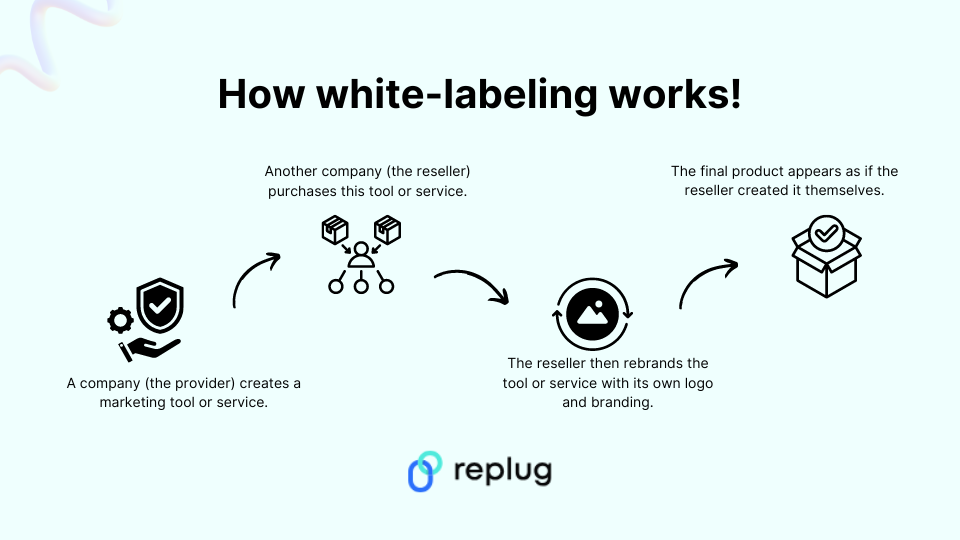
The white label model is pretty simple once broken into stages. A white label products manufacturer builds the product. Another business “rents” that product, adds its own brand and offer, then sells it to customers. Here is how that flow usually looks.
1. Manufacturing
A specialist company produces a generic product or service at scale. That might be collagen powder, face cream, or a SaaS tool such as playout software, link management, or a white label website builder. Their focus is quality, safety, and reliable output, not branding.
2. Purchase
A reseller decides to add this item to its catalog. It buys units in bulk, signs a license, or pays a monthly fee for digital white label products. Sometimes this happens through wholesale deals, sometimes through a simple online dashboard.
3. Customization
Next comes the branding step. The reseller adds its unique logo, brand colors, and packaging. With software that can include a custom domain, white-label products website, emails, and client reports that look fully “in-house.”
This approach is especially valuable for businesses such as a healthcare marketing agency, which can present third-party tools and services as part of a seamless branded experience for clients.
4. Sale
Now the reseller markets and sells the product under its own name. It sets pricing, manages customer support, and runs campaigns. In some cases, a dropshipping or white label products dropship model means the manufacturer ships directly to the buyer while staying invisible.
Step-by-step guide to create white label products
Launching a white label line is less about luck and more about clear steps. Whether it is a supplement, a hoodie, or a SaaS dashboard, the setup path is almost similar.
1. Identify a niche and research demand
Start with a clear niche. Look at search data, marketplaces, and social trends to see what shoppers already buy and where gaps exist. Aim for products people buy more than once, like skincare or marketing tools.
Useful data sources include:
- Search volumes and keyword trends
- Marketplace best-seller lists and reviews
- Social media comments and community discussions in your niche
2. Find a white label manufacturer
Search for a white label products manufacturer that already makes what you want to sell. Compare quality standards, certifications, and minimum order sizes. For software, check the product’s maturity and whether it includes embedded integration options or APIs that fit your tech stack.
3. Request and test samples
Never skip samples. Order several units from your shortlist and test them the way a real customer would. For digital tools, this means running campaigns, checking analytics, and seeing how the platform holds up under daily use. Take notes on packaging, instructions, and any support you receive.
4. Negotiate terms
Once you pick a partner, talk through pricing, order sizes, support, and exclusivity. Ask how costs change at higher volumes and what happens if you pause or scale down. With SaaS, ask about user limits, white label support, and roadmap plans, so you know the product will keep improving.
5. Customize branding and packaging
Now make the product feel like part of your brand. Define your name, logo usage, colors, and tone of voice across labels, inserts, and your white label products website. For software, match the dashboard to your existing website design and development style so the experience feels seamless.
6. Handle legalities
Check that your partner follows local rules and regulations for that category, especially for food, supplements, cosmetics, CBD, or health tools like white label telemedicine platforms. Make sure the contracts cover data privacy, returns, and ownership of content. If needed, involve a lawyer to review key documents.
Organizations that collect customer information across websites or digital services can also benefit from implementing a consent management platform to document user permissions and support privacy compliance.
7. Set up logistics and fulfillment
Plan how products move from the warehouse to the customer. Decide between in-house shipping, third-party logistics, or dropship from the factory. For SaaS, map out onboarding, billing, and how clients get support under your brand, including clear reporting paths to the underlying provider if something fails.
8. Launch and market the product
Create launch campaigns, content, and ads that speak to your target buyer. Use email, social, and paid search to send traffic to your product pages. Track results so you can double down on winners and quietly drop poor performers. Simple dashboards that monitor sales, returns, and reviews are especially helpful here.
Best white label products to sell online in 2026

Health, beauty, sustainability, and remote work still drive a lot of spending in 2026. Think of this section as a focused white label products list built around those trends.
Collagen powders
Collagen supports skin and joint health, and many shoppers now mix it into coffee or smoothies. White label collagen powders are a perfect fit for beauty, fitness, and wellness brands. However, make sure your supplier can provide clean sourcing and lab test results.
Supplements & vitamins
From multivitamins to magnesium, supplements stay in demand year-round. A strong label design and clear dosing guide help your bottles stand out on crowded shelves. Seek partners that follow good manufacturing practices and provide certificates of analysis.
Functional beverages
Think energy drinks with clean ingredients, focus shots, or sleep-support drinks. These fit well as white label products wholesale for gyms, studios, and online shops. Taste, sugar content, and branding all matter a lot here.
Skincare serums
Serums for hydration, brightening, or anti-aging are high-margin and gift-friendly, and the broader white label cosmetics market is projected to expand significantly through 2030, making this a well-timed category to enter. Customers care about ingredients, so list key actives and benefits in simple language. Great photos and honest claims can move plenty of units.
Face creams
Daily moisturizers and night creams keep buyers coming back after a short span. Offer formulas for dry, oily, and sensitive skin so people can pick their ideal match. Matching scent, texture, and packaging gives the line a polished feel.
Eco-friendly packaged cosmetics
Shoppers notice packaging almost as much as the original formula. Try refillable cases, glass jars, or recycled cardboard for outer boxes. Position your brand around minimal waste rather than only low prices.
Branded t-shirts & hoodies
Tees and hoodies are classics for creators, brands, and agencies. With print-on-demand platforms like Printful, you can test designs without holding inventory and create products such as custom embroidered hoodies without upfront manufacturing costs. Strong, simple designs often sell better than loud graphics.
Reusable water bottles
Steel and BPA-free plastic bottles fit wellness, sports, and corporate gifting. Add your logo and maybe a small message or graphic. White label bottles also pair well with fitness apps or wellness SaaS as merch.
Sustainable cleaning products
Plant-based sprays, soaps, and concentrates attract eco-conscious families. Concentrates ship lighter, which cuts shipping costs and waste. Clear labels and safe-for-home messaging work well in this space.
Custom apparel
Beyond basics, think leggings, sports bras, caps, or workwear. Brands can use platforms like Printify to create and sell custom clothing with unique designs, premium materials, and personalized styles without managing large inventories. Custom cuts and fabrics can set your brand apart, even if you start from a white label base. Offer limited drops to test styles before going deep on stock.
Tote bags
Totes work as both products and walking ads. They fit bookstores, coffee shops, agencies, and SaaS companies that attend events. Look for sturdy stitching and comfortable straps so people actually use them daily.
Air purifiers
People care very much about indoor air quality in homes and offices. Compact, sound-free (quiet) purifiers are easier to ship and store. Good filters, safety marks, and a clean design all help with trust.
Organic pet food
Pet owners treat pets like family and spend accordingly. Organic or limited-ingredient recipes speak to that concern. Be sure the labels match local pet food rules to avoid regulatory trouble.
Massage guns
Nowadays, massage guns have moved from pro athletes’ training rooms to living rooms. A simple set of speeds and heads usually beats complex menus. Strong safety testing and quiet motors are key talking points.
Phone accessories
Cases, grips, and chargers often need to be replaced as you buy a new smartphone. Slim, protective cases with simple designs keep selling year after year. Bundles, such as a case plus a screen protector, can further increase order value.
Blue-light glasses
People still spend long hours in front of screens. Affordable blue-light glasses pair well with productivity brands and coworking spaces. Offer a few frame shapes and sizes instead of dozens of options.
AI-powered tools
White-label AI products, like chatbots, content helpers, or analytics copilots, are perfect for tech and marketing agencies. You resell the tool while branding the dashboard as your own. Clear onboarding and use cases matter more than fancy names.
Web & e-commerce builders
A white label website builder lets agencies sell full sites without writing a single line of code. Clients log in to a portal that looks like their personal product. Add website design and development services on top for higher retainers.
Agency & operational tools
Think project management, reporting dashboards, or playout software for media teams. Agencies can bundle these into retainers as “their” platform. Check that the vendor offers stable uptime and responsive support.
Marketing & CRM
White label marketing tools and CRM tools or platforms help agencies centralize campaigns, contacts, and reports. You keep full brand control while the vendor maintains the tech. Replug, for example, lets agencies resell branded link management as if it were their own tool.
Popular white label products examples
Seeing white label products in the wild makes the model feel real. Here are simple examples across physical goods and software.
Organic white label products example
A regional grocery chain offers its own line of organic pasta and sauces. Shoppers see the store logo and trust the price and quality. Behind the scenes, a specialist food producer creates the recipes and fills every jar.
Digital white label products example
A marketing agency wants to add analytics dashboards without building software. It signs up with a platform that allows full rebranding, custom domains, and branded reports. Clients log in and believe they are using the agency’s own tool.
CBD white label products example
A wellness brand sells CBD oils and gummies under its name. A certified CBD manufacturer handles extraction, testing, and bottling. The brand designs labels, creates educational content, and speaks directly with customers.
Software (SaaS) white label products example
A social media agency wants link tracking, retargeting, and bio pages. Instead of hiring a development team, it uses a platform like Replug, applies its logo and domain, and sells access as part of its monthly package. The end client never sees the original provider.
Barber white label products example
A barbershop offers “house” pomade, beard oil, and shampoo on the counter, whereas a cosmetic lab formulates, bottles, and conducts safety tests. The shop chooses scents, label design, and pricing that match its style.
Businesses that use white label products: Common white label product categories
White label products are not just for big-box stores. Many types of companies, from tiny ecommerce brands to global SaaS firms, use them to round out their offers.
Retailers
Old-fashioned stores and online retailers use white label products wholesale to boost margins. Store-brand basics like paper goods, snacks, or cables can be cheaper to source and more profitable to sell. Retailers control placement and promotion, which makes house brands hard to miss.
Skincare & cosmetics brands
New beauty brands often start with white label serums, creams, and masks, a trend supported by the Private Label & Brand global outlook from NIQ. It highlights rising consumer acceptance of private labels across personal care categories. They focus on brand story, social proof, and clear ingredient lists instead of building labs. Spas and salons also create house lines so clients take the brand home.
Supplements & vitamins (health/wellness brands)
Gyms, coaches, and health influencers sell private label or white label supplements. They rely on certified partners for safe formulas and testing. A strong brand voice and educational content help buyers trust what they are ingesting.
Food & beverage brands
From coffee beans to brewed beverages, many food brands start with an experienced co-packer. That partner handles recipes, bottling, and shelf-life testing. The brand wraps the product in its own identity and packaging.
Home goods & tech accessories brands
Home decor shops and gadget brands often source white label blankets, lamps, or phone chargers. They pick styles and finishes that fit their targeted audience. This keeps catalogs fresh without constant product design work.
Clothing & apparel brands
Streetwear labels, creators, and corporate merch teams use blanks from apparel factories. They add prints, embroidery, and custom neck labels. This model keeps design flexible while production stays consistent.
SaaS companies & brands
Tech firms resell white label products such as link management, chat, billing tools, or a design editor (like VistaCreate) instead of building every feature. They might even act as a nearshore outsourcing service company for clients while using white label SaaS behind the scenes. This lets them move faster and stay focused on their main product.
Service companies & brands
Agencies, consultants, and IT firms add white label services like SEO, PPC management, or app maintenance. They may work with a custom software development company or MVP development company behind the curtain. Clients have one main point of contact while several partners handle the work.
Key benefits of white label products
White label products offer much more than a new logo on a box. They can change how fast a company grows and how wide its catalog becomes.
Faster time-to-market
In actuality, product development often takes months or years. However, white label products let you launch in weeks because the base product already exists. This speed helps you catch trends before they fade.
Lower costs
Starting with white label items cuts research, development, and tooling expenses. You usually pay for finished goods or access to a live platform. That frees up a budget for marketing, content, and support.
Expanded product lines
You can quickly add new SKUs or even full categories around a theme. For example, a wellness brand might add teas, supplements, and functional drinks from the same network of white label partners. More offers mean more chances to cross-sell.
Focus on core competencies
Instead of juggling factories or dev teams, you focus on selling and serving customers. Your energy goes into offers, funnels, and content, not lab tests or server tuning. This helps small teams produce outsized results.
Increased revenue potential
Each extra product line creates a new way to earn. Bundles, upsells, and subscriptions become easier when you control more of the catalog. The same audience can buy from you many times a year.
High-quality products
Experienced white label manufacturers live or die by quality. They already have processes, audits, and compliance checks in place. By picking the right partners, even a young brand can offer products that feel premium.
Common drawbacks of white label products
White label products are powerful, but they aren’t magic. There are real risks to plan around before you go all in.
Copycatting
If many brands use the same base product, packaging can start to look very similar. That makes it challenging to stand out and may cause legal trouble if designs are too close to a major brand. Aim for clear, original branding and honest messaging, and avoid imitating famous labels.
Monopsony
In some categories, one giant buyer controls most orders from a factory. Smaller brands might get worse pricing or lower priority. It is wise to avoid suppliers that depend too heavily on a single massive client and to ask directly how they handle smaller accounts.
Barriers to entry
Certain products need high minimum orders or strict licenses. That can keep newer entrepreneurs out or tie up too much cash in stock. Software can have barriers too, like steep monthly minimums for white label access. Start with categories that match your budget and experience.
Quality control
You trust another company with your reputation every time a product ships. Without regular checks, quality can be compromised over time. Ask for updated certificates, monitor reviews, and order sample runs now and then so you catch problems early.
Market saturation
If everyone jumps into the same hot niche, margins shrink fast. Think of fidget spinners or certain trendy supplements. Data and real research help you look past short-term trends and toward steady, long-term demand.
Dependence on suppliers
Relying on one partner for key products is risky. Factory shutdowns, price hikes, or policy changes can hurt your brand overnight. Having backup suppliers or backup software options adds safety.
Common use cases of white label products
Because the model is so flexible, there are many ways to apply it. Here are common white label use cases across industries.
SaaS & software
Agencies, B2B platforms, and resellers use white label SaaS to add features without coding them individually. Think link management, analytics, chat, or billing tools. The interface carries your logo while the vendor runs the code.
App development
Some firms resell app builders or template-based app systems under their brand. Instead of coding from scratch, they configure modules and publish on app stores. This works well for local businesses that want simple apps fast.
Marketing & services
Agencies expand offers by partnering with white label SEO, ads, or content teams. The client sees one agency brand and one invoice. Behind the scenes, several specialists share the workload.
Retail & e-commerce
Online stores and marketplaces bundle white label products into themed collections. Dropship options keep inventory risk low while you test demand. If a product proves strong, you can move to deeper wholesale deals.
Finance & payments
Banks, fintechs, and retailers use white label card issuing, wallets, and payment gateways. A large financial partner handles risk checks and processing. The brand focuses on rewards, app design, and support.
Beauty & skincare
Salons, spas, and influencers sell branded skincare that starts as white label stock. They may adjust the scent, packaging, or a few ingredients. Educational content and routines help these lines feel trusted.
Health & wellness
White label telemedicine platforms, coaching apps, and wearables allow clinics and coaches to offer digital care. Supplements and devices can be included alongside services in packages. This blend of physical and digital products can drive higher lifetime value.
Food & beverage
Cafes might sell their own beans, while bars sell house mixers. In many cases, a roaster or beverage co-packer produces the goods. The venue adds the story and experience around each item.
White label vs. private label products: What’s the difference?
White label and private label products sound similar, but they serve slightly different goals. Knowing the difference helps you choose the right path for your brand.
| Point | White label products | Private label products |
| Definition | Standard product or software sold to many brands that rebrand it as their own. | Product made for a single brand with custom specs or recipes. |
| Pros | Fast launch, lower cost, less product development work, and easy to test markets. | Stronger product control, harder for rivals to copy, deep brand fit. |
| Cons | Less control over formula or features, more direct competitors, and harder to stand out. | Higher setup costs, longer timelines, and deeper commitment to a single product. |
| Example | A link management platform like Replug, offered as a white label service to agencies. | A supermarket’s house coffee line, roasted only for that chain. |
| When to choose | You want speed, lower risk, and a broad catalog that can change often. | You want strong product control and plan to back one line for years. |
| Best for | Agencies, SaaS resellers, and e-commerce brands testing new categories. | Larger retailers and brands with clear long-term product plans. |
Related: White label vs Private label: Which to choose?
How to choose the perfect white-label product: Common mistakes to avoid!
Picking the right product matters more than picking a fancy logo. Here is how to make a smart choice and avoid painful surprises.
Validate demand
Look for real proof that people already buy similar items. Check search data, marketplace rankings, and reviews instead of guessing. Talk with existing customers to see what they wish they could buy from you.
You can:
- Review current customer emails and support tickets for product ideas
- Compare price points and review counts of competing products
- Check seasonality so you know when demand rises or dips
Order samples
Never rely on photos or spec sheets alone. Order and use samples the way your customers would. Share them with a few trusted people and gather honest feedback.
Check supplier reliability
Research your supplier’s track record for on-time shipping and handling issues. Ask about backup factories, support channels, and how they deal with recalls. For SaaS, review uptime history and support response times.
Identify niche gaps
Instead of copying top sellers exactly, look for small gaps or angles. That might be flavor, size, bundle, or a slightly different audience. A clear reason to exist helps a new product get traction.
Focus on branding
Even with the same base formula, branding makes a huge difference. Invest in names, visuals, and copy that speak clearly to your market. Think about how the product fits your wider brand story.
Now, checkout the common mistakes to avoid when picking white label products:
Price-driven selection
Choosing the cheapest offer often leads to thin margins and poor quality. Buyers notice fragile items and will not return. Aim for solid value, not the lowest quote.
Ignoring compliance
Skipping safety and legal checks can trigger fines or bans. This risk is high with supplements, CBD, kids’ items, and anything health-related. Work only with partners who understand and follow local rules.
Neglecting hidden costs
Look past the base unit price. Add shipping, packaging, storage, payment fees, and returns. Only then can you see your true margin and decide whether a product makes sense.
Product complexity
Extremely complex devices or multi-part kits can cause support headaches. Returns and broken parts eat profit quickly. Starting with simpler products keeps operations smoother.
Poor packaging design
Even great products can sit unsold in dull or confusing packaging. Use clear names, readable fonts, and honest claims. Match packaging to the price point so buyers feel confident.
Get the perfect white label solution for your business or agency with Replug!
For agencies, SaaS resellers, and brands that live online, links are everywhere. Every ad, social post, and email depends on them. This is where a strong white label solution for link management can quietly support your whole business.
Replug.io is an all-in-one link management and tracking platform that you can fully brand as your own. You can use your own custom domain, colors, logo, and wording so clients feel they are logging into your product, not a third-party tool.


Inside, you get features such as branded short links, bio-link pages, QR codes, and detailed analytics. Agencies can create campaign reports with their own branding and send them straight to clients.
Because Replug is already built and battle-tested, you avoid the cost and delay of hiring a custom software development company just to track clicks. You focus on selling and running campaigns, while Replug powers the white label engine behind the scenes.
Wrapping up
White label products turn finished goods and mature software into building blocks for brands of any size. Instead of starting from a blank page, you stand on top of tested formulas, code, and supply chains.
When you pick the right niche, vet suppliers, and build clear branding, white label items can widen your catalog, raise margins, and deepen customer loyalty. The model works across supplements, skincare, apparel, pet products, SaaS, and more.
Add in a strong white label tech stack, such as Replug for link management, and you can offer pro-grade tools under your name without long development cycles. Start small, measure carefully, and grow into the categories and channels that prove themselves.
Frequently asked questions
How do you white label a product?
To white label a product, you partner with a manufacturer or provider that offers white label access. Then, you agree on pricing, branding options, and terms, and apply your logo, domain, and packaging. After that, you market and sell the product as part of your own catalog.
What is an example of a white label product?
A simple example is a store-brand shampoo made by a third-party factory. Another example is a marketing agency that resells a white label link management platform like Replug under its own brand. In both cases, the buyer sees only the reseller’s name.
How to find white label products online in 2026?
Use trusted B2B marketplaces, trade sites, and industry directories to search by category. Look for “white label products manufacturer” or “white label products wholesale” plus your niche. For software, search for white label SaaS in areas like CRM, analytics, and link management.
How can I find white label product suppliers?
Start with online directories, trade shows, and referrals from other business owners. Join industry groups where people share supplier experiences. Always shortlist a few partners, then check reviews, request documents, and order samples before you sign anything.
How to tell if a product is white labeled or not?
It is not always obvious from the outside. Many store and house brands are white labeled, especially when the packaging looks simple and generic. Inside software, clues include “powered by” notes, shared layouts across different brands, or the option to add custom domains.
What are the costs involved in white labeling products?
Costs usually include product or license fees, packaging, shipping, and any setup charges. For physical goods, add storage, returns, and product photos. For SaaS, factor in user seats, branding fees, and any add-ons you want to resell.
How to start your own white label products brand or business?
Choose a clear niche, research demand, and list possible products. Find and vet suppliers, test samples, and decide on pricing and terms. Then build your white label products website, set up payment and shipping, launch your first offers, and refine based on data.
What is white labeling in e-commerce?
In e-commerce, white labeling means selling products made by another company under your own brand in your online store. You focus on storefront design, customer support, and marketing. The manufacturer stays mostly invisible to shoppers.
Is white labeling legal or illegal?
White labeling is legal as long as you obey all relevant laws. That means honest labeling, no trademark or copyright violations, and proper safety and compliance steps for your category. Problems arise only when brands copy designs or hide important information.
Is white labeling profitable?
White labeling can be very profitable when you pick strong products, manage costs, and build a trusted brand. Margins often beat simple reselling because you control pricing and branding. Like any business model, profit depends on research, execution, and ongoing optimization.