Influencer marketing—if you’ve scrolled through social media lately, you’ve probably seen it in action. But what exactly makes this marketing type so powerful? At its essence, influencer marketing revolves around influencers using their established credibility and personal connections with their followers to promote products or brands.
These influencers aren’t just celebrities; they’re trusted voices who resonate with specific communities. But is influencer marketing worth it? The answer is a resounding yes.
Brands turn to influencer marketing because it’s the ultimate hack for boosting their social media presence and engaging with highly targeted audiences in a genuine and personal way.
Instead of relying on traditional ads that often blend into the background, influencer marketing cuts through the noise, delivering messages that feel more like a trusted recommendation than a sales pitch.
So, why are brands so hooked on influencer marketing? It’s straightforward—this strategy delivers genuine results and creates real trust and strong connections in ways that old-school ads simply can’t match. So, let’s get you started:
Maximize marketing ROI
by transforming ordinary URLs into branded short links that convert.
Try Replug for free
What are the four types of influencers?
Here’s a quick breakdown of the four main types:
Nano-influencers: With a following of 1,000 to 10,000, nano-influencers are highly engaged with their audience.
Micro-influencers: Typically boasting 10,000 to 100,000 followers, micro-influencers focus on specific topics and have a loyal, engaged audience.
Macro-influencers: These influencers have followings ranging from 100,000 to 1 million. They’re usually well-known in their industry and can reach a broader audience, making them great for larger campaigns.
Mega-influencers: With more than 1 million followers, mega-influencers are often celebrities or public figures. Their massive reach makes them ideal for high-profile campaigns, though their engagement rates might be lower compared to smaller influencers. Therefore, when brands find influencers for such campaigns, it’s crucial to balance reach with engagement metrics to ensure campaign effectiveness.
Here are 10 successful influencer marketing campaigns that have set the bar:
1. Puma x Rihanna
Puma partnered with Rihanna to create the Fenty Puma line, utilzing her global influence to reach a fashion-forward audience, resulting in high demand and sold-out collections.
2. Heinz x Morley’s hot sauce
The Heinz x Morley’s Hot Sauce collaboration was a standout influencer marketing campaign, blending Heinz’s global brand power with Morley’s, a beloved UK-based fried chicken chain known for its cult following. Influencers across food, lifestyle, and pop culture shared their experiences trying the new sauce, often featuring spicy challenges or unique pairings, which created a buzz on social media.
3. Gymshark
Gymshark, a top player in fitness apparel e-commerce, has mastered the art of long-term influencer partnerships. Take this Instagram collaboration with bodybuilder David Laid and Gymshark as an example.
The stylish photos and a straightforward caption announcing the collection’s release date have already racked up over 250k likes and continue to grow.
Go beyond generic link pages!
Create custom bio links that truly fit your brand
With Replug, you can create bio links that are unique, engaging, and built to convert.
Starbucks leveraged the seasonal hype around its Pumpkin Spice Latte to create a viral TikTok challenge. Micro-influencers were encouraged to share their unique PSL experiences using specific hashtags and filters.
5. Gucci X Adidas
The “Adidas x Gucci” partnership represents a bold fusion of sportswear and luxury fashion, blending the iconic aesthetics of both brands into a unique and highly anticipated collection.
This collaboration marries Gucci’s high-fashion heritage with Adidas Originals’ streetwear legacy, creating pieces that feature a mix of both brands’ signature elements—Gucci’s vibrant colors and patterns alongside Adidas’ classic three stripes and Trefoil logo.
The McDonald’s X Travis Scott partnership was a groundbreaking collaboration between the fast-food giant and the popular rapper, marking the first celebrity meal deal since Michael Jordan in 1992.
This collaboration was not only a marketing success, driving significant sales and social media buzz, but it also tapped into Scott’s massive fanbase, blending pop culture with fast food in a way that resonated deeply with younger audiences.
7. ASOS (#AsSeenOnMe)
ASOS appeals to a diverse range of shoppers of all ages, sizes, and backgrounds due to its strong commitment to inclusivity.
The brand’s Instagram influencer marketing strategy is centered on its Insider influencer program, where ASOS collaborates with 29 influencers, each with unique styles and dedicated communities, ensuring broad and impactful reach.
Top 9 strategies to follow for your next influencer marketing campaign
1. Identify the right influencers
The foundation of any influencer marketing campaign is selecting the right influencers. Your chosen influencers should align with your brand’s values and target audience. Tools like Modash and ContentStudio ( for Instagram, Twitter (X), and YouTube) can assist in identifying influencers who resonate with your brand.
Consider factors such:
Relevance
Reputation
Audience demographics
Engagement rate
Content quality platform suitability
Authenticity
Previous collaborations
Contract terms
Geographic location
Keep in mind that the ideal influencer should know how to pitch to brands as an influencer. He or she must also know how to create different kinds of content. And, of course, be good at using various promotion strategies.
A complete link management solution
for marketing professionals & agencies.
Try Replug for free
2. Focus on authenticity with micro-influencers
Micro-influencers, who have between 5,000 and 100,000 followers, often deliver higher engagement rates due to their close-knit communities. We recommend that influencer collaborations should go beyond campaigns. You should treat influencers well even when the campaign is over.
For example, you can send flowers and gifts to influencers when they celebrate their birthday or any important achievement. You may even send them emails congratulating them on their achievement. The email should portray friendliness and not appear like a typical brand collaboration email sample.
Such a gesture will delight the influencer and the influencer’s fans. And hence, it can cause them to develop more interest in your brand.
3. Choosing the right type of influencer marketing campaign
Picking the right campaign type is like choosing the right outfit for a special occasion. It depends on what you’re trying to achieve. Are you looking to get more people to know about your brand? Want to get more leads? Or maybe you just want to sell more stuff?
Here are some popular options for influencer campaigns:
Live stream: Ask your influencer to host live streams on platforms like Instagram, Facebook, or YouTube to connect with your audience in real-time and offer exclusive content.
Public relations (PR): Generate media coverage and positive public sentiment.
Affiliate marketing: Partner with affiliates to promote your products or services in exchange for a commission.
Video marketing: Create videos to showcase your products or services and engage your audience.
Native advertising: Paid content that matches the form and function of the platform on which it appears.
Once you’ve chosen your influencer, trust them to bring their unique flair to your campaign. Building a friendly, open relationship is key to getting the best results. Share your goals, product details, and the type of content you’re looking for, but give them the space to work their magic.
Remember, you’re in this together, working towards the same goals. Supporting your social influencer in creating standout content can strengthen your influencer partnership and make the collaboration more enjoyable for both sides.
In fact, 77% of influencers are more likely to work with a brand again if they have the freedom to be creative.
5. Set up clear campaign goals
To set up an effective influencer campaign, start by establishing clear goals. Define what you aim to achieve, such as increasing followers on your social media account, driving traffic from the influencer’s bio to your website, or boosting sales through specific links.
Once your objectives are clear, enhance your campaign’s effectiveness by employing bio-link pages. These dynamic mini-websites act as a centralized hub for multiple links, simplifying access for your audience.
How do I create a bio landing page for my influencer marketing campaign?
To create a bio landing page, choose a bio-link tool like Replug, which allows you to design a microsite tailored to promote your brand comprehensively. With Replug, you can incorporate a range of links, including social media profiles, product pages, RSS feed URLs, and other important links, all together.
6. Incentivize and motivate influencers
Influencer collaborations shouldn’t end when the campaign does. Maintain strong relationships by acknowledging their milestones, sending thoughtful gifts, or offering continued collaboration opportunities.
Motivation goes beyond monetary compensation. Offer influencers validation, such as official badges, VIP experiences, or membership opportunities within your brand community.
Recognizing and appreciating their efforts will foster a stronger connection and drive them to deliver even better results for your campaign.
Go beyond generic link pages!
Create custom bio links that truly fit your brand
With Replug, you can create bio links that are unique, engaging, and built to convert.
Timing your campaign strategically can significantly impact its success. Align your influencer marketing efforts with key moments, such as festive periods or trending events, to maximize reach and engagement.
A well-timed campaign can resonate more deeply with your audience and capitalize on their heightened emotions or needs during these periods.
8. Diversify your influencer collaborations
Don’t limit your brand to just one type of influencer. Collaborate with a mix of macro, micro, and nano influencers to reach different audience segments.
Each marketing influencer tier brings unique strengths to your campaign, whether it’s wide-reaching exposure, higher engagement, or a more personal connection with their followers.
9. Regularly measure and optimize campaign performance
Measuring the success of your influencer marketing campaign is like checking the pulse of your strategy. It’s essential to understand what’s working and what’s not so you can refine and enhance your approach.
Start by looking at key metrics like click-through rates (CTR), which tell you how well your content is driving traffic, and revenue per client (RPC), which shows the financial impact of your efforts.
Productivity metrics can reveal how efficiently your campaign is performing, while new initiatives help you gauge how well you’re innovating. If your campaign isn’t hitting the mark, it’s time to make adjustments.
For example, if your links aren’t generating the expected returns, consider using a short URL generator to optimize and track your links. By fine-tuning your approach based on real data, you can continuously improve your campaign’s effectiveness and ensure it delivers the best possible results.
Maximize marketing ROI
by transforming ordinary URLs into branded short links that convert.
Try Replug for free
Additional tips for maximizing your influencer marketing campaigns
Tips for maximizing your influencer marketing campaigns
Use retargeting pixels
Deploy retargeting pixels on your campaign links and re-engage visitors who interact with your brand. This keeps your brand top-of-mind and improves conversion rates by serving targeted ads to potential customers.
Utilize link rotators
Employ a link rotator to manage multiple URLs through a single link. This technique helps in distributing traffic, testing various CTAs, and gaining insights into user behavior, optimizing your campaign’s performance.
Incorporate strong CTAs
Craft clear, compelling calls to action (CTAs) to direct your audience to desired actions, such as visiting your website or making a purchase. Effective CTAs drive engagement and conversions by guiding users to your campaign goals.
By using these strategies, you can maximize the impact of your influencer marketing efforts and achieve better results.
Conclusion
Influencer marketers have a remarkable positioning for any product in the market. With the right approach and the right selection of influencers, they can take your business or brand to the next level.
Settings the company’s goals and objectives ensure the marketing influencer campaign running more fruitful. Partnering with the leader encourages you to be appreciated by the audience and build up the brand standing in the digital market.
FAQs on influencer marketingcampaigns
Who is the biggest influencer in 2026?
The biggest influencer in 2026 is Cristiano Ronaldo, who has a total of 733 million followers.
What are the 3 R’s of influencer marketing?
The 3 R’s of influencer marketing are Reach, Relevance, and Resonance.
What is the ROI of influencer marketing?
The ROI of influencer marketing varies but averages about $5.78 for every dollar spent.
Who was the first influencer?
The first influencer is often considered to be Kevin Systrom, co-founder of Instagram, whose early adopters shaped influencer culture.
What is the average budget for influencer marketing?
The average budget for influencer marketing ranges from $10,000 to $50,000 per campaign, depending on the brand and influencer.
Affiliate marketing is a method that allows content creators to promote products and receive commissions when the audience makes purchases through their referral links.
With a global market value of approximately $17 billion, affiliate marketing is a significant revenue stream for millions of content creators worldwide, whether they’re bloggers, podcasters, Instagrammers, or YouTubers.
It’s also true that some affiliate marketers give up sooner or later because they fail to make any money with affiliate marketing. At the same time, many affiliate marketers make a ton of money with affiliate products.
Are you reading about taking your tiny affiliate marketing business to the next level? If yes, then you better start learning about high-ticket affiliate marketing right now.
What is high-ticket affiliate marketing?
High-ticket affiliate marketing refers to promoting affiliate programs that offer high commission rates such as Replug affiliate program. There are hundreds of thousands of high-ticket affiliate marketing programs on the market that almost anyone who meets the requirements can join. However, the core reason why high-ticket affiliate programs are a big deal is that not everyone gets accepted, at least in most cases.
This doesn’t necessarily mean these affiliate programs are secret or invite-only—they’re out there, but many affiliates are unable to find them.
It’s a common belief that these are the tier-1 affiliate programs that only allow well-known influencers, high-authority blogs, and large-scale publishers to join. However, it’s not always the case. A lot of companies have high-ticket affiliate programs that don’t have strict criteria for affiliates to join their program.
How much does a high-ticket affiliate marketing pay?
A high-ticket affiliate marketing commission can be anywhere between $100 to $2,500 per sale, depending on the product price. However, there may be luxurious products that pay more than that.
Top affiliate marketers, pro-bloggers, and social media influencers make a ton of money through various income streams. Affiliate marketing is surely one of their top income sources. These industry experts usually go for multiple high-ticket affiliate programs to make hundreds of thousands of dollars every month.
At this stage, keeping records of earnings is essential for tax filing and financial tracking. Using a tool like an employee pay stub can help affiliates stay organized
Jacky Chou is one of the popular bloggers in the SEO and affiliate marketing world. He makes a ton of money across different affiliate programs, such as Amazon Associates, and the Mediavine ad network.
23 best high-ticket affiliate marketing programs for beginners
Let us share some of the best high-ticket affiliate marketing programs for beginners to join in and start making money:
1. Replug
An all-in-one tool simplifies link management with shortening, tracking, and optimization features. Here’s what Replug.io offers:
Custom-branded URLs: Shorten links with your brand.
Become a Replug affiliate and access your unique referral link through our dashboard to start earning!
Commission: 30% on every new customer that signs up
Affiliate platform: FirstPromoter
Cookie period: 30 days
A complete link management solution
for marketing professionals & agencies.
Try Replug for free
2. ContentStudio
ContentStudio is a comprehensive platform designed to streamline content and social media management. Easily find and utilize trending content to keep your audience engaged and informed. Then, plan and schedule posts across multiple social media platforms from one place, saving you time and effort.
Besides all that, monitor the performance of your content with detailed analytics to understand what works and refine your strategy for better results.
Become a ContentStudio affiliateand earn a solid recurring commission for every customer you bring on board. The more creative you get in sharing its powers, the bigger your income stream grows.
Commission: 30% on every new customer that signs up
Affiliate platform: FirstPromoter
Cookie period: 30 days
3. Usermaven
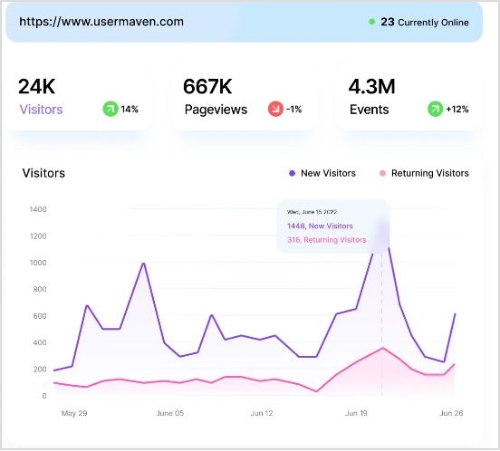
Usermaven is a lightweight, feature-rich, and user-friendly product and web analytics tool. Which helps you turn user behavior into actionable insights to help you increase product adoption and reduce churn.
Here are some of the most prominent features of Usermaven:
Become a Usermaven affiliate and earn 20% recurring commissions for referring to Usermaven’s amazing website and product analytics tool.
Commission: 20% on every new customer that signs up
Affiliate platform: FirstPromoter
Cookie period: 30 days
4. Teachable
Teachable is yet another platform for creating online courses, coaching, and digital goods without relying on any third-party tools. It also has an affiliate program that pays well. If you’re in the online courses or coaching niche, then you might want to check this platform out.
Commission: Up to 30% (for a year)
Affiliate platform: Impact
Cookie period: 30 days
5. Authority Hacker
Authority Hacker is a well-established internet marketing platform that offers a paid course and community around building and growing a website. The Authority Hacker podcast is one of the most popular SEO and digital marketing podcasts in the industry. Above all, they have an attractive affiliate program that pays a hefty commission.
Commission: $1,979 per sale
Affiliate platform: In-house affiliate program
Cookie period: 60 days
6. Shopify
Shopify is a top-tier e-commerce platform used by hundreds of thousands of merchants and retailers across the globe. This e-commerce giant runs a successful, high-ticket affiliate marketing program. It’s a great affiliate program for mentors, entrepreneurs, and experts who teach and advocate the on demand business model.
Commission: $25 to $150
Affiliate platform: Impact
Cookie period: 30 days
Maximize marketing ROI
by transforming ordinary URLs into branded short links that convert.
Try Replug for free
7. BigCommerce
BigCommerce is one of the popular e-commerce platforms for setting up an e-commerce store. This e-commerce business offers a lucrative affiliate program that might interest affiliate marketers creating content around e-commerce niches.
Luxury Card is a reputable brand that issues premium credit cards. These premium-quality credit cards are made of fancy metals. This credit card issuer has one of the highest-paying affiliate programs in the finance industry.
Commission: $405 per sale
Affiliate platform: FlexOffers
Cookie period: 30 days
9. Semrush
Semrush is a leading competitor analysis, keyword research, and website performance tracking tool in the digital marketing space. It’s widely used by content marketers, SEO experts, and pro-bloggers around the world. It offers a high-ticket affiliate marketing program that is worth checking.
Commission: $200 per sale
Affiliate platform: Impact
Cookie period: 120 days
10. Kinsta
Kinsta is a premium managed Web hosting service that offers high performance, reliability, and excellent customer support. It delivers blazing-fast and secure hosting solutions for businesses and developers. Kinsta’s affiliate program is highly rewarding, with competitive commissions and extended cookie duration.
Commission: 5% to 10%
Affiliate platform: In-house
Cookie period: 60 days
11. WP Engine
WP Engine is a high-end managed WordPress hosting provider known for its speed, security, and reliable customer support. It’s a popular choice among SEOs, web developers, and digital marketing agencies looking to scale their WordPress sites.
Commission: Starts from $200
Affiliate platform: ShareASale
Cookie period: 180 days
12. Bluehost
Bluehost is one of the largest and most reliable web hosting companies. It offers a range of services, including shared hosting, WordPress hosting, and VPS hosting. The Bluehost affiliate program is renowned for its high conversion rates and quick payouts.
Commission: 70% for each qualified sale
Affiliate platform: Impact
Cookie period: 30 days
13. Siteground
Siteground is a popular website hosting service used and promoted by bloggers, affiliate marketers, and SEOs. They offer several hosting plans, such as shared, cloud, WordPress, and reseller. Siteground’s affiliate program is one of the best affiliate marketing programs for beginners.
Commission: $50 to $100 per sale
Affiliate platform: In-house
Cookie period: 60 days
14. ActiveCampaign
ActiveCampaign is one of the leading players in the email marketing space. It offers a complete email marketing suite for businesses, agencies, and influencers to set up email campaigns. They have a generous affiliate marketing program for affiliate marketers that promotes email marketing software.
Commission: 20% to 30%
Affiliate platform: In-house
Cookie period: 90 days
15. GetResponse
GetResponse is an email marketing service that caters to medium and large-scale organizations and brands. They offer a bundle of online marketing and engagement tools that include email newsletters, automation, live chat, SMS marketing, push notifications, conversion funnels, and much more. Check out their high-ticket affiliate marketing program.
Commission: 33% (recurring)
Affiliate platform: In-house
Cookie period: 120 days
Drive more clicks, conversions, and app installations by deep linking
to your favorite platforms.
Try deep links for free
16. Wix
Wix is a leading website builder that allows users to create websites, blogs, and e-commerce stores using drag-and-drop tools. It’s popular among small business owners, entrepreneurs, and creative professionals for its ease of use and flexibility. Wix offers an excellent affiliate program with a generous commission rate.
Commission: $100 per sale
Affiliate platform: In-house
Cookie period: 30 days
17. Lasso
Lasso is an affiliate marketing WordPress plugin for bloggers and affiliate marketers to create, manage, and display affiliate product tables and boxes. Bloggers and affiliate marketers promote affiliate products to earn commissions on successful sales. Lasso has a high-ticket affiliate program that pays quite well.
Commission: 20% (recurring)
Affiliate platform: Tapfiliate
Cookie period: 30 days
18. ShareASale
ShareASale is a well-established affiliate marketing network that connects merchants and affiliates. It offers a wide variety of affiliate programs across multiple niches, making it a diversified platform for affiliate marketers.
Commission: $150 per sale
Affiliate platform: In-house
Cookie period: 60 days
19. SellHealth
SellHealth is a key player in the health and wellness affiliate marketing industry. It provides a variety of affiliate programs in the health niche, fitness, skincare, and wellness niches. SellHealth provides access to several health affiliate programs that offer generous commissions.
Thinkific is a popular platform for creating courses, membership sites, and digital products. It has a lucrative affiliate program for digital marketers, bloggers, and affiliates who talk about creating courses, building membership sites, and developing digital products.
Commission: 30% (lifetime)
Affiliate platform: PartnerSnack
Cookie period: 90 days
21. Frontpoint
Frontpoint is a major player in the home security niche, known for its advanced technology, easy installation, and exceptional customer service. It offers comprehensive security solutions for homes and offices. Frontpoint has an attractive affiliate program with a reasonable commission rate.
Commission: $175 per sale
Affiliate platform: In-house
Cookie period: 20 days
22. Empire Flippers
Empire Flippers is a website flipping marketplace that connects domains, websites, and other online real estate buyers and sellers. It’s one of the largest website and domain-buying platforms on the internet. They have a pretty decent affiliate program.
Commission: 20% (of EF’s commission)
Affiliate platform: In-house
Cookie period: 2 years
23. Flippa
Flippa is one of the most popular marketplaces for buying and selling domains, websites, online businesses, software tool companies, and other businesses. Flippa has a lucrative affiliate program that attracts experts in the domains and website flipping space.
Commission: 20% (Referral fee)
Affiliate platform: Partnerstack
Cookie period: 12 months
How to get started with high-ticket affiliate marketing?
The internet is full of tips and tricks on how to get started with affiliate marketing. It boils down to a few basic steps that are as follows:
1. Pick a niche with a noticeable audience
Start by picking a niche you know about or you’re interested in. It’s so important to opt for something that fascinates you or you have an experience of doing it.
Entering into an alien territory with no prior experience in the niche might not be a good idea. The reason is that affiliate marketers make money by helping guide readers; they must know what they’re talking about.
So, be cautious while choosing your affiliate marketing or blogging niche, as it’s a stepping stone to building something worthwhile.
2. Choose high-ticket affiliate products
It’s essential to understand the concept of high-ticket affiliate marketing. It doesn’t mean you don’t need to match the product pricing with your audience’s money-spending power.
For instance, you can’t sell private jet rides to mountain bike lovers. On the other hand, that the audience might be interested in buying gear and spare parts for the mountain bike.
Keep in mind that you’re picking the high-ticket items to promote on your blog no matter what niche you’re in. Go through two to three affiliate networks and try to find the best possible affiliate products to promote.
Choosing a great niche and finding the right affiliate products to promote will put you on the right path, but nothing will matter if your content sucks.
Your content, whether it’s articles, videos, or podcasts, must be top-notch so that it becomes irresistible for the audience. Try to deliver as much value as possible to create a connection with readers. In fact, always try to overdeliver value in your content, and it will turn things around for you.
4. Infuse affiliate products where it makes sense
While useful and helpful content creates a hook to keep the audience engaged, it’s also important to add affiliate products to your content to create conversions.
Boost ROI with branded URLs!
Enhance your marketing campaigns by creating shareable, trackable, and fully multi-purpose
customizable branded URLs.
We recommend using URL shorteners to create clean, clickable links for your affiliate products. Replug is a great option for this—try it for free and track your link clicks!
You’ll notice increased clicks and conversions once you start integrating affiliate products through product boxes, in-text links, and banners. It all comes together when your strategy is on point.
Keeping tabs on your affiliate links is key to boosting your earnings. By tracking how your links perform, you can see what’s working and make adjustments where needed. Replug makes this super simple, letting you shorten links efficiently and get insights on clicks and engagement. It’s like having a cheat code for your affiliate strategy. Use it to stay on top of things, and watch those commissions start rolling in!
Top 4 benefits of high-ticket affiliate marketing
The high-ticket affiliate products bring higher commissions. Therefore, the affiliate marketer earns more with high-ticket affiliate marketing.
One doesn’t have to make a ton of sales to make a handsome amount. A few high-ticket sales would do the job.
The high-ticket affiliate niches usually have high PPC and CPM rates, which means one can earn extra income with display ads, such as AdSense or Ezoic.
There is always less competition in such niches because most bloggers can’t find high-ticket products to promote, or most affiliate marketers run after the low to mid-range but popular products.
However, remember that most affiliate marketers find it tiresome to hunt for high-ticket affiliate products, not to mention create high-quality affiliate content for the audience.
What are the high-ticket affiliate items?
Let us share a list of several high-ticket affiliate items that could turn things around for you. In fact, these affiliate products might as well give you some idea on picking a profitable niche for affiliate marketing. Here we go:
Life/Car Insurance
Mortgage
Legal advice/lawyers
Personal Finance
SAAS products
Credit cards
Gardening
Automotive
Online courses
E-commerce
Web hosting
Travel
Car rentals
Hotels and restaurants
Lifestyle
Fashion
Home n decor
A complete link management solution
for marketing professionals & agencies.
Try Replug for free
What is the future of affiliate marketing?
Affiliate marketing has been a well-paid monetization strategy for bloggers, affiliate marketers, influencers, and YouTubers.
However, every affiliate marketer has a different approach to earning money with affiliate marketing. While some use email marketing to generate traffic, a lot of them stick to SEO, whereas others pivot toward social media traffic.
All of them have a common goal: to bring people on board, engage them with content, and push them to purchase the affiliate product via an affiliate link.
The reason why a lot of people are skeptical about the future of affiliate marketing is that Google seems to be targeting most content websites regardless of their quality unless they’re a huge publication like Forbes, Entrepreneur, Vice, or Huffington Post, etc.
Therefore, doubts are arising in the minds of bloggers and affiliate marketers who believe that bread and better are tied to SEO and affiliate marketing.
Some bloggers and affiliate marketers believe adding multiple traffic sources, such as social, email, and paid ads, is the way forward. However, the majority of internet marketers, bloggers, YouTubers, and social media influencers are still trying to maneuver and make something happen through SEO.
FAQs about high-ticket affiliate marketing
Let’s shed some light on the commonly asked questions about high-ticket affiliate marketing:
Which is better, high-ticket affiliate marketing vs. low-affiliation programs?
High-ticket affiliate marketing is way better than low-ticket affiliate programs, hands-down, unless you don’t know what you’re doing. However, there are no guarantees for every affiliate marketer who chooses high-ticket affiliate products to win at this. It all comes down to experience, exposure, and talent.
What is a high ticket affiliate marketing salary?
It’s hard to predict a salary in any type of affiliate marketing because there are various factors involved. But as far as the commission rates for high-ticket affiliate marketing are concerned, they can be anywhere between $200 to $2,000 per sale. Using a paystubs generator can help affiliates easily track and organize their earnings.
What is an example of high-ticket affiliate marketing?
There are various examples of high-ticket affiliate marketing programs mentioned earlier in the article, such as Replug, Authority Hackers, Thinkable, Teachable, Semrush, and others.
What are the 5 most popular high-ticket affiliate marketing programs?
The five most popular high-ticket affiliate marketing programs include Lasso, ShareaSale, SellHealth, Empire Flippers, and Flippa. However, there are several others mentioned earlier in the article.
E-commerce marketing refers to the strategies and tactics used to drive traffic to your online store, convert that traffic into paying customers, and retain those customers post-purchase. As customer expectations evolve, brands are increasingly adopting an AI agent for e-commerce shopping to deliver personalized product recommendations, automate customer interactions, and guide users through real-time purchasing decisions, improving both engagement and conversion rates.
E-commerce growth is on the rise across the globe and will continue to grow over the next few years.
There are over 2.77 billion online shoppers worldwide that have opened the e-commerce gateway wide open not just for themselves, but also for manufacturers, retailers, and marketers.
It’s no surprise that e-commerce marketing is crucial to putting an e-commerce business on a success trajectory.
When did e-commerce take off?
E-commerce started in 1982 with the launch of Boston Computer Exchange, an online marketplace for individuals to buy and sell used computers.
Things started to change in the global e-commerce landscape in the 1990s. E-commerce companies like Amazon and eBay emerged, significantly shaping the e-commerce landscape we recognize today.
In May 1989, Sequoia Data Corp. introduced Compumarket, marking the inception of the first internet-based system for e-commerce. This platform allowed sellers to list their items and buyers to search the database and make purchases using credit cards.
E-commerce became accessible for small and medium-sized businesses with the inception of the web in the 1990s. Tim Berners-Lee developed the first web browser, WorldWideWeb, on a NeXT computer, further propelling the growth of e-commerce.
Additionally, innovations like software for estimation and costing allowed businesses to streamline their operations, making it easier to manage pricing and project calculations within the e-commerce infrastructure.
Shopping on-line online store on website mobile application 3d rendering
E-commerce marketing refers to the strategy built and implemented by e-commerce businesses to attract, engage, and convert the audience by utilizing multiple channels, such as social media content, paid ads, and influencer marketing.
The goal is to engage as many people as possible through email, social, and paid ads and make your e-commerce brand get noticed by the audience.
E-commerce marketing is putting your e-commerce brand out there, attracting new eyeballs, building connections, and improving ROI along the way.
The upside of running a successful e-commerce marketing campaign is that the e-commerce store doesn’t only generate sales but also builds brand awareness among the masses.
Marketing is as important for an e-commerce brand as it is for any other type of business. Digital marketing doesn’t only provide sales opportunities to brands, but it also opens a portal to showcase creativity through content, copy, ad designs, etc.
The concept behind e-commerce marketing is to put forth the products in front of the audience for engagement, establish brand positioning, and improve conversion eventually.
As consumer expectations evolve rapidly, successful marketing today is about delivering the right message to the right person at the perfect moment. This is where AI in e-commerce becomes a game-changer helping brands unlock predictive insights, create hyper-personalized campaigns, and automate repetitive tasks to stay ahead in a crowded digital space.
The reason why e-commerce marketing is emphasized enough by industry experts is that we’re living through a busy, noisy time where users’ attention spans have been significantly squeezed. The aim is to explore every alternate channel that pops up in the market and plays an anchor role in finding untapped marketing opportunities.
Let’s discuss the 5 C’s of e-commerce marketing that are worth analyzing:
1. Company
The first ‘C’ indicates the company itself. It involves building a brand identity by establishing a recognizable business name and crafting a crystal clear business profile that outlines who you are, what you do, and where you’re based.
It’s essential to dig deep into the fundamentals (to analyze your company) to pinpoint your competitive advantages, which describe brand strength, capability, and efficiency. Customers need to see that your company has a sustainable edge over competitors.
2. Context
Marketing isn’t completed without infusing psychology into the sales tactics. Understanding the context revolves around knowing your customers’ desires, purchasing motivations, and actions.
The idea is to provide experiences that fulfill their emotional and practical needs. Grasping consumer behavior–what they want, why they need it, when and where they prefer to buy–is crucial to winning in this business model.
E-commerce marketing is all about addressing the aspects of products that are a game-changer for the audience, but it won’t be possible without knowing the context inside-out.
Note: To streamline tracking, branding, and optimization of all your store’s promo links, many e-commerce marketers turn to Replug.io, so every campaign link looks professional and performs reliably.
3. Competition
Competition can both challenge and opportunity for businesses. By paying close attention to competition, one can understand what customers want and identify their unique advantages.
Generally, competition in the e-commerce market can be intense, but it also offers opportunities to refine your strategies and surpass rivals. This is where new e-commerce marketing ideas are born. Understanding whether Shopify or Amazon is the right fit for your business can also inform your competitive strategy.
4. Consumer
Consumers are the center of attention in any marketing strategy – e-commerce marketing is no different. It’s crucial to understand their needs, requirements, and expectations to make a difference.
What do customers want? They want the best products and services at competitive prices.
One of the e-commerce marketing strategies brands can adopt is to expand their reach, engagement, and customer base by actively engaging on social media platforms where their target audience shows up or building marketing strategies that attract potential customers, for instance, a lot of brands use YouTube or Instagram to announce their giveaways.
5. Collaboration
E-commerce marketing and collaborations go hand-in-hand. Brands collaborate with influencers and industry experts to pick their brains and provide value to the audience.
Undoubtedly, collaborations are essential for reaching new audiences across all social media platforms. Partnering with social media influencers or top industry experts can expose your brand to their followers as well.
What are the 7 P’s of marketing in e-commerce?
Here are the 7 P’s of marketing that are crucial in e-commerce:
1. Product
The product is the fundamental element of these 7 P’s of marketing. If there is no product, then there is nothing to market. So, start by choosing your product to market. Usually, product selection isn’t an issue for companies because they always have a product or service to sell.
2. Price
The next important section of the 7’s of marketing is the price. It’s something that customers always check before they go ahead and add a product to the shopping cart. An e-commerce store must be aware of the similar product prices on the competitors’ sites. Moreover, sometimes companies use discount offers to attract customers and get their attention – it mostly works.
3. Promotion
Promotion is yet another important element of the 7’s of marketing. It’s related to the process of communicating with potential customers through different channels. The purpose of the promotion is to ensure that the offer is seen by the prospective audience.
4. Place
Place refers to the real estate where the brand can reach out to the audience and connect with the prospects. It’s the distribution channels where the action occurs; it could be the online store, a physical store, or the social media page.
5. People
Companies aren’t just fancy offices where employees work — people behind those walls are the company. People matter, whether employees, customers, or other stakeholders in the organization. Understanding and valuing the human factor plays a vital role in succeeding marketing campaigns. For distributed teams, this also means having visibility into how people work, which is where remote employee software comes in, helping organizations understand productivity patterns, support performance, and make people-centric decisions backed by real data.
6. Packaging
Packaging refers to the branding and outlook of the brand. One must ensure that the physical appearance of the products aligns with the image created by the brand or the perception is given to the end-users.
7. Process
The process is an essential part of the 7P’s of marketing as it covers areas like logistics, delivery of the product/service, and correspondence with the customers. Streamline the processes as smoothly as possible for the customers. Companies that invest in process efficiency see significant improvements in customer satisfaction and operational costs while maintaining high service standards. This includes implementing tools and techniques that increase team productivity, leading to faster, more efficient service. To further enhance your e-commerce operations, it is essential to optimize your delivery routes effectively.
Boost your conversion rates with irresistable CTAs with
The most common e-commerce marketing channels and key tips
Ecommerce marketing plays a huge role in improving conversion rates, and tons of marketing channels can be used to promote ecommerce businesses.
A good way to keep your store’s links clean, memorable, and shareable, whether for social, email or ads, is to use a reliable link shortener before publishing or distributing them.
Let’s shed some light on the e-commerce marketing channels that are relevant these days:
1. Social media
Social media marketing, complemented by emerging technologies such as voice AI generators, turns out to be the most effective marketing channel for e-commerce businesses. By incorporating interactive and engaging voice-driven content, e-commerce companies are not only building an audience across all social platforms but also significantly enhancing user engagement, leading to deeper community connections.
Businesses often explore custom AI solutions to tailor these experiences to their specific audiences, enabling more personalized interactions and data-driven marketing strategies.
Social media platforms are powerful tools for reaching and engaging with your audience. Key tips include:
Platform selection: Choose platforms where your audience is most active, such as Facebook, Instagram, or Pinterest.
Content strategy: Share a mix of product promotions, user-generated content, and behind-the-scenes looks.
Paid advertising: Use targeted ads to reach potential customers and retarget those who have interacted with your brand.
Influencer marketing: Partner with influencers to expand your reach and build credibility.
The ROI of social media marketing is fascinating if it’s done right. No wonder every major e-commerce is trying to hop on every mainstream social media platform like Facebook, Twitter, LinkedIn, Pinterest, Instagram, and TikTok.
E-commerce brands squeeze every bit of opportunity they get on the internet to put their brand out there and increase e-commerce sales.
Paid advertising can help you quickly reach a larger audience and drive traffic to your store. Common paid advertising tips include:
Google ads: Use different types, including search ads, display ads, or shopping ads, to reach potential customers.
Social Media ads: Run targeted ads on platforms like Facebook, Instagram, or LinkedIn.
Retargeting ads: Re-engage visitors who have left your site without making a purchase.
Affiliate marketing: Partner with affiliates who promote your products in exchange for a commission on sales.
3. Email marketing
Email marketing refers to the marketing done through email newsletters. E-commerce companies are big on email marketing. They use email marketing to upsell, retarget, and promote new offers.
Email marketing remains one of the most effective channels for driving sales and building customer loyalty. With the right balance of generative AI use, you can circle this channel efficiently.
Segmentation: Divide your email list into segments based on customer behavior, demographics, or purchase history.
Personalization: Use customer data to personalize email content, such as product recommendations and special offers.
Automation: Set up automated email sequences for abandoned carts, welcome series, and post-purchase follow-ups.
Promotional campaigns: Run seasonal promotions, flash sales, or special discounts to drive conversions.
4. Search engine optimization (SEO)
SEO is crucial for eCommerce businesses to improve their visibility in search engine results. For smaller brands that may not have dedicated teams, partnering with trusted seo companies for small business can be an effective way to handle technical optimization, keyword research, and content strategy. Key SEO tips include:
Keyword research: Identify relevant keywords your potential customers are searching for.
On-page optimization: Optimize product pages, meta descriptions, and headlines with targeted keywords.
Technical SEO: Improve site speed, mobile responsiveness, and ensure proper indexing.
Content marketing: Create valuable content that drives organic traffic and builds brand authority.
Drive more clicks, conversions, and app installations by deep linking
to your favorite platforms.
Try deep links for free
5. Content marketing
Content marketing is yet another marketing channel that businesses, individuals, influencers, and entrepreneurs use to spread the word about their expertise, products, and offers.
Content marketing is a marketing strategy that allows marketers to use content, such as articles, videos, podcasts, and images to market their product or service.
Blogging: Write blog posts that address customer pain points and provide solutions.
Product guides: Create detailed guides that showcase how your products solve specific problems.
Video marketing: Use AI videos to demonstrate product features, share customer testimonials, or provide tutorials.
Infographics: Visual content that simplifies complex information, making it easier to understand and share.
6. Influencer marketing
Influencer marketing has become extremely popular among millenials and Gen Z popular. We won’t be surprised if these generations are more crazy about top YouTubers and TikTokers than A-list Hollywood celebs.
When considering influencer collaborations, partnering with a premium marketing agency can elevate your brand’s reach and credibility.
This opens a doorway of marketing opportunities for e-commerce companies to collaborate with content creators and social media influencers and market their products. Key tips include:
Partnerships with influencers: Collaborate with influencers who have a relevant audience that matches your target market.
Content creation: Work with influencers to develop authentic content, such as reviews, tutorials, or lifestyle posts, that naturally features your products.
Audience engagement: Utilize the influencer’s platform to engage with their followers, increasing brand visibility and trust among potential customers.
Affiliate marketing is a highly effective eCommerce marketing strategy where businesses partner with affiliates who promote their products in exchange for a commission on sales or leads generated. This strategy leverages the influence and reach of affiliates to drive traffic, increase sales, and expand the brand’s visibility with minimal upfront costs.
Key affiliate marketing tips include:
Identify the right affiliates: Choose affiliates who align with your brand and have a following that matches your target audience.
Offer competitive incentives: Attract high-performing affiliates by offering competitive commissions and bonuses for top performers.
Monitor and optimize: Regularly review affiliate performance data to identify top performers and areas for improvement. Optimize your strategy based on these insights.
Let’s take a quick look at some of the best e-commerce marketing strategies you can apply to any e-commerce business whatsoever:
Create content consistently, so that your brand stays relevant regardless of the platform. Choose whatever is working for you whether it’s the blog, social, or email – just double down on what brings in the dollars.
Keep experimenting with your social media content by changing style, format, and approach. Everyone loves the newness and change. Stick with your branding, but keep bringing new flavors to the table.
Use every social media feature available at your disposal on your chosen social media platforms, such as Stories, Live streams, Shorts/Reels, etc. There is a reason why influencers try out every new tool that comes out on any social media platform.
Establish a powerful, synchronized email marketing system that keeps new customers, cart abandoners, and existing customers all in the loop.
Test out new marketing strategies for your business, such as e-commerce influencer marketing and affiliate marketing, and see how they work out for you.
Monitor your e-commerce store statistics, especially after making changes in the UI/UX, social media marketing, and content creation.
What are the four major e-commerce business models?
Four main e-commerce business models are worth knowing:
1. Business-to-Consumer (B2C)
B2C is the most common e-commerce business model in which businesses sell products or services directly to consumers. The B2C e-commerce business model examples include online retailers like Amazon and Walmart.
2. Business-to-Business (B2B)
In the B2B model, businesses sell goods or services to other businesses. It typically involves larger transactions and longer sales cycles. The B2B e-commerce business model examples include wholesale suppliers or companies like Alibaba and Grainger. Many B2B companies also enhance their operations by partnering with outsourcing ecommerce providers, who help streamline processes such as customer service, billing, and accounts receivable management.
3. Consumer-to-Consumer (C2C)
The consumer-to-consumer (C2C is also known as the peer-to-peer model. It allows consumers to sell products or services to other consumers, with online platforms facilitating these transactions. Examples of this business model are eBay, Craigslist, and other classified ad sites. Vendoo, for example, is an all-in-one software platform for online resellers that streamlines sales and inventory management across multiple marketplaces, including eBay (for which it includes an eBay fee calculator), Poshmark, Etsy, Mercari, and Facebook Marketplace.
4. Consumer-to-Business (C2B)
Consumer-to-business is a lesser-known e-commerce business model in which individuals sell products or offer services to businesses. The prime examples of this business model are platforms like Freelancer, Upwork, and Fiverr where freelancers provide services to businesses.
Each of these e-commerce business models caters to different types of consumer segments, offering unique value to the businesses.
A complete link management solution
for marketing professionals & agencies.
Try Replug for free
Top e-commerce platforms
Shopify: Known for its user-friendly interface, Shopify offers a complete eCommerce solution with customizable templates, payment processing, and extensive app integrations.
WooCommerce: A flexible, open-source eCommerce plugin for WordPress, WooCommerce is ideal for businesses looking for customizable options and control over their online store.
Magento (Adobe Commerce): A powerful platform suited for large-scale businesses, Magento offers extensive features, scalability, and customization options.
BigCommerce: A robust eCommerce platform that supports businesses of all sizes, offering built-in features for SEO, multi-channel selling, and analytics. It also offers support for ecommerce AI agents that help automate merchandising, personalization, and operational workflows.
Wix eCommerce: Known for its drag-and-drop website builder, Wix eCommerce is a good option for small to medium-sized businesses looking for an easy-to-use platform.
Squarespace: Popular for its visually appealing templates, Squarespace is a great choice for businesses focused on design and aesthetics.
PrestaShop: An open-source eCommerce solution that offers a high degree of customization, PrestaShop is ideal for businesses with technical expertise.
Salesforce Commerce Cloud: A scalable platform for enterprises, offering personalized experiences, AI-driven insights, and integration with other Salesforce products. Additionally, it leverages cloud services to ensure high availability and enhanced performance for users worldwide.
OpenCart: Another open-source platform, OpenCart is lightweight and easy to manage, with a wide range of extensions available for customization.
Volusion: A cloud-based eCommerce platform designed for small businesses, offering tools for inventory management, payment processing, and analytics.
Major e-commerce marketing challenges in the digital era
Increased competition: The digital landscape is crowded with eCommerce businesses, making it harder to capture and retain customer attention.
Ad fatigue and rising costs: Consumers are bombarded with online ads, leading to ad fatigue, while the cost of digital advertising continues to rise.
Data privacy and security: Balancing personalized marketing with data privacy concerns and compliance with regulations like GDPR is increasingly difficult. Some teams lean on Florida-based cloud provider Atlantic.Net to keep cardholder data environments segmented and well-governed while marketing experiments run on top. Tools like VPNs, 2FA, and encrypted digital vaults help secure platforms and build trust.
Adapting to changing algorithms: Search engines and social media platforms frequently update their algorithms, affecting visibility and reach.
Mobile optimization: With more consumers shopping on mobile devices, ensuring a seamless mobile experience is crucial but challenging.
Customer retention: High customer expectations and numerous options make it tough to build and maintain customer loyalty.
Omnichannel marketing: Coordinating consistent and effective marketing across multiple digital channels requires sophisticated strategy and technology.
Technology integration: Integrating new tools and platforms into existing systems can be complex and costly.
E-commerce seems to be on the rise ever since the Covid-19 pandemic hit the world. With the advances of new e-commerce platforms that have eliminated the barrier to entry in e-commerce to a great extent, it’s not hard to predict the future trends in the e-commerce industry.
It’s expected that the global retail e-commerce sales expected to reach 8 trillion dollars by 2027. It’s a mind-boggling statistic to comprehend.
While there would be challenges for starters and e-commerce store owners would still give up on their e-commerce dreams, it looks like the most exciting time to be alive and build a future in the e-commerce realm.
A complete link management solution
for marketing professionals & agencies.
Try Replug for free
FAQs about e-commerce marketing
What is meant by e-commerce market?
The e-commerce market refers to the online marketplace where businesses and consumers buy and sell goods and services over the internet. It encompasses all online transactions, including retail shopping, digital products, and services.
What are the 4 F’s of digital marketing?
The 4 F’s of digital marketing are:
1. Findable: Making your content easily discoverable through search engines and social media. 2. Focused: Targeting specific audiences with relevant, tailored content. 3. Frictionless: Ensuring a smooth, user-friendly experience across all digital platforms. 4. Followable: Encouraging ongoing engagement and interaction with your brand through social media and other digital channels.
What is B2B2C?
The B2B2C is the extended version of the B2B business model that infuses the idea of not just connecting with the retails, but directly to the customers.
What is C2C marketing?
C2C is a consumer-to-consumer model where consumers trade goods, products, or services using a third-party platform without the involvement of the businesses.
How does ecommerce work?
eCommerce works by enabling businesses to sell products or services online. Customers browse products on a website, add items to their cart, and complete the purchase through an online payment system. The business then processes the order, ships the items, and handles post-purchase support.
What is the best kind of marketing for e-commerce?
There is no right or wrong answer to this question. Many factors come into play when determining the best kind of marketing for an e-commerce business. Those factors include but are not limited to niche, demographics, territories, areas of interest, etc.
For instance, if someone is a furniture store owner who is really into photography, this person can use Instagram to post attractive furniture and home decor photos on Instagram.
So, it comes down to where your audience exists, what your strengths are, and what you’re selling to the audience.
What is the difference between e-commerce marketing vs. e-commerce advertising?
The sole purpose of discussing this sub-topic of e-commerce marketing vs. e-commerce advertising is that both these phrases are interchangeably used in the conversations.
The difference between e-commerce marketing and e-commerce advertising is that e-commerce marketing is more of a zoomed-out version of putting your brand out there for consumers to see. E-commerce marketing is about engagement, a sense of community, and educating the target audience on different levels.
Whereas, e-commerce advertising is more of a hard-core paid marketing strategy where brands spend that hard-earned money on online ads across the internet.
The approach to engagement of both these marketing tactics might be different, but the goal to bring the audience closer to the brand and convince them to an action at some point is common.
You’re creating amazing content every day, but the solid financial rewards just aren’t there. We get it—it’s frustrating to see all that hard work not translating into the income you deserve.
But what if we tell you that you could turn your passion for sharing great products into a reliable income stream?
Yes, you heard us right. Say hello to affiliate marketing, where your genuine recommendations can earn you countless commissions.
In this guide, we’ll cover everything you need to know about affiliate marketing, from the key benefits for brands to marketers. And introduce you to the Replug affiliate program, providing you with a clear, step-by-step process to get started and succeed.
Ready to turn your content into cash? Let’s get you started!
What are affiliate programs?
Affiliate programs are a type of performance-based marketing strategy where businesses reward affiliates (individuals or businesses) for promoting their products or services.
Affiliates typically earn a commission when a customer clicks their unique affiliate link and completes a desired action, such as making a purchase or signing up for a free trial.
These programs offer a wealth of advantages for both businesses and affiliates.
Boost ROI with branded URLs!
Enhance your marketing campaigns by creating shareable, trackable, and fully multi-purpose
customizable branded URLs.
Top perks for content creators, brand managers & influencers etc
Monetization opportunity
Turn your content into cash by promoting affiliate products and earning commissions on sales through your unique links.
Increased organic traffic
Capture email addresses through affiliate links, creating a valuable asset for future marketing campaigns.
Content longevity
Create evergreen content with affiliate links that continue to generate income long after they are published.
Building relationships with brands
Develop long-term partnerships with brands, opening doors to future collaborations and exclusive deals.
Passive income stream
Enjoy the potential for passive income as well-placed affiliate links continue to generate commissions over time.
Top 3 affiliate programs of 2026
1. Replug
Transform your links into powerful marketing tools with Replug’s affiliate program, offering high commissions and excellent support.
Maximize your earnings by promoting a tool that boosts engagement and tracks performance effortlessly.
2. ContentStudio
Earn generous commissions bypromoting ContentStudio, an all-in-one content marketing and social media management platform. Help businesses streamline their content strategy and social media presence while benefiting from a lucrative affiliate program.
Join Usermaven’s affiliate programand capitalize on promoting this top-tier product analytics tool. Earn commissions by helping businesses understand their user behavior and improve their product offerings with comprehensive analytics.
Open your web browser and go to the official website: Replug.io.
Navigate to the bottom of the homepage and look for the “Affiliate Program” link. This is typically found in the footer or under the “Company” or “Partnership” sections.
Or you can also access this link from the resources section of the header menu.
Step 2: Access the affiliate program page
Click on the “Affiliate Program” link. You will be redirected to a page with information about the affiliate program, including benefits, commission rates, and sign-up instructions.
Review the details to ensure the program aligns with your goals and expectations.
Step 3: Register for an Account
On the Affiliate Program page, look for the “Sign Up” or “Join Now” button. Click on it to start the registration process.
You will be prompted to enter your personal details, which typically include your name, email address, and password.
Step 4: Complete the application form
After signing up, you’ll be redirected to the dashboard.
Fill out the application form here with accurate and up-to-date information.
Add in all the necessary information and click “Update”.
Step 5: Access your affiliate dashboard
Explore the dashboard to familiarize yourself with available tools, tracking features, and marketing materials.
Then, add in the payout method.
Step 8: Track your performance
Track your performance through the affiliate dashboard to monitor clicks, conversions, and commissions earned.
Replug will handle payments based on their commission structure. Ensure you have set up your payment details correctly in the affiliate dashboard.
Payments are usually processed on a regular schedule (e.g., monthly). Check the payment terms and conditions for specifics on how and when you will receive your earnings.
Conclusion
Signing up for the Replug affiliate program is a straightforward process that can lead to substantial earnings if you effectively promote their services.
By following the steps outlined in this guide, you’ll be on your way to becoming a Replug affiliate and earning commissions through your promotional efforts.
That wraps up our quick guide for today. If you have any questions or need further assistance, don’t hesitate to reach out. Our customer support team is here to help and will get back to you promptly.
A complete link management solution
for marketing professionals & agencies.
Try Replug for free
FAQs related to affiliate programs
How does the Replug affiliate program work?
The Replug affiliate program allows you to earn commissions by promoting Replug’s link management and engagement tools, such as its top-notch short URL shortener. You share your unique affiliate links, and when users sign up or make a purchase through your link, you earn a commission.
What are the benefits of joining the Replug affiliate program?
As a Replug affiliate, you gain access to high commissions, excellent support, and a platform that helps you maximize your earnings by boosting engagement and tracking performance effectively.
Who can join the Replug affiliate program?
Anyone with an audience, including marketers, content creators, bloggers, and influencers, can join the Replug affiliate program to monetize their content and drive revenue.
How do I sign up for the Replug affiliate program?
Visit the Replug website, navigate to the “Affiliate Program” link, and follow the registration steps. You’ll need to fill out an application form and set up your affiliate dashboard.
Stop losing leads! Create exit-intent popups that convert.
Unsure what they are?
These are pop-ups triggered when a user is about to leave your website. Like
“Wait! Don’t Miss Out on This Exclusive Offer!”
“Leaving So Soon? Get 20% Off Your Next Purchase!”
The last-minute deal or incentive can encourage users to take action, whether it’s making a purchase, signing up for a newsletter, or downloading a resource.
That’s what exit intent pop-ups do.
Wanna know more? Let’s explore this detailed guide together:
What are exit popups & how do they work?
Exit popups, also known as exit-intent popups, are website overlays displayed right before a user appears to be leaving the page.
They use advanced technology to track user behavior and trigger the popup when someone moves their cursor toward the “X” to close the tab or scroll up to the browser bar.
Boost your conversion rates with irresistable CTAs with
Exit popups can be highly effective when used strategically. Studies show they can:
Cut down bounce rates: By offering a last-minute incentive or addressing potential concerns, exit popups can convince visitors to stay and explore further.
Quick conversion boost: Regain the attention of indecisive shoppers and nudge them towards completing a purchase.
Upsell or cross-sell opportunities: Based on a visitor’s browsing behavior, exit-intent popups can suggest complementary products or services. This can increase your average order value and boost overall revenue.
However, poorly designed pop-ups can be intrusive and backfire. The key is to use them thoughtfully and provide a genuine benefit to the user.
Must-do practices for successful exit-intent popups
Headline: Create an attention-grabbing headline that addresses a specific pain point or offers a compelling incentive.
Copy: Keep your message short and sweet, highlighting the benefit or value of your offer.
Catchy visuals: Use appealing visuals, like a shopping cart picture and a discount badge, to make your popup more attractive.
Brand-specific colors: Stick to your brand colors but use a bold color for the CTA button to make it pop.
Set duration: Trigger the popup to appear just as the user is about to leave to catch their attention at the perfect moment.
If you’re looking to simplify your pop-up creation process, opt for a no-code pop-up maker. With no-code tools, you can effortlessly design, customize, and launch pop-ups — no developers or designers needed.
Some exit-intent pop-up examples that caught our eye
Here are some of the most engaging pop-ups that caught our eye so far;
1. ContentStudio
At the forefront is ContentStudio, a premium social media management tool packed with advanced features. In a thoughtful move, the brand offers its users an exclusive AI powered marketing tool. Highlighting the key points in bold catches user attention. Given that the audience largely consists of social media professionals and content creators, this strategy is likely to attract significant interest and engagement.
2. Scarlettos
We came across a fantastic exit intent example from Scarlettos, a shoe store. They remind shoppers about the items still in their cart and offer a 20% discount on their exit popup, but only for first-time buyers.
3. Yesplshealth
Yesplshealth uses a vibrant and eye-catching exit-intent pop-up that offers 10% off on the first purchase for users who provide their email addresses.
4. Stylerunner
Here’s another thoughtful touch: users love freebies. So, alongside offering 10% off in exchange for an email address, you’re giving them a gift they can’t resist.
5. Zendesk
Zendesk’s exit-intent pop-up combines a sleek design with a compelling message. By offering a free trial or demo of its customer service software, Zendesk appeals to the immediate needs of its audience.
6. Le Creuset
Free shipping is another excellent tactic most e-commerce businesses use to capture users’ attention. By offering free shipping, you remove a common barrier to purchase, making it easier for customers to complete their orders and increasing overall conversion rates.
A complete link management solution
for marketing professionals & agencies.
Try Replug for free
05 common benefits of exit-intent popups
Exit-intent popups can be a game-changer for your website.
Here’s a look at how they can help you keep visitors engaged and boost your conversions.
1. Grow your email list
Capture valuable leads by offering something of value (e.g., discount code, free guide) in exchange for an email address.
This can significantly increase your email sign-ups, giving you a larger audience to nurture and convert over time.
2. Promote special offers & events
Got a special promotion or a new product launch? Use exit-intent popups to make sure visitors don’t miss it.
Highlighting special offers or important updates in a popup can drive more engagement and conversions, especially if the offer is time-sensitive.
3. Save abandoned carts
If you run an e-commerce site, abandoned carts are a big deal.
Exit-intent popups can help you recover lost sales by offering a discount or reminding customers of the items they’ve left behind. This gentle reminder can be just what they need to complete their purchase.
Ever wonder why people are leaving your site? Exit-intent popups can ask visitors for feedback just before they go.
A simple question like, “Why are you leaving today?” can provide you with insights into what’s not working on your site and what you can improve.
5. Better user experience
When done right, exit-intent popups can actually improve the user experience.
They provide timely and relevant information just when the visitor is about to leave, making their interaction with your site more engaging and valuable.
A complete link management solution
for marketing professionals & agencies.
Try Replug for free
Some secret exit intent hacks no one told you about
1. Speed up your pop-ups for instant impact
Boost the effectiveness of your pop-ups by ensuring they load quickly and seamlessly. Fast-loading pop-ups grab attention before visitors get distracted, leading to higher engagement and more conversions.
2. Send personalized messages to different user groups
Segment your audience based on the analytics of your pop-up. Then send personalized content that speaks directly to users’ interests and needs, enhancing engagement and fostering stronger connections.
3. Respect visitor preferences with easy opt-outs
Show your visitors you value their choices by providing simple opt-out options for pop-ups and notifications. Easy opt-outs build trust and create a more positive user experience, which can lead to greater loyalty.
4. Prioritize mobile-friendly experiences
Ensure your pop-ups are as effective on mobile devices as they are on desktops. Mobile-friendly designs cater to the growing number of smartphone users, providing a seamless and engaging experience on all screens.
5. Add a strong call to action (CTA)
Guide your visitors toward the desired action with a compelling call to action. A strong exit intent pop-up can drive more sign-ups, downloads, or purchases, enhancing your conversion rates.
6. Match your website’s design
Keep your branding consistent by aligning your pop-ups with your website’s design. Matching fonts, colors, and styles creates a cohesive user experience, making your pop-ups feel like a natural part of your site.
7. Test and learn with A/B testing
A/B testing different pop-up designs, messages, and triggers allows you to determine what works best for your audience. By continuously experimenting and analyzing results, you can optimize your pop-ups for maximum impact and improve overall site performance.
Boost your conversion rates with irresistable CTAs with
If you run marketing campaigns using links, ads or personalized webpages then one of the best options out there isReplug. It’s a versatile tool that does more than just exit intent pop-ups. It offers multiple types of CTA’s e.g. banner CTA, form CTA etc.
With Replug, you can easily adjust colors, images, and layouts to create visually appealing and highly effective pop-ups.
The platform also provides advanced targeting options, so you can set your pop-ups to appear at the precise moment a user is about to leave your site.
Here’s how you can create an exit-intent pop-up with Replug.
Enter the campaign name and choose the CTA campaign.
Note: You can also add your domain instead of using Replug’s shortened domain.
Step 4: Select CTA Type
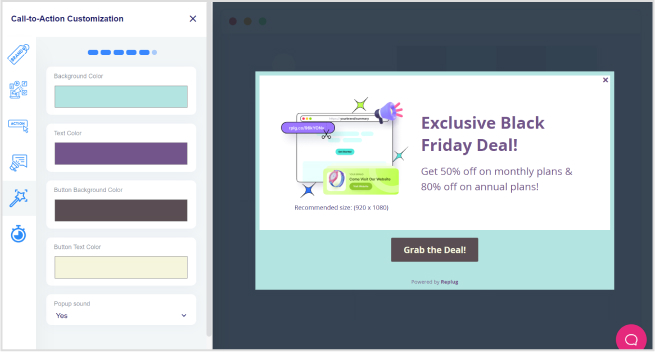
Add a button, link, or form to your CTA campaign. We have selected the “button CTA” and “exit intent popup” CTA type.
Once you have selected the exit intent popup CTA, then add your CTA image that you wish to display on your CTA link.
Step 5: Add your CTA message
Then add a headline, body, and actual CTA of your exit intent pop-up.
Helpful tip: UTM tracking
Add UTM parameters to your pop-up to track the effectiveness of your campaigns. By including specific UTM tags like source, medium, and campaign in your popup URLs, you can easily identify which channels and messages are driving the most conversions. This data allows you to refine your marketing strategies and optimize future campaigns for better results.
Step 6: Customize your exit Intent popup template
The next step is to add background colors to your text and button. Also, add a background image, ensuring your CTA image and text is clearly visible.
Step 7: Select “On Exit-intent”
In the next step, choose when your CTA should appear. We are creating an exit intent CTA so we will select “On Exit-intent”.
Step: Preview & publish the exit intent popup
Lastly, preview your exit intent pop-up CTA and “Save campaign” to publish your CTA on the live link.
Check this exit intent popup yourself. Move the cursor on the address bar, and it will appear.
Replug is a complete link management tool
Apart from CTA’s, the core function of the tool is to optimize and personalize your URLs with the help of its top-notch URL shortener. With Replug, you can add retargeting pixels to your CTA links and generate QR codes for them.
Set various filters to route & rotate traffic on your CTA shortened links based on time, date, region, etc. Moreover, enhance the user experience using deep linking for your CTA links for seamless navigation. Lastly, track clicks and conversions for each CTA campaign you create.
Other tools you can use to create exit-intent popups
OptinMonster: Known for its user-friendly interface and powerful features, OptinMonster allows you to create and customize exit-intent pop-ups with ease. It also offers advanced targeting options and A/B testing.
Sumo: Sumo provides a range of tools for creating exit-intent pop-ups, including customizable templates and detailed analytics to track your pop-up’s performance.
Privy: Privy offers a simple setup process and robust customization options. It’s particularly popular among e-commerce businesses for its ability to reduce cart abandonment and boost sales.
Boost your conversion rates with irresistable CTAs with
Continuously monitor the performance of your pop-ups and be ready to make adjustments based on what works best for your audience.
All in all, by using these tools and following these best practices, you can create effective exit-intent pop-ups that help reduce bounce rates and convert visitors into customers or subscribers.
FAQs
Are exit popups good?
Yes, exit popups can be effective in capturing the attention of users about to leave, potentially converting them into leads or customers with timely offers or messages.
What is the exit-intent form?
An exit-intent form is a pop-up that encourages users to add their email in exchange for an offer, discount, or other relevant content to retain their interest.
What is a pop-up strategy?
A pop-up strategy involves the planned use of pop-ups on a website to engage visitors, capture leads, and drive conversions through targeted and timely messages.
Do exit popups work on mobile?
Yes, exit popups can work on mobile devices by detecting user behaviors, such as swiping away or tapping the back button, to trigger the pop-up.
Do pop-ups affect SEO?
Excessive or intrusive pop-ups can negatively affect SEO by impacting user experience and page load times, potentially leading to lower search engine rankings.
When not to use a popup?
Avoid using pop-ups when they disrupt the user experience, such as during critical navigation moments or on pages where users are highly engaged with content.
What if you could earn money while you sleep without creating a product, handling shipping, or dealing with customer service?
That’s exactly what affiliate marketing makes possible, and right now is one of the best times to get started.
The numbers speak for themselves. The global affiliate marketing industry is projected to surpass $17 billion in 2026, with U.S. spending alone expected to hit $13 billion (nearly double what it was just a few years ago). And it’s not slowing down.
Over 80% of advertisers already leverage affiliate marketing, meaning brands are actively looking for people like you to promote their products.
The best part? You don’t need experience or a huge audience to start. You just need the right programs. And that’s exactly what this guide is about.
But first, let’s make sure we’re on the same page. What actually is an affiliate program, and how does it work?
What is an affiliate program?
An affiliate program is basically a partnership between a business and a promoter (that’s you). It is where you earn a commission every time someone buys a product or signs up for a service through your unique referral link.
Here’s how it works in simple terms:
1. A company gives you a special tracking link.
2. You then share it with your audience through a blog, YouTube channel, social media, email, or wherever you hang out online.
3. When someone clicks that link and makes a purchase, you get paid a percentage of that sale.
That’s it! No inventory, no customer support, no headaches.
The business gets more sales, the customer gets a product they wanted, and you get a commission. Everyone wins!
Key features of an effective affiliate program
Not all affiliate programs are created equal. The good ones share a few things in common:
Attractive commission structure: This is what you’re earning per sale or referral, so it matters a lot. A good program offers competitive rates, whether that’s a flat fee or a percentage. That actually makes your effort worth it.
Reliable tracking & attribution: When someone clicks your link and buys, you need to get credit for it. A solid program uses dependable tracking technology to make sure every sale is properly linked back to you (no lost commissions).
Automated payouts & transparent reporting: Nobody wants to chase down their earnings. Good programs pay you automatically on a set schedule and give you a clear dashboard so you can see exactly what you’ve earned, when, and from where.
Cookie duration: A cookie is a small file that remembers that a visitor came through your link. Longer cookie durations (say 30, 60, or even 90 days) mean you still earn a commission even if the person doesn’t buy right away.
High-quality marketing assets: The best programs hand you ready-made banners, product images, email templates, and other creative materials. This saves you time and makes promoting their products a whole lot easier.
Onboarding & support: A program that actually helps you succeed is a green flag. Look for ones that walk you through the setup process and have a 24/7 responsive support team you can reach out to when you’re stuck.
Fraud prevention: This one protects both you and the brand identity. Programs with solid fraud detection make sure fake clicks or shady activity don’t mess with your stats or get your account flagged unfairly.
Types of affiliate marketing programs
Not every affiliate program works the same way, and that’s actually a good thing. Depending on your niche, audience, and content style, different types of programs will suit you better than others.
Here’s a quick breakdown of the main ones you’ll come across:
SaaS & recurring programs
These are programs offered by software companies where you earn a commission (often monthly) for as long as your referred customer stays subscribed.
Tools like email marketing platforms, SEO software, and project management apps fall into this category.
The recurring commission model is what makes these so attractive. One referral can pay you for months or even years.
E-commerce retail programs
These are your classic programs tied to online stores (think Amazon, Walmart, or niche online shops). You promote physical or digital products and earn a percentage of each sale.
They’re beginner-friendly and easy to get into, though commission rates tend to be lower compared to SaaS or high-ticket programs.
High-ticket programs
These programs let you earn big commissions, sometimes hundreds or even thousands of dollars per single sale.
They usually involve premium products or services like online courses, luxury goods, or high-end software.
The conversions are harder to get, but one good referral can make a huge difference to your income.
Niche-specific programs
These are programs built around a specific industry or interest, e.g., finance, health & wellness, travel, or pet care.
They tend to convert really well because the audience is already highly targeted and genuinely interested in what’s being promoted.
If you’ve got a focused niche blog or channel, these can be a perfect fit.
Influencer/content affiliate partnerships
These programs are designed specifically for creators such as bloggers, YouTubers, podcasters, and social media influencers.
Brands partner with content creators to reach their engaged audiences, usually offering custom discount codes or referral links to share.
If you already create content and have an audience (even a small one), this type of program is a natural starting point.
Best affiliate programs to make money
Alright, this is the part you’ve been waiting for. There are thousands of affiliate programs out there, but let’s be honest, not all of them are worth your time.
The ones on this list have been picked based on commission rates, reliability, cookie duration, and overall earning potential, so you’re only looking at programs that can actually move the needle for you.
Program
Commission rate
Cookie duration
Payout
Best for
Pros
Cons
Contentpen.ai
30% recurring (up to 12 months)
60 days
Monthly (after 45-day hold)
Bloggers & SEO content creators
AI-powered tool with growing demand; Ready-made promo kit included; Free to join with instant dashboard access
Minimum 2 paying referrals needed before first payout
Replug
30% recurring (lifetime)
30 days
Monthly (after 45-day hold)
Marketers & link management enthusiasts
Trusted by 350,000+ users making it easy to promote; Lifetime recurring commissions; Multiple payout methods (PayPal & bank wire)
High $200 minimum payout threshold
Amazon Associates
Up to 10% (varies by category)
24 hours
~60 days after month end
Lifestyle, tech & product review bloggers
Millions of products to promote across every niche; Trusted brand with very high conversion rates; Earn on anything in the buyer’s cart
Very short 24-hour cookie window
ContentStudio
30% recurring (up to 12 months)
30 days
Monthly (after 45-day hold)
Social media marketers & agencies
No ContentStudio account needed to join; Ready-made promo assets provided; Supports multiple promotional channels
$200 minimum payout threshold
Usermaven
20% recurring (lifetime)
14 days
Monthly (after 45-day hold)
Marketers & analytics consultants
Lifetime recurring commissions; Privacy-friendly product with strong appeal; Rated 4.9/5 across major review platforms
Shortest cookie window on this list at just 14 days
Semrush
$50–$300 per sale + $10 per trial
120 days
Monthly via Impact.com
SEO bloggers, marketers & agencies
One of the longest cookie windows at 120 days; Earn on free trial sign-ups too; Tiered loyalty program with bonuses up to $1,500/quarter
Requires at least 1,000 monthly visitors to qualify
HubSpot
30% recurring (up to 12 months)
180 days
Monthly via Impact.com
B2B content creators & SaaS reviewers
Industry-leading 180-day cookie duration; Multiple tier levels with growing rewards; No minimum sales required to start earning
Application requires email outreach — no instant self-signup
PostNitro
20% recurring (lifetime)
30 days
Monthly (after 60-day hold)
Social media creators & content marketers
Lifetime recurring commissions with no earnings cap; No approval process — anyone can join instantly; Dashboard built into the app, no separate login needed
High 60-day hold period before commissions are released
ClickBank
Up to 90% (varies by product)
Varies by offer
Weekly or bi-weekly
Beginners across all niches
Some of the highest commission rates available anywhere; Massive marketplace with 4,000+ products to choose from; Has never missed a payment in 25+ years
Product quality varies widely — vetting is necessary
Etsy
4% per qualifying sale
30 days
Monthly via Awin
Lifestyle, gifting & wedding bloggers
Massive and trusted brand that converts well; You earn on anything the buyer purchases — not just the linked item; Earn across millions of unique handmade & vintage products
Low 4% commission rate requires high traffic to earn well
Shopify
Up to $150 per referral
30 days (400 days for free trials)
Bi-weekly or monthly via Impact.com
E-commerce & entrepreneurship creators
No earnings cap whatsoever; Applications reviewed within 24 hours; Referrals tracked up to 400 days if they start a free trial
Requires an active website and established audience for approval
ActiveCampaign
30% recurring (up to 12 months)
Not publicly specified
Monthly via PartnerStack
Email marketing & automation bloggers
Average commission of $1,350 per referral; Available in 170 countries — huge global market; Strong product retention means longer commission streams
Commission runs for 12 months only, not lifetime
Leadpages
10–50% recurring
90 days
Monthly (after 30-day hold)
Marketing & small business bloggers
Performance-based tiers reward top affiliates with up to 50% commission; Generous 90-day cookie window; Recurring commissions for as long as the customer stays
Base commission starts at just 10% until you hit minimum sales
LiveChat
20–22% recurring (lifetime)
120 days
Monthly via PayPal
Customer service & SaaS bloggers
Promote 4 products under one program; Lifetime recurring commissions; Long 120-day cookie window
Minimum $50 payout threshold required before withdrawal
Kit
50% for 12 months + 10–20% lifetime
Not publicly specified
Monthly via PartnerStack
Creator economy & newsletter bloggers
Market-leading 50% commission for the first year; Lifetime recurring commissions once Bronze status is reached; Tiered system rewards consistent referrers with higher long-term rates
Let’s step into the best of the best, starting with one of the most popular choices for beginners and seasoned affiliates alike.
1. Contentpen.ai
Contentpen.ai is an AI-powered content creation tool that takes a blog post from keyword research all the way to a fully published, SEO-optimized article.
It’s a great fit for bloggers, freelancers, agencies, and anyone who wants to grow organic traffic without spending hours writing.
Its affiliate program runs on a simple recurring model. You share your unique link, someone subscribes within 60 days, and you earn 30% commission every month for up to 12 months.
To qualify for a payout, you just need at least 2 paying referrals and a valid payment method set up in your dashboard.
Signing up is free and takes under 5 minutes. Head over to contentpen.firstpromoter.com and apply. You’ll get instant access to your dashboard, tracking link, and a full marketing kit with banners, email templates, and social media copy ready to go.
2. Replug
Replug is a link management platform trusted by 350,000+ brands, marketers, and agencies worldwide. It lets you generate a branded short link in no time.
The affiliate program offered by Replug works on a recurring commission model. Every time someone signs up through your link and becomes a paying customer, you earn 30% of their subscription fee for as long as they stay subscribed.
To qualify for a payout, you need to hit a minimum threshold of $200 in commissions, and payouts are released 45 days after the sale.
Signing up is free and takes just a few minutes. Head over to replug.firstpromoter.com, create your affiliate account, grab your unique link, and start promoting across your blog, social media, YouTube, or email list.
Also, the 30-day cookie window means you still get credit if someone buys within a month of clicking your link.
3. Amazon Associates
Amazon Associates is one of the largest and most well-known affiliate programs in the world (and for good reason). With millions of products across virtually every category imaginable, it’s one of the easiest programs to start promoting, no matter what your niche is.
This Amazon affiliate program works pretty straightforwardly. You pick products from Amazon, grab your unique affiliate links using their built-in linking tools, share them with your audience, and earn a commission on every qualifying purchase made through your link.
The cookie lasts 24 hours, and you even earn on other items the buyer adds to their cart during that window.
To qualify, you need a website, blog, or mobile app with original content. Sign up at affiliate-program.amazon.com, submit your application, and Amazon will review it before approving your account.
Commissions vary by product category and can go up to 10%, with payments sent approximately 60 days after the month your earnings were made.
4. ContentStudio
ContentStudio is a social media management tool that lets you plan, schedule, publish, and analyze content across all your social channels from one place. All this is done efficiently with an AI assistant built right in.
It’s used by solo creators, agencies, and marketing teams who want to stay consistent on social without spending hours on it every day.
The affiliate program is open to everyone. You don’t even need a ContentStudio account to join. If you have an audience interested in social media or content marketing, you’re already a good fit.
Simply head over to contentstudio.firstpromoter.com, sign up for free, grab your unique referral link, and start promoting through your blog, social media, email list, or YouTube channel.
You earn a 30% recurring commission for every paying customer you refer, for up to 12 months. Payouts are released 45 days after the month the sale was made, with a minimum payout threshold of $200.
5. Usermaven
Usermaven is a privacy-friendly website and product analytics tool. Think of it as a cleaner, easier alternative to Google Analytics 4.
It’s built for marketers, product teams, and agencies who want clear data insights without the usual complexity, and it’s rated 4.9/5 stars across major review platforms.
Its affiliate program is open to digital marketers, analytics consultants, influencers, and really anyone with an audience that could benefit from a solid analytics tool. And, what’s the best part? You don’t even need a Usermaven account to join.
Signing up is free and straightforward. Go to usermaven.firstpromoter.com, create your affiliate account, and you’ll get your unique referral link plus access to brand assets and an earnings dashboard right away.
You earn a 20% recurring commission for every paying customer you refer, for as long as they stay subscribed. Payouts are made via bank transfer once you hit the $200 minimum threshold, with commissions released 45 days after the month of sale.
6. Semrush
Semrush is one of the most well-known SEO and digital marketing platforms out there, trusted by millions of marketers worldwide. It covers everything from keyword research and site audits to social media, content, and competitor analysis, all under one roof.
To qualify for the Semrush Affiliate Program, you need an active online presence. Ideally, a website with at least 1,000 monthly visitors, or a social channel with a solid organic following. Coupon sites, unfinished websites, and purely paid-traffic-based channels generally don’t get approved, so having genuine content is key.
To get started, please ensure that you meet the program requirements. Sign up through impact.com, fill in your application with your website and promotional channels, and you’ll hear back within about 2-4 business days.
Commission-wise, you can earn anywhere from $50 to $300 per sale, depending on which Semrush product is purchased, plus $10 for every free trial activation. The cookie lasts 120 days, which is one of the most generous windows you’ll find in any affiliate program.
7. HubSpot
HubSpot is one of the biggest names in the marketing and business software world. It’s an all-in-one platform covering CRM, marketing automation, sales, content, and customer service. It’s used by businesses of all sizes, which makes it incredibly easy to recommend to almost any audience.
The affiliate program offered by HubSpot is a great fit for content publishers, SaaS reviewers, course creators, and B2B marketers. You don’t need to be a HubSpot customer to join, and there are no minimum sales requirements to start earning.
To sign up, simply email affiliates@hubspot.com with your website and a quick outline of how you plan to promote HubSpot. The team reviews applications within 2–3 business days, and if you’re a good fit, they’ll get you set up on their affiliate platform.
You earn 30% recurring commission for up to one year per customer you refer, with a very generous 180-day cookie window. Payouts are made via direct deposit or PayPal once you hit a $10 minimum balance.
8. PostNitro
PostNitro is an AI-powered carousel maker that turns any topic or piece of text into scroll-stopping carousel posts for Instagram, LinkedIn, TikTok, and more, in under 60 seconds. It’s a tool that pretty much sells itself once people see it in action.
The best part about its affiliate program? There’s no approval process and no minimum traffic requirements.
Anyone can join for free and start sharing their referral link immediately. Whether you’re a blogger, YouTuber, newsletter writer, or social media creator, you’re a good fit.
To sign up, head over to postnitro.affonso.io, create your affiliate account, and you’ll get instant access to a dashboard built right into your PostNitro account. No separate login needed.
You earn a 20% recurring commission for life on every paying referral, as long as they stay subscribed. Payouts are monthly via PayPal, bank transfer, or Wise, after a 60-day hold period and once you hit the $200 minimum threshold.
9. ClickBank
ClickBank is one of the oldest and most well-established affiliate marketplaces in the world. It’s been around since 1999 and has paid out over $7 billion in commissions without ever missing a payment.
With 4,000+ products across categories like health, self-help, e-business, and more, there’s something to promote for almost every niche.
Unlike most programs, ClickBank doesn’t promote a single product; it’s a marketplace. You browse thousands of listed offers, pick the ones that fit your audience, grab your affiliate link, and start promoting.
You can earn through revenue share (a percentage of each sale) or CPA (a fixed amount per action), depending on the offer.
There are no strict qualification requirements. Anyone can create a free ClickBank account at clickbank.com/affiliates and start browsing products right away, making it one of the most beginner-friendly platforms out there.
Commissions vary by product but can go up to 90% on some offers, and payments are sent reliably on a set schedule via check, direct deposit, or wire transfer.
10. Etsy
Etsy is a global marketplace for handmade, vintage, and one-of-a-kind products, from custom jewelry and home décor to wedding supplies and digital downloads.
It’s a platform people already love and trust, which makes it a genuinely easy sell if your audience is into lifestyle, gifting, or creative niches.
The affiliate program is managed through the Awin affiliate network, so to sign up, you’ll need to create an Awin account first. There’s a small, refundable $5 deposit to join.
Once approved, you get access to your affiliate dashboard, tracking links, banner ads, and other promotional materials to start sharing right away.
Etsy actually offers two options: the standard Affiliate Program for bloggers and publishers, and the Creator Collective for social media content creators. Pick whichever fits how you create content.
You earn a commission on each qualifying sale, with a 30-day cookie window. 4% for standard publisher referrals, with payouts processed monthly or bi-weekly via bank transfer or ACH.
11. Shopify
Shopify is one of the most trusted e-commerce platforms in the world, powering millions of businesses across 175+ countries.
No matter if someone wants to sell physical products, digital downloads, or even in-person at a pop-up, Shopify makes it incredibly easy to get started. This ultimately makes it a super-easy platform to promote.
To qualify for its affiliate program, you ideally need an active website or established audience, and your content should be focused on e-commerce, entrepreneurship, or business.
It’s not the most beginner-friendly in terms of approval (they do review applications), but if your content fits, getting in isn’t too hard.
Signing up is completely free. Apply via the Shopify affiliate page, and most applications are reviewed within 5 business days. Once approved, you get a personal dashboard with your referral links, ready-made banners, playbooks, and resources.
You earn up to $150 per qualified referral when someone signs up for a paid Shopify plan through your link.
Also, there’s no earnings cap, referrals are tracked for up to 30 days, and payouts are made via direct deposit or PayPal once you hit a $10 minimum balance.
12. ActiveCampaign
ActiveCampaign is a top-rated marketing automation platform that combines email marketing, CRM, and AI-powered automation in one place.
It’s used by businesses in 170 countries and has over 14,000+ reviews on G2, so it’s a product people already trust and stick with, which is great news for your commissions.
The affiliate program is open to content creators, influencers, and publishers, and you don’t need to be an ActiveCampaign customer to join. As long as you have an audience interested in marketing, e-commerce, or business growth, you’re a solid fit.
To sign up, head to activecampaign.partnerstack.com and submit your application. Once approved, you’ll get your unique referral link and access to ready-made banners, copy templates, and a full promotional kit managed through PartnerStack.
You earn 30% recurring commission for up to 12 months per paying customer you refer, with commissions averaging around $1,350 per referral. The more referrals you bring in that stick around, the more your monthly income grows.
13. Leadpages
Leadpages is a popular landing page and website builder designed specifically to help small businesses capture leads and convert visitors into customers (without needing to know how to code).
It’s a well-known tool in the marketing space, which makes it a genuinely easy product to recommend to the right audience.
Its affiliate program is open to everyone, such as bloggers, content creators, marketers, and course creators.
You don’t even need to be a Leadpages customer to join. Though partners who actually use the tool tend to earn about twice as much on average, so it helps if you do.
To sign up, head to ap.leadpages.com, click “Become an Affiliate,” and fill out a short application through PartnerStack.
Applications are typically reviewed within two business days, and once approved, you get your referral link, swipe copy, and promotional assets right away.
You earn commissions ranging from $100 to $400 per referral, with a very generous 90-day cookie window. The more new customers you bring in, the higher your commission tier climbs.
14. LiveChat
LiveChat is a customer messaging and support platform used by 40,000+ companies across 150 countries, including big names like PayPal, Huawei, and IKEA.
Through its affiliate program, you can actually promote four products: LiveChat, ChatBot, HelpDesk, and the Text App, giving you more ways to earn from a single program.
The program is completely open to everyone. Bloggers, review site owners, marketers, and content creators are all welcome.
There’s no application approval process to stress over, no fees, and no complicated requirements to meet.
Signing up takes just a couple of minutes at the Partner App. Once you’re in, you get instant access to your unique affiliate link, a full partner dashboard, ready-made banners, content samples, and a campaign builder tool.
You start earning 20% recurring commission for the lifetime of every paying subscription you refer. And, once you bring in 5 paying customers, your rate bumps up to 22%.
The cookie lasts 120 days, and payouts are made via PayPal once you hit the $50 minimum threshold.
15. Kit
Kit(formerly ConvertKit) is an email marketing and creator platform built specifically for bloggers, podcasters, course creators, authors, YouTubers, and anyone growing an online audience. It covers emails, landing pages, automations, paid newsletters, and digital product sales, all in one place.
Just fill out a short form, and you’re good to go. There’s no complicated entry bar, though the more active you are as a referrer, the more you unlock.
Once approved, you get access to Kit’s Affiliate Promotion Hub, packed with ready-made graphics, copy, and campaign materials to make sharing easy.
The commission structure is genuinely one of the best out there. You earn 50% for the first 12 months of every paying customer you refer.
Beyond 12 months, you also unlock 10–20% recurring commissions for the lifetime of each customer, depending on your tier (Bronze, Silver, or Gold).
Ever wonder why so many companies, from small startups to Fortune 500 brands, are jumping on the affiliate marketing bandwagon?
It’s not just a trend!
There are some really solid business reasons behind it, and understanding them can actually help you pitch yourself better as an affiliate partner.
Key reasons for running an affiliate program include:
Cost-effective marketing
Instead of spending a fixed budget on ads that may or may not convert, businesses only pay when a sale actually happens. This makes affiliate marketing one of the lowest-risk marketing channels out there.
Performance-based ROI
Every dollar spent is tied to a real result. Businesses can track exactly which affiliates are driving sales and double down on what’s working, making it incredibly easy to measure return on investment.
Expanded reach & brand awareness
Affiliates bring their own audiences to the table. These are people that businesses would otherwise have to spend a lot of money to reach through paid advertising alone.
Increased credibility & trust
When a renowned blogger, creator, or influencer recommends a product, their audience listens (for sure). That kind of word-of-mouth recommendation carries far more weight than a traditional ad.
Improved SEO
Affiliate content, such as reviews, comparisons, and tutorials, naturally generates backlinks and keyword-rich content that helps businesses rank higher in search engines over time.
Low-maintenance marketing
Once the program is set up and affiliates are on board, the machine basically runs itself. Businesses don’t need to manage day-to-day campaigns. Instead, affiliates do the primary job.
Competitive advantage
Having an army of affiliates actively promoting your product keeps your brand visible in places your competitors might not be. This offers you a real edge in crowded markets.
How to choose an affiliate program: What points to look for!
With thousands of affiliate programs out there, picking the right one can feel quite challenging, especially when you’re just starting out.
But here’s the thing: not every high-paying program is the right fit for you, and not every beginner-friendly program is worth your time.
Here’s what to actually look at before you sign up.
Commission structure & rates
Look beyond just the percentage. Understand whether it’s a one-time payment or recurring commission, because a 20% recurring rate can easily outperform a 50% one-time payout over time.
Cookie duration (referral period)
The longer the cookie window, the better your chances of getting credit for a sale. A 90-day cookie is far more forgiving than a 24-hour one, especially if your audience takes time to make decisions.
Cookie tracking method
Most programs use browser cookies, but some use more reliable methods like account-based tracking. Knowing how your referrals are tracked helps you understand how accurately your commissions are being recorded.
Brand relevance
Promoting a brand your audience has never heard of (or doesn’t trust) is a great battle. Stick with the ones that are already well-known or respected in your niche for easier conversions.
Program quality & reputation
Do a quick Google search before joining. Read reviews from other affiliates, check forums, and make sure the program actually pays on time and treats its partners fairly.
Market demand & competition
A product with strong demand but not too many affiliates already promoting it is a sweet spot. Too much competition can make it hard to stand out, especially if you’re new.
High conversion rates & EPC
EPC (earnings per click) tells you how much affiliates are earning on average per click. It’s one of the best indicators of how well a program actually converts traffic into sales. Must consider this metric!
Payout terms & thresholds
Check how often they pay, what the minimum payout threshold is, and which payment methods they support. A $500 minimum payout with monthly-only payments isn’t that ideal if you’re just starting out.
Align with niche & audience
Even the best program in the world won’t work if it doesn’t match what your audience actually needs. Always ask yourself: would my readers genuinely find this useful?
Support & marketing resources
Good programs give you banners, email templates, swipe copy, and a support team to help you succeed without hassle. If a program leaves you completely on your own, that’s usually a red flag.
How to find & join the best affiliate programs for free online?
Finding great affiliate programs doesn’t have to be complicated. The easiest way is to start with what you already know.
Think about the tools, products, or platforms you use and love, then simply Google “[product name] + affiliate program” to see if they have one.
You can also browse affiliate marketplaces like ShareASale, Impact, PartnerStack, and Awin, which host hundreds of programs all in one place.
Another solid approach is checking what other bloggers or creators in your niche are promoting. If it’s working for them, it might work for you, too.
Most programs are completely free to join, so don’t be afraid to apply to a few and test what resonates best with your audience.
How to actually make money with affiliate marketing programs?
A lot of people sign up for affiliate programs and then wonder why they’re not making any money. The truth is, it’s not just about dropping links everywhere. There’s a simple process that actually works.
Follow these steps, and you’ll be miles ahead of most beginners.
Step #01: Pick a specific niche & focus
Don’t try to promote everything to everyone. Select one focused area you’re genuinely interested in, no matter if that’s personal finance, SaaS tools, fitness, or travel, and stick to it. A focused niche builds a more loyal audience that actually trusts your recommendations.
Step #02: Build a platform
You need somewhere to send people, e.g., a blog, a YouTube channel, a newsletter, or even a social media account. The key is having a consistent place where your audience can find you and engage with your content regularly.
Step #03: Join affiliate programs
Once you have a platform and a niche, start applying to programs that are a genuine fit for your audience. Start with two or three programs at max. Trying to promote too many at once as a beginner usually leads to spreading yourself too thin.
Step #04: Create valuable content
This is where most of the actual work happens. Write reviews, tutorials, comparisons, or how-to guides that genuinely help your audience make informed decisions. Content that solves a real problem is what drives clicks and conversions, not just promotional posts.
Place your unique affiliate links naturally within your content inside relevant sentences, comparison tables, orcall-to-action buttons, rather than just throwing them at the bottom. Always make sure you’re using your correct unique tracking link so every sale gets credited to you.
Step #06: Drive traffic & conversions
Great content means nothing if nobody sees it. Focus on SEO, social media sharing, email marketing, or even Pinterest to get consistent eyes on your content. More targeted traffic equals more clicks, and more clicks equals more commissions.
Why you should become an affiliate marketer in 2026?
If you’ve been uncertain about affiliate marketing, 2026 might just be the best time to finally jump in. The industry is growing fast, the tools are better than ever, and the barriers to entry have never been lower. Here’s why right now is actually a great time to get started.
AI tools today make it significantly easier and faster to create content, research keywords, and optimize campaigns. This means you can build and scale your affiliate business with far less time and effort than it would’ve taken a few years ago.
High market growth & demand
The global affiliate marketing industry is projected to surpass $20 billion in 2026 and is growing at a steady double-digit rate annually. It means more brands are actively looking for affiliates to partner with, and more money is being put on the table.
Low barrier to entry
You don’t need a professional degree, a big budget, or years of experience to get started. Most affiliate programs are free to join, and all you really need is a platform and a willingness to learn.
Shift to authentic content
Consumers are increasingly tuning out traditional ads and trusting real recommendations from real people. This shift puts affiliate marketers who build genuine relationships with their audiences in a very strong position.
High-income potential in specialized niches
Niche-focused affiliates who build authority in a specific space can earn significantly more than generalists, with some top performers pulling in six or even seven figures annually.
Final words
There you have it!
15 of the best affiliate programs for beginners in 2026, along with everything you need to actually get started and succeed.
Whether you’re drawn to high-ticket programs, recurring SaaS commissions, or beginner-friendly marketplaces like Amazon and ClickBank, there’s genuinely something on this list for every type of creator.
The most important thing is to stop overthinking and just start. Pick one or two programs that align with your niche, create honest and helpful content around them, and stay consistent.
Affiliate marketing isn’t a get-rich-quick scheme, but with the right programs and a bit of patience, it can absolutely become a real and reliable income stream for you.
Frequently asked questions
Which affiliate program is the best for beginners?
Amazon Associates is widely considered the best starting point for beginners because it’s easy to join, covers millions of products, and your audience is already familiar with the brand.
That said, if you create content around software or online tools, programs like Contentpen.ai, Replug, or ContentStudio are excellent choices. They offer recurring commissions and are just as easy to get started with.
What are the best affiliate programs for beginners without a website?
You don’t necessarily need a website to get started. Programs like Kit, PostNitro, and ClickBank allow you to promote through social media, YouTube, email newsletters, or even TikTok. Etsy’s Creator Collective is also specifically designed for social media creators.
The key is having some kind of active platform. Even a decent Instagram or YouTube channel qualifies for most programs.
What are the highest-paying affiliate programs?
When it comes to pure earning potential, Semrush (up to $300 per sale), HubSpot (up to $1,000+ per sale), Kit (50% commission for the first 12 months), and ActiveCampaign (averaging $1,350 per referral) are among the highest-paying programs on this list.
High-ticket and SaaS programs generally pay the most because subscription prices are higher and customers tend to stick around for a long time.
What are the best affiliate programs for influencers in 2026?
Influencers do really well with programs that have broad audience appeal and strong brand recognition. HubSpot, Shopify, Semrush, and Amazon Associates are all solid picks for influencers with business or lifestyle audiences.
For content creators specifically, Kit and PostNitro are great fits since their products are built for the creator community and practically sell themselves to the right audience.
What is the best affiliate program that works worldwide and that is not fraudulent?
Amazon Associates, HubSpot, Semrush, Shopify, and ClickBank all operate globally and have long-standing reputations for paying affiliates reliably and on time. LiveChat and ContentStudio also support affiliates from 150+ countries.
Sticking to programs managed through trusted platforms like Impact, PartnerStack, or Awin adds an extra layer of security. This is because these networks have strict fraud prevention and transparent payment systems in place.
What are the best affiliate marketing programs for earning passive income?
Recurring commission programs are your best friend for passive income. Once you refer a customer, you keep earning every month without doing anything extra.
The best ones for this are Replug (lifetime recurring), LiveChat (lifetime recurring), PostNitro (lifetime recurring), Contentpen.ai (12 months recurring), and ActiveCampaign (12 months recurring).
The idea is simple: refer once, earn for months or years.
Can you make $100 a day with affiliate marketing programs?
Yes, absolutely! But it takes time and consistent effort to get there. To make $100 a day, you could refer just a handful of customers to a high-paying recurring program, or build up a larger volume of referrals on lower-ticket programs.
Most affiliates who hit that level have been consistently creating content and growing their audience for at least 6–12 months, so be patient and stay consistent.
How can I start an affiliate program?
If you’re a business looking to start your own affiliate program, the easiest way is to use a platform like PartnerStack, Impact, or ShareASale to manage tracking, payouts, and affiliate recruitment.
You’ll need to decide on your commission structure, set cookie duration, create promotional materials for affiliates, and define your payout terms.
Starting with a competitive commission rate and being genuinely helpful to your affiliates from day one goes a long way in attracting quality partners.
What is the difference between affiliate programs and referral programs?
The main difference comes down to who’s doing the promoting.
– Affiliate programs are designed for public marketers, bloggers, and creators. These are people who may have never used the product but promote it to earn a commission. – Referral programs, on the other hand, are typically aimed at existing customers who recommend the product to friends and family in exchange for a discount or small reward.
Affiliate programs are generally more structured and scalable, while referral programs are more personal and community-driven.
How to optimize your affiliate earnings effectively?
A few things make a big difference here:
– First, focus on SEO so your content gets found organically over time. – Second, always place your affiliate links contextually inside helpful content rather than random placements. – Third, regularly check your analytics to see which content and which programs are actually converting, and double down on those.
Building an email list is also one of the most underrated ways to boost affiliate earnings, since you can promote relevant offers directly to people who already trust you.
In 2024, Amazon witnessed a record-breaking $575 billion in sales, proving its power as a selling platform.
But with such a massive opportunity comes intense competition!
Increasing sales on Amazon demands more than just listing your products; it requires a strategic approach. And to help you out we created this guide.
This guide isn’t just another “how-to” – it’s the only roadmap you’ll ever need to master top sales tips and tricks in Amazon’s vast market.
So let’s get started:
The A10 Algorithm: What Amazon wants from sellers
According to Maacro Trends, Amazon invested $85.6 billion in research and development from March 31, 2023, to March 31, 2024, marking an 8.6% increase from the previous year. Before we get to the tips and tricks, let us give you a quick overview of Amazon’s algorithm. Amazon’s algorithm, currently called A10 (though some sources still reference A9), focuses on delivering the most relevant products to users based on their search queries.
Here’s what you need to know:
The A10 algorithm favors products with positive customer reviews, high ratings, and low return rates.
Boost your listings by using Amazon links across your website, blog, social media, and other platforms. This external engagement shows Amazon that your product has a broader appeal.
Sponsored links and PPC campaigns are less effective under A10 compared to A9. Instead, prioritize organic traffic and authentic customer engagement for better results.
Products with a strong sales history are given priority. Consistent sales signal to Amazon that the product is popular and reliable.
Here’s a detailed breakdown of some of the best strategies:
1. Optimizing your listings for maximum visibility
On Amazon, where millions of products compete in order to stay on the top. Standing out requires strategic optimization of product titles, descriptions, and keywords to align with customer search behaviors.
Manually researching and selecting the perfect product category can be a tedious task. The Product Classifier automates this process, saving you valuable time and effort. It uses the most up-to-date information to specify your product type, add your brand name, and compelling selling points directly into the title.
The best part is that it automatically updates its suggestions based on trends so your listings stay relevant and discoverable even as Amazon’s catalog grows and adapts.
2. Use customer-centric keywords
Put yourself in your customer’s shoes. What terms would they use to search for your product? Understanding your customer’s perspective is key to optimizing your product listings on Amazon.
Research is Key: Use Amazon scraping and keyword research tools like Smartminded’s free Amazon Keyword Toolor conduct manual searches on Amazon to identify high-traffic, low-competition keywords relevant to your product.
Long-tail advantage: Don’t just focus on broad, generic keywords. Target long-tail keywords – more specific phrases that shoppers will likely use later in their buying journey. For example, instead of just “blender,” consider “high-performance countertop blender.”
Strategic Integration: Weave your target keywords naturally throughout your listing. Include them in your title, description, backend search terms, and even in product variations (e.g., color options).
It’s important to have relevant keywords that closely relate to what the person is searching for.
Amazon wants your title to be short, descriptive and to the point, they do allow for between 150-250 characters
Great images and videos grab attention in a flash. They make your content pop, not just look pretty. Cool charts and clear pictures can explain things way faster than words alone. This keeps people hooked, turning them from scrollers into viewers who get your message.
Here are some of the factors you should know:
The main image should have a white background, 85% product fill, and no text/logos/watermarks.
Images should be clear, and free from blurriness, pixelation, or jagged edges.
Number of Images: 7 recommended, avoid overwhelming with too many.
For videos, amazon suggests a minimum resolution of 1280 x 720 pixels (HD).
An easy way is to use the Amazon A+ Content tool which allows you to enhance your product detail pages with videos, customized text placements, shoppable product-comparison charts, and more, effectively showcasing your products and telling your brand’s story.
Important note:Make sure that all visuals are optimized for mobile viewing. With a significant number of consumers shopping on mobile devices, your images and videos should be responsive and load quickly on smaller screens without compromising quality.
If you’re an affiliate marketer this is the most important tip for you. Rather than using raw Amazon affiliate links, opt for a branded link shortener.
One popular link shortener is Replug.io, which not only makes your links appear more professional and trustworthy but also provides valuable analytics and tracking capabilities.
Cross-platform consistency: Branded link shorteners allow you to maintain consistent branding across different platforms and channels.
Aesthetic appeal: Shortened and branded links are often more appealing to users, leading to higher click-through rates compared to long, complex URLs. This can result in increased Amazon sales and traffic to your affiliate products.
Easy management: Using a branded link shortener centralizes the management of your affiliate links. You can easily edit, update, or redirect links as needed without having to change the URLs embedded in your content, saving time and effort.
Commission protection: Masking your affiliate links helps protect your commissions from link manipulation or hijacking.
5. Win back customers with multi-channel retargeting
While Amazon offers a massive audience, relying solely on it can limit your earning potential. To expand your reach effectively, strategically place advertisements on social media, search engines, email newsletters, and other platforms where your target demographic is active.
A highly effective approach involves incorporating retargeting pixels. Retargeting is a significant move for the retailers to bring the customers towards your website repeatedly. Use retargeting ads on platforms like Facebook and Instagram to re-engage potential customers who have shown interest in your products.
Pro tip:
Sellers! Don’t let valuable audience data slip through your fingers. Go beyond basic retargeting by utilizing demographic and interest-based targeting options.
6. Get more positive reviews
Did you know that over 95% of online shoppers read reviews before deciding to buy something? On Amazon, having lots of positive reviews not only boosts your product’s search visibility with their A10 algorithm but also enhances its perceived quality.
Customers are often willing to pay more for products that have received good reviews. After your product has been delivered and they’ve had a chance to use it, sending a follow-up email asking for a review can be really effective.
If they haven’t left a review after your first request, a friendly reminder a week or two later can often nudge them to share their thoughts. It’s a great way to build trust and attract more buyers to your listing.
7. Win the Buy Box
The Buy Box is prime real estate on Amazon, and securing it translates to increased Amazon sales and brand visibility. To become the top contender, optimize your product listings with high-quality images, detailed descriptions, and relevant keywords.
Additionally, prioritize account health by maintaining a competitive price, exceptional fulfillment speed, and a stellar customer service record.
8. Provide excellent customer service
Prioritize providing prompt, helpful, and friendly customer service to build trust and loyalty. Respond to inquiries quickly and efficiently, address issues with empathy and understanding, and go the extra mile to exceed expectations.
Positive customer experiences translate to positive reviews, which can further strengthen your Buy Box position.
9. Make sure you have a competitive pricing strategy.
Start by analyzing the prices of similar products, identifying your main competitors, and understanding the average price range in the market.
Setting your price too low might make customers question the quality, while pricing too high could discourage potential buyers. Set competitive yet profitable prices that attract buyers while considering factors like shipping costs and Amazon fees.
You can use tools like Amazon’s pricing analytics or third-party options such as Helium 10’s Market Tracker and Insights Dashboard.
Another option is to automate your pricing strategy with tools like RepricerExpress or Feedvisor, which can help you stay competitive and save time.
10. Outsource your tasks
Start by identifying tasks that can be outsourced. Common tasks for Amazon sellers to outsource include
Customer service
Product photography
Order processing
Product Listing
Inventory management
Marketing campaigns
Complete store management
Choose reliable partners or freelancers with expertise in Amazon operations to streamline processes, improve efficiency, and maintain a high level of service and productivity.
11. Test campaigns, ads, images, etc.
Testing campaigns, advertisements, product images, and descriptions on Amazon allows you to optimize performance and identify what resonates best with your target audience.
Conduct A/B testing to compare different elements and strategies, such as ad copy variations, image styles, and campaign settings, to improve engagement, click-through rates, and ultimately, conversion rates.
12. Offer multiple payment methods
By catering to a wider range of payment preferences, you remove potential barriers to purchase and encourage more customers to complete transactions.
Accept all major credit and debit cards like Visa (including the Amazon Rewards Visa Signature Card), Mastercard/EuroCard, Discover Network, American Express, JCB, and China UnionPay (credit card only).
Regularly monitor your Amazon Seller Central account to track your sales performance, identify top-selling products, and analyze amazon customer reviews. Utilize the data to identify areas for improvement and optimize your strategies for better results.
Key customer metrics to track:
Metrics
Description
Sales performance
Total revenue generated over specific periods (daily, weekly, monthly) to assess growth trends.
Conversion rate
Percentage of visitors who make a purchase, indicating listing effectiveness and customer interest.
Customer lifetime value (CLV)
Projected revenue from a customer over their entire relationship with your business.
Average order value (AOV)
The average amount spent per customer order, guiding pricing, and promotion strategies.
Conversion rate
Percentage of visitors who make a purchase, indicating listing effectiveness and customer interest.
Advertising performance
Metrics like CTR, CPC, and ROAS to evaluate ad effectiveness and return on investment.
Buy Box percentage
Percentage of time your product wins the Buy Box, impacting visibility and sales.
Return rate
Percentage of orders returned, indicating product quality and customer satisfaction.
Inventory levels
Monitoring stock levels and avoiding stock-outs to maintain sales continuity.
Show off your products in real time, answer customer questions live, and build a connection with viewers.
Demonstrate your products in action, offer exclusive deals during your live stream, and run fun polls or quizzes to keep people engaged. Limited-time offers or free gifts with purchases can create a sense of urgency and encourage customers to take action.
Besides that, this is a fantastic way to put a face to your brand and connect with potential customers on a personal level. You can even partner with relevant Amazon Live personalities to reach a wider audience.
Offer discounts: If you want to increase sales, then offering discounts is a very effective strategy to draw customers into your stores.
Competitor analysis: It’s imperative to analyze your competitors. Before offering a product or service to the target market, you need to find the gaps in the competitor’s marketing strategies and try to fill up.
Stay up-to-date with Amazon policy changes: Amazon’s policies and procedures can change frequently. Stay informed by regularly reviewing Amazon Seller Central announcements and updates to ensure you’re adhering to the latest guidelines.
Boost Amazon sales by incorporating bio links: Increase Amazon sales using bio links in your social media profiles, directing traffic to your product listings. Leverage platforms like Instagram and TikTok to engage followers with compelling content and seamless access to purchase options through these links.
Conclusion:
Remember, success on Amazon is not a one-time achievement but an ongoing journey of adaptation and optimization.
Stay tuned in to policy updates, keep an eye on how you’re doing, and always be ready to tweak your approach based on what the data tells you.
With each step, you’ll navigate Amazon’s ever-changing terrain with a sense of assurance and purpose.
FAQs on increasing sales on Amazon
How can I improve my product’s visibility on Amazon?
To improve product visibility on Amazon, focus on keyword optimization, high-quality images, compelling product descriptions, and utilizing Amazon advertising options.
What strategies can I use to win the Buy Box?
Winning the Amazon buy box requires competitive pricing, positive seller feedback, fast shipping, and maintaining stock availability.
How do I effectively manage pricing to stay competitive on Amazon?
Manage pricing effectively by utilizing repricing tools, monitoring competitors’ prices, offering competitive pricing, and adjusting prices strategically based on demand and market trends.
What are the benefits of using Fulfillment by Amazon (FBA)?
Fulfillment by Amazon (FBA) streamlines order fulfillment, storage, shipping, and customer service, thus saving time.
If you own an eCommerce business, you need to make sure people can find you online. And eCommerce SEO is the key strategy that can help your online store gain visibility and attract more customers.
But what exactly is eCommerce SEO, and how can it benefit your business? Let’s break it down.
What is eCommerce Search Engine Optimization (SEO)?
eCommerce SEO, or eCommerce search engine optimization, is all about optimizing your online store to rank higher in search engine results pages (SERPs). Unlike traditional SEO, eCommerce SEO focuses on product pages, category pages, and other elements specific to online stores. The aim is simple: attract more organic traffic, enhance the user experience, and boost sales and revenue via effective ecommerce marketing & SEO techniques.
11 benefits of eCommerce SEO
1. Enhanced branding
One of the biggest perks of eCommerce SEO is enhanced branding. When your store consistently pops up at the top of search results, your brand gains more visibility and recognition. This repeated exposure builds familiarity and trust with potential customers, which is essential for long-term success.
2. More traffic & sale
With effective eCommerce SEO, you can significantly increase your website’s organic traffic. Higher visibility in search results means more visitors to your site. And with the right SEO strategies, these visitors are more likely to become paying customers, leading to more e-commerce sales and revenue.
3. Increased conversion rate
Optimizing your eCommerce site for search engines also means optimizing it for users. SEO best practices involve optimizing URLs, improving site speed, making your site mobile-friendly, and enhancing overall usability. A better user experience leads to higher conversion rates, as customers find it easier to navigate your site and make purchases.
A complete link management solution
for marketing professionals & agencies.
Try Replug for free
4. Improved credibility
Websites that rank higher in search engine results are often seen as more credible and trustworthy. By implementing effective eCommerce SEO strategies, you can boost your site’s credibility, making potential customers more likely to choose your products over your competitors.
5. Better search rankings
One of the most obvious benefits of eCommerce SEO is better search rankings. Appearing on the first page of search results for relevant keywords increases your chances of being found by potential customers. Higher rankings not only drive more traffic but also enhance your brand’s authority in your niche.
Fact: Research shows that the first organic result in Google search gets 28.5% of clicks, while the second result gets only 15%.
6. Increased customer engagement
Engaging content is a key part of eCommerce SEO. By creating high-quality, informative content, you can keep visitors on your site longer, reducing bounce rates and increasing content engagement. Implementing an effective content marketing strategy can lead to higher conversion rates and more loyal customers, as it helps deliver the right messages to your audience at the right time.
7. Improved user experience
SEO best practices often align with user experience improvements. For example, optimizing site speed, ensuring mobile compatibility, and creating easy-to-navigate site structures all contribute to a better user experience.
By using strategies like internal links, you can enhance navigation, making it easier for users to find relevant content. Satisfied users are more likely to return and recommend your site to others.Satisfied users are more likely to return and recommend your site to others.
Fact: 57% of users say they won’t recommend a business with a poorly designed mobile site.
8. Reduced customer acquisition cost
eCommerce SEO is a cost-effective marketing strategy. While paid advertising requires ongoing investment, the benefits of eCommerce SEO can be long-lasting. Once your site ranks well, you can maintain a steady flow of organic traffic without the continuous costs associated with paid ads.
9. Improved PPC efficiency
Combining SEO with PPC (Pay-Per-Click) advertising can boost your overall digital marketing strategy. High organic rankings can improve your Quality Score in PPC campaigns, leading to lower costs per click and more effective ad spending.
10. Gain competitive advantage
eCommerce SEO gives you a competitive edge over businesses that neglect it. By ranking higher in search results, you can attract more customers and establish your brand as a leader in your industry.
Fact: 61% of marketers say improving SEO and growing their organic presence is their top inbound marketing priority.
11. Measurable results
One of the great things about eCommerce SEO is that you can measure the results accurately. Tools like Usermaven and Search Console provide detailed insights into your site’s performance, allowing you to track click traffic, conversions, and other key metrics. For more advanced reporting at scale, a scraper API can help you programmatically collect SERP and competitor data to benchmark performance over time. This data helps you refine your SEO strategies for even better results.
A complete link management solution
for marketing professionals & agencies.
Try Replug for free
5 benefits of using Replug for eCommerce SEO?
1. Boost brand visibility:
Replug allows you to create branded links that include your company’s name or a specific keyword. Branded links are more recognizable and trustworthy, which can increase click-through rates and improve user experience.
2. Slug optimization:
Customize the slugs (the part of the URL after the domain) of your shortened links to include relevant keywords. This can reinforce the relevance of the linked page to search engines and potentially benefit your SEO efforts
Maximize marketing ROI
by transforming ordinary URLs into branded short links that convert.
Try Replug for free
3. Higher conversion rates with link retargeting:
Replug enables you to retarget users who click on your generated short URL. You can create retargeting campaigns on platforms like Facebook, Google, and LinkedIn to re-engage these users with relevant ads, increasing the chances of conversions.
4. Make data-driven decisions
Replug’s link tracking & analytics provides details on performance of your links, including click-through rates, geographic data, device information, and referral sources. This data helps you understand your audience’s behavior and optimize your marketing strategies.
Use the insights from Replug’s analytics to make informed decisions about your SEO and marketing efforts. Identify what’s working and what needs improvement to continually refine your strategy.
5. UTM parameter tracking
Replug allows you to add UTM parameters to your shortened links, enabling you to track the performance of specific campaigns. Tracking the effectiveness of different campaigns helps you allocate your marketing budget more effectively and focus on strategies that deliver the best results.
Try Replug’s free UTM builder & measure the success of your marketing campaigns!
Best eCommerce SEO practices
1. Keyword research and optimization
Effective keyword research is the foundation of eCommerce SEO. Use tools like Google Keyword Planner and SEMrush to find relevant keywords with high search volume and low competition. Incorporate these keywords naturally into your product titles, descriptions, meta tags, and content.
2. Optimize your product pages:
Ensure each product page is optimized for its target keywords. Pay attention to adopt best practices for URLs, title tags, meta descriptions, product descriptions, and images.
Boost ROI with branded URLs!
Enhance your marketing campaigns by creating shareable, trackable, and fully multi-purpose
customizable branded URLs.
Creating valuable and informative content is crucial for engaging visitors and improving search rankings. Write detailed product descriptions, publish blog posts related to your products, and create how-to guides and tutorials. Quality content not only attracts visitors but also encourages them to spend more time on your site.
Ensure your website is technically sound by optimizing site speed, ensuring mobile-friendliness, and fixing any broken links or errors. Use tools like Google Search Console to monitor your site’s health and performance. A technically optimized site provides a better user experience and improves search engine rankings.
Fact: A one-second delay in page load time can reduce conversions by 7%.
5. On-page SEO
On-page SEO involves optimizing individual pages to rank higher and earn more relevant traffic. This includes optimizing title tags, meta descriptions, headers, and URLs. Make sure each page on your site is unique and targets specific keywords relevant to the content on that page.
6. Link building
Building high-quality backlinks from reputable websites is essential for improving your site’s authority and search rankings. Quality backlinks serve as critical endorsements that demonstrate your website’s credibility to search engines.To get the best results, many businesses turn to professional link building services, which help secure placements on relevant and authoritative websites. Reach out to industry influencers, guest post on relevant blogs, and create shareable content that others will want to link to. Quality backlinks signal to search engines that your site is trustworthy and valuable.
7. Local SEO
For eCommerce businesses with physical locations or those targeting specific regions, local SEO is crucial. Optimize your site for local search by including location-specific keywords, creating Google My Business listings, and getting reviews from local customers. Local SEO helps attract customers in your area and enhances your overall search visibility.
Fact:46% of all Google searches are seeking local information.
8. Conduct regular site audits:
Use tools like Google Search Console and Ahrefs to conduct a thorough audit of your e-commerce website. Identify areas that need improvement and prioritize them based on their potential impact. Monitor your site’s performance and track your rankings. Continuously adjust your strategies based on data and feedback.
Wrapping up the benefits of eCommerce SEO
The benefits of eCommerce SEO are vast and impactful. From increased visibility and traffic to improved user experience and reduced customer acquisition costs, eCommerce SEO can significantly enhance your online store’s success. By implementing best practices and consistently optimizing your site, you can achieve higher search rankings, attract more customers, and enjoy measurable results that contribute to your business’s long-term growth. Start leveraging the power of eCommerce SEO today and watch your online presence thrive.
FAQs on the benefits of eCommerce SEO
How is eCommerce SEO Different from Normal SEO?
eCommerce SEO focuses specifically on optimizing online stores, including product pages, category pages, and transactional keywords. It involves unique strategies tailored to Best eCommerce platforms for seo, such as optimizing product descriptions and images, which are not typically the focus in normal SEO.
Why is SEO Important for eCommerce?
SEO is essential for eCommerce because it increases organic visibility, drives targeted traffic, and improves user experience. Higher search rankings lead to more visitors and potential customers, which can significantly boost sales and revenue.
How Long Does It Take to See Results from eCommerce SEO?
SEO is a long-term strategy, and it can take several months to see significant results. The timeframe can vary based on factors like competition, keyword difficulty, and the effectiveness of your SEO efforts. Consistency and patience are key to achieving lasting results. A well-planned SEO strategy for eCommerce can streamline these efforts, ensuring you focus on impactful optimizations that align with your business goals.
Is SEO Worth It for Small eCommerce Businesses?
Yes, SEO is worth it for small eCommerce businesses. It provides a cost-effective way to compete with larger companies and attract organic traffic without relying solely on paid advertising. With the right strategies, small businesses can achieve high rankings and significant growth. Partnering with top-featured SEO agencies can further enhance your efforts and deliver better results.
What are the Benefits of Local SEO?
Local SEO helps eCommerce businesses attract customers in specific geographic areas. This is particularly beneficial for businesses with physical locations or those targeting local markets. Local SEO can increase foot traffic, improve brand visibility in local searches, and enhance customer trust.
Which eCommerce Platform is Best for SEO?
Platforms like Shopify, WooCommerce, and Magento are considered SEO-friendly due to their customizable features and built-in SEO tools. The best platform for you depends on your specific needs, technical expertise, and budget. Each platform offers unique advantages that can support your eCommerce SEO efforts.
Lead generation is the heartbeat that keeps companies alive and thriving. It is a fundamental aspect of marketing that helps businesses identify potential customers and nurture them towards making a purchase. The ultimate goal of lead generation is to create a pipeline of prospects who can be guided through the sales funnel, eventually becoming loyal customers.
This guide will explain what lead generation is, how it works, and explore the best tools available for generating leads.
What is lead generation?
Lead generation is a marketing strategy that many businesses, influencers, and experts use for attracting and converting potential customers into leads by capturing their contact information, typically through offers of valuable content or incentives.
How does lead generation work?
Lead generation serves as the cornerstone of effective marketing strategies, driving businesses to attract and convert potential customers into valuable leads. Here’s a detailed breakdown of the lead generation process:
Attracting traffic: Businesses leverage a myriad of digital channels including websites, social media platforms, email marketing, and targeted advertising campaigns to drive qualified traffic to their online platforms.
Offering value: To entice visitors to take action, businesses offer compelling incentives such as free trials, exclusive eBooks, informative webinars, or enticing discounts.
Capture information: Interested visitors willingly provide their contact information by filling out a form, granting access to the valuable offer or resource.
Lead nurturing: Once captured, leads undergo a nurturing process through personalized marketing efforts like targeted email campaigns, relevant content, and strategic follow-up communications. Many businesses choose to hire a virtual assistant to streamline these tasks efficiently.
Conversion: Through effective nurturing, leads progress through the sales funnel, ultimately resulting in conversions where they make a purchase, sign up for a service, or engage in another desired action. Businesses focused on building funnels fast with AI can streamline lead management and improve the efficiency of guiding prospects toward conversion goals.
Measurement & optimization: Throughout the entire process, businesses use lead tracking to monitor key performance metrics and evaluate the effectiveness of their lead generation initiatives. By leveraging data-driven insights, businesses continuously refine and optimize their strategies to achieve superior results over time.
A complete link management solution
for marketing professionals & agencies.
Try Replug for free
Types of lead generation
Different types of lead generation tactics are implemented by the experts. However, lead generation has two main categories, such as inbound lead generation and outbound lead generation. These main categories encapsulate multiple lead-generation strategies that we know or use today. Let’s find out:
1. Outbound lead generation
Outbound marketing refers to the engagement where brands directly reach out to prospective customers through various means. Here are multiple outbound lead generation strategies to check out:
Email marketing:
In email marketing, subscribers give marketers or brands permission to reach out to them via email. It allows brands or marketers to communicate with the subscribers to update on the latest developments or offer new products. If you’re leveraging email marketing as part of your lead generation strategy, ensuring that your emails land in the inbox and not in spam is crucial. Using a free mail tester by Maileroo can help you optimize your email deliverability by identifying potential issues before sending out campaigns
Direct mail:
Direct mailing is yet another way to communicate with the prospects, for instance, sending pamphlets, flyers, and posters to the prospects is an example of direct mailing.
Advertising:
Advertising is a marketing form that has been around for years. Retargeting ads is a cost effective way to remind visitors to revisit your site and complete the purchase.
Cold calling:
Cold calling is an outbound marketing strategy in which brands reach out to customers over the phone. Virtual call centers use this technique of outbound call to sell products or services.
On the inbound side, businesses running outreach campaigns also need to ensure that callbacks from warm prospects are answered automatically. An AI answering service handles those inbound calls and routes them to the right person, so no lead response goes to voicemail while the team is focused on outbound.
Accurate phone verification helps businesses identify the right contact type and improve the efficiency of their outreach efforts. Businesses can check whether a number is a cell or landline to better understand customer contact details and optimize their outreach strategy.
Did you know?
Only 18% of marketers perceive outbound lead generation to yield valuable leads, highlighting the importance of adopting innovative and strategic approaches to lead generation (source: Bloggingwizard) .
Inbound marketing refers to the engagement where prospective customers find out about the brand through search, content, or social media. Let’s take a look at some of the popular inbound lead generation tactics:
SEO:
Search engine optimization is the basic inbound lead generation strategy that entrepreneurs, brands, and marketers use to bring in the relevant audience to their websites.
Blogging:
Blogging doesn’t only help in SEO, but it also assists brands and marketers in engaging social media users. It’s one of the most powerful ways to generate leads on the market.
Social media:
Social media has turned out to be a useful source of traffic, attention, and conversion. It can also generate inbound leads once the social media content starts to get traction.
Maximize marketing ROI
by transforming ordinary URLs into branded short links that convert.
Try Replug for free
How to generate market qualified leads?
Generating market qualified leads (MQLs) is crucial for driving sales and business growth. Here’s a comprehensive guide on how to effectively generate MQLs:
1. Define your target audience
Ideal customer profile (ICP): Start by defining your ICP based on demographics, firmographics, behavior, and pain points. Understanding who your ideal customer is helps tailor your marketing efforts to attract the right leads. For companies looking to accelerate results, partnering with commercial lead generation services can help define and reach their ideal prospects efficiently, ensuring a steady pipeline of qualified B2B leads.
Buyer personas: Develop detailed buyer personas to represent different segments of your target audience. These personas should include information on their job roles, challenges, goals, and decision-making processes.
2. Content marketing
Educational content: Create valuable and relevant content that addresses the needs and pain points of your target audience. This can include blog posts, eBooks, whitepapers, infographics, and case studies.
SEO optimization: Ensure your content is optimized for search engines to increase organic traffic. Use relevant keywords, meta descriptions, and high-quality backlinks to improve your search engine rankings. Partnering with a trusted SEO Reseller can also help you efficiently scale your digital marketing efforts and deliver exceptional results for your clients.
Content distribution: Promote your content through various channels such as social media, email newsletters, and industry forums to reach a wider audience.
3. SEO and SEM
Search engine optimization (SEO): Optimize your website and content for search engines to attract organic traffic. Focus on on-page SEO (keywords, meta tags, headers) and off-page SEO (backlinks, social signals).
Search engine marketing (SEM): Use paid search advertising (PPC) to target specific keywords related to your business. Retargeting ads can help you reach potential leads who are actively searching for your products or services.
4. Social media marketing
Platform selection: Identify which social media platforms your target audience uses the most and focus your efforts there. LinkedIn is particularly effective for B2B lead generation, especially when you know how to use LinkedIn Sales Navigator to generate leads effectively. Facebook and Instagram work well for B2C.
Engagement: Actively engage with your audience by sharing valuable content, responding to comments, and participating in relevant groups and discussions.
Paid advertising: Use social media ads to target specific demographics and interests. Platforms like LinkedIn, Facebook, and Twitter offer robust targeting options to reach your ideal audience.
5. Email marketing campaigns
Segmentation: Segment your email list based on criteria such as industry, job role, and engagement level to deliver personalized and relevant content.
Lead nurturing: Develop automated email sequences to nurture leads through the sales funnel. Provide educational content, case studies, and product information through email automation to move leads closer to a purchase decision.
A/B testing: Experiment with different URLs, subject lines, content formats, and calls to action (CTAs) to optimize your email campaigns for better performance.
6. Lead magnets
Offers and incentives: Provide valuable offers such as free trials, demos, webinars, and downloadable resources in exchange for contact information. These lead magnets should address a specific pain point or need of your target audience.
Landing pages: Create dedicated landing pages for your lead magnets with clear and compelling CTAs. Ensure the landing page is optimized for conversions with a simple form and persuasive copy.
Exit-intent popups: Use exit-intent popups to capture visitors’ attention just before they leave your site, offering them a compelling reason to stay or subscribe.
7. Lead scoring
Criteria definition: Establish criteria for scoring leads based on their behavior and engagement with your content. This can include website visits, content downloads, email opens, and social media interactions.
Automation tools: Use marketing automation tools to track and score leads in real-time. Platforms like ContentStudio, Marketo, Artisan, and Salesforce can help automate the lead scoring process.
Qualification thresholds: Define thresholds for when a lead becomes market qualified. This helps your sales team prioritize leads that are most likely to convert. As a Flow State Sales expert says, “a proper sales training program can help your team to understand marketplaces and effective sales methodologies to generate leads”.
8. Analytics and refinement
Performance tracking: Use analytics tools to monitor the performance of your lead generation efforts. Track metrics such as website traffic, conversion rates, lead quality, and ROI.
Continuous improvement: Regularly analyze your data to identify areas for improvement. A/B test different strategies and make data-driven decisions to optimize your lead generation process.
Feedback loop: Create a feedback loop between marketing and sales teams to ensure continuous alignment and improvement. Sales teams can provide insights on lead quality and help refine the lead generation process. To support these efforts, using the best AI meeting note taker can ensure that important discussions and action points from internal strategy meetings are automatically captured and shared across departments, improving follow-through and collaboration
9. Leverage social proof
Testimonials and reviews: Display customer testimonials and reviews prominently on your website and social media profiles.
Case studies: Share detailed case studies showcasing your product or service’s success in solving customer problems.
10. Utilize interactive content
Quizzes and surveys: Create engaging quizzes or surveys related to your industry. Require an email address to receive the results.
Interactive tools: Offer tools like calculators or assessments that provide personalized results in exchange for contact information.
11. Offer exclusive content
Gated content: Provide high-value content such as ebooks, whitepapers, or research reports behind a sign-up form.
Webinars and live events: Host live webinars or virtual events on relevant topics and require registration to attend.
12. Referral programs
Incentivize referrals: Create a referral program that rewards existing customers for referring new leads.
Partnerships: Form strategic partnerships with complementary businesses to cross-promote and share leads.
13. Retargeting ads
Ad campaigns: Use retargeting ads to re-engage visitors who have previously interacted with your website but didn’t convert.
Lookalike audiences: Create lookalike audiences based on your existing leads to target similar potential customers.
14. Leverage video content
Explainer videos: Create short explainer videos that highlight the benefits of your product or service.
Live streaming: Use platforms like Facebook Live, Instagram Live, or YouTube Live to engage with your audience in real-time and capture leads.
8 best lead generation tools
Let’s take a look at some of the best lead-generation tools on the market:
1. Replug
Boost your conversion rates with irresistable CTAs with
Replug.io is an excellent link management tool that offers several URL management and tracking services for brands, agencies, influencers, and bloggers. It’s an all-in-one URL management software that helps users shorten the URLs with its efficient link shortener and provides the necessary tools to manage and track them.
Top features of Replug
Lead generation: Replug lets users create lead generation widgets to target the audience that clicks on the short URLs. It’s a customizable call-to-action widget that pops up when users click on the short links once activated for the campaign.
Bio links: It allows Replug to create a personalized web page for all links, such as website, blog, social media, etc. The bio link goes into the social media profile link section and helps users showcase multiple links via the Replug bio link option.
Link rotation: Link rotation is a feature that Replug users can activate if they want to generate leads based on parameters, such as time, date, region, or web browser.
A/B testing: The A/B testing feature allows Replug users to compare two different-looking links that go to the same destination URL and see which link performs better than the other.
Personalized CTAs: Users can create personalized CTAs for user engagement. The CTA types available in Replug are forms, buttons, and links.
Branded URL: Replug has a custom domains feature that lets you create short, branded URLs. It can significantly improve your lead generation campaign.
While labeling: The white labeling feature allows users to set up a custom domain, theme, and logo instead of Replug branding.
Price: Replug pricing starts at $19 per month
Free trial: Yes (14-day free trial)
2. Usermaven:
When it comes to lead generation, Usermaven has accurate and comprehensive data on your website visitors and their behaviors. Usermaven is a cutting-edge analytics tool that empowers marketers and product professionals with the insights they need to maximize their lead-generation efforts.
Key features of Usermaven:
Effortless lead tracking: Usermaven’s accurate tracking captures all sources automatically, including organic traffic, inorganic traffic, and UTM sources, ensuring you never miss a potential lead. No more relying on developers or complex setup processes.
Powerful event tracking: Easily track and analyze critical user events, such as form submissions, button clicks, and scroll depth, to gain a comprehensive understanding of your lead generation funnel’s performance.
AI-powered insights: Leverage the power of Maven AI, Usermaven’s built-in data assistant, or explore specialized AI recruiting software to uncover hidden patterns and opportunities for optimizing your lead generation funnel.
Comprehensive visitor journey: Understand your prospects’ behavior with detailed user journeys, funnels, and attribution data, allowing you to identify bottlenecks and optimize conversion paths.
Segmentation made easy: Usermaven’s intuitive segmentation tools enable you to slice and dice your audience data, helping you target specific segments with tailored messaging and offers.
Privacy-friendly analytics: Usermaven prioritizes user privacy, making it a trustworthy choice for responsible lead-generation practices.
Price:
Usermaven offers flexible pricing plans to cater to businesses of all sizes:
Pro plan ($14 per month)
Premium plan ($24/month)
Enterprise plan (Custom pricing)
3. LeadFeeder
Leadfeeder is a powerful lead generation tool loaded with a bunch of useful tips to generate, manage, and monitor leads and take your digital marketing campaign to the next level. Its seamless integration with other marketing tools makes it a great choice for lead generation.
Key features of LeadFeeder:
Visitor identification: It’s easier with Leadfeeder to identify anonymous website visitors coming from top companies
Prospect segmentation: Leadfeeder assists users in prospects’ segmentation. It helps brands in segmentation using behavioral and demographic filters to find leads with the highest potential
Seamless integration: It flawlessly integrates with several CRM and marketing tools, such as Zoho, Pipedrive, zapier, HubSpot, salesforce, and others
Automatic lead scoring: One of the key features of Leadfeeder is that it intelligently attributes visitors with a lead score and helps users prioritize the top visitors
Powerful customer insights: It also offers in-depth tracking and analysis that lets marketers and brands track the performance of the lead generation campaign.
Price: The paid plan costs €99 per month
Free trial: It offers a free plan (with no limits)
4. ZenRows
When it comes to lead generation, ZenRows transforms hours of manual prospecting into a fast, reliable, and automated data pipeline that feeds fresh, high-intent contacts directly into your CRM. It streamlines capturing accurate lead data from public web sources—all without getting blocked.
Key features of ZenRows:
Automated, scalable lead acquisition: ZenRows builds customizable scraping workflows—from company names and locations to growth indicators—so you can generate high-quality leads at scale and enrich existing prospects with precision.
Anti‑bot robustness: Its Universal Scraper API handles proxy rotation, headless browsing, CAPTCHA bypassing, and anti-bot defenses—so scraping remains uninterrupted even on heavily protected sites.
Real-time discovery capabilities: Stay ahead with continuous tracking of new listings, reviews, domain registrations, job postings, and social signals for on-the-fly lead detection.
CRM-ready output & integrations: Seamlessly push enriched leads into CRMs and automation tools in real time, with no-code glue via Zapier, Clay, Make.com, etc.
Developer-friendly flexibility: Whether you’re using SDKs in Python or Node.js or no-code integrations like workflows, ZenRows adapts to your technical stack.
High success rates & efficiency: Users report an industry-leading success rate (over 99.9%), ensuring more reliable lead capture without friction.
Price: ZenRows offers a starting plan of $69/month, with a free trial available.
5. Qualaroo
Qualaroo is a powerful user feedback and survey tool designed to help businesses understand why users behave the way they do. With its intelligent targeting, AI-powered analysis, and seamless multi-platform deployment, Qualaroo enables teams to collect high-quality qualitative insights that fuel better product decisions, conversions, and user experience improvements.
Key features of Qualaroo:
Advanced user targeting: Target users based on behavior, demographics, device type, location, exit intent, scroll activity, visit number, and more, ensuring surveys reach the right users at the right moment.
Beautiful, customizable surveys: Create branded surveys with your logo, colors, and custom styling. Choose placement such as bottom-right, top-left, center, or full-screen and make the experience feel native.
AI-powered sentiment analysis: Qualaroo uses IBM Watson to automatically analyze open-text responses, detect sentiment, categorize themes, and generate word clouds for quick insights.
Multi-platform deployment: Run surveys across websites, mobile sites, native iOS and Android apps, and even UX prototypes (Figma, InVision, AdobeXD, Marvel, Axure).
Logic branching & personalization: Use question branching, skip logic, and targeting rules to ask relevant follow-up questions and reduce survey fatigue.
Integrations that scale: Connect with tools like HubSpot, Salesforce, Slack, Segment, Mailchimp, and Google Analytics to automate workflows and analyze feedback in your existing systems.
Price:
Qualaroo provides a range of pricing options suitable for individuals, SMBs, and large enterprises:
Free plan ($0/month)
Essentials plan ($19.99/month — billed annually)
Business plan ($49.99/month — billed annually)
Enterprise plan ($149.99/month — billed annually; custom features available)
6. Reply.io
Reply is an excellent lead generation tool and one of the leading AI sales tools, with an AI-powered sales engagement platform that transforms and scales the prospect outreach campaign. It’s an effective channel to acquire new customers and grow revenue faster than ever.
Key features of Reply:
Outreach data sourcing: Discover the most relevant leads through a powerful AI-based outreach toolkit
Automated multichannel sequence: Create an automated, multichannel communication sequence that increases the chance of engagement and conversion
Social media integration: It seamlessly connects with social media platforms and makes lead generation even better through the power of social media marketing
Email and sequences templates: Unleash the effectiveness of existing email and sequence templates available to the users
AI-based sales assistant: It has an AI-based assistant that automates your emails and responses and increases the chances of getting attention from the receiver.
Price: The paid plans start at $49 per month
Free trial: It offers a free plan (with limited features)
7. Meet Alfred
Meet Alfred is a fantastic lead-generation tool for marketers, brands, and agencies. It allows users to create and send completely automated messages on LinkedIn, Twitter, and email. It’s a tool that takes your lead generation to the next level
Key features of Meet Alfred:
Multichannel connectivity: It’s an efficient tool that helps brands and marketers send out messages with ease. Instead, it allows marketers to send out automated messages across different platforms, such as Twitter, LinkedIn, and email
Personalized messaging: It doesn’t only automate messaging across different platforms, but it also enables marketers and brands to send out personalized messages to the leads. It massively improves the effectiveness of the message
Improve efficiency: Automation makes it easier to send messages, follow up on the leads, and increase overall efficiency. This is why such features make all the difference
Impressive integration: It integrates with over 3,000 apps and platforms, which is mind-boggling.
Price: It starts at $39 per month
Free Trial: The free trial is available
8. LeadIQ
LeadIQ is a smart B2B lead generation tool that tracks accurate prospect data, creates personalized email messages, and tracks campaign performance effectively. It’s astonishingly good at connecting with the right audience, making it easier to engage and convert.
Key features of LeadIQ:
Huge verified contacts database: It lets you find verified contacts with its smart database technology and helps connect with prospects faster than ever
AI-powered email writing: Use the power of AI to write effective, high-quality emails to your prospects and existing clients
Personalized messaging: Make the email messages more authentic and trustworthy by adding personalization to them
Robust integration: Integrate with the industry’s leading marketing tools and softwares and take the luxury of this tool to the next level
Price: The paid plans start at $39 per month
Free Trial: LeadIQ has a free plan
FAQs about lead generation
What are the 3 approaches of lead generation?
The three best approaches to lead generation are content marketing, search engine optimization, and social media marketing.
What is the most common lead generation?
The most common lead generation technique is driving visitors to a landing page through SEO and converting them into paying customers or subscribers (lead).
Which activities will not help with lead generation?
Several activities will not help any lead generation campaign, such as social media marketing with no planning, a vague content marketing strategy, targeting the wrong audience through ads, and trying to sell to everyone.
What is the lead generation lifecycle?
It looks like this: Awareness > Findability > Reputation > Conversion > Advocacy
What comes after leads?
Once the lead is generated, it’s usually nurtured in the funnel until it’s ready to make a purchase decision. Nurturing involves educating this segment and preparing them to take their game to the next stage.
What are the 4 steps of the lead generation process?
The four steps of the lead generation process are: aware, convert, close, and delight.
Pinterest affiliate marketing involves curating and sharing pins that include affiliate links. When users click on these links and make a purchase, you earn a commission. The process is straightforward, but success requires a strategic approach to account setup, content creation, and promotion.
This guide is designed to walk you through the key steps to get you started with Pinterest affiliate marketing.
Pinterest: Overview, features, and history
What is Pinterest?
Pinterest is a visual discovery and bookmarking platform where users can find, save, and share ideas through images and videos known as “pins.” These pins are organized into thematic “boards” and often link to external websites, making Pinterest a powerful tool for driving online traffic.
Key features:
Pins: Images or videos linked to external content.
Boards: Thematic collections of pins.
Search and discovery: Advanced search and personalized recommendations.
Rich pins: Enhanced pins with additional information.
Analytics: Tools for tracking performance of pins and boards.
History of Pinterest
Founded in December 2009 by Ben Silbermann, Paul Sciarra, and Evan Sharp, Pinterest started as a closed beta and officially launched in March 2010, quickly gaining popularity. Pinterest went public in April 2019, solidifying its market presence. Today, with over 518 million monthly active users, Pinterest remains a key platform for visual discovery and is ideal for affiliate marketing.
Most beginners want to get into Pinterest affiliate marketing, some users want to grow Pinterest followers, while the majority of the users want to drive website traffic from Pinterest.
To manage and track all those affiliate links easily, especially when you’re pushing many pins, you might want to rely on a dedicated link management platform that keeps your URLs clean, branded, and analytics-ready.
This piece is intended toward beginners who want to get into Pinterest affiliate marketing. So, if it sounds interesting to you, then feel free to stick around.
You might learn a new way to make money online or find an additional channel to put out your affiliate links tools list.
While all major social media platforms are fighting for more users, retention, and activities, it becomes overwhelming for beginners to start social media on the right foot.
Without any further ado, let’s get right into it.
What is Pinterest affiliate marketing?
Affiliate marketing is a monetization strategy that allows marketers, bloggers, and social media experts to promote products and earn commissions on the sales.
Affiliate marketing on Pinterest means using the Pinterest platform to promote affiliate products that are in line with the content and make money off of affiliate sales.
A lot of beginners are skeptical about promoting affiliate links on social media platforms, and rightly so. There are several affiliate programs and social media platforms that prohibit users from sharing affiliate links on social media platforms.
The good news is that Pinterest doesn’t stop users from promoting affiliate products on the platform. However, users shouldn’t go overboard with an affiliate promotion. There is a fine line between affiliate marketing on Pinterest and bombarding Pinterest’s audience with affiliate links.
Social media platforms (including Pinterest) terminate accounts that violate the community guidelines all the time. So, be vigilant and aware when trying to make money from affiliate marketing using Pinterest.
Note: To make those affiliate destinations neat and trustworthy, and to avoid long, messy URLs, you can use a reliable URL shortener to cloak and brand your links before adding them to your pins.
Why use Pinterest to promote your affiliate links?
Here are the 6 reasons why you should promote your affiliate links on Pinterest:
1. The platform has a large user base:
Pinterest is no ordinary social media platform. It competes with all major social media platforms, like Facebook, YouTube, TikTok, and Instagram.
2. Pinterest has a huge user base outside the US:
80% of Pinterest users live outside of the United States of America. It shows the popularity of this platform across the globe.
3. Popular among female audience:
Pinterest is a predominantly female platform as the data shows that over 76% of the Pinterest users are females. No wonder a lot of fashion, beauty, DIY, and lifestyle female bloggers use Pinterest.
4. Affiliate links are allowed:
Pinterest doesn’t restrict users from sharing affiliate links. It’s one of the main reasons why bloggers and affiliate marketers should be using Pinterest.
According to Authority Hackers, 42.2% of affiliate marketers use Pinterest to promote products.
5. Pinterest makes it easier to make money:
Pinterest has recently introduced product pins that make it convenient for users to monetize their Pinterest pins.
According to a study, 82% of Pinterest users said they had bought something after discovering content on Pinterest.
6. Users can drive traffic to the blogs:
One of the reasons why Pinterest is a useful platform for bloggers, YouTubers, and social media marketers is that it can drive a ton of traffic to the blogs.
How to get started with Pinterest affiliate marketing?
Are you looking to start Pinterest affiliate marketing and need an affiliate marketing guideline?
Well, go through the step-by-step guide on how to make money with Pinterest affiliate marketing:
Step 1. Identify your niche
Choose a niche that you are passionate about and that has a strong following on Pinterest. Popular niches include fashion, home decor, fitness, and travel. However, there are other Pinterest niches that work too. Ensuring your niche aligns with Pinterest trends will help attract your target audience.
Step 2. Determine your goals
Set clear, measurable goals for your Pinterest affiliate marketing efforts. Goals could include generating a certain amount of traffic, earning a specific income, or building a follower base. Clear goals will guide your strategy and measure success.
Step 3. Join an affiliate program or network
Sign up for reputable affiliate programs or networks that offer products or services related to your niche. Popular options include Amazon Associates, ShareASale, CJ, and ClickBank. Try to opt for the products that resonate with your audience.
Step 4. Do your topic research
Research popular topics and trends within your niche on Pinterest. Use Pinterest’s search bar and tools like Pinterest Trends to discover what content users are searching for and checking out. This will help you create engaging and relevant pins.
Step 5. Create your Pinterest account
Join the Pinterest platform. Remember to set up a Pinterest business account to access analytics and advertising features. Add your profile with a professional photo, a keyword-rich bio, and a link to your website or blog.
Step 6: Make boards and pins
Create boards organized by themes relevant to your niche. Design high-quality, eye-catching pins using tools like Canva. Make sure your pins have clear descriptions, keywords, and attractive visuals to increase visibility and engagement.
Step 7: Apply best practices to grow your followers
Engage with other users by following, commenting, and sharing their content. Use relevant keywords and hashtags to increase the discoverability of your pins. Regularly post fresh content and join group boards to reach a wider audience.
Step 8: Add affiliate links
Incorporate affiliate links into your pins’ description or destination URL section. Comply with Pinterest’s policies and include disclosures that inform users about affiliate links. Balance promotional content with valuable, non-promotional pins.
Step 9: Track performance
Monitor the performance of your pins using Pinterest analytics and affiliate dashboards. Track metrics such as impressions, clicks, saves, and conversions. Use this data to optimize your strategy, focusing on what works best to maximize your earnings.
Best practices for affiliate marketing on Pinterest
It goes without saying that every online marketing strategy needs a bunch of best practices for affiliate marketers to follow.
Go through the following tips and ensure that you’re all set to crush it with Pinterest affiliate marketing:
1. Design beautiful, engaging pins:
Pin designs matter a lot. Use an online image designing tool like Canva to come up with fantastic Pinterest pins. Customize Pinterest pin templates and create unique designs that stand out.
2. Create Pinterest pins in bulk:
Consistent publishing on any social media platform makes all the difference. Try creating Pinterest pins in bulk, so that you don’t have to go through the pain of designing individual pins and publishing – it will slow the whole process. Check out 400+ ready-made social media posts to create Pinterest pins in bulk.
3. Use keywords in boards and pins:
It’s imperative to insert relevant, niche-related keywords in your boards and pins. Otherwise, you won’t break into the Pinterest search and might not be able to compete with the other Pinterest accounts in the niche.
4. Try video pins once in a while:
Video is all over social media. Don’t shy away from trying out Pinterest video pins. Statistics reveal that videos are a must-try tool on every social media platform – Pinterest is no different.
5. Schedule Pinterest pins for consistency:
Scheduling does help in publishing Pinterest pins without a gap. You could use the Pinterest native pin scheduling feature or try out ContentStudio for scheduling your Pinterest pins.
6. Optimize Pinterest account for more reach:
Pinterest account optimization includes adding relevant keywords in your username, account name, boards, and pins. It does make a difference in your Pinterest SEO.
7. Use affiliate links on Pinterest wisely:
Affiliate links can be posted on Pinterest, but they shouldn’t be exploited. Social media platforms tend to ban users or terminate accounts if they find spammy posts or accounts that solely publishing for affiliate link promotion. It’s better to direct some traffic to your blog posts or others’ content to balance it out.
FAQs about Pinterest affiliate marketing
Let’s answer some of the burning questions about Pinterest affiliate marketing:
Can I do affiliate marketing on Pinterest?
Yes, you can do affiliate marketing on Pinterest. The platform doesn’t restrict users from promoting affiliate products. Understand how it works and find out the best practices of Pinterest affiliate marketing. Then, give it a try.
How do beginners start affiliates?
Affiliate marketing is all about picking the right products that suit your content and are helpful for your audience and promoting them without being salesly. When readers buy from your affiliate links, you earn commissions. That’s how it gets started.
Can I sell directly from Pinterest?
You can place your product links in the destination URL section and start selling directly from Pinterest. However, make sure you have read the community guidelines before hopping on the platform for selling.
Can I earn money from Pinterest?
Pinterest users usually promote affiliate products on Pinterest or drive website traffic to their websites to make money. So, the answer is yes, you can make money from Pinterest as long as you know how to use the platform effectively.
How to increase Pinterest followers?
Optimize your Pinterest account, put out a ton of content, engage with the audience, and keep an eye on the competitor accounts. Once you continue these activities, things will start to happen for you on Pinterest. You’ll surely see a spike in impressions, clicks, and followers eventually.
What are the 4 steps to start affiliate marketing?
First of all, pick a niche that you want to work in. Secondly, create helpful content that helps the audience. Thirdly, choose a product that goes with your content. Lastly, promote your affiliate products via blog, social media, and email newsletter.
Is selling on Pinterest free?
Selling on Pinterest is free unless you want to run Pinterest ads. The ads would cost you money. However, a lot of Pinterest users directly sell or promote affiliate products on Pinterest to make money.
How to use Amazon affiliates on Pinterest?
A lot of pinners tag Amazon affiliate products when mentioning the products in their pins. However, Amazon Associates has strict terms of use. Make sure you’re adding a tag, such as “affiliate link,” “paid link,” or “sponsored” in your description. Therefore, most Pinterest users try to avoid adding direct Amazon Associates links to their pins. Instead, they put the links in their blog posts and promote the blog URL in their pins.






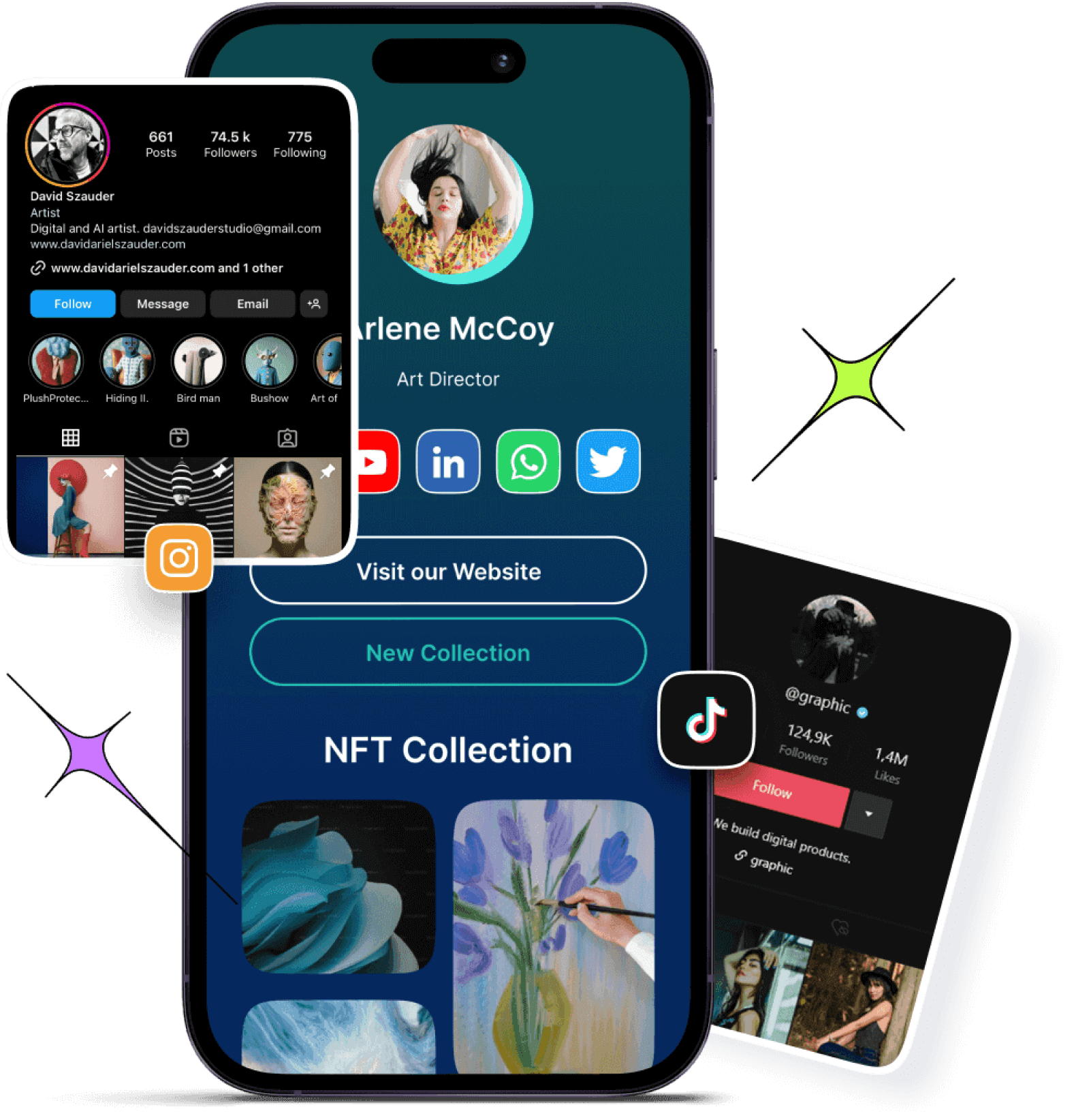



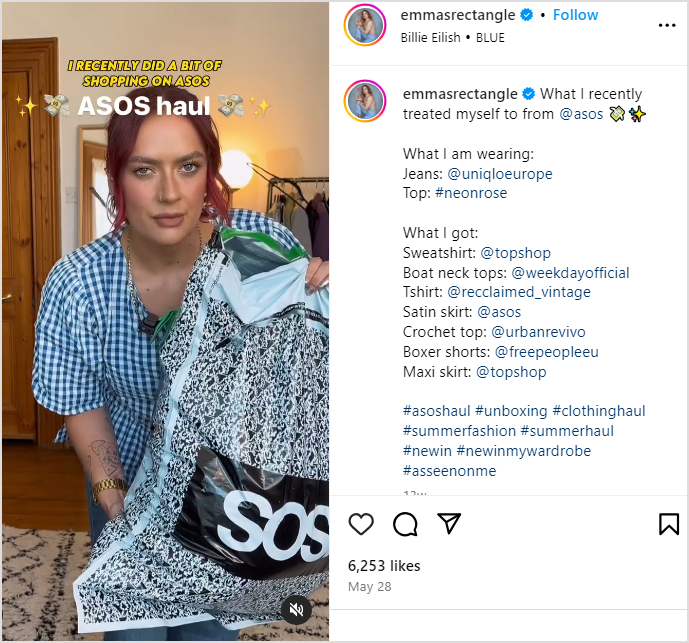



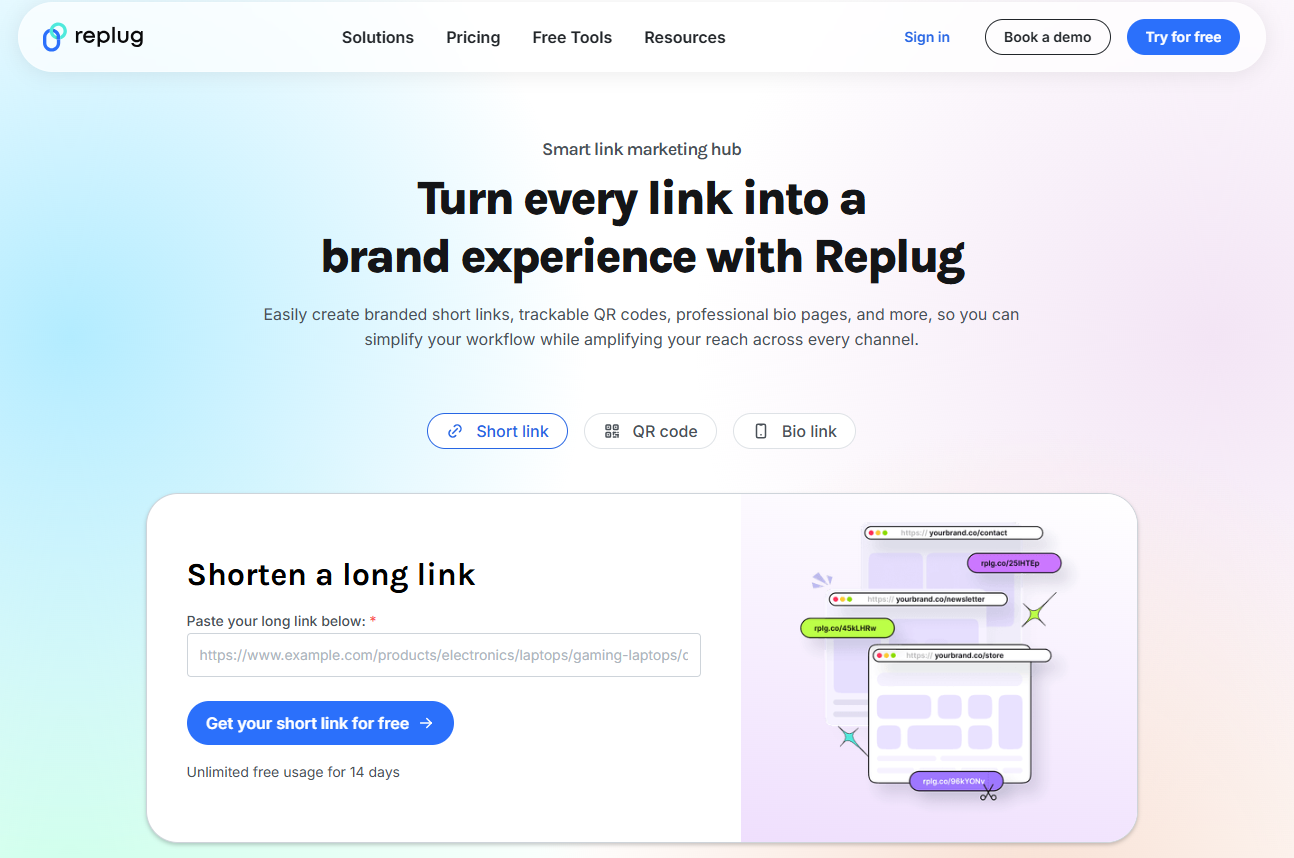
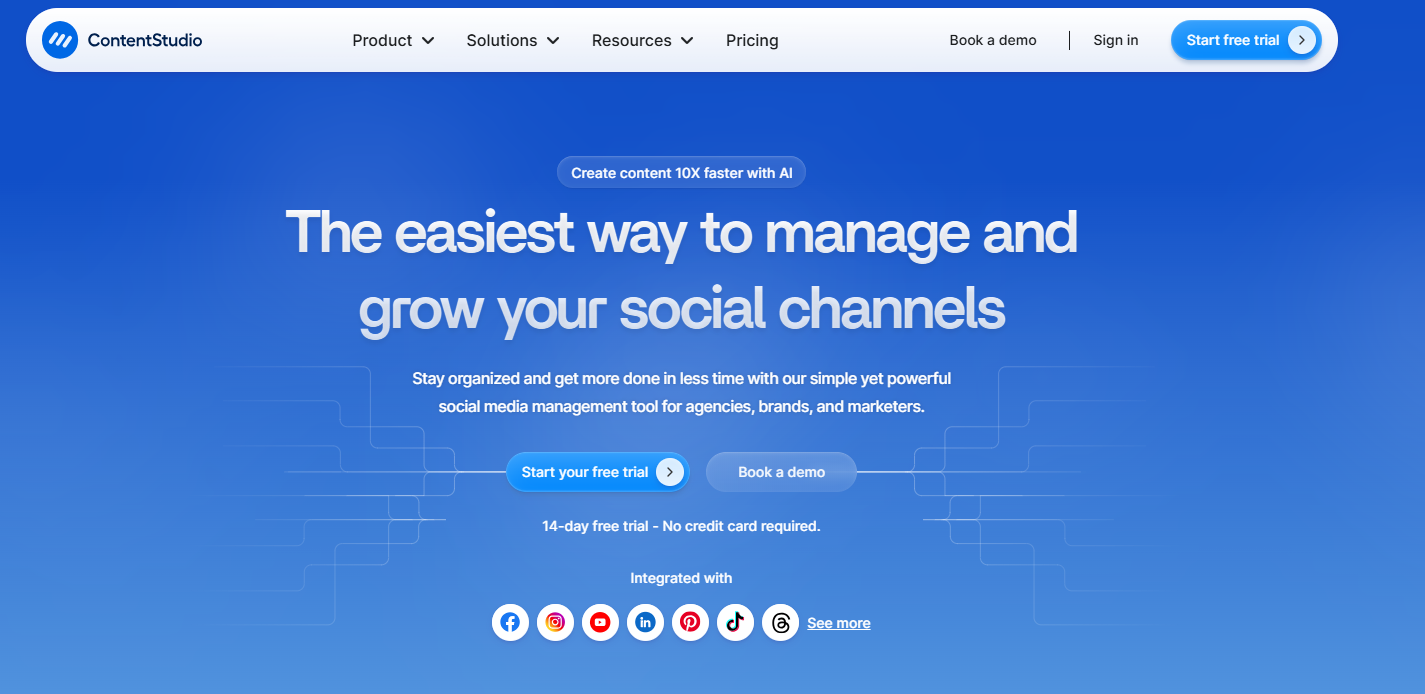
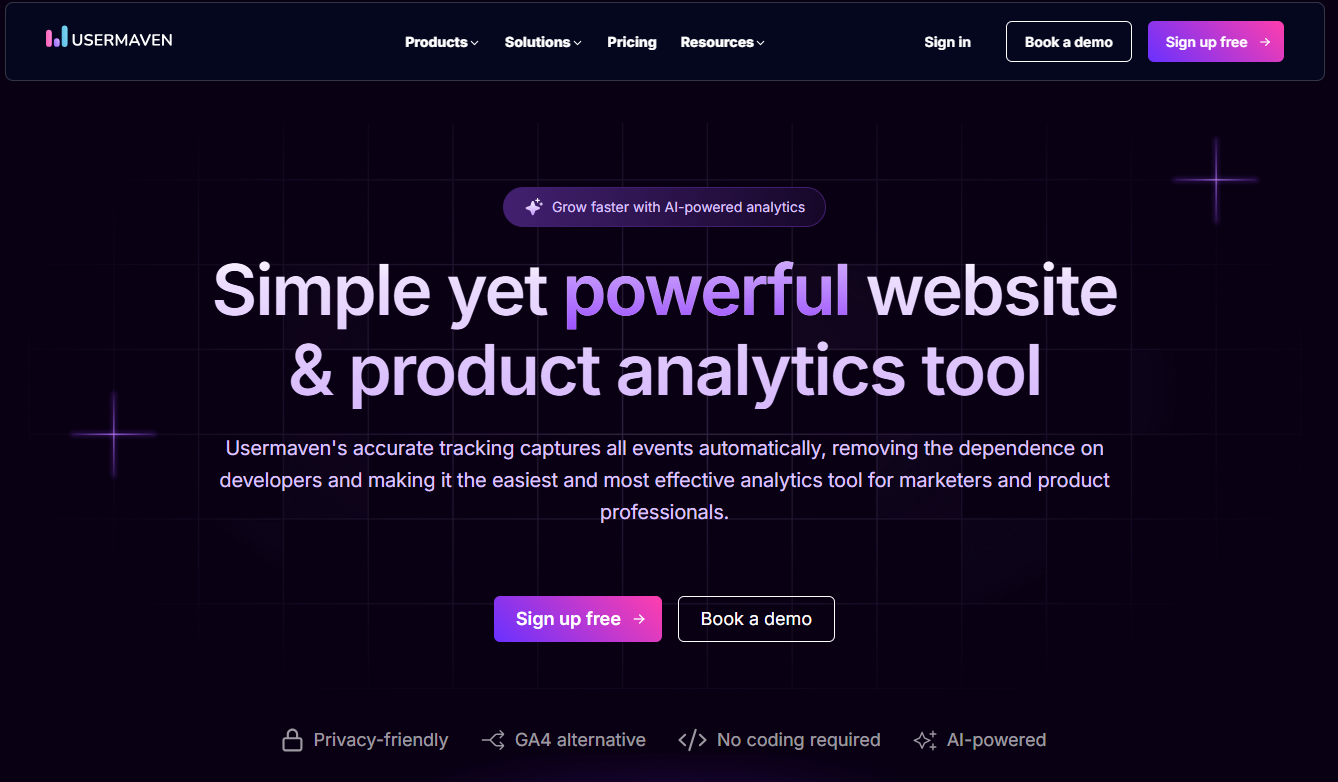
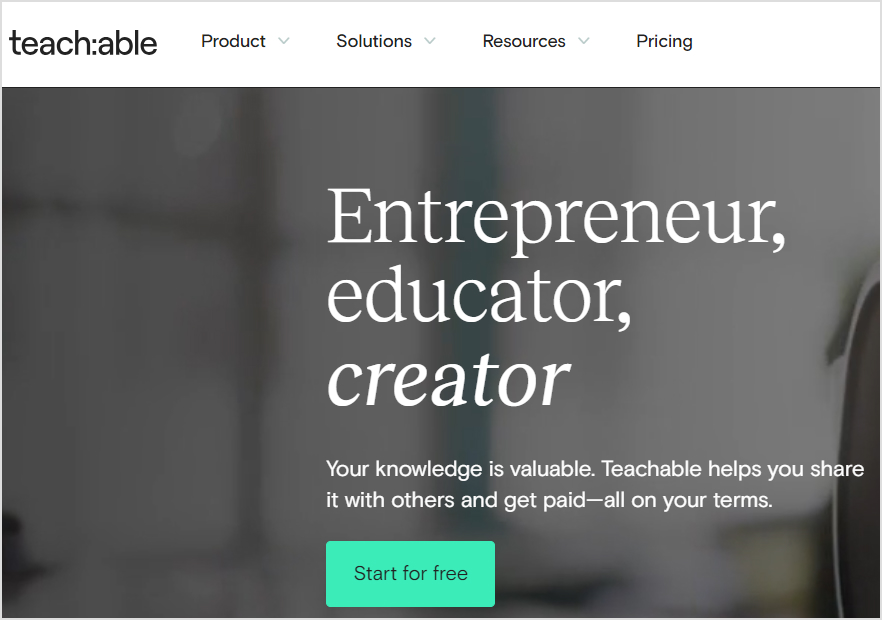
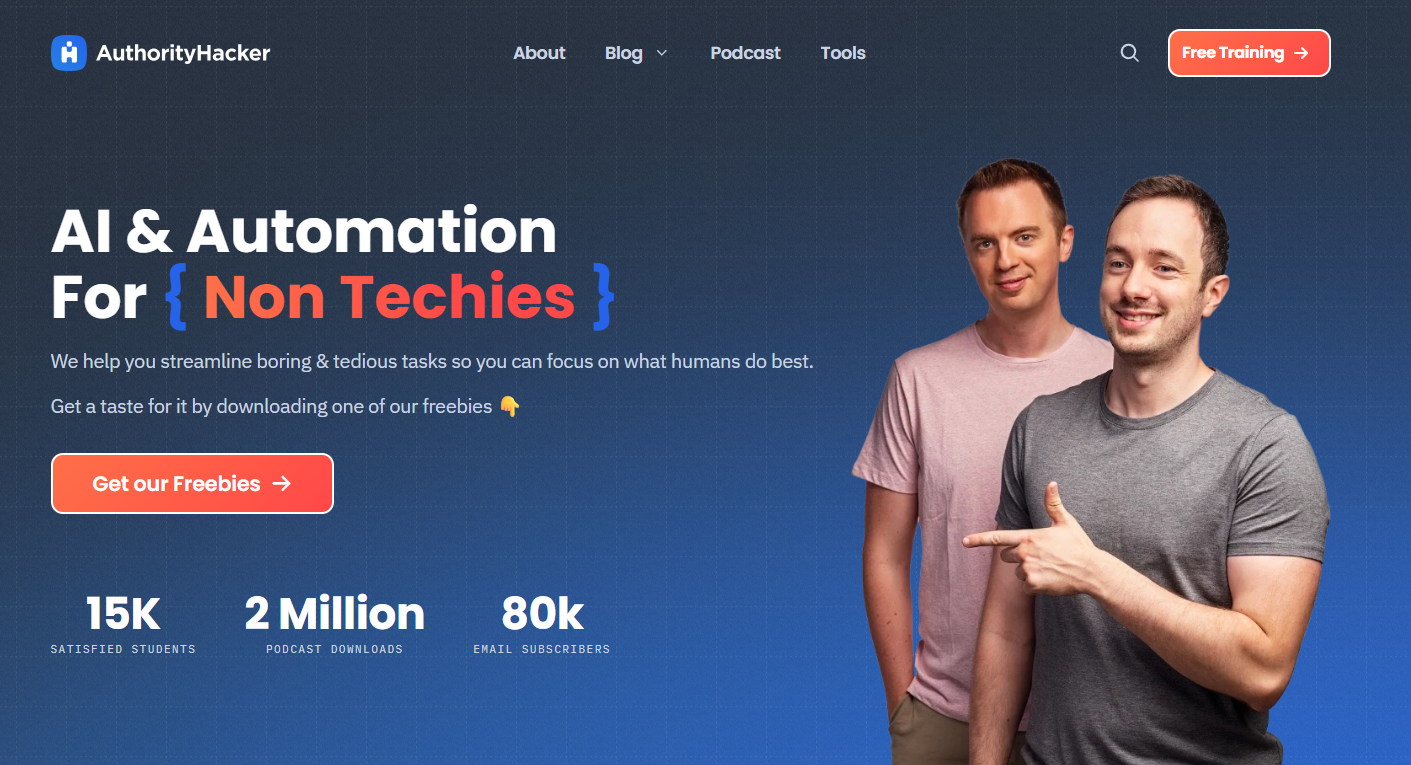

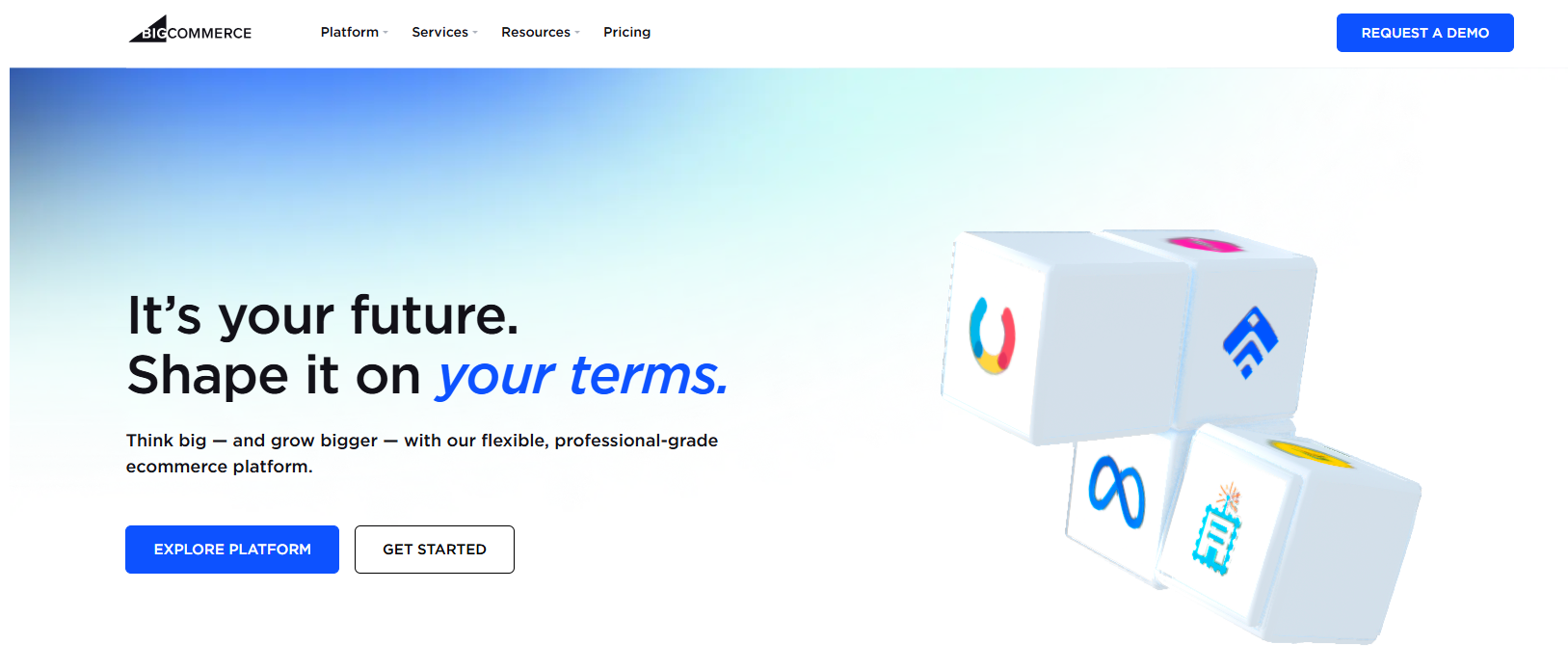
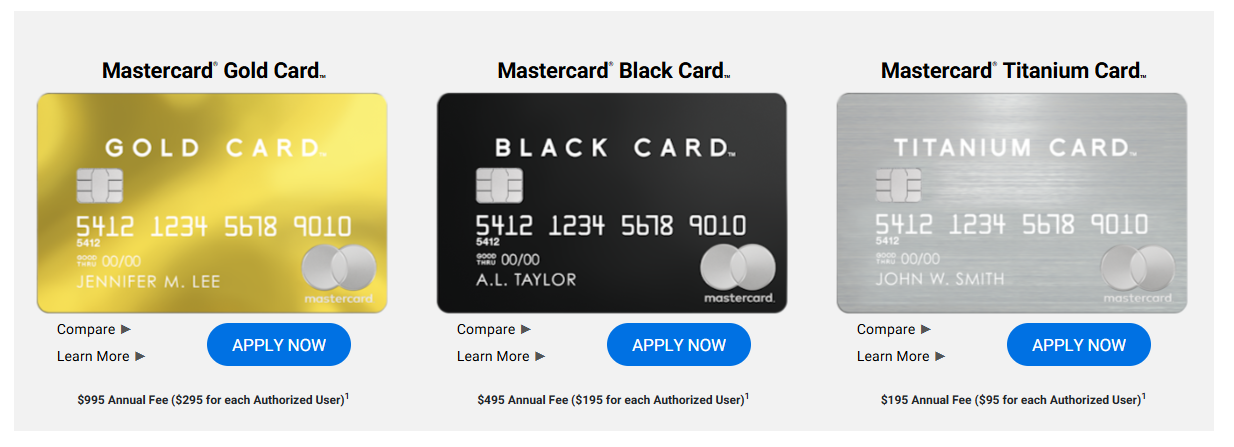

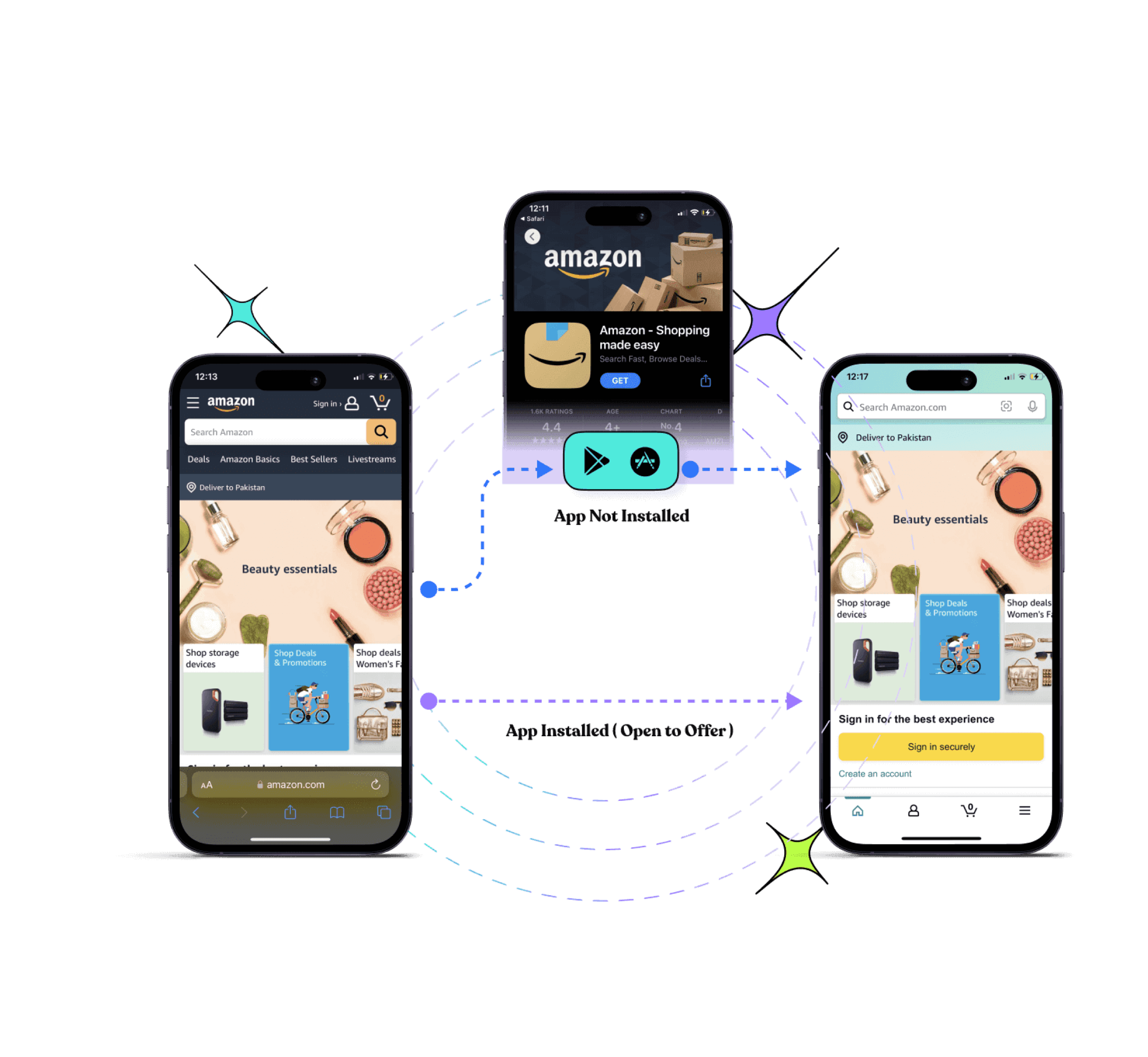


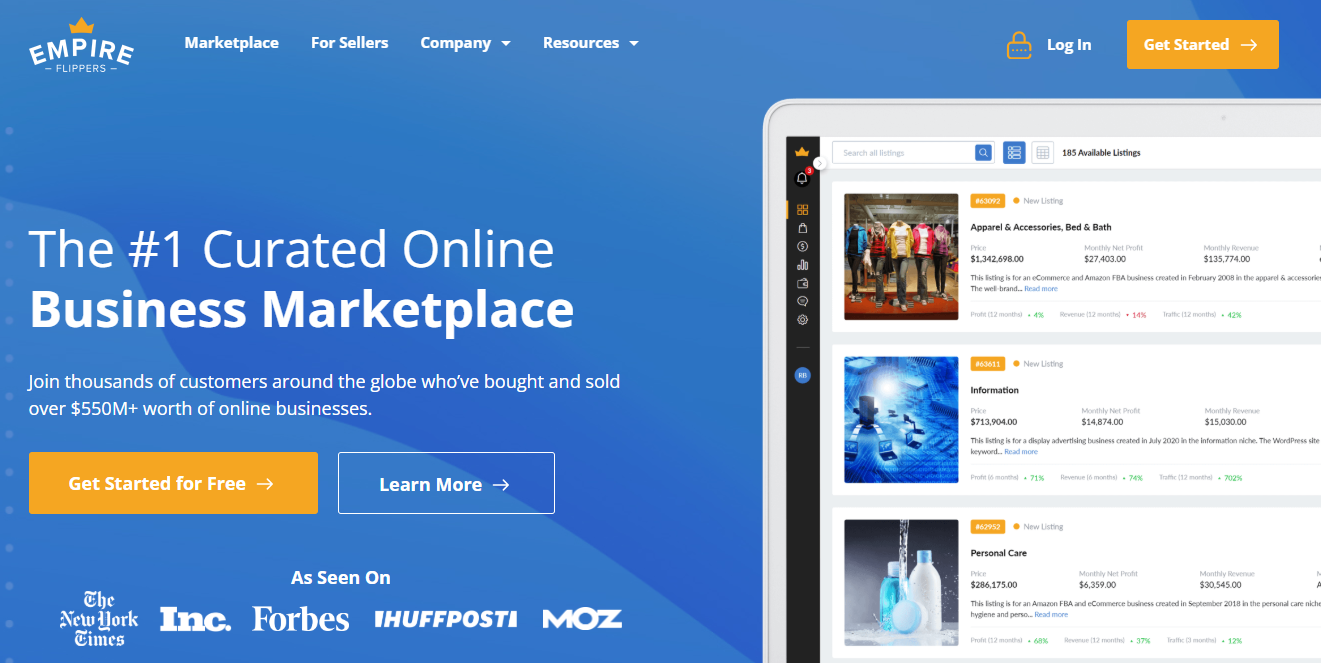
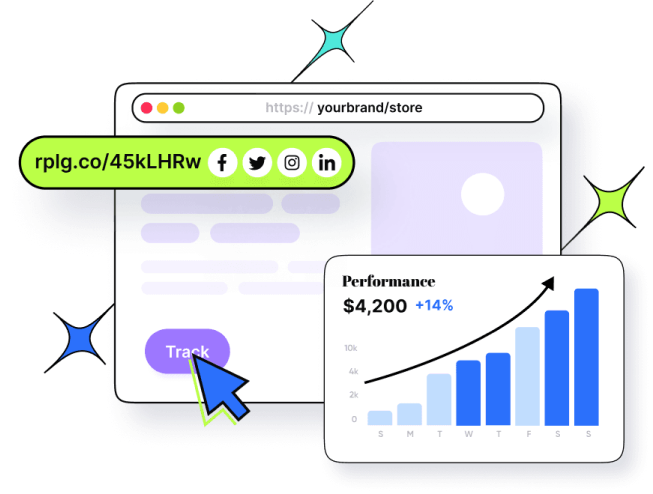
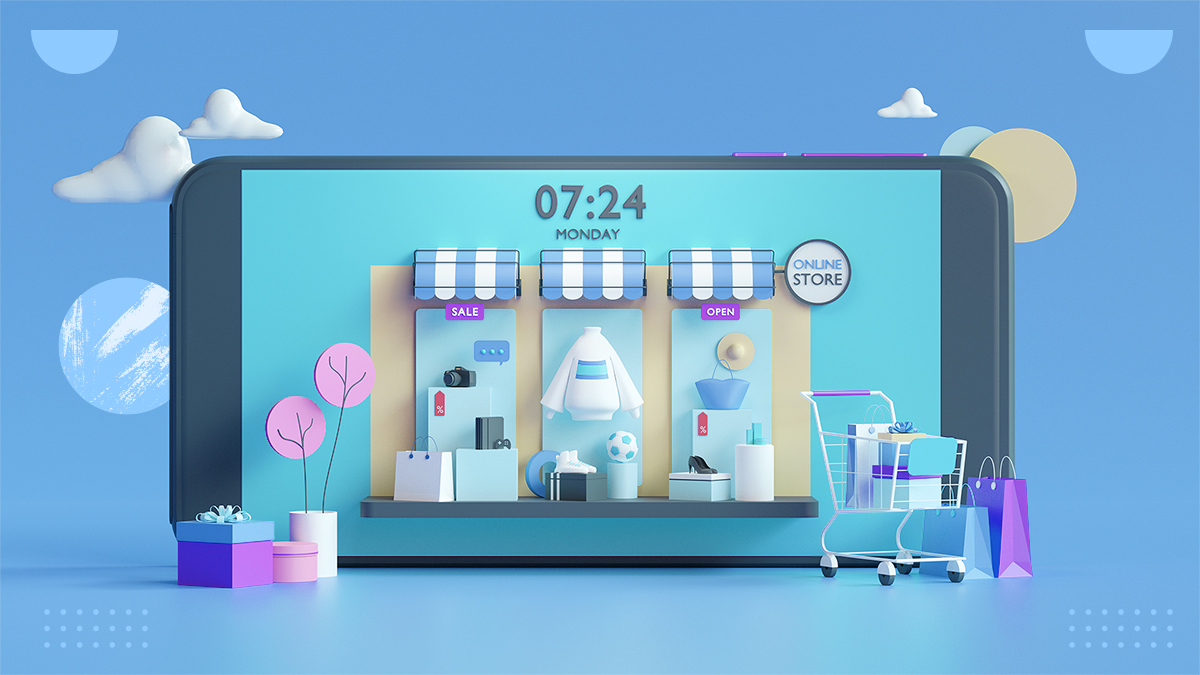

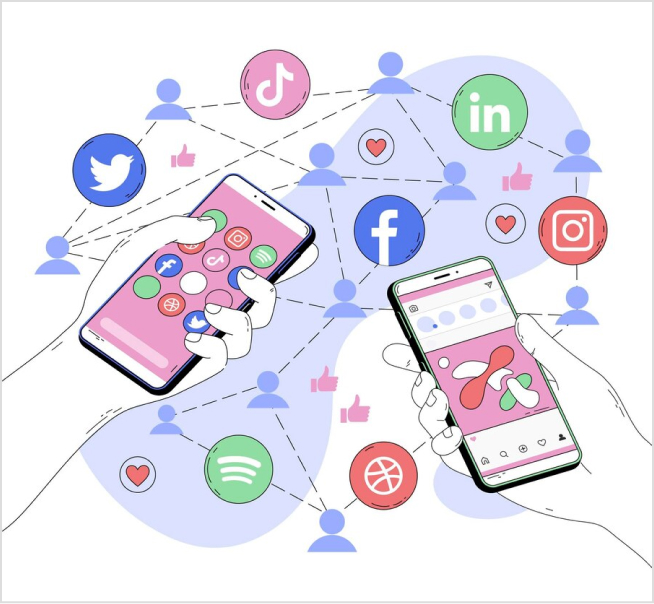

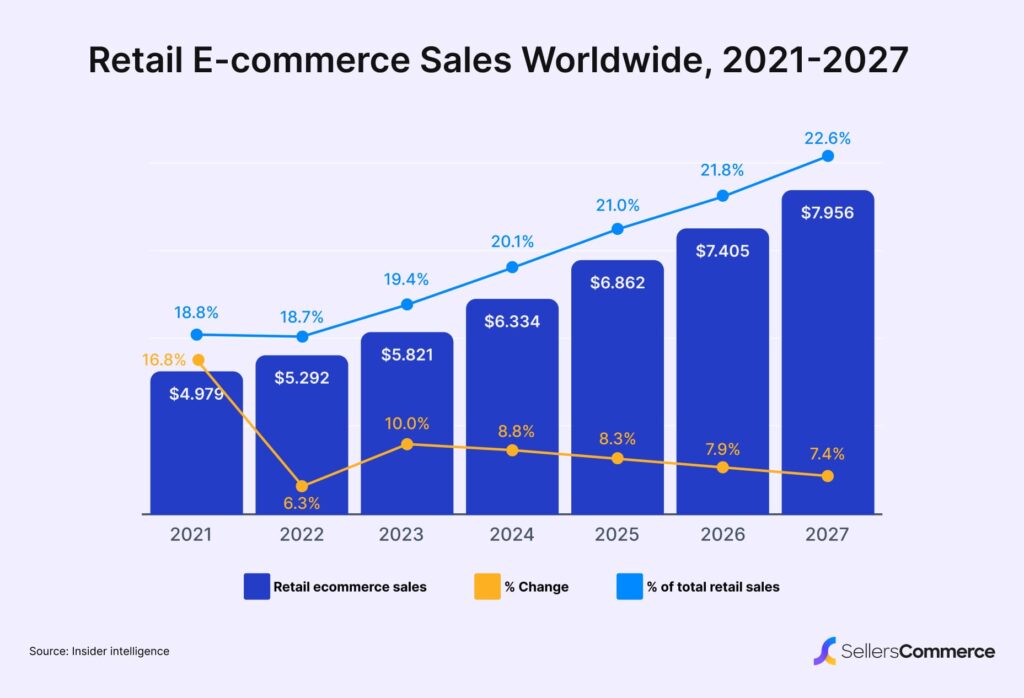



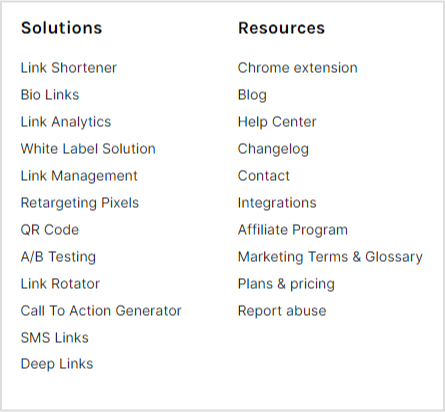
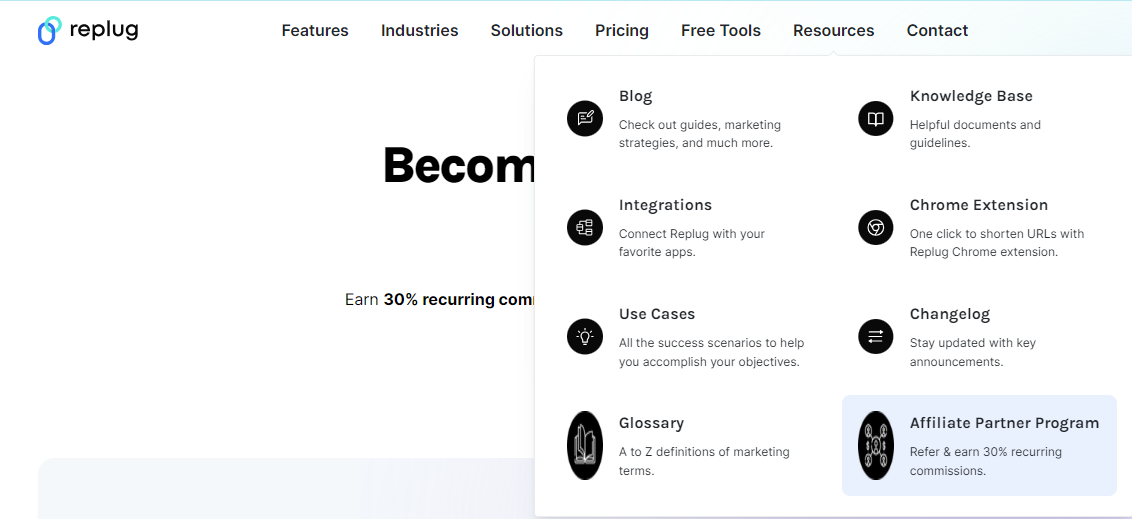
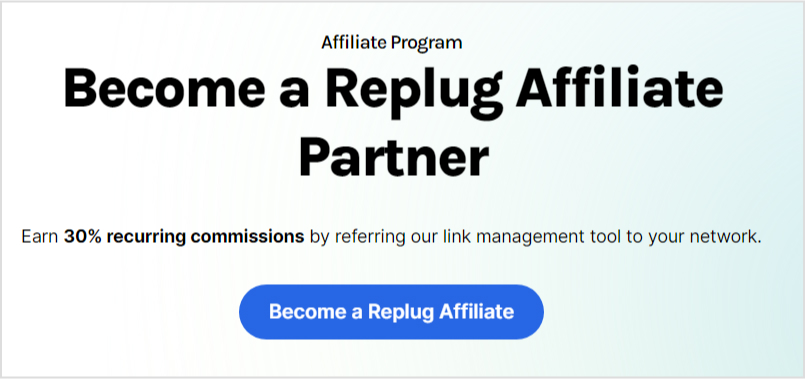
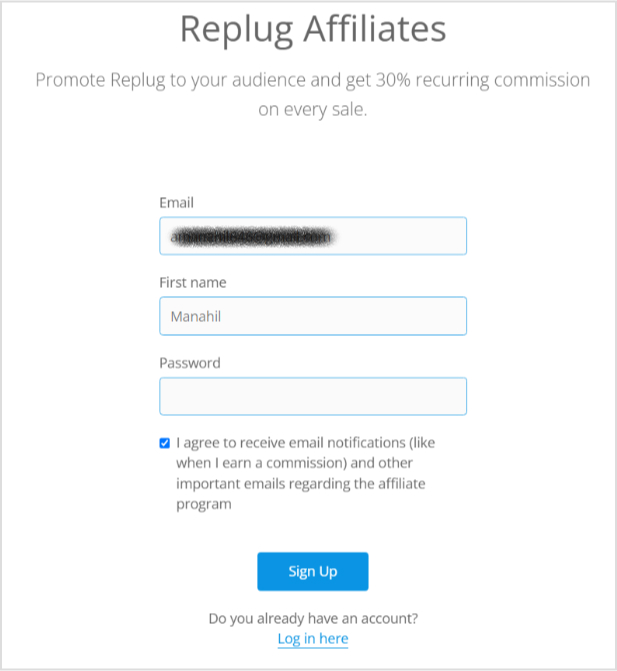
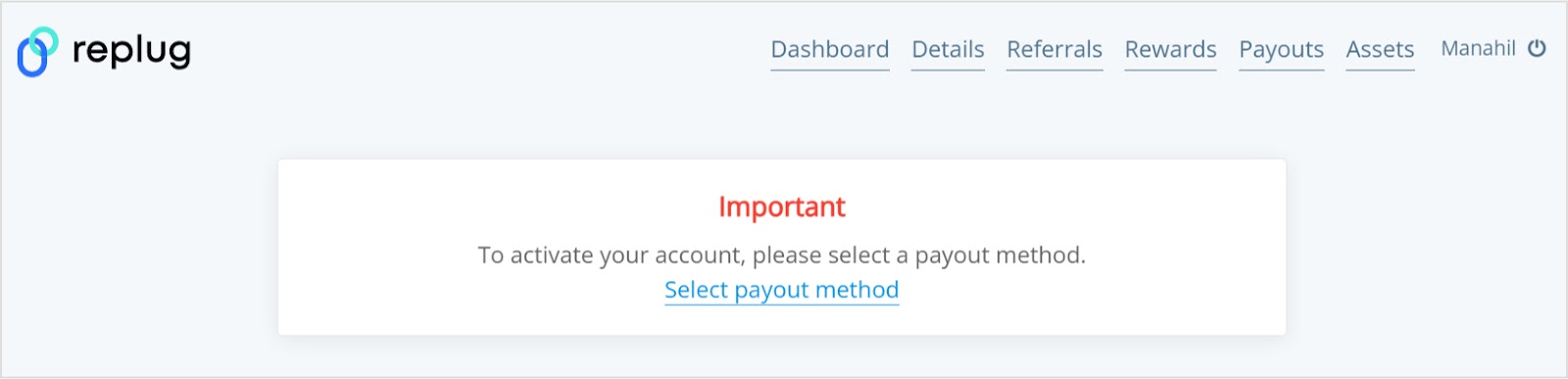
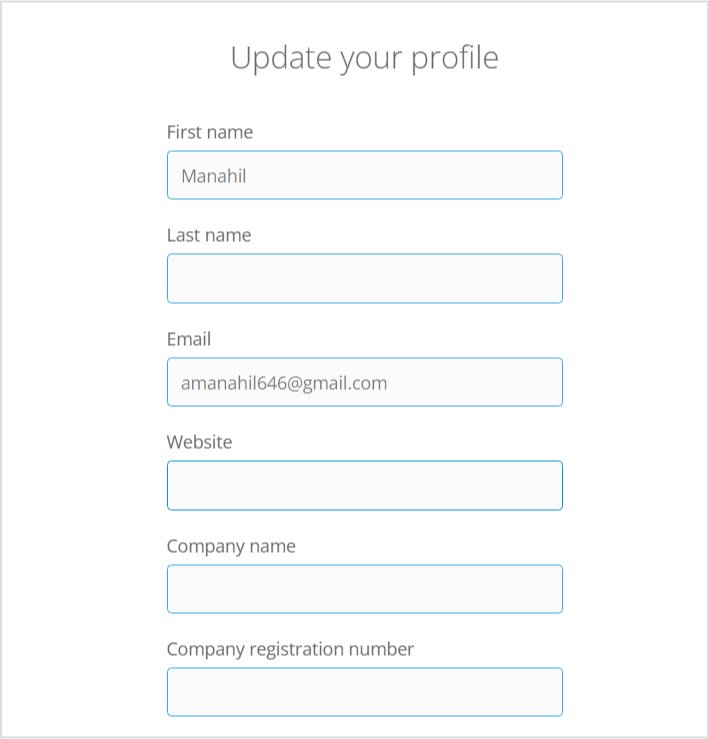
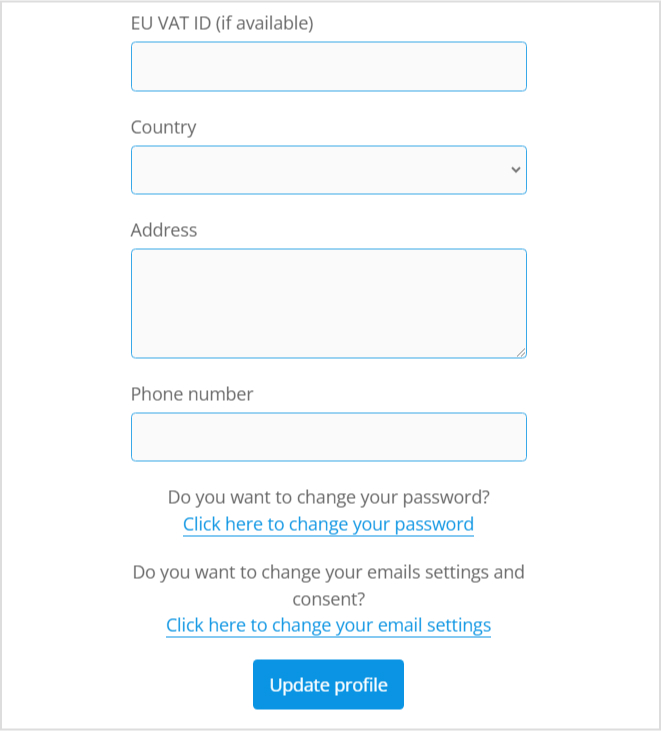
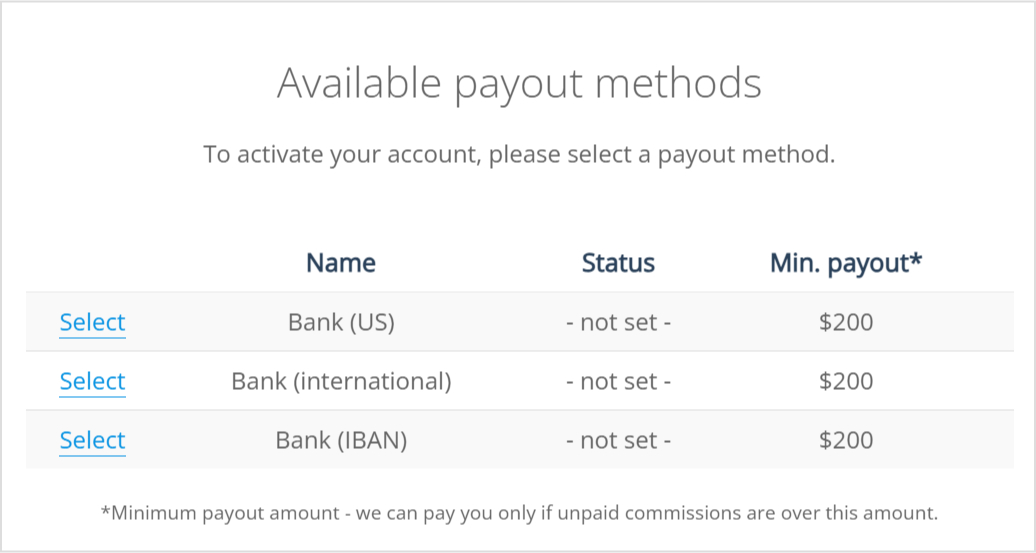
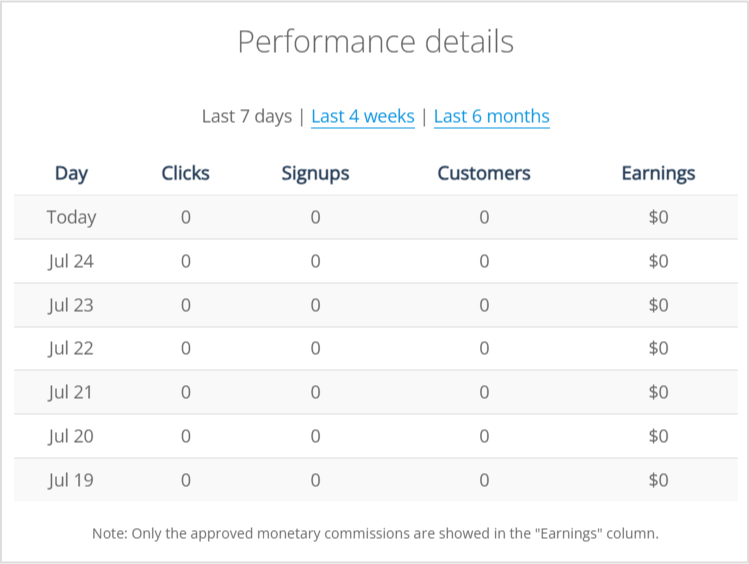
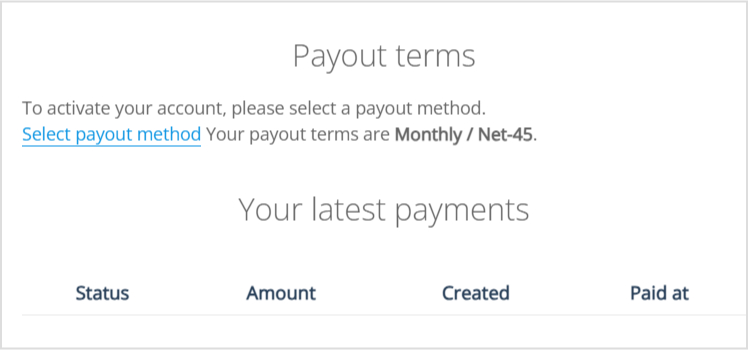
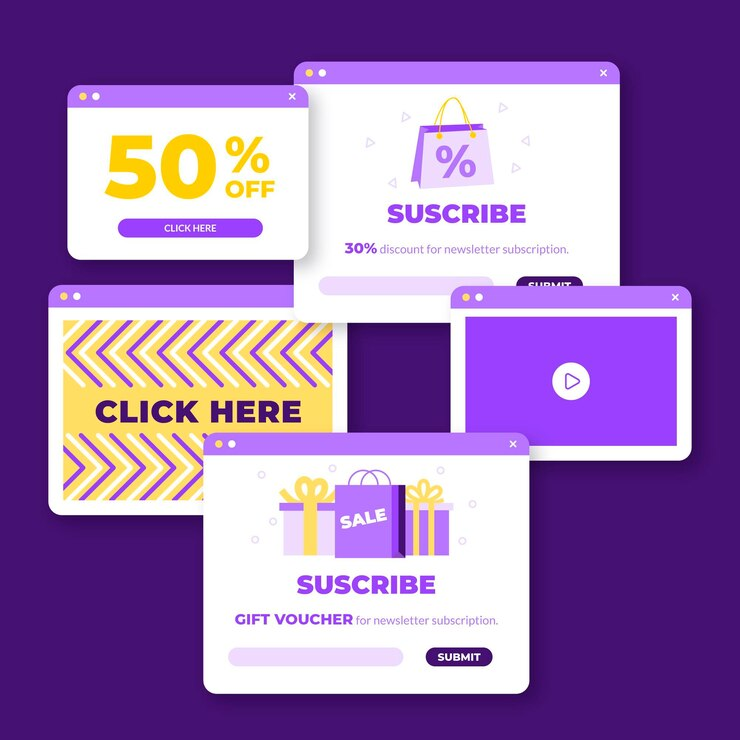
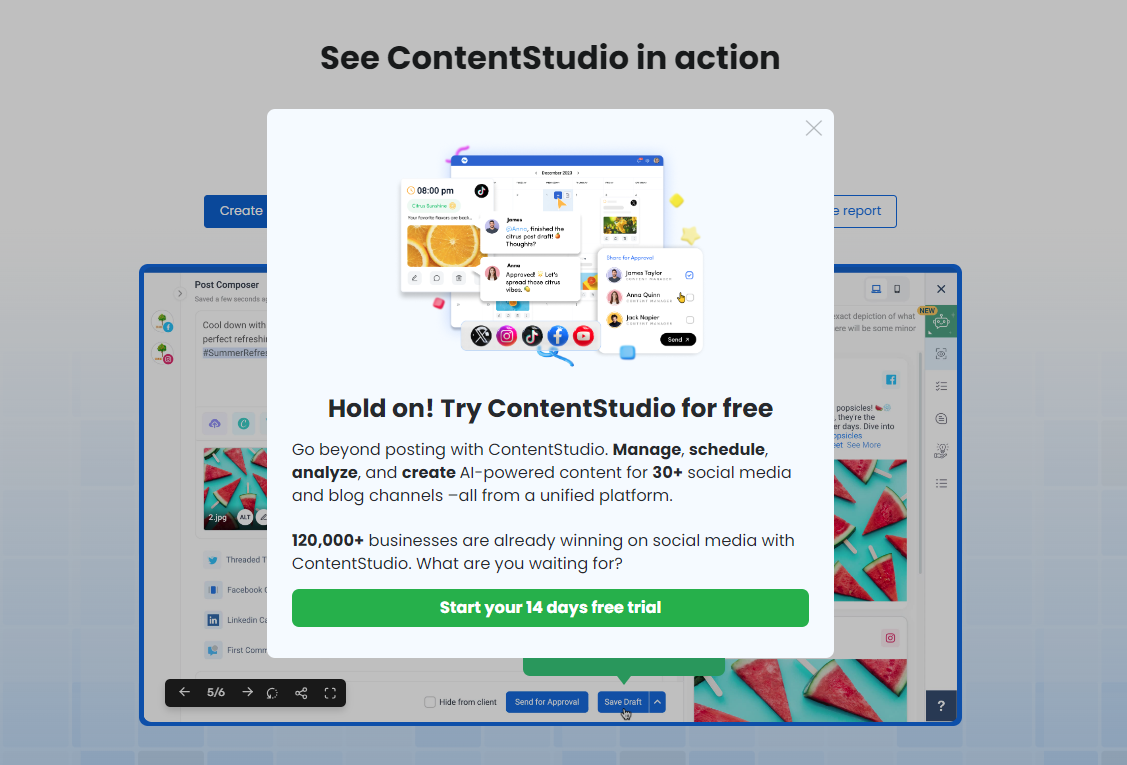
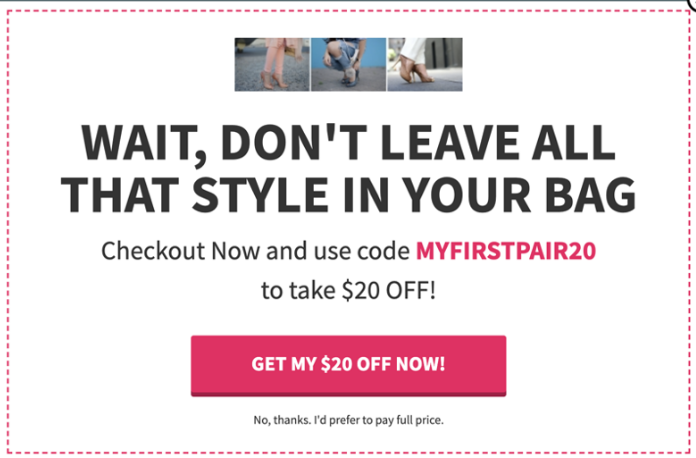
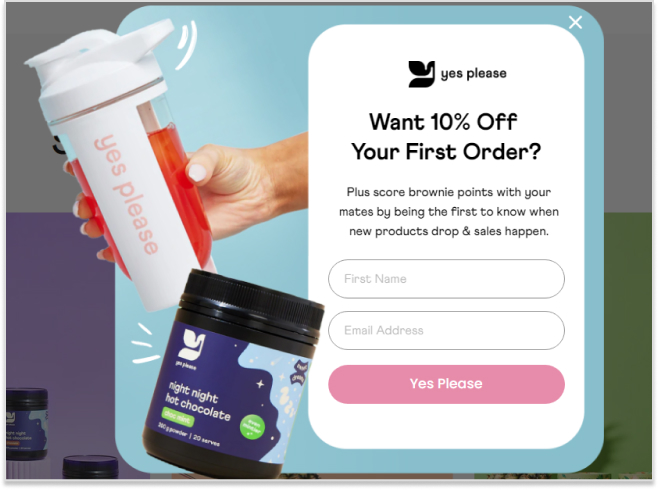
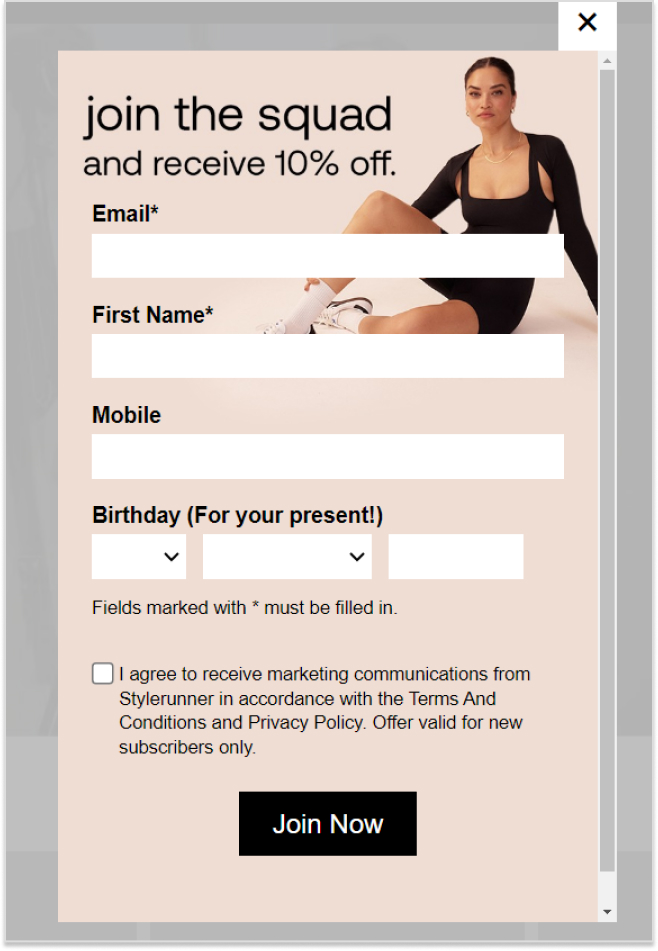
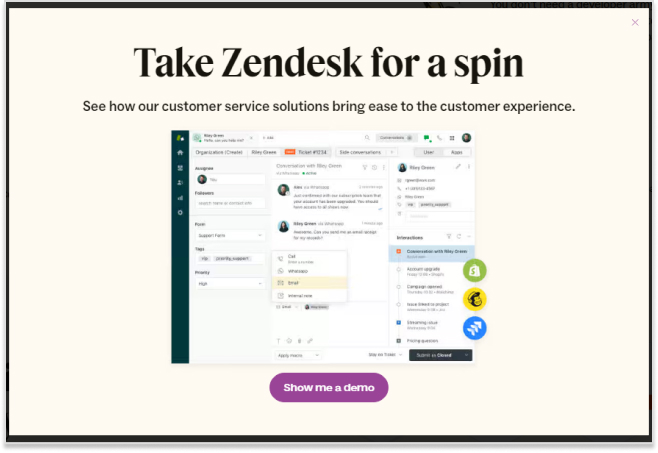
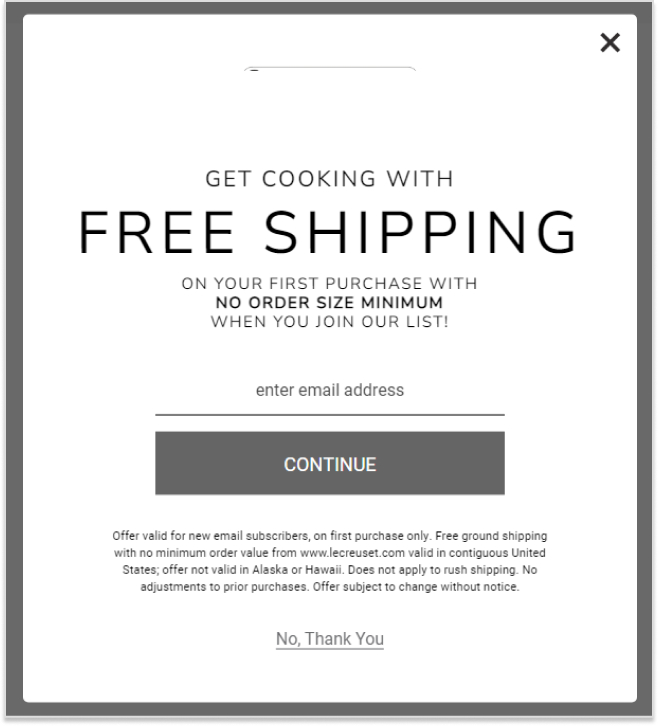

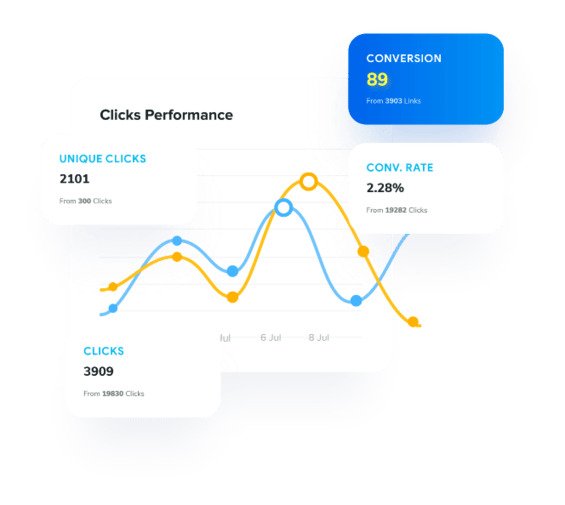
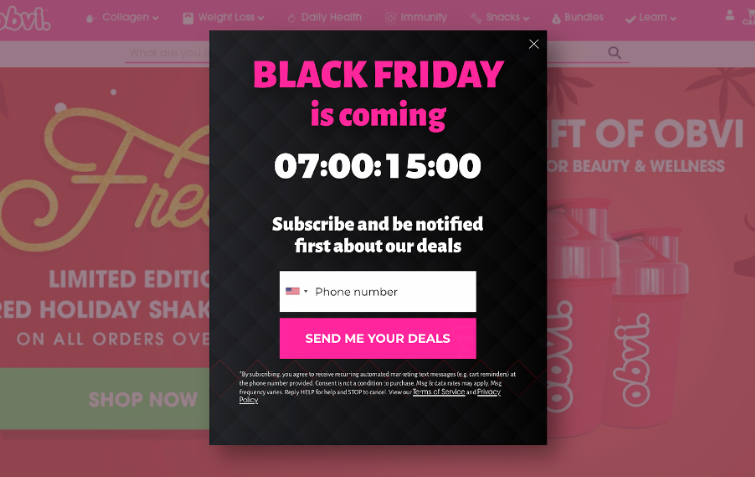
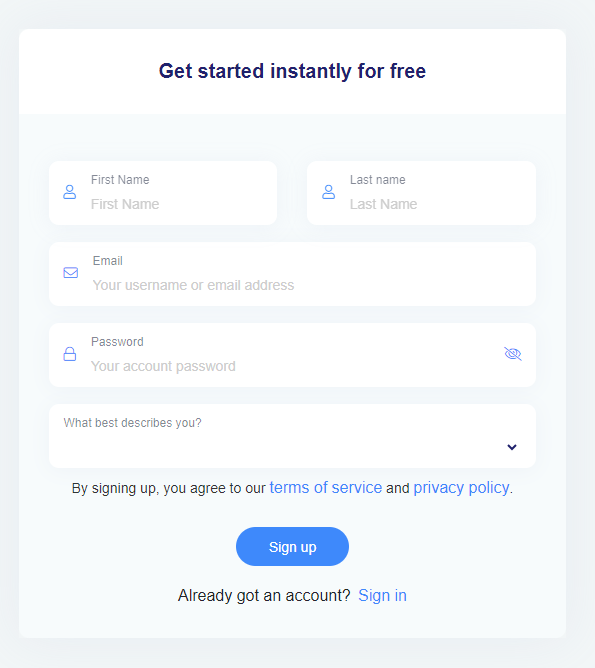

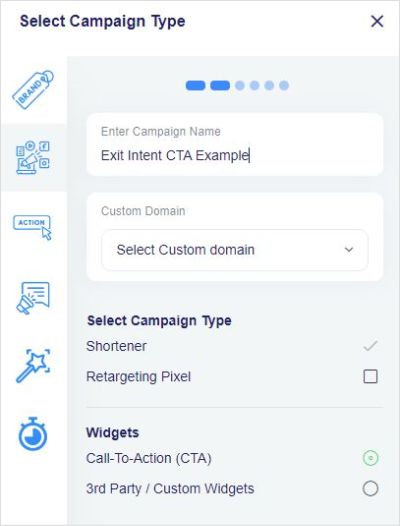
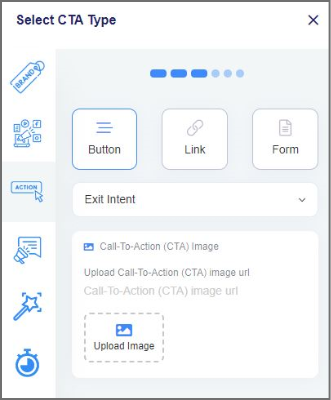
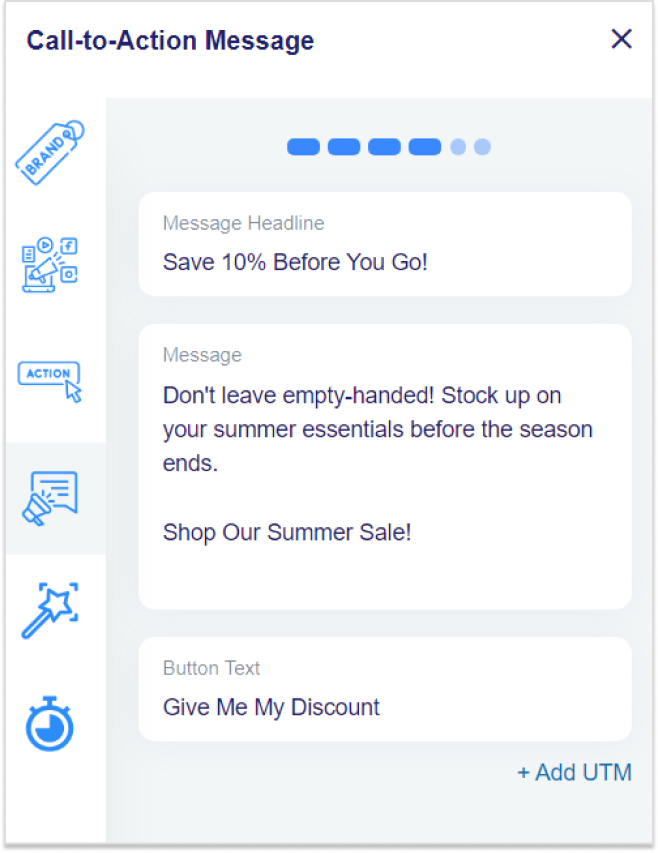
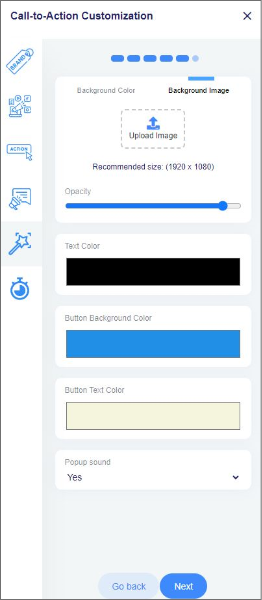
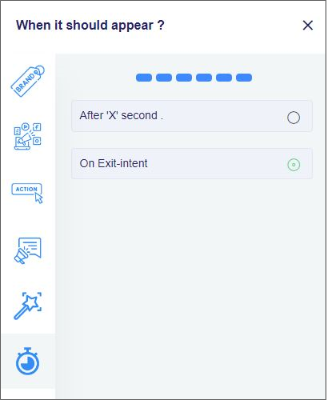
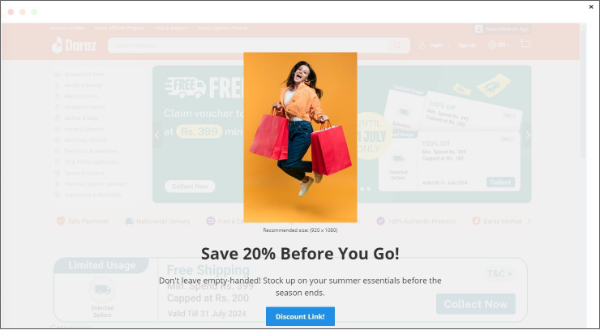
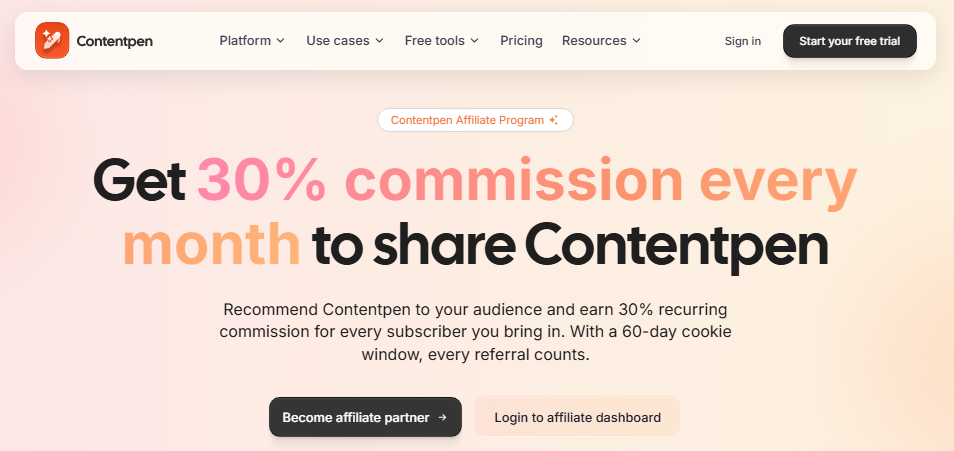
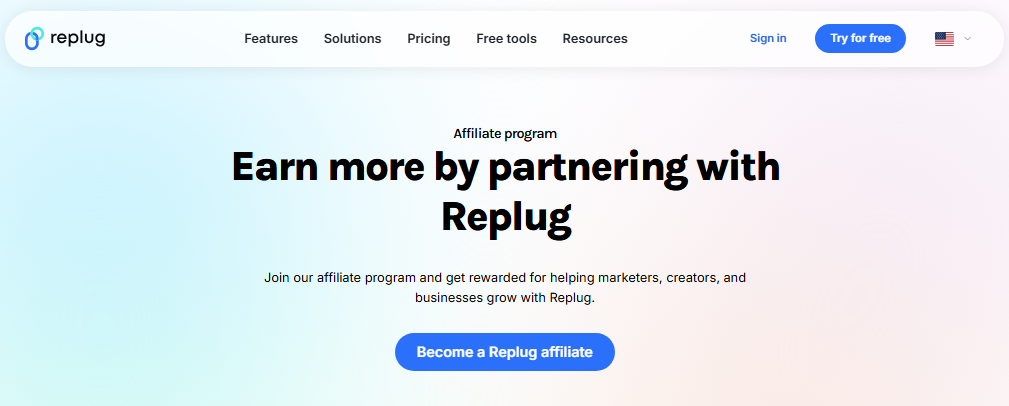

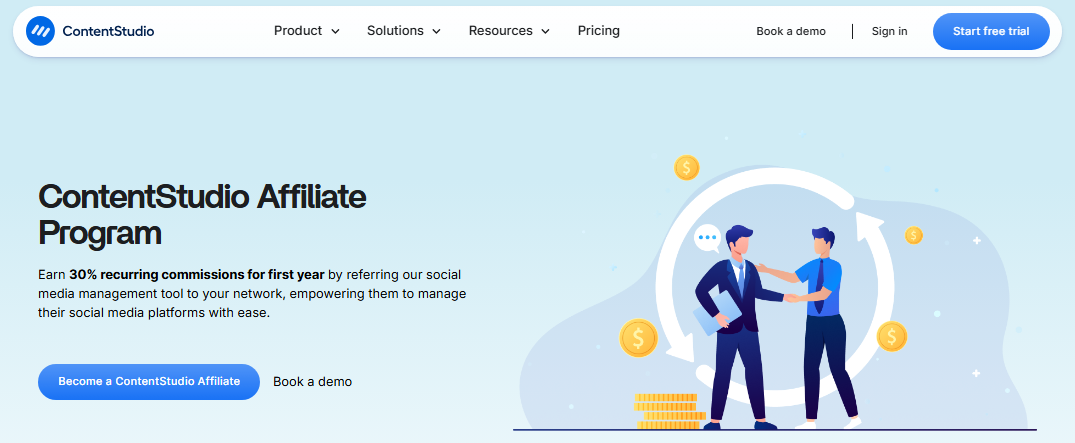

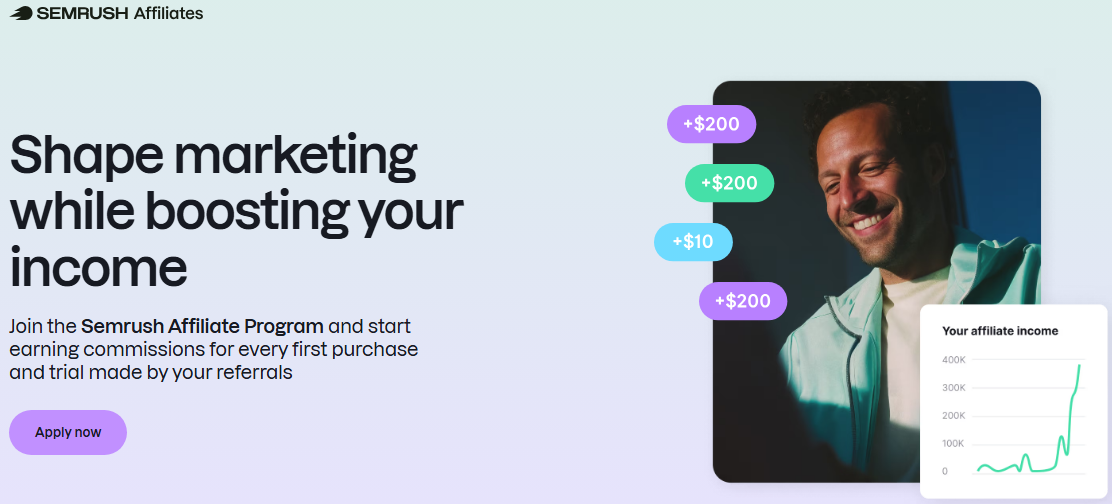

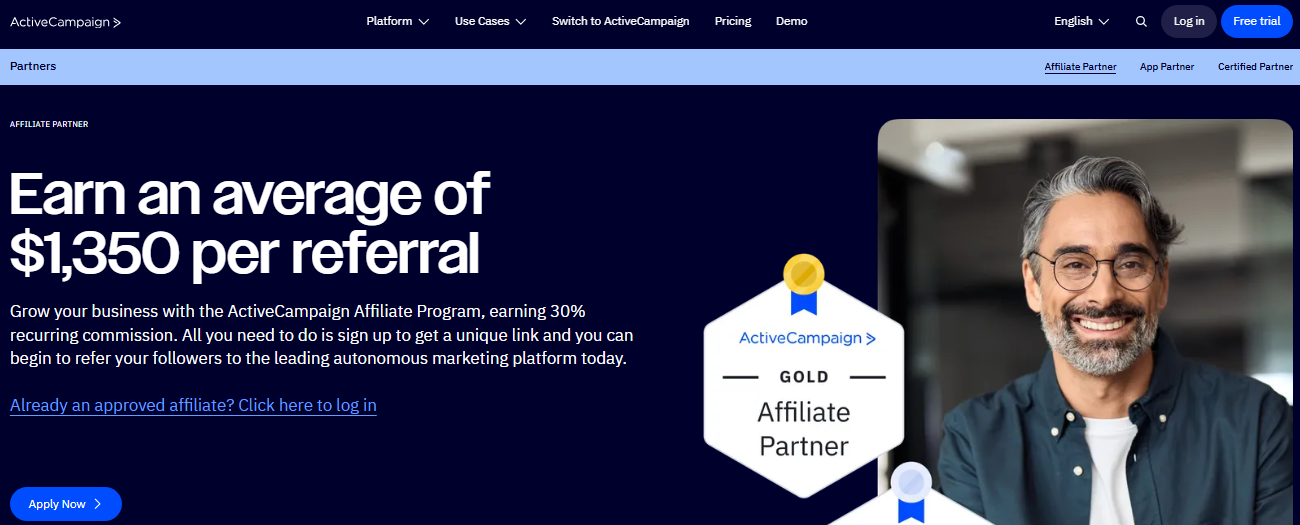
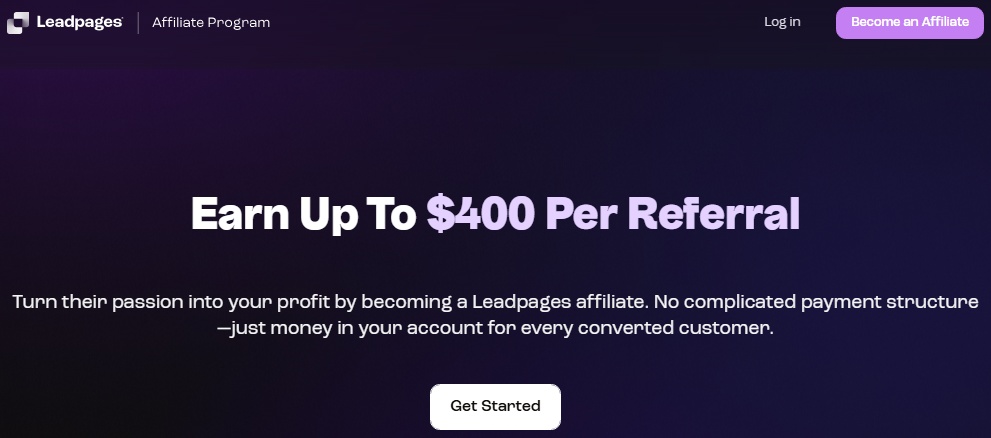
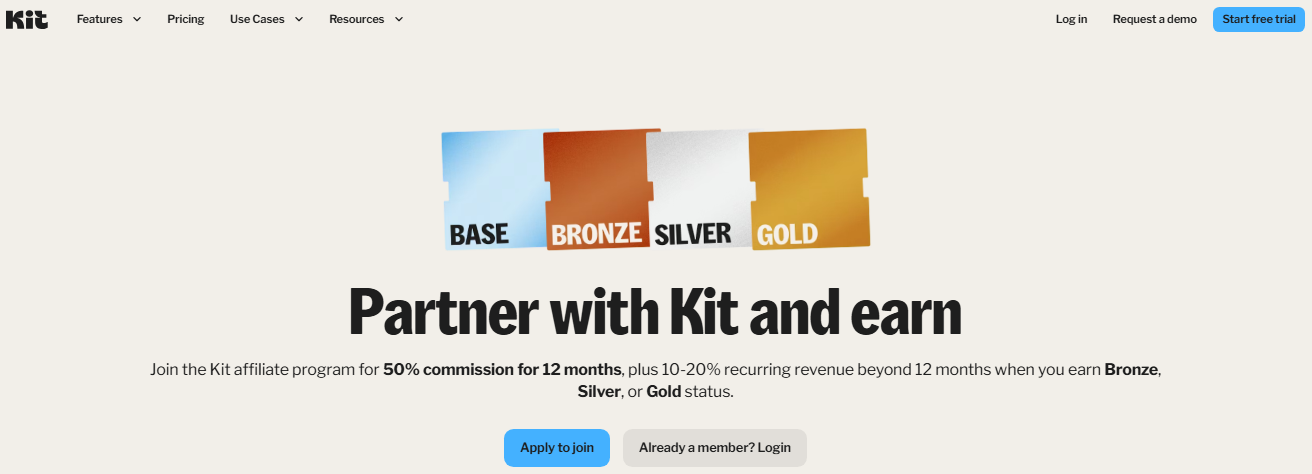
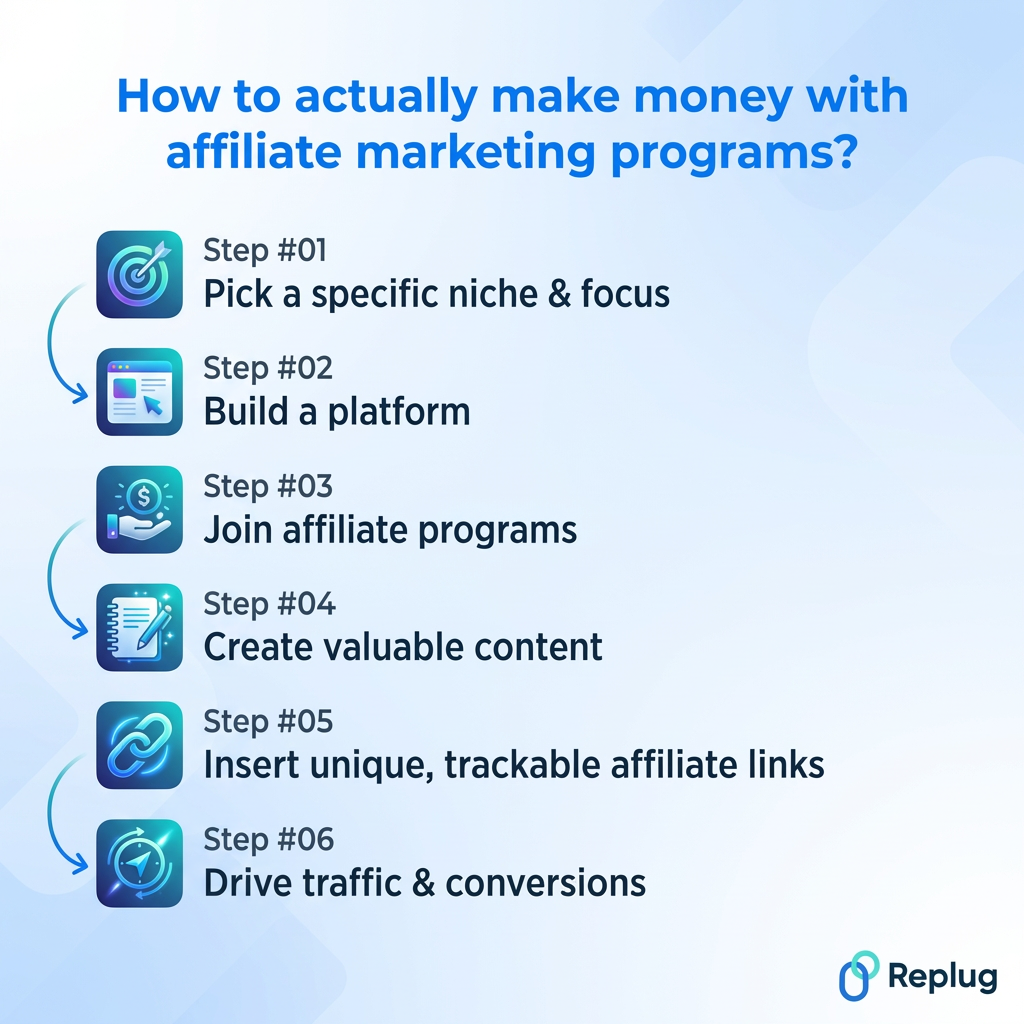
![How to increase sales on Amazon: Understanding A10 [Updated]](https://internal-blog.replug.io/wp-content/uploads/2019/02/how-to-increase-sales-on-amazon.png)