Category: Marketing

Read blogs covering digital marketing, strategies, tools, and growth insights to level up your campaigns.

  • What is email marketing: A practical guide for novice email marketers in 2026!

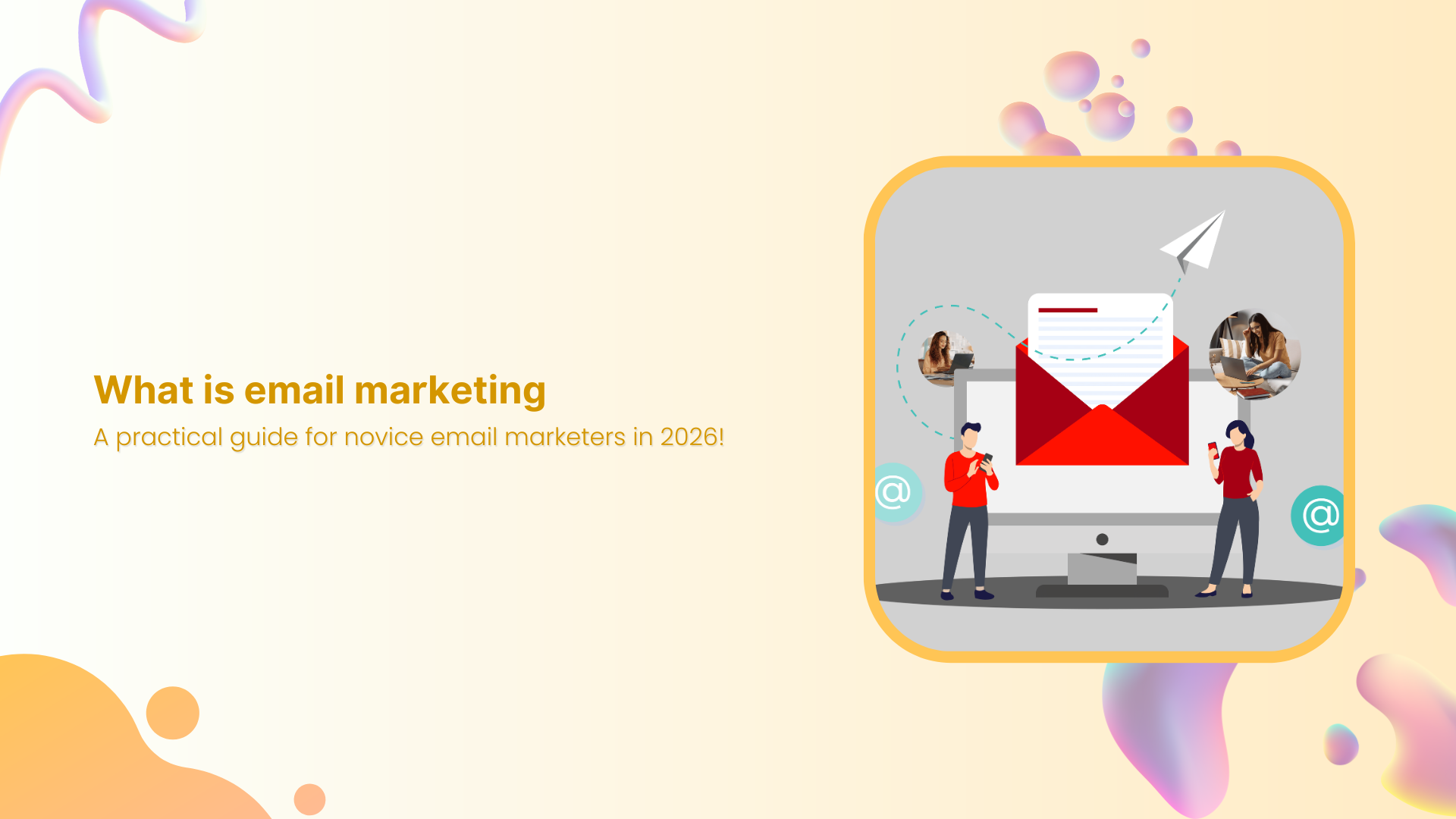
    What is email marketing: A practical guide for novice email marketers in 2026!

    Email might feel old-school compared to flashy social platforms, but the numbers tell a different story. 

    Recent email marketing statistics show that email continues to deliver one of the highest returns in digital marketing, generating roughly $36–$43 for every $1 spent. 

    With over 5 billion email users expected globally and hundreds of billions of emails sent daily, email remains a powerful and widely used communication channel for businesses and consumers alike. 

    Modern email marketing trends also highlight the rise of AI, automation, and personalization, with automated, targeted campaigns driving significantly higher conversion rates and engagement.

    So, why does email marketing continue to dominate despite constant changes in the digital landscape? 

    To fully understand its impact and evolution, let’s begin by defining email marketing and tracing its development over time.

    What is email marketing: A brief overview & history

    “Email marketing” is a digital marketing strategy in which businesses send promotional, informational, or relationship-building messages to people via email. 

    Its primary objective is to:

    • connect with audiences, 
    • promote products or services, 
    • nurture customer relationships, and 
    • encourage repeat purchases or engagement.

    In simple terms, it helps brands stay in touch with their audience in a direct and personal way.
    What is email marketing

    The roots of email marketing go back to 1978, when marketing executive Gary Thuerk sent the first mass promotional email to around 400 users on ARPANET. It generated significant sales and proved the significant potential of email marketing.

    Over the 1990s and 2000s, the rise of webmail, HTML emails, and automation tools made campaigns more visually appealing and targeted. 

    Today, email marketing uses personalization, AI, and analytics to deliver smarter and more engaging campaigns. 

    Now that you know where it started, let’s explore the fundamental components of email marketing.

    Key components of email marketing

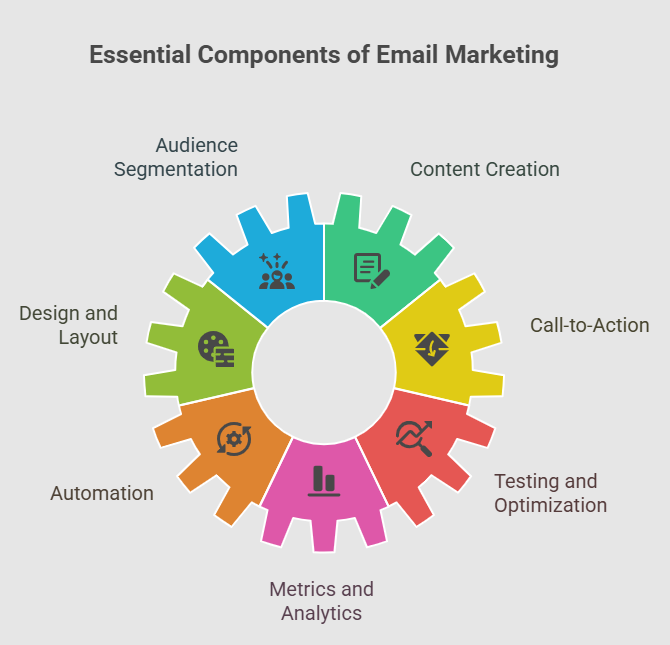
    Email marketing works best when several important elements come together. These components help businesses send the right messages to the right people while staying effective and compliant.
    Key components of email marketing

    Permission-based subscriber list

    This means sending emails only to people who have agreed to receive them (also called opt-in subscribers). Permission-based lists usually deliver better engagement, fewer spam complaints, and stronger ROI because the audience actually wants to hear from you.

    Segmenting audiences for relevance

    Segmentation means dividing subscribers into smaller groups based on factors like demographics, interests, behavior, or purchase history. This helps marketers send more personalized and relevant messages instead of generic emails.

    Engaging content with strong subject lines

    The subject line is the first thing people see in their inbox and plays a big role in whether they open the email. Clear, curiosity-driven, and relevant subject lines improve open rates and overall engagement.

    Email platform

    An email platform, or Email Service Provider (ESP), is a tool that helps businesses create, send, and track email campaigns. It usually offers templates, automation, list management, segmentation, and performance tracking features.

    Privacy laws compliance

    Email marketers must comply with privacy and anti-spam laws such as GDPR and CAN-SPAM. These rules require honest subject lines, valid sender details, and easy unsubscribe options to protect users and prevent spam.

    Email visuals & design

    Good design makes emails easier to read and more appealing. Mobile-friendly layouts, clear structure, consistent branding, and strong call-to-action buttons colors improve user experience and engagement.

    Drip campaigns

    Drip campaigns are automated email sequences sent over time based on user actions or timelines. They help nurture leads, onboard customers, and guide subscribers through their journey.

    Important metrics tracking

    Tracking metrics like open rate, click-through rate, conversions, bounce rate, and unsubscribe rate helps marketers understand what’s working and where improvements are needed.

    How to get started with email marketing

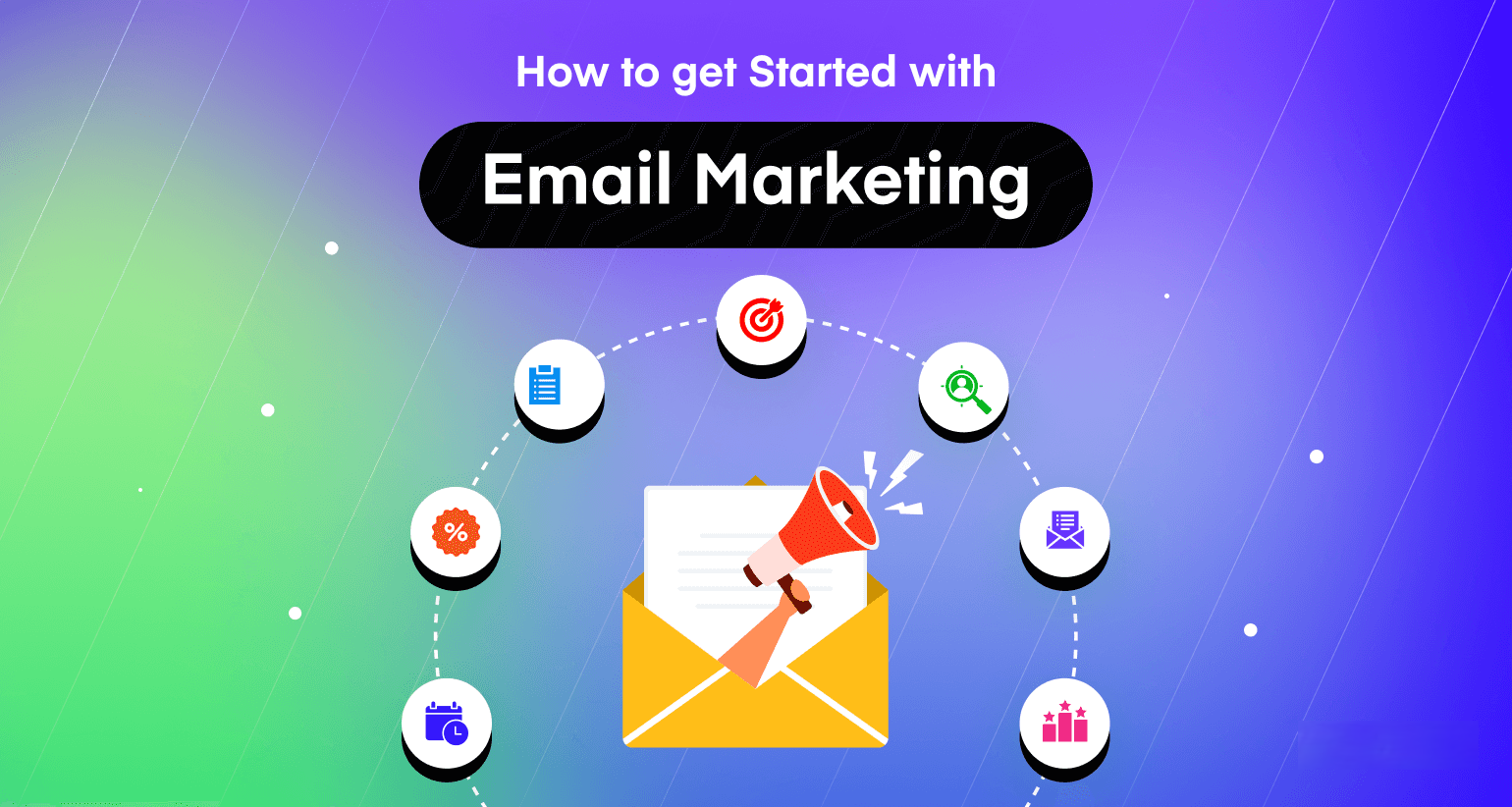
    Getting started with email marketing may seem stressful at first, but it becomes simple when you follow a clear, step-by-step process. Let’s break down the key steps you should focus on.
    How to get started with email marketing

    Here’s how to do email marketing:

    1. Build an email list

    Start by collecting email addresses from people who genuinely want to hear from you. You can use sign-up forms, landing pages, or free resources like ebooks or discounts to encourage subscriptions. A quality list is more valuable than a large but uninterested audience.

    2. Pick the right platform/software

    Choose a reliable ESP that helps you create, send, automate, and analyze campaigns hassle-free. Good platforms usually offer automation, segmentation, mobile-friendly templates, and reporting features to simplify your workflow.

    3. Set primary goals & objectives

    Before sending emails, decide what you want to achieve. Your goals might include increasing sales, growing your subscriber list, generating leads, or boosting engagement. Clear goals help you measure success and plan better campaigns.

    4. Segment audience

    Divide your subscribers into smaller groups based on interests, behavior, demographics, or purchase history. Segmentation helps you send more personalized emails, which usually leads to better engagement and stronger customer relationships.

    5. Design & create campaign content

    Create emails that provide immense value to your audience. Focus on clear subject lines, helpful content, on-point call-to-action phrases, and mobile-friendly design. The more relevant and engaging your content is, the better your results will be.

    6. Optimize the email campaign

    Test different subject lines, layouts, send times, and content styles to see what works best. A/B testing helps you improve performance and understand what your audience prefers over time.

    7. Track critical metrics

    Tracking performance helps you understand how your campaigns are doing. Important metrics include open rate, CTR, conversion rate, bounce rate, and unsubscribe rate, which show how recipients interact with your emails and whether your campaigns are driving results.

    Different types of email marketing campaigns

    Email marketing isn’t just about sending one type of message. Businesses use different types of email campaigns depending on their goals, audience stage, and purpose. 

    Here’s a simple breakdown of the most common types.

    Email campaign typeExplanation
    Welcome emailsThese are the first emails sent to new subscribers or customers. They introduce your brand, set expectations, and help start the relationship on the right note.
    Email newslettersRegular emails that share updates, blogs, company news, or helpful content to keep subscribers informed and engaged.
    Promotional emailsEmails designed to promote products, services, discounts, or special offers to encourage purchases.
    Informational emailsThese focus on educating subscribers by sharing guides, tips, updates, and product knowledge rather than direct selling.
    Lead nurturing/automated emailsA series of automated emails sent over time to guide potential customers through the buying journey and build trust.
    Transactional emailsAutomated emails triggered by user actions like purchases, password resets, or account updates, mainly to provide important information.
    Confirmation emailsSent to confirm specific actions like subscriptions, bookings, or purchases to reassure customers that the process is complete.
    Dedicated emailsEmails focused on a single message, product, or offer. Usually sent to a specific audience group.
    Invite emailsEmails used to invite subscribers to webinars, product launches, or special events.
    Interactive emailsEmails that include clickable elements like polls, quizzes, or image sliders to boost engagement.
    Feedback/Survey emailsEmails sent to collect customer opinions, reviews, or satisfaction feedback to improve products or services.
    Retention emailsEmails designed to keep existing customers engaged and loyal by offering value, updates, or exclusive offers.
    Relational emailsEmails focused on building long-term relationships by sharing helpful resources, stories, or personalized content.
    Milestone emailsEmails celebrating birthdays, anniversaries, or customer achievements to create a personal connection.
    Re-engagement/Winback emailsEmails sent to inactive subscribers to encourage them to reconnect with your brand.
    Seasonal marketing emailsEmails sent during special seasons like summer sales or back-to-school campaigns to promote relevant offers.
    Cart abandonment emailsAutomated emails reminding users about items left in their shopping cart and encouraging them to complete the purchase.
    Announcement emailsEmails used to announce product launches, company updates, or new features.
    Event emailsEmails that promote, remind about, or follow up on events such as webinars, conferences, or workshops.
    Cold emailsEmails sent to potential customers who haven’t interacted with your brand yet. Usually for outreach or lead generation.
    Holiday emailsCampaigns built around holidays like the New Year, Christmas, or Black Friday to promote festive deals and engagement.
    Post-purchase follow-up emailsEmails sent after a purchase to thank customers, provide product guidance, or encourage repeat buying.

    Key benefits of email marketing

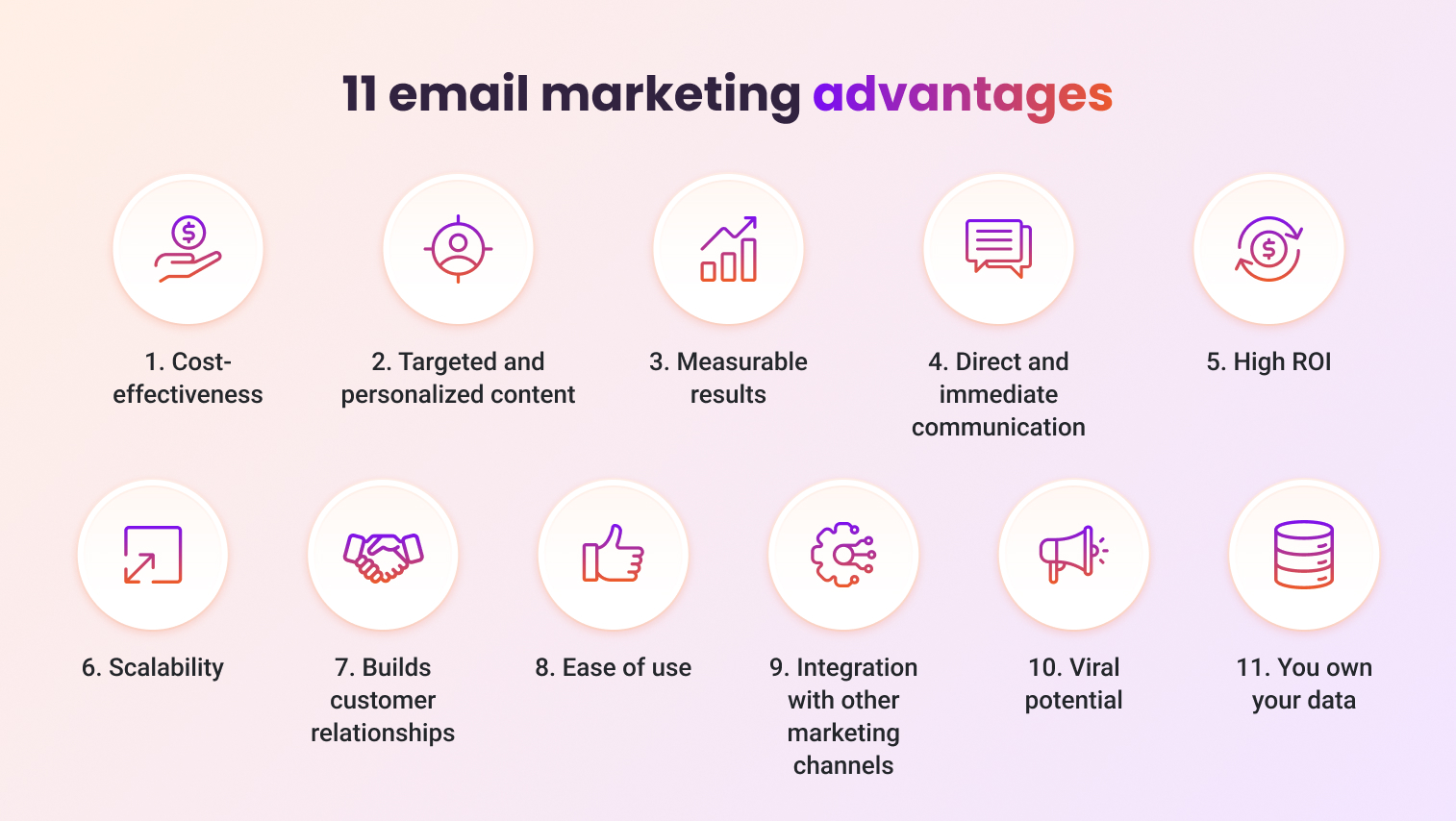
    If you’re wondering why use email marketing, the answer lies in the wide range of benefits it offers. From building strong customer relationships to driving measurable business results, email remains one of the most reliable marketing channels available today.
    Key benefits of email marketing

    Advantages of email marketing:

    Direct communication

    Email allows you to reach people directly in their inboxes without relying on social media algorithms. This makes it easier to deliver messages, updates, and offers in a more personal and consistent way.

    Targeted & scalable

    Email marketing works for both small and large businesses. You can start with a small list and gradually scale your campaigns as your audience grows, while still maintaining relevance.

    Segmentation & personalization

    Modern email tools let you segment subscribers based on behavior, preferences, or demographics. Personalized or customized emails can significantly boost engagement and conversions by delivering content that feels relevant to each user.

    Relationship building

    Regular, valuable emails help you stay connected with subscribers and build trust over time. This long-term connection often turns subscribers into loyal customers.

    Measurable results & insights

    Email marketing provides clear performance data such as open rates, click-through rates, and conversions. These insights help marketers understand audience behavior and improve and further optimize future campaigns.

    Automation & efficiency

    Automation allows you to send welcome emails, follow-ups, and reminders automatically. Automated campaigns can generate significantly more revenue compared to manual campaigns, making marketing more efficient.

    Offers more control

    Unlike social media platforms, your email list is an owned asset. You control how and when you communicate with your audience, which makes your strategy more stable and reliable.

    Drive traffic (clicks) & sales (conversions)

    Email campaigns encourage users to visit websites, explore products, and complete purchases. Many businesses rely on email as a major or ultimate driver of traffic and sales.

    Enhanced brand awareness

    Consistent emails keep your brand identity fresh in subscribers’ minds. Even if recipients don’t buy immediately, regular exposure helps increase brand recognition.

    Strengthen customer loyalty

    By sharing useful content, exclusive deals, and personalized messages, email helps build long-term customer loyalty and repeat business.

    Cost-effective & High ROI

    One of the biggest reasons why modern businesses use email marketing is its impressive return on investment. On average, businesses earn $36–$43 for every $1 spent, making email one of the most cost-effective marketing channels.

    Key challenges of email marketing

    Email marketing is pretty effective, but it’s not always smooth sailing. Businesses often face several hurdles that can affect campaign performance, engagement, and overall ROI. Understanding these challenges helps marketers create smarter strategies and get better results.
    Key challenges of email marketing

    Disadvantages of email marketing:

    Deliverability issue

    One of the most significant challenges in email marketing is ensuring your emails actually reach your audience’s inboxes rather than being blocked or bounced. 

    Deliverability can be affected by:

    • Poor sender reputation, 
    • Outdated email lists, 
    • Low engagement rates, or 
    • Improper authentication settings

    If emails don’t reach inboxes, even the best campaigns won’t perform. Maintaining clean email lists, using verified domains, and following email marketing best practices can significantly improve deliverability.

    Spam filters

    Spam filters are designed to protect users from unwanted or harmful emails, but they can sometimes block legitimate marketing emails too.

    • Overusing promotional language, 
    • Adding too many links, 
    • Sending bulk emails without permission, or 
    • Lacking proper email authentication

    can trigger spam filters.

    To avoid this, marketers should focus on sending permission-based emails, writing genuine subject lines, and maintaining consistent sending patterns.

    Competitive email competition

    Most users receive dozens of marketing emails daily, which creates intense competition for attention. Your emails are competing with newsletters, promotions, and updates from other brands. If your emails don’t stand out, they may be ignored or deleted. 

    Creating personalized, relevant, and valuable content helps brands stay competitive and encourages recipients to open and engage with emails.

    Content overload

    People are constantly exposed to digital content across multiple platforms, and email is no exception. When subscribers receive too many messages or overly long emails, they may lose interest quickly. 

    To tackle content overload, marketers should keep emails concise, structured, and focused on delivering clear value rather than overburdening readers with too much information.

    Attention span

    Nowadays, audiences have shorter attention spans, especially when scrolling through emails on mobile devices. If your email doesn’t capture concentration within a few seconds, readers are likely to move on. 

    Strong subject lines, clear headlines, and easy-to-scan content can help grab and maintain attention for a longer period.

    Design challenges

    Creating visually appealing, responsive emails can be quite tricky. Emails must display properly across different devices, screen sizes, and email clients. Poor formatting, broken layouts, or slow-loading visuals can hurt user experience and reduce engagement. 

    Using mobile-friendly designs, simple layouts, and tested email marketing templates helps overcome these design challenges.

    Email fatigue

    When subscribers receive too many emails from the same brand, they may feel frustrated or annoyed, which can lead to lower engagement or unsubscribes. 

    Finding the right sending frequency and offering meaningful content is essential to avoid email fatigue and maintain a positive relationship with subscribers.

    Cost considerations

    While email marketing is often more cost-effective than other marketing channels, expenses can still add up. 

    Businesses may need to invest in email marketing tools, automation software, design resources, and list management services. Additionally, poor targeting or low engagement can reduce the return on investment. 

    Proper planning and data-driven strategies help businesses maximize value while controlling costs.

    How to write a marketing email (step-by-step)

    Writing a marketing email isn’t just about typing a message and hitting send. It’s about planning, structuring, and crafting content that speaks directly to your audience while guiding them toward a clear action.
    How to write a marketing email

    Let’s break down the process step-by-step!

    Step #01: Map out your email marketing strategy

    Before you start writing, you need a clear plan. Ask yourself “why you’re sending the email” and “what you want readers to do” after reading it. It could be promoting a product, sharing updates, or nurturing leads.

    • Start by identifying your target audience and segmenting them based on their interests, behavior, or purchase history. 
    • Then, decide your goal, such as increasing sales, driving website traffic, or improving engagement.
    • Also, plan your email frequency and messaging tone so your communication stays consistent.

    When you have a strong strategy in place, writing the actual email becomes much easier and more focused.

    Step #02: Structure your marketing email

    A well-structured email keeps readers engaged and helps them quickly understand your message.

    Most effective marketing emails follow a simple flow:

    • Header & branding: This includes your logo or brand name so readers instantly recognize you.
    • Introduction: A short opening that connects with readers and sets the context.
    • Main content: This is where you explain your offer, message, or value.
    • Call-to-action (CTA): Clearly tell readers what to do next, like signing up, buying, or visiting a page.
    • Footer: Add contact details, social links, and unsubscribe options.

    Keeping your email organized makes it easier to read and increases the chances of getting responses.

    Step #03: Use pre-designed, customizable email templates

    Instead of designing emails from scratch every time, use ready-made email marketing templates. Templates save time and ensure your emails look professional and consistent with your brand.

    Most email marketing platforms offer customizable templates where you can adjust colors, fonts, layouts, and images. Choose mobile-friendly templates since many people check emails on their phones. 

    Note: Templates help maintain design balance, ensuring your content looks clean and easy to scan. Use them to your advantage!

    Step #04: Fine-tune your subject line, preheader, & preview text

    These three elements decide whether someone opens your email or ignores it.

    • Subject line: Keep it short, clear, and interesting. Focus on value or curiosity!
    • Preheader text: This supports your subject line by giving extra context or highlighting benefits. It must be a good one!
    • Preview text: This is the short snippet users see before opening the email, so make it relevant and engaging.

    Note: Avoid misleading clickbait or overly salesy language. Instead, focus on delivering genuine value and clarity to build trust with readers.

    Step #05: Develop clear & engaging email copy

    Your email copy should feel natural, simple, and helpful. Talk to your readers like you’re having a friendly conversation. Focus on benefits rather than just listing features.

    • Keep paragraphs short and easy to scan. 
    • Use bullet points when needed to highlight key information. 
    • Personalization, such as using the reader’s name or referencing their interests, can make your email feel more relatable. 
    • Most importantly, include a strong and clear CTA so readers know exactly what step to take next.

    Top email marketing examples

    Great email campaigns are more than just promotions. They show how brands connect, engage, and convert their audience using smart strategies.
    Top email marketing examples

    Below are some real-world examples that highlight how different brands use email marketing effectively.

    Little Sleepies’ community-focused welcome email

    Little Sleepies is known for sending warm welcome emails that introduce new subscribers to the brand story, product benefits, and community vibe. These emails often include helpful resources, social proof, and a gentle first-purchase incentive to build trust and encourage early engagement.

    Taylor Stitch’s browse abandonment automation

    Taylor Stitch uses automated emails that remind customers about products they viewed but didn’t buy. Browse abandonment emails re-engage shoppers by showing product images, benefits, and sometimes special offers, helping recover lost sales opportunities.

    Birchbox’s curiosity-driven promotions

    Birchbox grabs attention through curiosity-based subject lines and teaser-style content. Their emails often hint at exclusive beauty tips or product discoveries, encouraging readers to click and explore more.

    Chamberlain Coffee flash sale email

    Chamberlain Coffee frequently uses time-limited flash sale emails to create urgency. Clear CTAs, bold headlines, and countdown-style messaging push customers to act quickly.

    100% Pure FOMO (fear of missing out) campaigns

    100% Pure uses scarcity tactics like limited-stock alerts and deadline-driven offers. These emails motivate subscribers to purchase before products sell out or deals expire.

    Brightland’s founder-signed thank-you note

    Brightland strengthens emotional connection by sending personalized emails signed by the founder. This adds authenticity and makes customers feel valued after their purchase or subscription.

    July’s personalized Black Friday offers

    July tailors holiday promotions based on customer preferences and browsing behavior. Personalized discounts and product recommendations make these emails highly relevant and conversion-friendly.

    Made In’s expert-led email content

    Made In focuses on educational content, including cooking tips, product usage guides, and expert insights. This builds authority while subtly promoting their cookware products.

    Pulp & Press’s targeted email automation

    Pulp & Press uses automation to send tailored messages based on customer activity, such as product interest or previous purchases. This improves engagement and helps guide customers through the buying journey.

    Cuyana’s minimalist email design

    Cuyana keeps emails clean and visually simple. Minimal text, high-quality imagery, and a strong product focus create a premium feel and improve readability, often boosting engagement rates.

    Email marketing best practices

    Email marketing works best when it’s done thoughtfully and with your audience in mind. Following proven best practices helps improve engagement, boost deliverability, and keep your brand trustworthy and compliant with modern email standards.
    Email marketing best practices

    Follow proper email etiquette

    Treat emails like real conversations, not sales blasts. Use a clear sender name, keep the tone friendly, avoid misleading subject lines, and respect your subscribers’ time by sharing useful and relevant information.

    Never buy email lists

    Buying email lists may seem like a quick shortcut, but it usually leads to poor engagement and higher spam complaints. Purchased lists often contain outdated or fake addresses, which can damage the sender’s reputation and reduce deliverability.

    Ensure compliance with regulations (GDPR & CAN-SPAM)

    Modern privacy laws require businesses to collect consent before sending marketing emails and allow users to unsubscribe easily. Regulations like GDPR and CAN-SPAM focus on transparency, consent, and protecting subscriber data, which helps build long-term trust.

    Use double opt-in signup forms

    Double opt-in asks subscribers to confirm their email after signing up. This ensures that the address is valid and that the person truly wants to hear from you, helping improve engagement rates and reducing spam complaints.

    Use compelling email marketing subject lines

    Your subject line decides if someone opens your email or ignores it. Keep it short, relevant, and honest. Adding urgency, curiosity, or personalization can increase open rates when used naturally.

    Ensure emails are optimized for mobile devices

    A large portion of emails today are opened on smartphones on the go. Mobile-friendly designs with readable text, responsive layouts, and clear call-to-action buttons help improve user experience and engagement.

    Only send when you really need to

    Sending emails too frequently can annoy subscribers and increase unsubscribe rates. Focus on quality over quantity and send emails only when you have something valuable or relevant to share.

    Segment your mailing list

    Not every subscriber has the same interests. Segmenting your list based on demographics, behavior, or preferences allows you to send more targeted messages that resonate better with each group.

    Personalize your marketing emails

    Using subscriber names, purchase history, or browsing behavior makes emails feel more relevant. Personalized emails typically improve engagement because they address the subscriber’s specific needs or interests.

    A/B test your email marketing content

    A/B testing helps you compare different subject lines, designs, or calls to action to see which performs better. Testing small changes over time can lead to big improvements in engagement and conversions.

    Optimize email deliverability

    To ensure emails land in inboxes instead of spam folders, maintain a strong sender reputation, authenticate your emails, and avoid spam-trigger words or misleading messaging.

    Clean your email list regularly

    Removing inactive or invalid email addresses improves deliverability and guarantees your campaigns reach engaged subscribers. Regular list cleaning also helps you maintain accurate performance metrics.

    Make unsubscribing easy

    Providing a clear unsubscribe option is both a legal requirement and a trust-building practice. It allows uninterested users to leave gracefully, reducing spam complaints and protecting your brand reputation.

    Measure your success with email marketing metrics

    Tracking metrics like open rates, click-through rates, bounce rates, and conversions helps you understand what’s working and what needs improvement. These insights allow you to refine future campaigns in a much better way.

    Scale with email automation

    Automation allows businesses to send timely emails, such as welcome sequences, reminders, and follow-ups, without manual effort. Automated workflows save time while maintaining consistent, streamlined communication.

    Acquire & engage new subscribers

    Growing your subscriber list should be a continuous effort. Offering valuable content, exclusive deals, or helpful resources encourages users to subscribe and stay engaged with your brand.

    Connect email campaigns to other channels

    Email works best when combined with other marketing channels, such as social media, SMS, or content marketing. Multi-channel strategies help reinforce your message and improve overall marketing performance.

    10 best email marketing platforms online at present

    Choosing the right email marketing software can make your campaigns easier to manage, automate, and scale. Below are some of the best email marketing tools, including a few free options, that marketers commonly use today.

    Email marketing platformBrief overviewProsCons
    Brevo email marketingBrevo is an all-in-one platform offering email, SMS, and automation features, making it great for small to mid-sized businesses.– Free plan available
    – Strong automation
    – Supports multichannel marketing
    – Limited advanced analytics compared to premium tools
    – The interface can feel basic for large enterprises
    Mailchimp email marketingMailchimp is one of the most popular email marketing tools, known for its beginner-friendly dashboard and design templates.– Easy to use 
    – Offers automation
    – Free plan for small lists 
    – Strong integrations
    – Pricing rises quickly as your list grows
    – Automation features are limited on lower tiers
    ActiveCampaign email marketingActiveCampaign focuses heavily on advanced automation and CRM integration, making it ideal for targeted email campaigns.– Powerful automation workflows 
    – Excellent segmentation 
    – Strong CRM tools
    – Steeper learning curve
    – Higher pricing for beginners
    – Limited free plan options
    Kit email marketingKit is designed mainly for creators, bloggers, and content-focused brands.– Simple automation
    – Strong subscriber tagging 
    – Easy-to-use interface
    – Limited template variety
    – Fewer advanced reporting features compared to enterprise-level email marketing software
    HubSpot email marketingHubSpot combines email marketing with a full CRM and marketing automation ecosystem quite effectively.– Excellent CRM integration
    – Reliable automation tools
    – Free email marketing tools available
    – Premium plans can be expensive
    – Advanced features require higher-tier subscriptions
    Klaviyo email marketingKlaviyo is widely used by eCommerce businesses. Thanks to its strong personalization and customer data features.– Powerful segmentation 
    – Strong automation
    – Deep integration with eCommerce platforms
    – Pricing increases as subscriber lists grow
    – May feel complex for beginners or newbies
    Zoho email marketingZoho Campaigns integrates well with Zoho’s business ecosystem, making it a great fit for companies already using Zoho products.– Affordable pricing 
    – Good automation
    – Seamless CRM integration
    – Fewer third-party integrations
    – Design templates may feel limited
    Sender email marketingSender is a budget-friendly and easy-to-use option, especially for small businesses and startups.– Generous free plan
    – Strong deliverability
    – Simple automation tools
    – Fewer advanced analytics and integrations compared to top-tier platforms
    Omnisend email marketingOmnisend is built mainly for eCommerce brands and supports email, SMS, and automation campaigns brilliantly.– Excellent eCommerce automation
    – Easy segmentation
    – User-friendly interface
    – Advanced features are mostly available in paid plans
    – Limited flexibility for non-eCommerce brands
    Get Response email marketingGetResponse is a versatile platform offering email marketing, landing pages, webinars, and automation, all in one place.– Strong automation builder
    – Landing page tools
    – Beginner-friendly workflow
    – Pricing increases with advanced features
    – Some integrations require setup effort

    These platforms cover a wide range of needs, from beginners looking for free email marketing tools to businesses searching for advanced email marketing software with automation and personalization. The best choice really depends on your goals, budget, and technical comfort level.

    How to do email marketing for a small business?

    Email marketing is one of the most cost-effective ways for small businesses to build relationships, drive sales, and stay top of mind. The key is to keep it simple, targeted, and consistent.
    How to do email marketing for a small business

    1. Build a quality email list

    • Create lead magnets: Offer something valuable (discounts, free guides, checklists) to encourage sign-ups.
    • Use clear sign-up forms: Place forms on your website, blog, and checkout pages so people can easily subscribe.
    • Enable double opt-in: Ask subscribers to confirm their email after signing up. This keeps your list clean and improves engagement.
    • Focus on quality over quantity: A smaller, interested list performs better than a huge uninterested one.

    2. Choose the right email service provider (ESP)

    • Look for beginner-friendly tools: Pick an ESP that’s easy to use and fits your budget.
    • Check automation features: Make sure it supports welcome emails, drip campaigns, and basic workflows.
    • Prioritize deliverability: A good ESP helps your emails land in the inbox, not spam.
    • Ensure analytics are included: You must be able to track opens, clicks, and conversions at any time to easily assess performance.

    3. Segment & automate

    • Segment your audience: Group subscribers by behavior, interests, or purchase history so emails feel relevant.
    • Use behavioral triggers: Send emails based on actions (sign-up, purchase, abandoned cart).
    • Set up basic automations: Welcome series, post-purchase emails, and re-engagement campaigns save time.
    • Avoid over-automation: Keep messages human and helpful, not totally sounding robotic!

    4. Create compelling content

    • Balance value & sales: Mix helpful tips, updates, and offers. Don’t just sell in every email.
    • Write strong subject lines: Keep them clear, benefit-driven, and to the point, so people actually open your emails.
    • Keep it personal: Use names, simple language, and speak like a real person. Personalized emails drive higher engagement.
    • Design mobile-first emails: Most people read emails on phones, so use short paragraphs and responsive layouts.
    • Include one clear CTA: Tell readers exactly what action to take or what to do next.

    5. Best practices for success

    • Clean your list regularly: Remove inactive or invalid emails to protect deliverability.
    • Ensure deliverability: Set up authentication (SPF, DKIM, DMARC) and avoid spammy language.
    • Analyze performance: Track open rates, click rates, and conversions to see what’s working.
    • Test & improve: A/B test subject lines, send times, and content, and optimize accordingly.
    • Stay consistent: Send emails on a predictable schedule so subscribers know what to expect.

    Legit email marketing jobs worldwide (with salary range)

    Email marketing offers solid career paths, from entry-level roles to senior leadership. Below is a simple breakdown of common roles and the typical global email marketing salary. Have a look!
    Legit email marketing jobs worldwide (with salary range)

    Email marketing coordinator

    This is usually an entry-level role focused on assisting with campaign execution and managing email lists.

    • Handles campaign setup, scheduling, and basic reporting
    • Assists with templates and subscriber management
    • Works closely with marketing teams
    • Best for beginners with 0–2 years of experience
    • Email marketing salary range for this role: About $49,000–$72,500/year

    Email marketing specialist

    A specialist takes more ownership of strategy, testing, and performance optimization.

    • Builds and optimizes email campaigns
    • Runs A/B tests and improves open/click rates
    • Manages segmentation and basic automation
    • Mid-level role (2–5 years experience)
    • Email marketing salary range for this role: Around $69,500 to $81,000/year

    Email marketing manager

    Managers oversee the full email program and often lead a team to get the job done.

    • Plans email strategy and campaign calendar
    • Manages budgets and revenue tracking
    • Supervises specialists and coordinators
    • Senior-level position (5+ years experience)
    • Email marketing salary range for this role: Roughly $87,000 to $121,000/year

    Email marketing strategist

    Strategists focus more on high-level planning and customer lifecycle growth.

    • Designs long-term email and lifecycle strategy
    • Aligns email with overall marketing goals
    • Analyzes customer journeys and funnels
    • Works cross-channel with paid, CRM, and content teams
    • Ideal for experienced marketers who enjoy big-picture planning
    • Email marketing salary range for this role: Commonly falls in the $72,000 to $91,000/year range (varies by company and seniority)

    Email marketing automation/CRM manager

    This is a technical, high-demand role focused on advanced automation and customer data.

    • Builds complex workflows and customer journeys
    • Manages CRM platforms and integrations
    • Handles personalization and behavioral triggers
    • Ensures data hygiene and reporting accuracy
    • Strong demand in SaaS tools and e-commerce companies
    • Email marketing salary range for this role: About $87,000 to $120,000/year

    Email marketing freelance/contractor

    Freelancers work with multiple clients and can scale their income based on their skills and reputation.

    • Creates campaigns for different brands
    • Sets up automations and audits accounts
    • Often paid hourly or per project
    • Great for remote work and flexible schedules
    • Email marketing salary range for this role: About $20 to $120/hour

    Email marketing glossary: Terms every email marketer must know!

    If you’re getting into email marketing, you’ll keep seeing the same technical terms everywhere. Here’s a simple, no-nonsense glossary to help you understand what each one really means.

    TermWhat it means (in simple words)
    Acceptance rateThe percentage of emails accepted by the recipient’s server (not bounced). It shows how many of your emails successfully reached the mail system.
    A/B testingSending two versions of an email (like different subject lines) to see which one performs better.
    AutomationEmails that are sent automatically based on triggers (for example, welcome emails after signup).
    Bounce rateThe percentage of emails that failed to deliver due to invalid addresses or server issues.
    CampaignA planned set of marketing emails sent with a specific goal (promotion, newsletter, launch, etc.).
    Conversion rateThe percentage of recipients who completed the desired action (purchase, signup, download).
    Call to action (CTA)The button or link that tells readers what to do next (e.g., “Buy now,” “Download”).
    Click-through rate (CTR)The percentage of recipients who clicked a link in your email (a key engagement metric).
    Delivery rateThe percentage of emails that were successfully delivered (sent minus bounces).
    Email listYour collection of subscriber email addresses who agreed to hear from you.
    IP warmingGradually increasing email volume from a new IP address to build sender reputation and avoid spam filters.
    Lead magnetA free resource (ebook, checklist, discount, etc.) offered in exchange for someone’s email address.
    Nurture sequencesA series of automated emails designed to build trust and guide subscribers toward a purchase.
    Open rateThe percentage of delivered emails that recipients opened. Often used to judge the performance of subject lines.
    Opt-in/opt-outOpt-in = someone agrees to receive emails. 
    Opt-out = someone unsubscribes or withdraws consent.
    Opt-in formThe signup form on your site where people enter their email to subscribe.
    PersonalizationCustomizing emails using subscriber data (like name, location, or behavior).
    Subject lineThe main headline of your email! It is the foremost thing people see before opening.
    SubscriberA person who has given permission to receive your emails.
    SegmentationDividing your email list into smaller groups based on behavior, interests, or demographics.
    Unsubscribe rateThe percentage of recipients who choose to stop receiving your emails.

    How effective is email marketing: Why is it so important in 2026?

    Email marketing is still one of the most reliable ways to reach and convert customers in 2026. Despite new channels popping up, email continues to deliver strong engagement, ownership, and ROI for businesses of all sizes.
    How effective is email marketing
    • Outstanding ROI: Email marketing still returns about $36–$43 for every $1 spent, making it one of the most profitable digital channels.
    • Massive global reach: There are over 5 billion email users worldwide, so your audience is almost guaranteed to be there.
    • Better conversions than social: Email campaigns typically achieve around 2.4%–3% conversion rates, often outperforming many social media efforts.
    • High engagement when done right: Average open rates typically range from 26%–34%, showing people still actively check their inboxes.
    • Owned audience advantage: Unlike social platforms, your email list is yours. No algorithm changes can suddenly cut your reach.
    • Automation boosts revenue: Automated email flows can generate significantly more revenue than one-off campaigns, especially when personalized.

    Bottom line: In 2026, email marketing remains essential because it’s cost-effective, measurable, and gives you direct access to your audience, something very few channels can match.

    Why trust Replug for your next email marketing campaign

    If you want your email links to look clean, trustworthy, and trackable, Replug is worth a serious look. It’s an all-in-one link management platform built to help marketers turn ordinary URLs into branded, high-performing assets.


    Replug Branded Short Links CTA
    A complete link management solution
    for marketing professionals & agencies.
    Try Replug for free

    Replug lets you create short, memorable branded links using your own domain, which instantly makes your email campaigns look more professional and trustworthy. On top of that, you get detailed analytics to track clicks, conversions, and audience behavior, so you always know what’s working.

    What makes it especially useful for email marketing is the built-in A/B testing, retargeting pixels, custom CTAs, and QR code support, all designed to boost engagement and conversions. You can even manage bio links and campaigns from one dashboard, which keeps your workflow simple.

    In short, if you want a reliable online link shortener that helps you create branded short links and optimize email performance, Replug is a smart, marketer-friendly choice.

    Summing up

    To wrap things up, email marketing is still one of the smartest ways to connect with your audience and drive real results in 2026. 

    From understanding the basics and campaign types to mastering best practices, tools, and career paths, you now have a clear roadmap to succeed. With returns often averaging around $36 for every $1 spent, it’s easy to see why businesses continue to prioritize it.

    Stay updated with the latest email marketing news, keep testing what works for your audience, and focus on building genuine relationships; that’s where the real growth happens

    And when it comes to tracking and optimizing your links, tools like Replug can give your campaigns that extra edge!

    Frequently asked questions

    What does email marketing do?

    Email marketing helps businesses send targeted messages directly to people’s inboxes to build relationships, promote products, and drive sales. It’s popular because it delivers strong returns. On average, brands earn about $36 for every $1 spent. In short, it keeps your audience engaged and moves them toward buying.

    How much is a 1000 email list worth?

    The value of an email marketing list with 1,000 subscribers varies widely. A healthy, engaged list in a good niche can be anywhere from $100 to $1,000+, depending on quality, engagement, and industry. What really matters is list quality, not just size. A small active list often outperforms a large inactive one!

    What is the 3 3 3 rule in marketing?

    The 3-3-3 rule is a simple attention framework. It suggests you have:

    3 seconds to grab attention (subject line or hook)
    30 seconds to keep interest (email content)
    3 minutes to drive action (offer or CTA)

    Marketers use it to keep messages clear, quick, and focused on conversions.

    How do I become an email marketer?

    To become an email marketer:

    – Start by learning the basics (copywriting, automation, and analytics). 
    – Then practice with different online email marketing tools. Build sample campaigns, get certifications, and create a small portfolio. 

    Many beginners join or work with an email marketing agency first to gain real client experience before freelancing or going in-house.

    How important is the email subject line?

    It’s extremely important! The subject line often decides whether your email gets opened or ignored. Around 47% of recipients open emails based on the subject line alone, and many mark emails as spam because of it. A clear, relevant, and curiosity-driven subject line can dramatically improve open rates and overall campaign results.

    How much does email marketing cost?

    Email marketing is relatively affordable compared to many channels. Most small businesses spend $0–$300/month using entry-level tools, while growing brands and agencies may pay $300–$1,000+/month depending on list size and features. Many platforms offer free tiers for beginners, so you can start small and scale as your list grows.

    How to get emails for email marketing?

    The best way is to collect emails ethically with permission. Offer lead magnets (discounts, free guides, webinars), add sign-up forms to your website, and promote your newsletter on social media. Avoid buying lists, since they hurt deliverability and often violate privacy rules. Focus on attracting people who actually want to hear from you.

    How to build your contact lists for email marketing?

    To grow strong contact lists for email marketing:

    – Add opt-in forms on key pages (homepage, blog, checkout)
    – Use pop-ups or exit-intent forms
    – Offer valuable freebies or exclusive deals
    – Collect emails during events or webinars
    – Use double opt-in to keep the list clean

    Consistency and value are what steadily grow a quality list.

    When is the best time to send a marketing email?

    The best time and day to send your emails generally falls between Tuesday and Thursday mornings (around 9 a.m. and 12 p.m.) in the recipient’s local time. Studies show mid-week emails often get higher engagement. That said, always test with your own audience. Timing can vary by industry and region.

    How can I make money through email marketing?

    You can earn through email by promoting and selling email marketing products like your own services, digital downloads, courses, or physical goods. Other common methods include affiliate marketing, sponsored emails, and upselling to existing customers. The key is to build trust first, then send relevant offers that genuinely help your subscribers.

    Is it legal to do email marketing?

    Yes, email marketing is legal as long as you comply with major laws such as CAN-SPAM (US) and GDPR (EU), and similar rules worldwide. 

    The key requirements are:

    – getting clear consent, 
    – identifying yourself, and 
    – including an unsubscribe link

    One of the biggest email marketing mistakes is sending emails without permission or hiding the opt-out option, which can lead to penalties and poor deliverability.

    What is email automation?

    “Email automation” is the process of sending emails automatically based on user actions or schedules (such as welcome emails or abandoned-cart reminders). The main email marketing automation benefits include saving time, improving personalization, increasing conversions, and maintaining consistent communication without manual effort.

    How do I build and then segment an email list effectively?

    Start by collecting emails through opt-in forms, lead magnets, and website sign-ups. Once your list grows, segment it based on behavior (clicks, purchases), demographics, or interests. Good segmentation lets you send more relevant emails, which usually leads to higher open rates, click-through rates, and sales.

    How to use email and SMS marketing together to expand your reach?

    Use email for detailed content (newsletters, promotions) and SMS for short, urgent messages (flash sales, reminders). A smart approach is to collect both email and phone numbers, then coordinate campaigns. For example, send the full offer by email and a quick SMS reminder later. This multi-channel strategy improves visibility and response rates!

    What is an email marketing strategy, and why does it matter?

    An email marketing strategy is your overall plan for how you collect subscribers, what you send them, and how often you communicate. It matters because it keeps your messaging consistent, targeted, and measurable. Without a clear strategy, campaigns become random, and results usually suffer.

    What are the key components of successful marketing emails?

    Strong marketing emails usually include:

    – a clear subject line, 
    – a personalized greeting, 
    – valuable content, and 
    – a single, focused call to action. 

    Mobile-friendly design, clean formatting, and proper segmentation also matter. When these pieces work together, emails are more likely to be opened, read, and acted on.

    How do I measure the ROI of my email marketing campaign?

    To calculate ROI, compare the revenue generated from your campaign to the total cost of running it. 

    The basic formula is: 

    [(Revenue − Cost) ÷ Cost] × 100.

    For instance:

    If, revenue = $5000, and cost = $1000

    Then, 400% ROI.

    How to reach your email marketing goals in 2026?

    Focus on list quality over size, use smart segmentation, and lean into automation. In 2026, privacy, personalization, and mobile optimization matter more than ever. Set clear KPIs, test regularly, and keep your messaging helpful rather than overly salesy. That’s what consistently drives results.

    How can I optimize email marketing campaigns?

    Some practical email marketing tips include:

    – A/B test subject lines and send times
    – Segment your audience for relevance
    – Keep emails mobile-friendly
    – Clean inactive subscribers regularly
    – Use one clear CTA per email

    Small, consistent improvements usually lead to better open rates and conversions.

    What impact have marketing automation and AI had on email marketing?

    Automation and AI have made email marketing faster and more personalized. Modern AI features for email marketing can predict send times, generate subject lines, recommend products, and automatically trigger behavior-based emails. The result is better targeting, higher engagement, and less manual work for marketers.
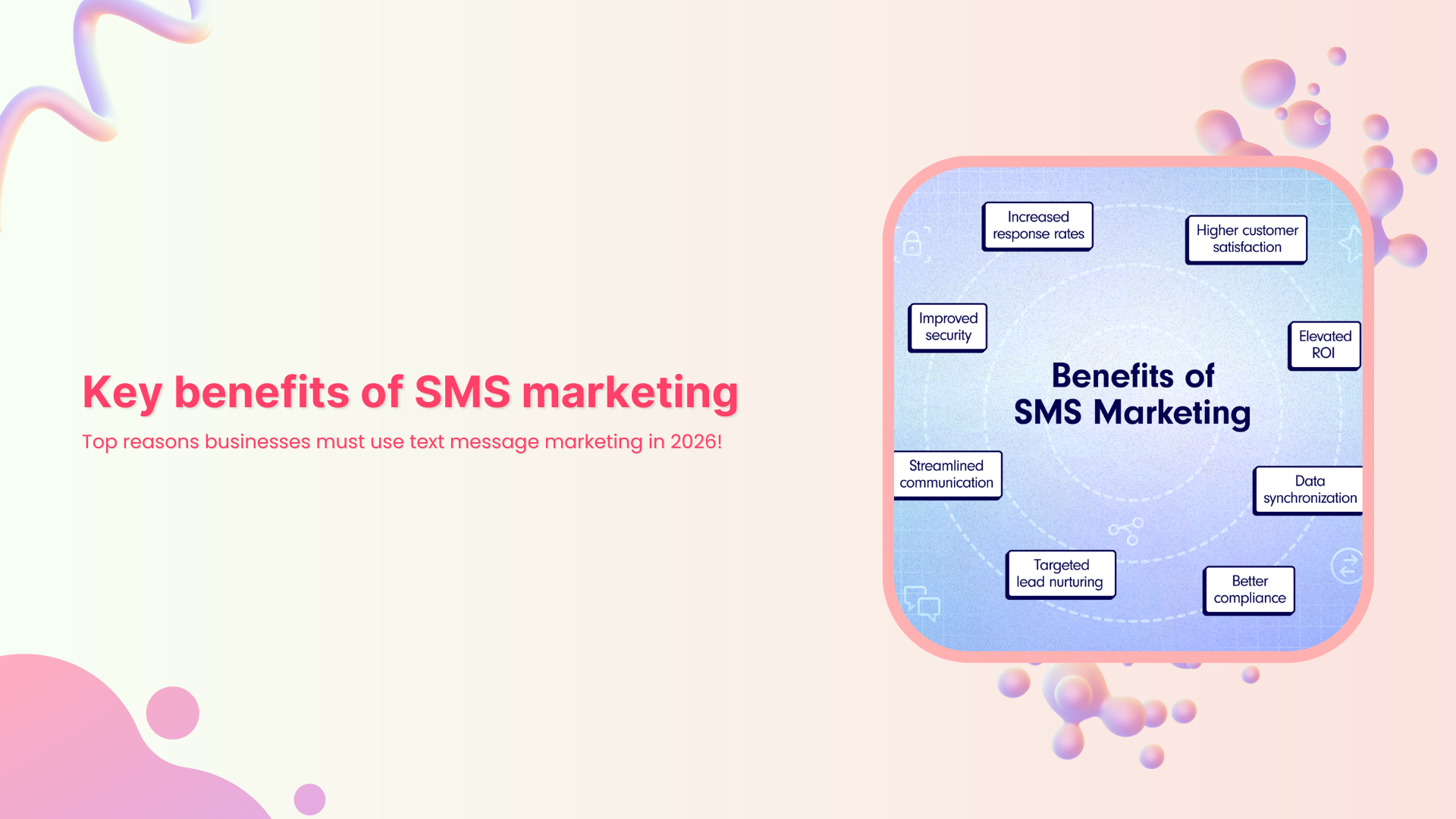
  • Key benefits of SMS marketing: Top reasons businesses must use text message marketing in 2026!

    Key benefits of SMS marketing: Top reasons businesses must use text message marketing in 2026!

    In an age where inboxes are overflowing and attention spans are shorter than ever, text message marketing still cuts through the noise. 

    In 2026, SMS campaigns boast open rates as high as 90–98%, surpassing email’s average and making it one of the most reliable ways to reach customers quickly. 

    SMS messages are read within minutes (often within three of delivery) and generate response rates around 45% or more, far above most digital channels. 

    What’s more, consumers actively opt in to receive these messages, with many preferring SMS for urgent updates and exclusive offers. 

    Ready to unpack why SMS marketing is such a powerhouse for businesses?

    Let’s jump into the key benefits that make it essential in 2026!

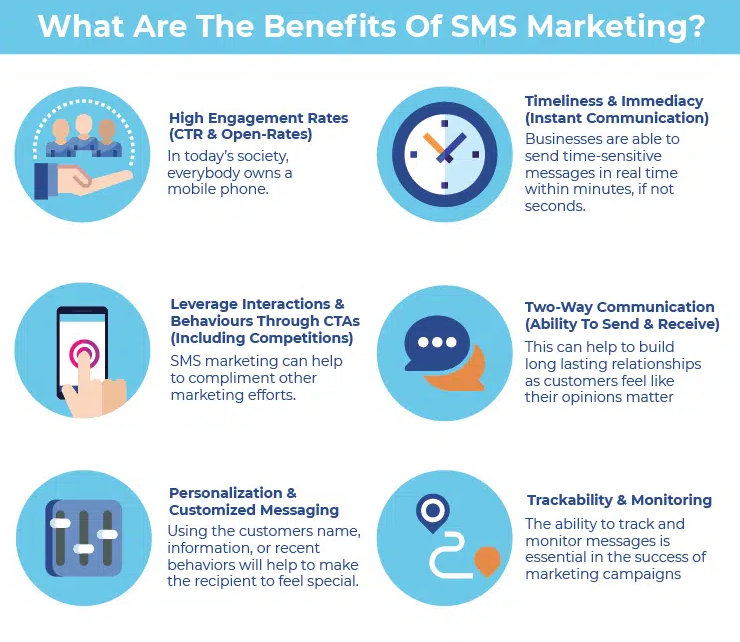
    What are the benefits of SMS marketing?

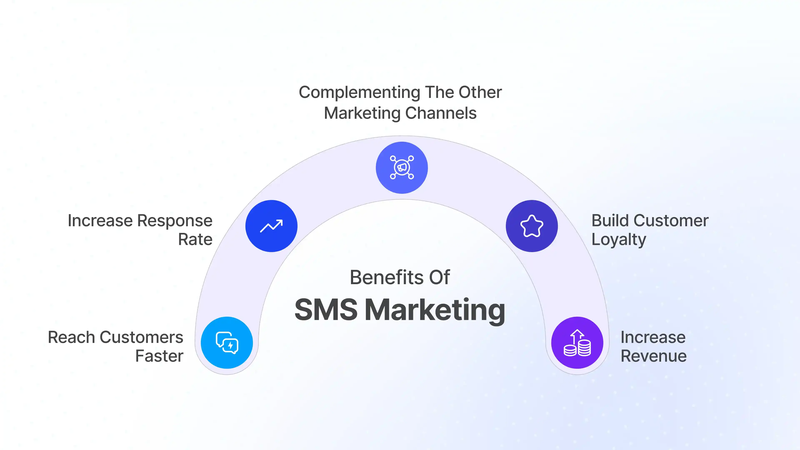
    SMS marketing isn’t just another buzzword; it’s one of the most effective ways businesses connect with customers at present. 

    Because people carry their phones everywhere and check messages constantly, text campaigns cut straight through the clutter and drive real engagement that other channels struggle to match.

    What are the benefits of SMS marketing

    Instant global reach & communication

    One of SMS’s biggest strengths is how fast and reliably it gets delivered. Texts land directly on people’s smartphones, with most being read within minutes of arrival. 

    That makes SMS perfect for time-sensitive alerts, flash offers, order updates, or appointment reminders that need immediate attention.

    Extremely high engagement & open rate

    Nothing else comes close to SMS when it comes to visibility. The average open rate hovers around 98%, compared with roughly 20–30% for emails. 

    And because texts are short and personal, response rates are often much higher, meaning more people actually read and interact with your messages.

    Versatile, cost-effective, permission-based tool

    SMS isn’t just powerful; it’s also pretty affordable and multifaceted!

    Sending texts doesn’t require big ad budgets or expensive creative assets, and messages only go to people who have opted in to hear from you. That means you’re talking to a willing audience, keeping costs low and relevance high.

    High conversion rates

    Because texts get read quickly and feel personal, they also drive action. Many brands see conversion rates well above those of other digital channels, with a significant portion of recipients taking the next step (whether that’s buying, booking, or signing up).

    Incredibly fast delivery rate

    SMS works in real time! Messages reach cell phones almost instantly, and many people respond within minutes of delivery. That speed makes it ideal for promotions with tight deadlines or updates that customers need right now.

    Improved customer loyalty & trust

    Text messaging helps build stronger relationships by keeping your customers informed and appreciated without overpowering them. When people receive timely updates, such as order confirmations, delivery notifications, or exclusive perks, they feel valued and more connected to your brand. 

    High open and response rates also mean customers are actually engaging with what you send, which naturally boosts trust and loyalty over time.

    No internet required

    One massive perk of SMS is that it doesn’t need Wi-Fi or mobile data to work. The message travels over your customer’s basic cellular network. That means even people without smartphones or reliable internet can still receive your texts. 

    It’s especially helpful in regions or situations with non-uniform internet access, ensuring your communication gets through seamlessly every time.

    Reliable two-way communication

    SMS isn’t just a one-way broadcast; customers can reply directly to messages. That makes it a great channel for real conversations, quick feedback, appointment confirmations, or customer service check-ins. 

    Two-way texting makes your brand feel more reachable and responsive, which builds confidence and keeps customers engaged.

    Personalization & segmentation

    Sending a generic message is one thing, whereas sending texts tailored to what your customers care about is another. With SMS marketing tools, you can segment your audience and personalize messages based on behavior, purchase history, location, and more

    Personalized texts perform much better. They get higher engagement and revenue than generic campaigns because people feel the message is meant just for them.

    Measurable results

    One of the smartest things about SMS marketing is how easily trackable it is. You can see who received your messages, who opened them, who clicked through, and even how many opted out. 

    This real-time data helps you understand what’s working (and what isn’t) so you can tweak future campaigns, measure ROI, and make smarter decisions, all without guesswork.

    Automation capabilities

    Modern text message marketing tools let you automate whole campaigns instead of sending texts manually one by one. Nearly half of marketers already use automated SMS workflows, such as birthday offers, welcome series, or abandoned-cart alerts, to save time and ensure messages always go out on schedule.

    Automation not only frees you up from repetitive tasks but also helps deliver the right message at the right moment without lifting a finger.

    Boosts brand awareness

    Consistent SMS outreach keeps your brand top of mind because texts go straight to people’s phones and are often read within minutes. 

    Using regular updates or promotions via SMS helps customers remember your brand and what you offer, in a way that more crowded channels (like social or email) often can’t match.

    Get quick feedback from customers

    SMS is great for 2-way communication. You can ask a simple question and get responses fast, like “Did you enjoy your purchase? Reply YES or NO.” 

    Because people are already comfortable texting, replies come in quickly, giving you honest feedback and insights you can act on right away.

    Hassle-free implementation

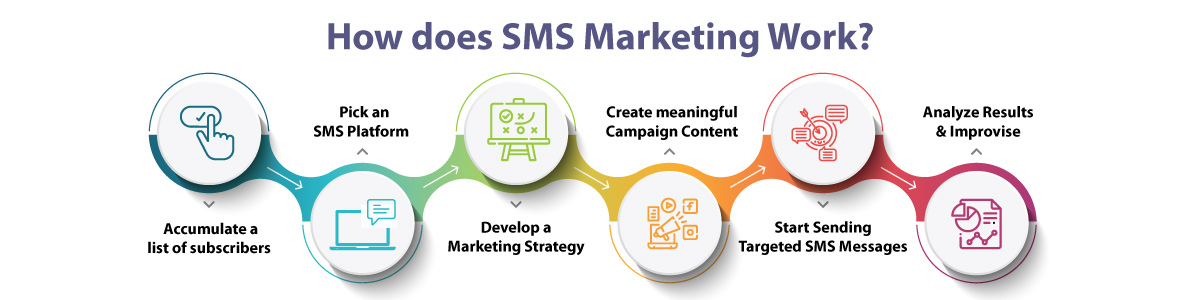
    Getting an SMS campaign up and running doesn’t require fancy design, heavy coding, or a huge budget. Most platforms are plug-and-play: 

    Choose your audience → Write a clear, short message → Schedule it

    That simplicity makes SMS one of the least intimidating channels for any business to adopt, no matter if you’re a solo shop owner or part of a big team.

    No spam issues

    Unlike email marketing, where messages often end up in spam folders and go unread, SMS messages go directly into the recipient’s inbox (no filters, no clutter). 

    That means your texts are almost always seen, which encourages visibility and engagement without the headache of spam-related deliverability issues.

    Zero-party data & data friendly

    SMS marketing gives you zero-party data, i.e., information customers willingly share, like their phone number and preferences, which is gold for personalization. 

    Unlike third-party tracking that’s disappearing due to privacy changes, this direct data source lets you tailor messages based on what your audience actually wants to hear. That means more relevant texts and better results without sacrificing consumer trust.

    Builds a targeted subscribers list

    With SMS, you grow a list of people who chose to hear from you (not random folks). That permission-based list tends to be highly engaged because subscribers are already interested in your brand, offers, or updates. 

    You can segment this list (loyal buyers, new leads, VIPs, etc.) and send more relevant messages that get real responses.

    Integrates seamlessly with other marketing efforts

    SMS doesn’t work in a silo; it plays well with email, social media, and other tools you’re already using. You can send a text to remind customers about an email you sent, highlight a social post, or drive traffic back to your website

    Platforms even let you sync SMS with your automation stack so everything speaks the same language.

    Complements other marketing channels

    Instead of replacing email or social, text messages uplift them. Think of SMS as the “quick nudge” channel. Short texts prompt action right away, while emails deliver deeper content.

    When used together, you create a consistent brand experience that gets noticed more often and drives better overall engagement.

    Works for nearly every industry/niche

    One of the coolest things about SMS marketing? It isn’t limited to one type of business. 

    Retail stores, service providers, real estate agents, healthcare practices, gyms, events, and almost every niche can use text messages to promote offers, confirm appointments, send reminders, or share news. This broad applicability makes SMS a flexible tool in any marketer’s toolkit.

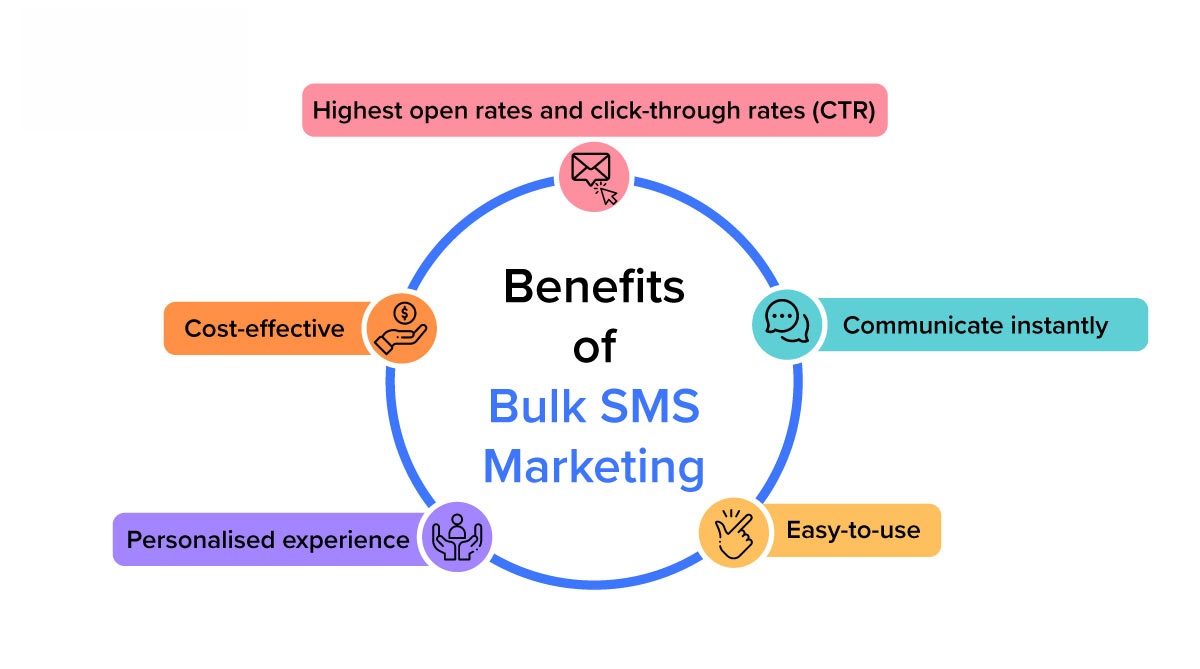
    What are the benefits of bulk SMS marketing?

    Bulk SMS marketing is one of the simplest yet most effective ways to reach your audience fast and get real results. 

    Because text messages go straight to people’s phones and nearly everyone reads them quickly, it’s become a go-to channel for businesses that want speed, engagement, and measurable impact without a massive budget.

    What are the benefits of bulk SMS marketing

    Extremely high open & response rates

    Bulk SMS really shines in visibility. On average, about 98% of messages are opened, and many are opened within minutes of delivery. 

    That beats email by a long shot and means your audience actually sees what you’re sending. Plus, response rates are much higher than email, so more people take action after reading your message.

    Budget-friendly & high ROI

    Sending text messages in bulk is much more cost-effective than paid ads or direct mail. Because costs per message are low (especially when buying in volume) and engagement is high, many businesses see an excellent return on investment from SMS campaigns.

    Instant delivery & time-sensitive

    SMS is about as fast as it gets! Messages usually reach customers instantly and are read right away. That makes bulk SMS ideal for time-sensitive alerts like flash sales, limited-time offers, and urgent updates.

    Direct & personal communication

    Text messages land straight in someone’s personal phone inbox, making SMS feel more direct and personal than most digital channels. That personal touch helps messages resonate more and builds a sense of connection that feels natural to recipients.

    Easy to integrate & track

    Innovative bulk SMS tools let you see delivery stats, open rates, clicks, and even conversions in real time. You can also plug or integrate SMS with your other marketing systems (such as CRM or email platforms) so everything works together and you can measure performance accurately without approximation.

    Exceptional conversion rates

    Because most text messages are opened and read within a matter of minutes, bulk SMS often drives strong conversion rates. This means a higher percentage of people take the action you want, whether buying, signing up, or clicking a link.

    Broad reach (no internet needed)

    One of SMS’s biggest advantages is that it doesn’t require an internet connection. It works on any mobile phone, including basic phones and smartphones. That means you can reach customers who might not be online at all times, making your campaigns more inclusive.

    Short & concise messaging

    Texts are naturally brief, which is a big plus (max 160 characters). People don’t want long reads on their phones. Short, clear messages with a direct call to action perform best, making it easier for your audience to understand and respond right away.

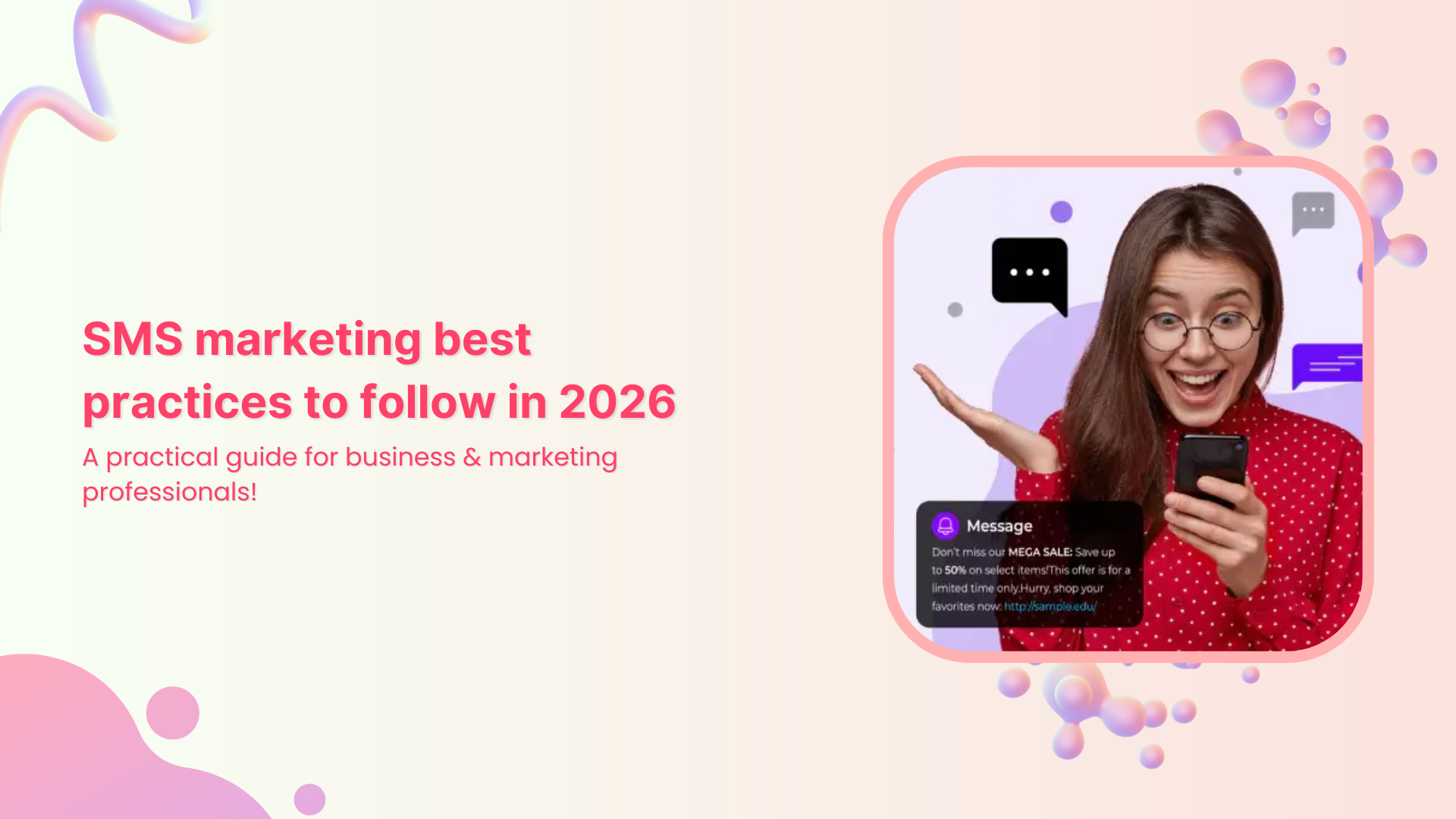
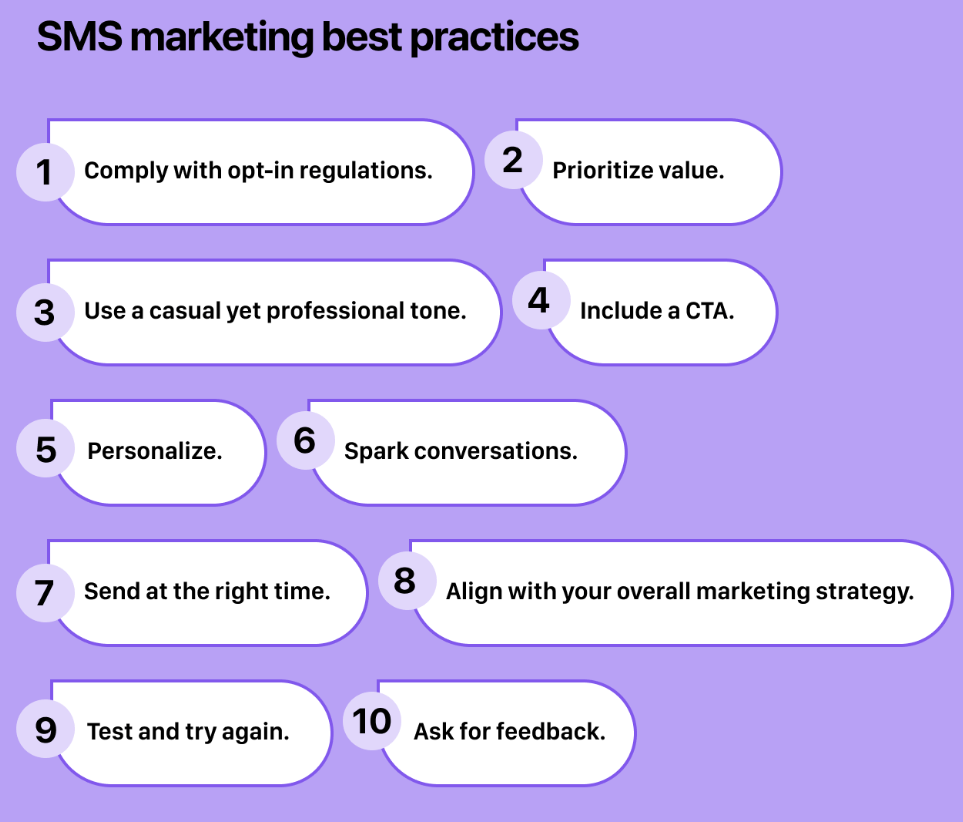
    Read also: SMS marketing best practices to follow in 2026: A practical guide for business & marketing professionals!

    Is SMS marketing effective?

    Absolutely, and the numbers show why!

    SMS marketing consistently outperforms many other digital channels in engagement, speed, and real business results. Because text messages go straight to people’s phones and get seen almost right away, they deliver a measurable impact that’s hard to ignore in 2026.

    Is SMS marketing effective

    Why it works so well:

    • Sky-high visibility: Around 95-98% of SMS messages are opened, far more than email.
    • Fast engagement: Many texts are read within minutes, making SMS great for urgent offers or updates.
    • Strong interaction: SMS response rates are often much higher than email response rates, sometimes around 45%.
    • Better conversions: Many campaigns lead to real action, with conversion rates often 20–30% or more.
    • Excellent ROI: Businesses can make tens of dollars (even around $71) for every dollar spent.

    In short, SMS isn’t just effective, it’s one of the most reliable ways to get your message seen and acted on!

    Why strategic SMS marketing matters the most at present?

    In today’s jam-packed digital world, just sending tons of texts isn’t enough. You need a thoughtful SMS strategy to make sure your messages actually connect with your audience.

    Strategic SMS marketing helps brands cut through the noise, drive real results, and build stronger customer relationships.

    Here’s why strategy matters:

    • High consumer adoption: Around 71% of people have opted in to receive business texts, showing a real appetite for this channel when done right.
    • Better engagement: A good strategy ensures messages are personal, relevant, and valuable, which keeps unsubscribes low and trust high.
    • Greater profit: SMS continues to outperform many channels in response and conversion rates, especially when automated and targeted.

    All in all, strategic planning turns simple texts into powerful business tools that deliver real results.

    Get help for your next SMS marketing campaign with Replug!

    If you’re planning your forthcoming SMS marketing campaign, Replug.io can make your life a whole lot easier. It is a smart link management tool that goes beyond basic URL shortening. 

    It helps you create short, branded, trackable links perfect for SMS marketing so your messages stay clean, effective, and easy to click.

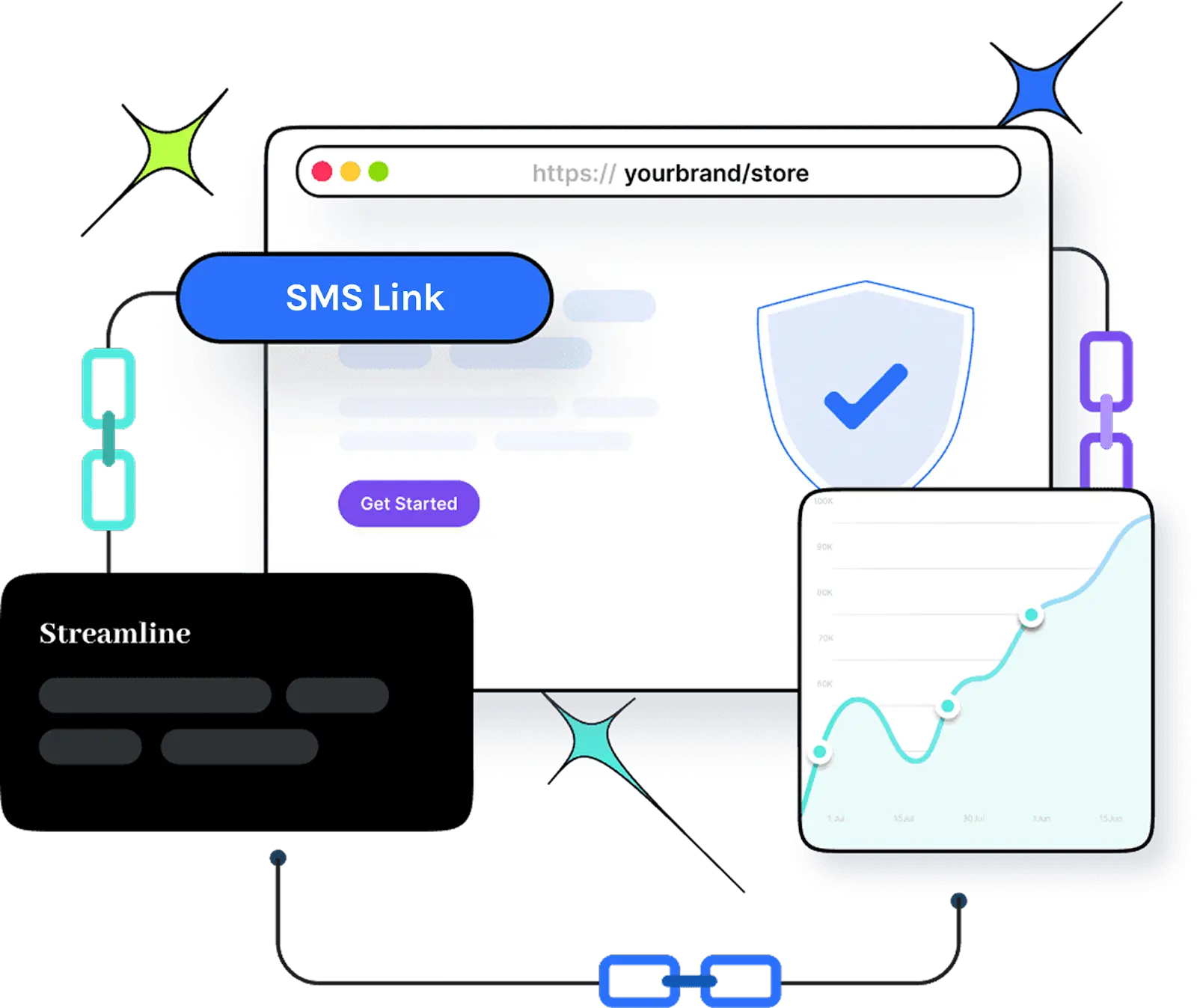
    With Replug’s SMS links feature, you can shrink long URLs to fit within character-limited text messages. Besides, you can build trust by using your own brand domain, track every click in real time, and even retarget users across ads on platforms like Facebook and Google.

    SMS Short Links
    Get short links for SMS more character space for efficient SMS marketing. Try Replug for free

    Because these links are mobile-friendly and analytics-ready, Replug helps you boost engagement and measure campaign success with minimal effort. 

    Whether you’re running promotions, alerts, or updates, this top-notch tool makes your SMS links work harder for your marketing goals.

    Related: How to create and use branded short links for SMS marketing: A detailed guide!

    Summing up

    As we’ve seen throughout this post, SMS marketing stats clearly back up what savvy marketers already know: text messaging remains one of the most powerful tools in your digital toolkit. 

    With open rates that nearly hit 98%, fast response times, high conversion numbers, and exceptional ROI, SMS helps you reach customers in a way other channels can’t.

    More importantly, when you use a strategic approach, like segmenting your audience, adding automation, and using tools such as Replug, you turn a simple text into real engagement, sales, and stronger relationships. 

    No matter if it’s for alerts, offers, or meaningful two-way conversations, SMS stands out as both cost-efficient and effective. 

    So if you’re not already using text marketing seriously, now’s the time to tap into its potential and see the impact for yourself.

    Frequently asked questions

    What are the advantages and disadvantages of SMS marketing for small businesses?

    Advantages:

    – Very high open and response rates.
    – Quick delivery and immediate visibility.
    – Easy to personalize and target specific customer segments.
    – Works on all phones (no internet required).
    – Simple, low-cost messaging with clear tracking.

    Disadvantages:

    – Very limited space (about 160 characters).
    – Messages can feel intrusive or annoying if overused.
    – Strict legal compliance is needed.
    – Harder to include rich media (images/videos).
    – Cost per message can add up at scale.

    What are the benefits of text message marketing for e-commerce?

    Mentioned are the benefits:

    – Higher open and click-through rates.
    – Great for time-sensitive offers, such as flash sales or coupon codes.
    – Can boost loyalty programme engagement.
    – Easy integration with e-commerce tools (order updates, cart reminders).
    – Direct, personal channel that increases conversions and retention.

    What are the benefits of SMS messaging over calling?

    Here are the amazing benefits:

    – Faster and more reliable delivery.
    – Doesn’t require phones to be answered in real time.
    – Less intrusive than calls for simple updates or reminders.
    – Lower cost (one text often replaces a time-consuming call).

    What makes SMS such a powerful marketing medium?

    Here’s what makes text messages such a powerful marketing medium:

    – Extremely high visibility and engagement because most people check texts immediately.
    – Direct access to customers’ mobile phones (no algorithms, no spam folders).
    – Works globally on any mobile device.
    – SMS lists are opt-in, meaning recipients have already opted in to receive your messages.
    – Great for quick calls to action and timely offers.

    What is the main advantage of SMS text notifications?

    The biggest advantage is speed and reliability. Messages are delivered straight to the inbox and are usually read within minutes, making them ideal for urgent alerts, reminders, and updates.

    What are the common SMS marketing challenges, and how to solve them effectively?

    SMS marketing challenges & solutions:

    Character limits: Keep messages concise; use links for details.
    Customer annoyance: Limit frequency and send only relevant offers.
    Compliance hurdles: Build consent/opt-out into signup flows.
    Delivery issues: Maintain clean contact lists and use quality SMS platforms.
    Spam perception: Personalize and segment messages; avoid mass blasts without context.

    Are there any laws and regulations for SMS marketing?

    Yes! SMS marketing is regulated in most countries and requires strict consent and compliance:

    – Express opt-in/consent must be obtained before sending promotional SMS.
    – Opt-out/unsubscribe options must be clear and honoured.
    – In the U.S., the TCPA mandates written consent and strict rules around messaging.
    – In the EU/UK, GDPR and related laws require clear consent and data protection.
    – Other regions (Canada’s CASL, Australia’s Spam Act, etc.) also enforce consent, content, and timing rules.

    Failing to follow these can lead to fines or strict legal action.

  • 75+ best SMS marketing examples & ideas for inspiration: Plan your next text message campaign now!

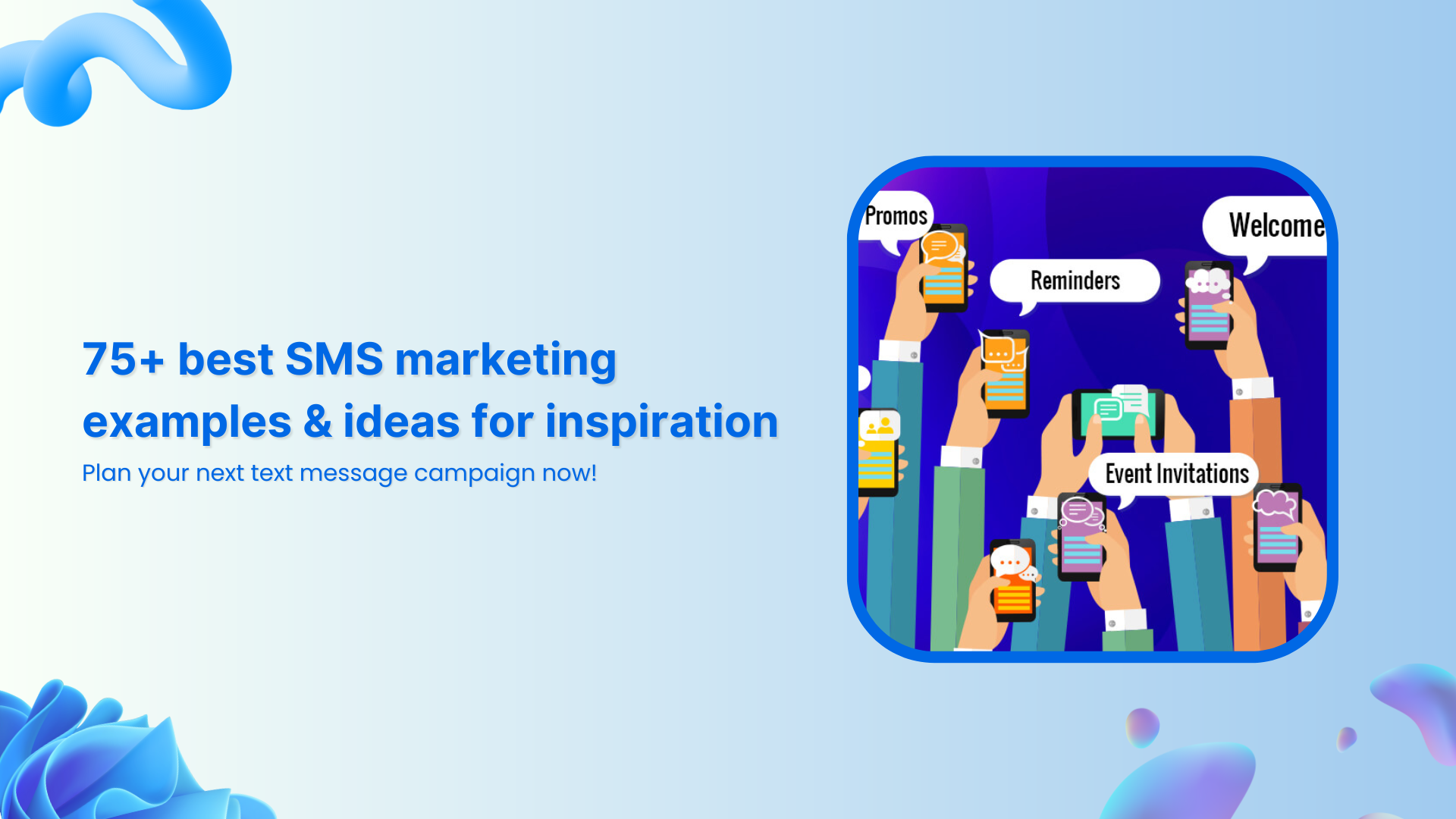
    75+ best SMS marketing examples & ideas for inspiration: Plan your next text message campaign now!

    Are your emails getting lost in crowded inboxes? If you want real, attention-grabbing conversions, SMS marketing might be your secret weapon.

    In 2025–26, text message campaigns are crushing engagement benchmarks, with open rates around 98%, far beyond email’s typical ~20%, and most texts are read within just minutes of delivery.

    And it’s not just visibility that matters: SMS campaigns can drive 21–30% conversion rates, often outperforming other channels by big margins.

    No wonder 66% of businesses now use SMS as part of their marketing mix, and many are expanding their investment in text-based campaigns. 

    No matter if you’re selling products, reminding customers, or boosting loyalty, the right SMS strategy can deliver measurable results. 

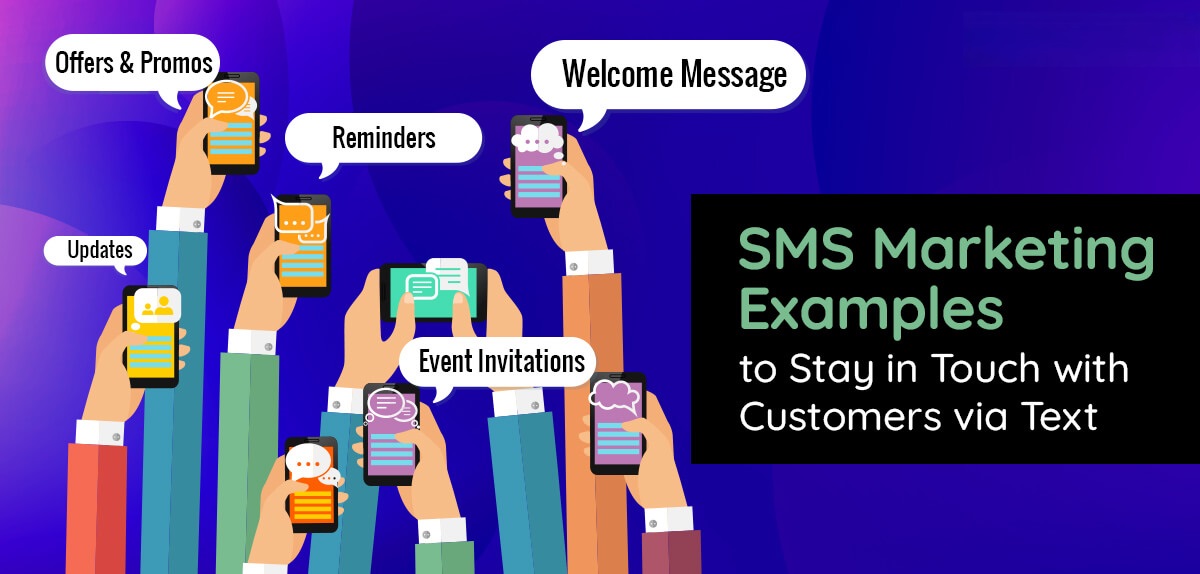
    In this guide, we will provide a complete catalog of top-notch SMS marketing examples, from promotions to industry-specific use cases and more.

    Let’s kick off with the basics!

    What is SMS marketing?

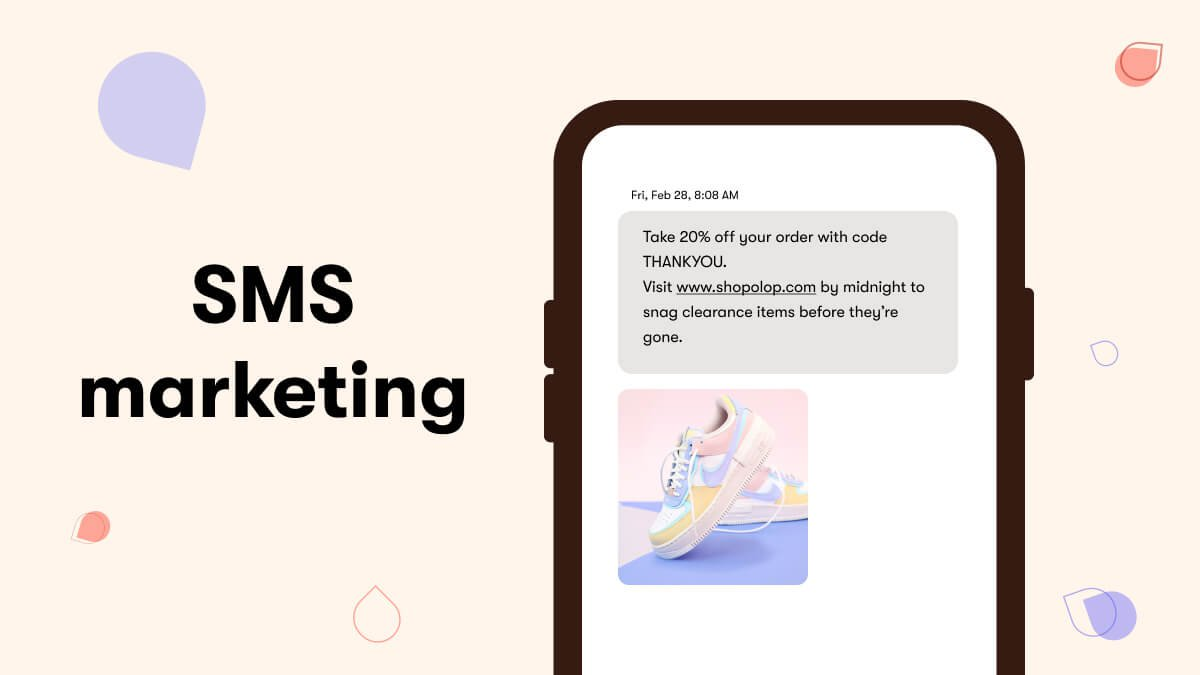
    SMS (short message service) marketing is a direct marketing channel that uses text messages to communicate with customers who have opted in. 

    It’s all about sending short, clear messages (usually promo offers, updates, reminders, alerts, or links) that land straight in someone’s mobile inbox.

    What is SMS marketing

    Businesses use this marketing technique to boost engagement, drive action, and keep customers in the loop without relying on email or social platforms. 

    Because text messages are almost always seen quickly, SMS is one of the most reliable ways to reach people when it matters most.

    The primary objective of SMS marketing is simple: connect with your audience in a fast, personal, and actionable way that encourages responses, whether that’s making a purchase, confirming an appointment, or visiting a website.

    Why is text message marketing important for brands and businesses?

    Let’s take a quick look at why SMS marketing matters so much for modern brands:

    • Instant visibility: Texts are delivered right to a customer’s phone and usually read within minutes.
    • Sky-high open rates: SMS typically sees open rates of around 98%, well above those ofmost other channels.
    • Immediate engagement: People often respond fast. Many texts get replies or clicks within a short period.
    • Cost-effective: Sending texts costs far less than many traditional advertising methods.
    • Direct connection: You reach customers where they already spend most of their time, i.e., on their phones.
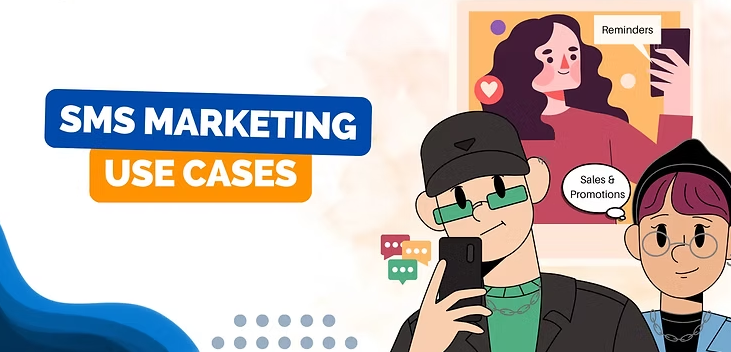
    • Versatile uses: SMS works for promotions, reminders, alerts, surveys, and more.
    • Better reach: No internet needed, so messages get through even in places with weak connectivity.
    • Stronger relationships: Because it’s permission-based, SMS feels more personal and trusted than many other channels.

    In short, SMS marketing is one of the fastest, most effective ways to stay in touch and drive results in today’s mobile-first world.

    List of creative text message/SMS marketing examples

    Before we step into actual examples, let’s talk about the key ingredients that make an SMS marketing message truly effective. These are the building blocks you’ll see again and again in the examples that follow.

    Key elements in SMS marketing examples:

    • Personalization: Great SMS messages don’t feel generic. When you include a person’s name or tailor the content based on their past behavior, the message feels more relevant and friendly, thereby encouraging engagement.
    • Urgency: Creating a sense of urgency, such as a time-limited deal or a limited-stock notice, encourages people to act right away rather than putting it off. This taps into that “fear of missing out” without being pushy.
    • A clear CTA: Every text should tell the reader exactly what to do next, such as “Shop now,” “Claim your discount,” or “Reply YES to confirm.” Without a straightforward call to action, people often don’t know what step to take.
    • Easy opt-out: Respect your audience by giving them a simple way to unsubscribe, usually with a brief note like “Reply STOP to unsubscribe.” It’s required by law in many places and also helps build trust.

    These simple elements help make your SMS messages clear, respectful, and action-oriented, and set you up for stronger campaign results.

    Now that you know what to look for, let’s jump into some promotional text message/SMS marketing samples that you can use for inspiration!

    Promotional SMS marketing examples

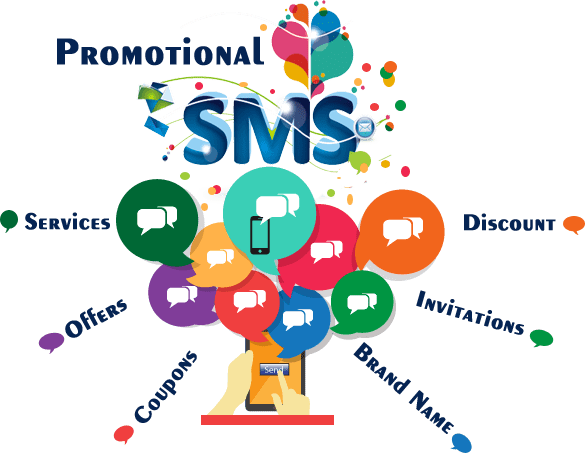
    Promotional SMS campaigns are all about sending messages that spark action, whether it’s getting people to shop a sale, check out a new item, or show up for an event.

    Promotional SMS marketing examples

    Below are some common types of promotional SMS examples that brands use to make their audience feel informed, appreciated, and ready to act.

    Special offers & deals

    This is one of the most classic ways brands use SMS, telling subscribers about a special discount or time-sensitive deal. 

    For example:

    “Flash Sale! 30% off sitewide today only. Use code FLASH30. Shop now: [link].”

    A clear deal with urgency and a direct link to buy.

    Cross-sell or upsell product alerts & service alerts

    Here, you nudge customers with related products or upgrades based on what they’ve bought or shown interest in. 

    A typical upsell SMS might say:

    “Loved your new blender? Get 20% off our smoothie recipe guide to go with it — only for SMS subscribers!” 

    This drives extra value and sales.

    Event invitation & reminders

    Most brands and businesses use SMS to invite people to special events or remind them of big sales days. 

    Here are ready-to-use examples for key occasions:

    • Cyber Monday: “Cyber Monday kicks off now! Early access for our beloved subscribers ⏰ Shop deals here: [link].”
    • Black Friday: “Black Friday starts at midnight — exclusive 40% off early access for you: [link].”
    • Christmas: “Merry Christmas! 🎁 Enjoy 25% off sitewide — today only: [link].”
    • Mother’s Day: “Treat Mom! 🌷 20% off gifts through Sunday: [link.]”
    • Father’s Day: “For Dad: 15% off tools & gear — today only! Shop now: [link].”
    • Valentine’s Day:“Valentine’s Day special ❤️ 30% off roses & chocolates! Order now: [link].”

    These quick texts keep key dates top of mind and give customers a fast way to take action.

    Loyalty perks & reward program campaigns

    SMS is ideal for rewarding your repeat customers and keeping them coming back for more.

    Examples include:

    • “You’ve earned 500 points! Redeem for $10 off today: [link].” (A simple reward reminder.)
    • “VIP-only deal: Free gift with your next purchase — just show this text!”(perks that make loyalty feel special and valuable.)

    Transactional SMS marketing examples

    Transactional SMS messages are helpful, timely texts that provide customers with important updates or confirmations (not sales pitches)

    They’re designed to reassure people, keep them informed, and support smooth interactions between a business and its customers.

    Transactional SMS marketing examples

    Order confirmations

    This type of transactional SMS lets a customer know their order was successfully placed and often includes an order number and next steps:

    “Thanks for your order, Sarah! Order #4829 confirmed. We’re getting it ready — track it here: [link].”

    Clear confirmation with a tracking option.

    Appointment confirmation & reminders

    These texts make sure customers remember their upcoming bookings and can often reduce no-shows:

    “Your dental appointment is confirmed for January 31st at 10:00 AM. Reply YES to confirm or call to reschedule.”

    Quite simple, friendly, and informative.

    Payment confirmations & details

    One of the best things about transactional SMS is that it can instantly reassure users about financial activity, like successful payments:

    “Payment of $150 received for Invoice #7854. Thank you for your payment!”

    Gives peace of mind and receipt information.

    Shipping & delivery tracking/updates

    These messages keep customers in the loop about where their purchase is and when it’s arriving:

    “Good news! Your order #9876 has shipped. Track it here: [link]. Estimated delivery: February 5, 2026.”

    Keeps customers’ expectations clear.

    Privacy & security verification codes

    For account access and safety, businesses often send codes via SMS so customers can verify actions or logins:

    “Your verification code is 582391, valid for 10 minutes! Do not share it with anyone.”

    Pretty secure and straightforward.

    Seasonal SMS marketing examples

    Seasonal SMS campaigns are texts that tap into what’s happening right now, to connect with your audience at just the right moment. 

    These messages feel timely and personal, which helps brands stay relevant and friendly while encouraging action.

    Seasonal SMS marketing examples

    Holiday promotions

    Holiday-focused SMS is a great way to spread festive cheer and boost sales. 

    For example:

    “🎁 Merry Christmas, [FIRST NAME]! Enjoy 25% off our holiday collection today only — shop here: [link]!”

    Short, festive, and instantly actionable.

    Weather-related promotions

    Weather SMS uses real-time conditions to offer relevant deals or suggestions. 

    For instance:

    “🌧️ Rainy day deal: 20% off all rain gear today only! Stay dry & save: [link].” 

    Smart and helpful because it speaks directly to what’s happening outside.

    Back-to-college campaigns

    These messages reach students or parents as they gear up for a new school year. 

    For example:

    “📚 Back-to-school ready? Grab 15% off dorm essentials now with code SCHOOL15! Shop: [link]”

    Timely and useful right when people are prepping.

    Birthday greetings/deals

    Birthday SMS is a simple way to make customers feel appreciated and encourage purchases. 

    For instance:

    “🎂 Happy Birthday, [FIRST NAME]! Enjoy a free drink on us this week — just show this text!”

    Personal, warm, and rewarding.

    Anniversary message

    Anniversary texts can celebrate a customer milestone with your brand, such as the date they first joined your list.

    For example:

    “🎉 It’s been 2 years with us! To celebrate, here’s $10 off your next order. Thanks for being with us!”

    Acknowledges loyalty and encourages another purchase.

    Customer engagement SMS marketing examples

    Customer engagement SMS campaigns are all about starting conversations, involving your audience, and building stronger connections beyond just sales messages. 

    These kinds of texts make people feel heard and involved, which helps deepen their relationship with your brand.

    Customer engagement SMS marketing examples

    Below are some top engagement SMS ideas with real examples for your inspiration!

    Welcome message/offer

    Welcome messages set the tone and make new subscribers feel appreciated from the first text. A great way to encourage early engagement is to include a friendly greeting and a small perk.

    “Welcome to [BrandName]! Thanks for joining! Enjoy 15% off your first order. Use code HELLO15 today. Shop now: [link].”

    Friendly and gives immediate value.

    Poll & surveys

    Polls and short surveys invite your audience to join the conversation and provide useful feedback. Keep them short and easy to complete.

    “We want your thoughts on this! Reply 1–5, how was your experience today? 5 = Excellent.”

    Quick, simple, and encourages interaction.

    Contest announcements

    Contests are a fun way to foster engagement and excitement. They give people a reason to open, read, and respond to your text messages.

    “📣 Giveaway Alert! Reply with your favorite product emoji for a chance to win a $50 gift card!”

    Playful and interactive, driving replies and serious interest.

    Customer appreciation & relationships

    These messages make customers feel valued simply for being themselves. They often acknowledge loyalty or say thanks in a genuine way, sometimes with a small reward.

    “Thanks for being with us! 🎉 Here’s an exclusive free shipping code JUSTFORYOU. Enjoy your next order!”

    Shows appreciation and keeps the bond strong.

    Re-engagement SMS marketing examples

    Re-engagement SMS campaigns are all about bringing people back who may have drifted away or stopped interacting with your brand. 

    Instead of pushing new offers right away, these messages serve as friendly reminders, gentle nudges, or thoughtful alerts to rekindle interest and keep relationships alive. 

    They’re great for reconnecting with shoppers who almost bought, slipped off your list, or simply need a little motivation to return.

    Re-engagement SMS marketing examples

    Abandoned cart reminders

    Abandoned cart SMS messages are a classic re-engagement tool for online stores. They gently remind customers that they left something behind and make it easy to finish the purchase. 

    For example:

    “Hey Alex, your [Product Name] is still in your cart! Complete your order now: [link] Reply STOP to opt-out.”

    Simple, personal, and action-focused.

    Renewal reminders

    These messages show up when a subscription or service is about to expire, helping customers stay active:

    “Alert 🚨 Your subscription ends in 3 days! Renew now to keep access uninterrupted. Renew here: [link] Reply NO to opt-out.”

    Keeps the relationship going without surprises.

    Product restock reminders

    Restock alerts let customers know when something they want is back in stock. A perfect nudge for people who showed interest before:

    “Good news! Your favorite [Product] is back in stock. Grab yours while supplies last: [link] Reply STOP to opt-out.”

    Pretty timely and relevant.

    Win back inactive/dormant customers

    These texts aim to reignite interest among customers who haven’t engaged in a while, often with a friendly note and a perk:

    “Hey Jackson, we’ve missed you! Here’s 20% off your next order to welcome you back. Use code COMEBACK20 at checkout: [link].”

    On-point, personal, and incentive-driven.

    Industry-specific SMS marketing examples

    Different industries use SMS marketing in ways that fit their audiences and business models, whether it’s healthcare reminders, tasty restaurant offers, or updates from nonprofits.

    Industry-specific SMS marketing examples

    Here are practical, real-world examples of how various sectors make SMS work for them.

    Healthcare & wellness

    Healthcare providers use SMS to keep patients informed, reduce missed appointments, and share helpful health info. 

    For example:

    “Reminder: Your dental check-up with Dr. Ahmed is tomorrow at 2 PM. Reply YES to confirm or call to reschedule.” 

    This kind of message helps cut no-shows and keeps patients on track.

    Note: SMS can also be used for health campaigns, such as flu shot reminders or wellness tips, making it easier for patients to take action.

    Food & beverage

    Restaurants and cafés use SMS to amplify repeat visits and promote specials. 

    For instance:

    “Today’s Special: Get 20% off our signature BBQ Burger! Show this message when ordering.”

    Simple, tasty, and encourages walk-ins or orders.

    Note: Some brands even send daily community-focused content or exclusive deals to their SMS lists to build loyalty.

    Hospitality & service businesses

    Hotels, travel companies, and service providers use SMS to confirm bookings and share offers. 

    For example:

    “Your room at Oceanview Hotel is confirmed for February 14th. Check-in starts at 3 PM.”

    Clear and reassuring for guests.

    Note: Restaurants and service businesses also use SMS to share happy hour deals, special events, or personalized service reminders.

    Nonprofit organizations

    Nonprofits use SMS to mobilize supporters, share impact stories, and drive action. 

    For instance:

    “Your support changes lives. Donate now to help provide clean water to communities in need: [link].”

    Quite direct and impactful.

    Note: These organizations also send thank-you messages after donations or campaign updates to keep supporters connected to the cause.

    Ecommerce SMS marketing examples

    In the world of online shopping, SMS marketing has become a powerful way for big ecommerce brands to connect with customers instantly, boost sales, and build loyalty.

    Ecommerce SMS marketing examples

    Below are some standout real-world examples showing how major fashion and lifestyle brands use text messages in smart, engaging ways to drive results.

    Nike

    Nike uses SMS to keep fans in the loop with “Notify Me” alerts that let subscribers sign up for restock and product-availability notifications, especially for limited releases or hot styles. This approach reminds customers the moment their size or favorite item is back online, boosting conversions and reducing lost sales.

    Nike SMS marketing example (template):

    Nike: 🏃‍♂️ New Drop Alert!
    Limited edition Air Max Ultra 2026 just released — Reply YES to reserve your pair before they sell out! 👟🔥
    Shop now:nike.com/SneakerDrop
    Msg & data rates may apply. Reply STOP to unsubscribe.

    H&M’s

    H&M ties its SMS campaigns closely with its loyalty program, sending texts that include introductory discounts, free shipping offers, birthday perks, and event invites. This makes customers feel valued and encourages repeat engagement through tailored messages.

    H&M SMS marketing example (promotion):

    H&M: 🎉 FLASH SALE!
    30% off storewide — today only! Use code FLASH30 at checkout.
    Shop now ➡️ hm.com/sale
    Reply STOP to opt out.

    SKIMS

    SKIMS takes SMS a step further by using visually rich MMS messages, often with product images or GIFs, to announce new drops or collections. This makes the messages more eye-catching and helps drive clicks straight to the product pages.

    SKIMS SMS marketing example (new product / restock alert):

    SKIMS: ✨ New Drop Just Landed!
    See the latest Cozy Knit Lounge Set + sizes back in stock.
    Tap to shop 🛍️ skims.com/new-arrivals
    Reply STOP to cancel. Msg & data rates may apply.

    Alo Yoga

    Instead of treating SMS as a secondary channel, Alo Yoga leans on text messaging as a core part of its marketing mix. This is especially during big sale periods like Black Friday and Cyber Monday, where SMS has driven significant revenue growth and immediate action.

    Alo Yoga SMS marketing example (holiday or big event promo):

    ALO YOGA: 🚨 Black Friday Deal!
    Extra savings on must-have sets 🛍️
    Shop the sale now: aloyoga.com/bf
    Reply STOP to end messages.

    Show Me Your Mumu

    Show Me Your Mumu stands out by letting its authentic brand voice shine in its texts. From the moment someone signs up (“We’ll text ya!”) to playful, casual messages like “Welcome babe!”, their SMS feels genuine and personal (not corporate). This makes subscribers more likely to stay engaged.

    Show Me Your Mumu SMS marketing example (welcome offer):

    Show Me Your Mumu: 🌸 Welcome babe!
    Thanks for joining the Mumu crew — enjoy 15% off your first order!
    Shop now → showmeyourmumu.com
    Reply STOP to opt out, anytime!

    More real-life brands’ SMS marketing examples

    SMS marketing isn’t just for small shops anymore! 

    Big, renowned brands use it too, and they’ve come up with clever, simple ways to connect with customers right on their phones.

    Real-life brands' SMS marketing examples

    From sending deals and reminders to exclusive offers and confirmations, these real examples show how text messages can make a real impact.

    Starbucks

    Starbucks has used SMS and MMS to send fun, exclusive loyalty messages to its rewards members. Things like notifying customers about special promotions (such as “Double Stars” days) or limited-time offers that encourage them to stop by or order through the app. This approach helps keep customers engaged and feeling valued.

    Starbucks SMS marketing example (loyalty & reward offer):

    Starbucks: Gold Member Exclusive 🎉
    Double Stars on all drinks today only! 
    Show this text at checkout to redeem.

    Papa John’s

    Papa John’s uses SMS to send coupons and special deals directly to subscribers. For example, customers can opt in (e.g., by texting a keyword) to receive pizza discount codes or alert messages that keep the brand top of mind for ordering. This is especially useful in the quick-service pizza market, where price and convenience matter.

    Papa John’s SMS marketing example (limited-time coupon):

    Papa John’s Deal 🍕
    Text “DEALS” to 47272 (4PAPA) for your latest coupon & pizza savings!
    Up to 6 msgs/mo. Reply STOP to unsubscribe!

    Hello Molly

    Hello Molly, a popular fashion brand uses SMS to reduce cart abandonment by sending targeted messages to shoppers who left items in their carts. These messages include a direct link back to the cart and often a small incentive (a tactic that helps recover sales that might otherwise be lost).

    Hello Molly SMS marketing example (abandoned cart reminder):

    Hey [Name]! Your cart’s waiting 😍
    Grab your picks before they sell out: [short.link]
    Use code CART10 for 10% off. Reply STOP to end msgs.

    Hair Cuttery

    While specific public examples of Hair Cuttery’s SMS campaigns aren’t widely published, salons like this often use SMS to send appointment reminders, booking confirmations, and promotional offers. This helps keep clients engaged and reduces no-shows. This same strategy is widely recommended for salon marketing.

    Hair Cuttery SMS marketing example (appointment reminder):

    Reminder: Your Hair Cuttery appointment is tomorrow at 2 PM with Alina. Reply YES to confirm or RES to reschedule.

    Hello Skincare

    Hello Skincare sends order confirmation and delivery update texts that go beyond the basics. For instance, including a visual, encouraging progress pics, and even inviting customers to follow their community on social media. That kind of friendly, post-purchase SMS builds excitement and connection, not just a receipt.

    Hello Skincare SMS marketing example (post-purchase):

    Hello Skincare 🧴 Your order is on the way!
    Don’t forget to take progress photos 📸 and share your glow on Insta!
    Follow us: [instagram.link]
    Msg&data rates may apply. Reply STOP to unsubscribe.

    Lulus

    Lulus uses SMS to remind customers about sales, holiday promotions, and special offers, including automated messages tied to purchases or website activity. These might include “back in stock” alerts or nudge texts for promotions, which help drive customers back to shop before deals or inventory run out.

    Lulus SMS marketing example (restock alert):

    Back by popular demand! The ‘Sunset Maxi Dress’ is restocked 👗 Get it before it’s gone ➡️ [link]

    JUDY

    JUDY, which sells emergency and preparedness gear, does something interesting with SMS. They pair promotional messages with chatbot integration so customers can text back to get help with prep questions or kit recommendations. This makes the SMS channel feel like a helpful tool rather than a sales pitch.

    JUDY SMS marketing example (personalized two-way SMS):

    Reply with your ZIP code, and we’ll send localized severe weather preparedness tips 🌪️

    SMS marketing campaign examples

    SMS campaigns come in all shapes and sizes, but the best ones share a simple trait: They deliver timely, useful, and action-driven messages straight to people’s phones. 

    Because text messages are usually read fast, they’re perfect for everything from welcoming new subscribers to sharing last-minute deals.

    SMS marketing campaign examples

    Opt-in SMS marketing campaign

    An opt-in SMS campaign is the first step. It’s how people choose to receive messages. Usually, a brand invites someone to join by offering a perk (such as a sign-up discount)

    Here is a real-world example: Many retailers send something like, “Text YES to join and get 15% off your first order!” Once someone replies, they’re officially opted in and ready to receive future campaigns.

    Flash sale SMS marketing campaign

    Flash sales are short, urgency-driven promotions that push buyers to act fast. A classic example is a fashion brand texting, “FLASH SALE! 50% off sitewide — today only! Shop now: [link],” where the limited-time window makes people click almost immediately.

    Personalized SMS marketing campaign

    Personalized or customized SMS campaigns use buyer data to make the text feel tailored to the individual. For instance, an e-commerce brand might send a cart abandonment message like, “Hey Archer, you left your favorite sneakers in your cart. Grab them before they’re gone! [link].” This feels way more relevant than a generic blast.

    New product launch SMS marketing campaign

    This type of campaign builds buzz around a new release. A retailer might send a message like, “Just launched: Our new EcoBottle — be the first to grab yours!” with a link to shop. It gets customers excited and drives early traffic right when the product drops.

    Lead nurturing SMS marketing campaign

    Lead nurturing is all about gently guiding new or hesitant leads over time. Instead of one big promo, you send a series of helpful or educational messages. 

    For example, a fitness app might text a new subscriber tips over several days:

    • “Tip #1: How to stay motivated this week,” 
    • “Tip #2: Quick meal ideas,” etc.
    • .
    • .
    • .

    And so on, keeping the brand top of mind and building trust.

    Feedback request & survey SMS marketing campaign

    Once a purchase is made or a service is used, brands often text to gather feedback. A simple example is a restaurant texting, “Thanks for dining with us! Reply with 1–5 to rate your experience,” which gives quick insights and makes customers feel heard.

    Back-in-stock alert SMS marketing campaign

    These are perfect for high-demand items. When something sells out, brands can automatically notify interested shoppers with: “Good news! Your favorite sneakers are back in stock — get them before they’re gone again! [link],” encouraging a fast return.

    Triggered follow-up SMS marketing campaign

    Triggered follow-up messages respond to specific customer actions. A common example is when someone leaves a purchase incomplete. The brand then sends an automatic follow-up SMS shortly afterward, reminding them to complete checkout, potentially with a small incentive such as free shipping.

    Here is an example for this: “Hey [First Name], you left items in your cart 🛒. Complete your order now and enjoy FREE shipping on us! Tap to finish checkout: [Cart Link] Reply STOP to unsubscribe.”

    Exclusive member preview & access (sneak peek) SMS marketing campaign

    These campaigns make subscribers feel special. For example, a boutique might text its VIP list first with something like, “Sneak peek! SMS subscribers get first access to our new summer line — shop now before public release!” This creates exclusivity and rewards loyal followers.

    B2B SMS marketing examples

    In the B2B (business-to-business) world, SMS isn’t just for promos. It’s a powerful way to move deals forward, keep clients on track, and make communication quick and personal without clogging up inboxes. 

    Below are five solid examples showing how companies lean on texting to keep things moving.

    1. Appointment reminders & confirmations: “Hi Emma, just a friendly reminder — your strategy session with Apex Advisors is tomorrow at 3 PM. Reply CONFIRM or RESCHEDULE.”
    2. Lead follow-ups & nurturing texts: “Hi Jake 👋 Thanks for downloading our whitepaper. Want to schedule a quick demo this week?”
    3. Contract renewals & billing reminders: “Hi Blake, your service contract renews June 10. Reply YES to renew or ASK for questions.”
    4. Event, webinar, or training notifications: “Reminder: Join our webinar on B2B automation today at 1 PM. Click to join now: [short link].”
    5. Order & delivery updates:“Hi Samson, your shipment #3021 is scheduled for delivery tomorrow at 10 AM. Reply CHANGE if needed.”

    Call SMS marketing examples

    Such SMS campaigns are text messages designed to elicit a specific response, such as clicking a link, replying with a keyword, calling, booking something, or taking advantage of a deal right away. The trick is to make it clear what you want the reader to do next. 

    Here are five practical examples that show how this works in real marketing.

    1. “Shop Now” urgency text: “Spring sale is live! 🌸 Shop now for up to 40% off before the best pieces sell out: [link].”
    2. “Reply to confirm” appointment: “Hi Jacob! Your service appointment is set for Tuesday at 5 PM. Reply YES to confirm or NO to reschedule.”
    3. “Claim your discount” offer: “🎉 Exclusive deal! Claim your 20% discount today only: [link]”
    4. “Reserve your spot” event invite: “Seats are limited for our live workshop! Reserve your spot now: [link] 🎟️”
    5. “Call now to book” for immediate action:“Weekend slots filling fast! Call now to book your table: 📞 [phone number].”

    2-way SMS marketing examples

    Two-way SMS marketing is all about real conversation, not just blasting messages out. It is actually letting customers reply and engaging with them in return.

    This interactive approach fosters engagement, builds relationships, and makes people feel like they’re talking to a brand that listens.

    Here are five top examples of how brands use two-way SMS in real campaigns.

    1. Welcome & preference setup: “Hey! Thanks for joining our SMS list. How often do you want deals? Reply WEEKLY or MONTHLY.”
    2. Cart recovery chats: “Hi! Noticed you left something in your cart — reply HELP if you have questions or ASK for a discount.”
    3. Feedback & surveys: “How was your experience today? Reply with a number from 1–10.”
    4. Gamified scavenger hunts: “Earth Day Scavenger Hunt launched! 🌍 First clue: Visit our blog and find the word that best saves water. Reply with the word to get your next clue!”
    5. Preference quizzes for personalized content: “Hey! Quick food quiz 🍽️ What’s your favorite cuisine? Reply with A) Italian, B) Asian, C) Mexican.”

    AI SMS marketing examples

    AI is changing the game for SMS marketing in 2026! 

    No longer are texts just one-way broadcasts; they’re becoming smarter and more helpful by using AI to personalize, automate, and engage customers in smarter ways. 

    Here are five solid and real examples of how brands and tools are using AI in SMS marketing right now:

    1. Personalized product re-engagement: “Hi [First Name] — based on your recent purchase of skincare essentials, we just restocked your favorite serum. It’s back in stock! 💧 Buy now while it lasts: [link].”

    2. Predictive upsell after purchase: “Hey [First Name]! Since you bought a fitness tracker last week, you might love these accessories at 20% off today only ➡️ [link].”

    3. Two-way conversational SMS bot:

    • Customer: “Do you have vegan skincare?”
    • AI reply: “Yes! Check out our vegan favorites here: [link]. Want personalized suggestions?”

    4. AI-optimized timing for promotions: “Flash Deal 🎉 — 30% off sitewide starts in 10 minutes! Ready? Shop early for best sizes: [link].”

    5. AI-generated two-way engagement & support:

    • Subscriber: “Which color sandal should I get?”
    • AI response: “For sunny days, the sky blue always sells out fast 🌞 — here’s the link: [link]. Want outfit ideas?”

    Funny SMS marketing examples

    Funny SMS campaigns are those text messages that don’t feel like boring sales pitches. They make people smile, chuckle, or even laugh out loud, which makes them more memorable and more likely to get a response. 

    When done right, humor in SMS helps brands stand out in crowded inboxes and build a stronger connection with customers.

    Here are 5 great examples of funny or humor-driven SMS marketing in action:

    1. Slutty Vegan’s cheeky “bait-and-laugh” texts: “Turn around 👀… we just can’t stop thinking about you. Thought you might want one more taste of the Fussy Hussy 😏🍔 — peep the pic & slide through today: [link]”
    2. Use of playful promo codes: “Hey gorgeous ✨ Ready for squeaky-clean hair? Enjoy 15% OFF dry shampoo + FREE mini with code SUDSFREE at checkout 🛁👉 [link] Never reply STOP, coz we won’t.”
    3. Light-hearted sale announcements: “🍕 Crust us — this deal is •cheesy• 😄! Get 20% OFF all pizzas today only 🧀🤌 Use code SLICE-OF-FUN & order now: [link] 🍕 Don’t make us get saucy! 😜”
    4. Holiday humor with value: “🎄Want to become the Gingerbread Guru of your block this year? Try our go-to gingerbread cookie recipe 👨‍🍳👉 [link to recipe]”
    5. Emoji-packed, friendly conversational texts: “Hey [First Name]! 🌟 New drops just hit — and we think you’re gonna love the colors 🎨✨. Tap to check them out before they’re gone 👟🔥: [link]. Don’t slap us otherwise!”

    Some additional free SMS marketing examples

    SMS marketing doesn’t always need big budgets or fancy tools. Creative, thoughtful messages can stand out and build engagement on their own. 

    Below are 10 innovative examples you can use or adapt to make your campaigns feel sharper, friendlier, and more useful to your audience.

    1. Weather-triggered offer: “Hey! It’s 35°C in your area 🌞 — cool off with 20% off our iced cold brew today only! Hit the cafe before 6 PM. Reply STOP to opt out.”
    2. Milestone celebration message: “🎊 Hard to believe it’s been 1 year since your first order! We’re grateful for you — here’s 25% off your next purchase, just for you!”
    3. Abandoned browse follow-up: “Still thinking about those sneakers you checked out? Here’s a quick size guide and link to them 👉 [link]. Reply HELP for sizing tips.”
    4. Honest inventory update: “We stocked up way too many winter jackets 🧥, so you get the savings! 40% off while supplies last. Shop: [link]”
    5. Holiday recipe or tip share: “It’s cookie season! 🎄 Try our famous lasagnia recipe here 👉 [link] — or just order a fresh one from us 😉.”
    6. Exclusive sneak peek: “👗 Exclusive early access for text message subscribers! Our new summer sundress collection just dropped — shop it before anyone else here: [link]”
    7. Loyalty points boost offer: “🍦 Double loyalty points on our new sundae this week only! Visit us and stack those rewards.”
    8. Emoji puzzle or trivia game: “🎬 Guess the movie from these emojis 🍿🕵️‍♂️🏰 Reply with your answer for a chance to win free tickets!”
    9. Care tip or DIY content: “It’s DIY Sunday! 🛠 Resurface your old countertop with this epoxy trick: [link] — share your results with us!”
    10. Virtual queue/waitlist update: “Your spot at Oga’s Cantina is ready! 🎉 Head back now — enjoy the adventure! Reply INFO if you need help.”

    Also read: SMS marketing best practices to follow in 2026: A practical guide for business & marketing professionals!

    8 useful tips for crafting a winning marketing SMS

    Crafting a winning marketing SMS means making every word count. Since text messages are short by nature, the best ones are simple, valuable, and action-driven. They help your audience understand exactly what you want them to do, without confusion or fluff.

    Tips for crafting a winning marketing SMS

    Tip #01: Keep it short

    SMS has limited space (around 160 characters), so stick to the essentials. Trim unnecessary words so your message is quick to read and easy to understand at a glance.

    Tip #02: Focus on one clear message

    Don’t try to sell six things at once! Pick one goal per text, such as a special offer or a reminder. That way, your audience doesn’t get confused and knows exactly what to do.

    Tip #03: Lead with value

    Hook your reader with the benefit right away (a discount, helpful info, or exclusive access), so they instantly see why the message matters.

    Tip #04: Personalize texting when possible

    Must use names or customer-specific details when you can. Personalized texts feel more genuine and boost engagement because they speak directly to the person.

    Tip #05: Create urgency (without panic)

    Encourage quick action by mentioning limited time or limited stock, but don’t sound alarmist. Phrases like “today only” or “last chance” work well.

    Tip #06: Use clear calls to action (CTAs)

    Tell people exactly what to do next in simple words or phrases like “Shop now,” “Reply YES,” or “Claim offer.” A clear CTA makes it easy to act.

    Tip #07: Mind the timing

    Send texts when people are most likely to read them (usually mid-morning to early evening). Avoid sending them early in the morning or late at night. This helps your message get noticed!

    Tip #08: Test & optimize

    Don’t just send and forget! Try slight variations (like different CTAs or send times), track results, and tweak what’s working best to improve future messages.

    If you follow these tips, your SMS campaigns will feel more thoughtful, respectful, and effective, like you’re talking to a friend instead of blasting a generic ad.

    Build text message campaigns that convert for sure: Make your SMS marketing strategy come to life with Replug!

    If you want SMS campaigns that actually get results, Replug is an easy-to-use link management platform that helps you make the most out of every text. 

    It’s not just a tool to shorten URLs; it lets you create branded, trackable SMS links that fit nicely within character limits and feel trustworthy to your audience, improving click-throughs and engagement.

    With Replug’s SMS links feature, you can keep your messages concise and professional while tracking performance in real time. You also get analytics, UTM tracking, branded domains, and retargeting options, so you know what’s working and can tweak campaigns for better results. That means your texts don’t just get sent, they convert.

    SMS Short Links
    Get short links for SMS more character space for efficient SMS marketing. Try Replug for free

    Replug makes SMS marketing simple, powerful, and measurable. A perfect option for small businesses, marketers, and anyone who wants more clicks and sales from their campaigns.

    Summing up

    In the end, SMS marketing is one of the most direct and effective ways to connect with your audience, from understanding what it is and seeing creative examples, to using smart tips that make your messages actually work.

    By keeping your texts clear, valuable, and well-timed, you can boost engagement and build real relationships with your customers. Using a tool like Replug makes this even easier!

    With the right strategy and reliable tools, your SMS marketing can go from “just sent” to “results delivered.”

    Frequently asked questions

    Provide a list of content-sharing text examples with SMS marketing?

    Here are some kinds of content you can share via SMS to keep your audience engaged:

    Giveaway: “Text to enter our free giveaway! Reply WIN for a chance to get a gift!”
    Drip campaigns: Scheduled texts that share content or tips over time.
    Direct texting: One-to-one messages with helpful content.
    Emojis: Use friendly emojis to make content feel livelier.
    Text-based shopping: “Tap to browse today’s top picks!”
    Automated text message: Triggers like “Thanks for subscribing! Here’s your first tip…”
    Referral text message: “Share this link and get a reward for every friend who signs up!”
    Discount text message: “Get 20% off today — tap to claim!”

    What are the examples of SMS marketing messages?

    SMS marketing messages can take many forms, such as flash-sale alerts, delivery updates, cart-recovery nudges, event invites, or even simple reminders that keep your brand top of mind. 

    For example: “Your order has shipped! Track it here:” or “Limited-time 70% off today only — click to shop.”

    Provide SMS examples for real estate marketing?

    In real estate, SMS is great for fast, relevant updates, like:

    “New 3-bed listing in your area! Tap for details and photos.”
    “Don’t forget the open house at 123 Main St this Saturday at 7 PM.”
    “Price update: $10,000 off your saved property. Reply to schedule a showing.”

    What are the best SMS marketing use cases?

    Some of the top SMS marketing use cases include:

    – Promotional offers & flash deals
    – Abandoned cart reminders
    – Order & delivery notifications
    – Appointment reminders
    – VIP early access messages
    – Post-purchase follow-ups

    What are the top SMS marketing case studies?

    Here are a few real, high-impact example case studies for SMS marketing:

    Salt Strong used hyper-segmentation and saw major increases in engagement and revenue by tailoring SMS content.
    HBO’s “Three-Eyed Raven” campaign sent themed, narrative SMS to fans ahead of new episodes, boosting hype and connection.
    Domino’s Pizza turned delivery updates into repeat purchases with timely SMS links.
    Hydrate Medical tripled sales with targeted, segmented text outreach.

    What are some ready-to-use SMS marketing templates?

    You can find plenty of copy-and-paste SMS templates that save time and spark engagement online and inside the blog above. These include welcome messages, abandoned-cart nudges, flash-sale alerts, appointment reminders, and loyalty-reward texts. Most are under 160 characters and come with sample links and opt-out lines you can adapt for your brand.

    Provide some SMS mobile marketing examples for companies?

    Companies use SMS for:

    Promotions (e.g., “Flash Sale: 25% off today! Shop now: [link]”), 
    Delivery updates (“Your order has shipped! Track here: [link]”), and 
    Loyalty offers (“VIP early access to our new collection: [link]”). 

    These messages are short, clear, and action-oriented.

    Provide a list of SMS mobile marketing examples for students?

    For students, SMS works well for reminders and useful info:

    – Class or exam reminders
    – Assignment due date alerts
    – Scholarship or opportunity notifications
    – Campus event invites
    – Study tips or resource links

    These messages keep students informed without cluttering their inboxes.

    What are real-life examples of SMS campaigns that feature visuals (MMS)?

    Some brands use MMS (which can include images, GIFs, or video) to “pop” their messaging:

    – Clothing brands sending outfit photos in deals
    – Restaurants showcasing menu items for special promos
    – Retailers using images to highlight Black Friday discounts

    This visual boost helps grab attention and increase engagement compared to plain text alone.

    How long should an SMS message be?

    A standard SMS should stay under 160 characters to avoid being split into multiple messages and to sidestep increasing costs. If an MMS with images or longer content is used, it can stretch to a few hundred characters while keeping content concise and clear.

  • SMS marketing best practices to follow in 2026: A practical guide for business & marketing professionals!

    SMS marketing best practices to follow in 2026: A practical guide for business & marketing professionals!

    In 2026, SMS marketing isn’t just another buzzword. It’s one of the few channels that still gets attention!

    Imagine this: upwards of 98% of text messages are opened, often within minutes of being delivered. A level of visibility few other channels can touch. 

    Businesses are seeing response rates around 45% and click-through rates between 21–35% or more, dramatically outpacing email and push notifications. 

    What does that mean for you? 

    Faster engagement, clearer ROI, and campaigns that actually move the needle!

    In a world where audiences are crushed with noise, SMS offers clarity and connection. So, before we step into best practices, let’s start with the basics: What exactly is SMS marketing?

    What is SMS marketing: Meaning & definition

    SMS marketing (short message service marketing) is a simple, permission-based way for businesses to send short text messages to customers who’ve opted in (sharing promotions, alerts, reminders, or updates right to their mobile phones).

    What is SMS marketing - Meaning & definition

    Its main goal is to boost engagement and sales by reaching people quickly and personally in a channel they check constantly, often within minutes of delivery.

    Is SMS marketing effective? Importance of this marketing technique, explained!

    When done right, SMS marketing really works, and the numbers back it up. With open rates hovering around 98% and most texts read rapidly, it’s one of the quickest ways to reach your target audience.

    Why SMS marketing matters:

    • 📱 Instant visibility: Nearly every text gets seen (far more than email).
    • 🔄 High engagement: Response and click-through rates often beat traditional channels.
    • 💡 Boosts conversions: Consumers act on offers and reminders faster via SMS.
    • 💰 Great ROI: Many businesses earn significantly more than they spend on SMS campaigns.

    In short, SMS still deserves a solid spot in your 2026 marketing mix, for both reach and real results. 📊

    45 SMS marketing best practices to achieve a better conversion rate

    To level up your SMS campaigns and drive better conversions, you need the right habits and tactics in place. 

    Below are key practices that lay the foundation for more effective, compliant, and engaging text messaging.

    SMS marketing best practices

    1. Get explicit permission

    Always ask people to clearly agree to receive your marketing texts before you send anything. This protects you legally and ensures your list consists of people who actually want your messages, leading to higher engagement and fewer complaints.

    2. Use keywords for easy opt-ins

    Give users simple keyword prompts (like “JOIN” or “YES”) they can text to subscribe. Using memorable, SMS-related keywords makes it easy to grow your list and gives potential subscribers a clear way to signal their interest.

    3. Use a double opt-in strategy

    Once someone signs up, have them confirm their choice (e.g., reply “YES” to a confirmation message). This extra step guarantees your list is full of real, engaged subscribers and reduces accidental adds or spam reports.

    4. Be concise & valuable

    Text messages are short by nature, so make every word count. Keep your SMS messages tight, focused on value (like offers or updates), and include a clear call to action so subscribers know exactly what to do next.

    5. Personalize content

    Personalized messages (using names, past purchases, or preferences) feel more relevant and human. This kind of tailoring helps your audience care about your texts and boosts the chances they’ll act on them.

    6. Segment audiences

    Always remember that not every subscriber is the same, and they shouldn’t be treated the same way. Break your list into groups based on things like purchase history, behavior, or interests so your messages feel relevant to each person. 

    Note: Targeted SMS gets more engagement and better conversion rates than sending a single generic message to everyone.

    7. Promote responsibly

    Respect your audience by sending only useful, well-timed texts. Too many messages can annoy subscribers and increase opt-outs, so stick to a sensible frequency and always provide value with each SMS. Being thoughtful builds trust and keeps people engaged in the long term.

    8. Add a clear call to action (CTA)

    Every SMS should tell people exactly what you want them to do next, whether it’s “Shop now,” “Claim your deal,” or “Reply YES to join.” A strong CTA removes doubt and drives immediate action, turning readers into buyers.

    9. Must create urgency & FOMO

    Use time-sensitive language like “today only,” “ends at midnight,” or “limited stock” to spark urgency and FOMO (fear of missing out). SMS is the perfect technique for quick bursts of excitement that push people to act now rather than later.

    10. Lead with a discount

    Starting with a compelling offer (especially a good discount) gives subscribers a reason to act right away. Exclusive or subscriber-only deals make people feel valued and can significantly increase response and conversion rates.

    11. Build a welcome message

    When someone joins your SMS list, send a friendly welcome message right away. It confirms they’re subscribed, sets expectations about what you’ll send and how often, and starts the relationship on a good note. This makes them more likely to feel special and stay engaged.

    12. Provide an easy opt-out option

    Always tell subscribers exactly how to stop receiving messages (like “Reply STOP to unsubscribe”). Making this clear and simple respects their choice, builds trust with your audience, and is also an industry standard practice.

    13. Watch your tone & support multiple languages

    Keep your messages friendly and appropriate for your brand. If you’re serving people who speak different languages, consider sending texts in their preferred language. This makes your messages feel personal and respectful. 

    Note: Supporting multiple languages can significantly improve engagement and avoid confusion.

    14. Include multimedia in your SMS

    Text messages don’t have to be plain text only. You can use MMS to send images, short videos, GIFs, or rich links that make your message more eye-catching and engaging. It is especially helpful for product highlights or announcements.

    15. Respond promptly to comments/replies

    If subscribers reply to your texts, try to respond quickly. Two-way SMS builds real conversations, improves customer experience, and can turn questions into conversions faster, showing your brand cares about what they say.

    16. Mind your timing & frequency

    Sending SMS at the right time matters more than you think. Avoid late nights or early mornings and stick to regular hours that respect the recipient’s day (e.g., 8 a.m.–9 p.m. local time). This improves engagement and keeps people from getting annoyed or opting out. 

    Note: Don’t message too often; too many texts can feel spammy and lead to higher opt-out rates.

    17. Show off your brand authentically

    Your SMS messages are an extension of your brand. Use your real brand voice so people instantly recognize you and feel a connection. Authenticity builds trust, makes your texts more memorable, and helps set the tone for future interactions.

    18. Send SMS regularly & add variety

    Consistency keeps your audience engaged. Don’t disappear for weeks and then flood them with messages. But mix up what you send: promotions, updates, helpful tips, or exclusive content. Variety keeps your contacts interested and less likely to ignore your texts.

    19. Make your content RVU

    Your messages should feel worth their time. That means they’re relevant to the person, offer clear value (a deal, info, or insight), and aren’t just the same old canned text. Unique, tailored content keeps engagement high.

    20. Maintain compliance with laws & regulations

    Follow the SMS marketing rules! Laws like TCPA, GDPR, and CAN-SPAM protect consumers and set clear requirements around consent, timing, and data handling. Staying compliant isn’t just legal protection; it shows respect for your subscribers and prevents fines or blocked messages.

    Note: Always get proper consent and handle data responsibly.

    21. Build trust & avoid spam reports

    Trust is huge in SMS marketing because people are far too sensitive about their phones. Only text subscribers who’ve consented, use clear sender names, and send relevant content. 

    Note: When messages feel wanted and useful, people are much less likely to mark them as spam, and carriers are less likely to block your campaigns.

    22. Prioritize mobile optimization

    SMS is a mobile-first channel, so everything you send should look and work great on smartphones. Keep texts short, use concise links, and test how messages display on different devices. This makes your content easier to read and act on!

    23. Talk like an actual human being

    People subscribe to texts because it feels personal, not robotic. Write like you’d text a friend: short, natural sentences and a friendly tone. That makes your messages more relatable and engaging.

    24. Incorporate emojis & images where they fit in naturally

    Adding an emoji (👍) or a small image can make a message pop and convey emotion quickly. However, just don’t overdo it! One or two emojis that match the message’s mood or purpose go a long way without distracting from the main point.

    25. Schedule your SMS marketing campaigns in advance

    Plan ahead so your messages go out on the right days and don’t bunch up unexpectedly. Scheduling ensures you maintain steady engagement, align with launches or holidays, and avoid overwhelming your audience.

    26. Send contacts what you promised at first

    Always deliver on what you promised when someone signed up, such as a discount, a freebie, or special content. If people feel like they’re getting exactly what they expected, trust and engagement stay high. 

    Note: Subscribers stick around longer when your texts match their expectations.

    27. Align your SMS around your email marketing & social media

    Your SMS messages should work alongside your emails and social posts, not in isolation. Syncing campaigns keeps messaging consistent and reinforces your offers or announcements across channels, making it easier for customers to remember and act on them.

    28. Offer exclusive deals & quality incentives for engaging

    Make people feel special by giving SMS-only deals, early access, or unique perks they won’t get elsewhere. Exclusive value provides real motivation to opt in and enhances conversions because subscribers know they’re getting something worthwhile from your texts.

    29. Make automations to simplify your SMS marketing efforts

    Automation lets you set up flows (like welcome messages or behavior-triggered offers) so texts go out at just the right time without manual work. This saves time and keeps your messaging timely and relevant, even when you’re busy with other stuff.

    30. Use a reliable SMS marketing tool

    Choosing a solid SMS marketing platform is key! It keeps your campaigns running smoothly, helps with scheduling and segmentation, and certifies better delivery rates. A good tool also makes compliance and analytics much easier to handle.

    31. Integrate in an omnichannel & multichannel strategy

    SMS works best when it’s part of a bigger marketing ecosystem (alongside email, social media, push notifications, and more). Coordinating your messaging across channels creates a smooth, consistent experience for customers and reinforces your campaigns at every touchpoint, helping you meet them where they already are.

    32. Integrate SMS with your marketing tech stack

    Connecting SMS to your CRM, analytics tools, ecommerce platform, or loyalty system keeps customer data in sync and unlocks smarter automation and personalization. This makes campaigns easier to manage and confirms your texts reflect real-time customer behavior.

    33. Collect & use customer real-time data

    Use real-time customer data, such as recent browsing history, purchase history, or engagement triggers, to tailor your SMS messages. This data-driven approach helps you send texts that are relevant and timely, boosting engagement and conversions exceptionally.

    34. Create a consistent SMS marketing strategy

    Don’t just text randomly! Plan a strategy that defines your goals, timing, messaging style, audience segments, and measurement plan. Consistency keeps subscribers engaged and helps you measure what’s working and what’s not.

    35. Actively build & grow your SMS subscribers list

    Your campaigns are only as strong as your list. Use opt-in incentives, mobile-friendly signup forms, social and email promotion, and keyword campaigns to grow your list steadily with people who actually want to hear from you

    36. Must differentiate email from SMS

    It’s super important to treat SMS and email as distinct tools, not the same thing with different names. Using SMS like email (long paragraphs, heavy visuals) kills engagement, and using email like SMS (too short without context) underuses its potential. Knowing when to use each facilitates your conversion chances big time.

    37. Make your subscribers feel special & connect with them on a deeper level

    Personalization goes beyond just names. Tailor texts based on past behaviour, preferences, or exclusive early perks to make subscribers feel truly valued. Relevant, human-sounding messages resonate more and boost engagement and conversions.

    38. Talk back with two-way texting

    Letting people reply to your messages turns a broadcast into a conversation, increasing engagement and trust. Two-way SMS also gives you instant feedback and insights straight from your audience.

    39. Find the right texting rhythm

    Keep in mind that timing matters; too many texts can annoy people, and too few can make you forgettable. Test send times and limit frequency so you’re helpful (not spammy), respecting daily routines and preferences.

    40. Test, measure, automate, and optimize campaigns

    A/B testing, or split-testing different CTAs, timing, or message styles, reveals what truly resonates with your audience, so you aren’t guessing. Pair that with automation and analytics to refine campaigns continually and make each send more effective than the last.

    41. Offer real-time customer support

    Let subscribers know they can text you and get help back fast. SMS isn’t just for blasts; it’s a support channel too. Allowing real-time replies or automated keyword responses lets customers resolve problems quickly, increasing trust and conversions.

    42. Collect customer feedback to enhance strategy

    SMS is great for short, immediate feedback because people read and reply quickly, giving you honest insights you can act on. Asking simple rating or one-question surveys after interactions helps you refine offers, messaging, and support.

    43. Integrate QR codes for seamless access

    QR codes make it dead easy for people to scan and go straight to opt-in forms, SMS keywords, landing pages, or offers without typing a thing. This bridges offline and online touchpoints, enhances engagement, and gives you measurable conversion data.

    44. Provide value in every SMS sent & focus on the present

    Every text should give people something they care about, like timely deals, useful info, or relevant updates; otherwise, they’ll tune out. Focusing on what’s immediately helpful (today’s offer, this week’s support tip) keeps your messages fresh and appreciated.

    45. Convert more via popups

    Smart on-site pop-ups that ask for phone numbers (with a clear benefit like a discount or early access) can dramatically grow your SMS list and conversions. These pop-ups catch attention at the right moment and turn casual visitors into engaged subscribers fast.

    Do’s & don’ts for SMS marketing

    SMS marketing is one of the most effective ways to reach customers, but it works only if you respect people’s space, expectations, and time. 

    The key is to send messages that feel helpful and welcomed, while steering clear of practices that frustrate your audience or violate rules.

    Do’s (What You Should Do)Don’ts (What to Avoid)
    Do have a clear reason to use SMS instead of email. Only choose SMS when it adds value or urgency (like flash deals or instant alerts). SMS is inherently more immediate than email, but use it only when speed and brevity matter.Don’t send anything people didn’t specifically agree to. Messages must match what subscribers opted in for, marketing versus updates, etc. Otherwise, it feels unsolicited.
    Do get permission for a specific purpose. Make sure customers know exactly why they’re signing up and what kinds of texts they’ll receive. Clear consent builds trust and stays compliant.Don’t ignore time zones when sending. Messages sent at odd hours (like early morning or late night) can feel intrusive and lower engagement.
    Do keep your message short. SMS has a character limit, and shorter content is easier to read quickly. Get straight to the point!Don’t use slang or confusing abbreviations. Avoid shorthand that might not be clear to everyone. Simplicity beats confusion.
    Do personalize messages as much as possible. Use names or relevant details so messages feel tailored, not generic.Don’t annoy your subscribers with too many messages. Over-messaging leads to significant opt-out rates and fatigue.
    Do give clear instructions on how to opt out. Let subscribers know how to stop receiving texts. “Reply STOP” works well and keeps things compliant.Don’t forget to introduce yourself. Always identify your brand or business so people know who’s texting them, very clearly.
    Do stay away from marketing jargon and “spammy” language. Keep the tone natural and conversational. This feels more respectful and less pushy.Don’t send too many sales-only pitches. Constant promotional texts get old fast; mix in value and helpful info too.
    Do limit how often you send messages. Frequency should match what subscribers expect. Too frequent and you overpower; too rare and you lose relevance.Don’t overwhelm your recipients with texts. Even if they opted in, flooding inboxes quickly leads to unsubscribes.
    Do leverage MMS for enhanced content. When appropriate, use images or rich media to make messages more engaging than plain text alone.Don’t send texts that just redirect to another page. If the SMS itself doesn’t provide value, people tune out quickly.
    Do avoid pitfalls and be creative. Think about what makes your brand stand out and avoid common traps like vague copy or unclear calls to action.Don’t make fake or misleading claims. Deceptive content undermines trust and can violate regulations, leading to penalties.
    Do start your texts with a show-stopper. Grab attention early. Strong openings help your message stand out in a crowded inbox.Don’t send irrelevant or off-message content. If it’s not useful or expected, people won’t pay attention.

    Common SMS marketing mistakes to avoid

    When you skip the basics of good SMS etiquette or strategy, you can easily lose trust, hurt engagement, or even face complaints.

    SMS marketing mistakes to avoid

    Below are some of the most frequent pitfalls and why they matter:

    • Avoid text-speak or overdone slang. Using too many shortcuts or teen-style talk makes your message look unprofessional or confusing, especially to a broad audience.
    • Don’t sound robotic or like a long email. SMS should be short and natural; long-winded, formal copy feels awkward and gets skipped.
    • Watch out for spam triggers. Messages that feel generic, use all caps, have weird formatting, or just contain links can be flagged as spam and ignored.
    • Never text contacts who have unsubscribed. If someone opts out, remove them immediately. Continuing to text them hurts trust and can violate regulations.
    • Don’t send texts without a clear goal. Simply bombarding people with messages because you can results in irrelevant content they dislike. Every SMS should have a purpose.
    • Avoid sending texts in the middle of the night. Late-night messages feel pushy and raise opt-out rates.
    • Don’t ditch your other channels entirely. SMS is great, but it shouldn’t replace all communication. Email, social media, and other channels still have their role.
    • Never promise offers you can’t deliver. Making big claims you don’t follow through on erodes trust and can quickly cost you subscribers.
    • Don’t ignore customers who reply. If people take the time to respond, leaving them hanging makes your brand seem uncaring and unprofessional.
    • Avoid sending SMS from your personal phone. Using a dedicated business platform ensures everything is tracked, organized, and compliant (not lost in your personal inbox).

    Pros and cons of SMS marketing

    Text message marketing is a super direct way to reach people on their phones with offers, alerts, or updates. It has plenty of advantages, but there are some drawbacks and limitations too.

    Let’s break them down in a clear, simple table!

    Pros (Why It’s Great 😊)Cons (Things to Think About ⚠️)
    Reach customers immediately. Texts show up right in their inbox, usually read within minutes.Limited space. You’ve only got a brief message to work with, which can make it challenging to explain complex stuff.
    Increased customer engagement. People reply or act more often compared to some other channels.Intrusiveness. Because SMS is personal, too many texts can feel like an interruption if not done thoughtfully.
    Create unbeatable personalization. You can tailor messages based on what each person likes or does.Compliance risks. There are strict laws about consent and how you send messages, and breaking them can cause serious trouble.
    Get an analytics boost. Most SMS marketing tools show you opens, clicks, and other useful stats.Saturation. If everyone starts texting too often, people might tune out or delete messages without reading.
    Leverage interactive content. You can ask people to reply or choose options right in the SMS.Less visual. Standard SMS doesn’t support pictures or videos, so you’re limited to text-only.
    Cost-effective & strong ROI. Typically cheaper than many types of advertising and drives good results.Management overhead. Keeping lists clean, timing messages, and staying compliant all take ongoing work.
    Time-sensitive & versatile. Great for flash deals, reminders, and urgent updates.
    Automation. You can schedule and trigger texts automatically based on behavior.
    Build relationships. Regular, relevant messages help keep your brand top of mind.
    No internet needed. Texts can reach anyone with a mobile phone, even without data.

    Related: Key benefits of SMS marketing: Top reasons businesses must use text message marketing in 2026!

    What is the future of SMS marketing?

    SMS marketing isn’t going away; it’s evolving

    In the next few years, we’ll see text messaging become even more personal and interactive. Thanks to innovative AI tools that tailor messages based on what customers actually like and do.

    Rich media formats (like pictures and buttons) will start appearing in messages, making them feel more like app chats than plain text.

    What is the future of SMS marketing

    SMS will also tie into broader marketing mixes, working alongside email, social, and app channels to deliver seamless customer experiences. 

    At the same time, two-way conversations and automation will make texts feel more like real chat than one-way blasts. 

    Rules around privacy and consent will remain important, too, so brands will need to be clear and respectful in how they message people.

    Generate short links for SMS with Replug!

    Replug.io is an all-in-one link management platform that includes a special feature specifically for SMS marketing called “SMS links.” 

    With this, you can take long URLs and turn them into clean, short, branded links that fit perfectly into text messages. This not only saves precious character space but also makes you look more professional and trustworthy to your audience.

    SMS Short Links
    Get short links for SMS more character space for efficient SMS marketing. Try Replug for free

    Replug lets you track every click in real time, add your own custom domain, and even retarget people across other channels like Facebook and Google using retargeting pixels

    All of this makes SMS campaigns more effective and measurable than just pasting messy URLs into texts. 

    If you care about boosting engagement and getting better results from your SMS marketing, Replug’s link tools are one of the smartest ways to do it.

    Wrapping up

    As we’ve seen, SMS marketing in 2026 is more than just “another channel.” It’s a high-impact way to reach people where they actually engage, with open rates often near 98% and conversion rates far beyond what email delivers.

    From understanding what SMS marketing really is to mastering text message marketing best practices, avoiding common mistakes, and balancing pros and cons, you now have a solid roadmap to craft campaigns that actually work. 

    When you align SMS with your broader marketing mix, focus on value and consent, and plan thoughtfully, you’re setting yourself up for real momentum and stronger customer relationships.

    Keep testing, keep learning, and let your SMS strategy grow with your brand!

    Frequently asked questions

    Should I use SMS marketing for my business?

    If you want a direct, fast, and high-engagement way to reach customers, SMS is worth considering. With open rates around 90–98% and much better responses than email, it’s especially useful for time-sensitive offers, reminders, and promotions (as long as your audience is open to receiving texts from you).

    Are there any rules to SMS marketing?

    Yes, in most places you must obtain explicit consent before sending marketing texts, include a clear opt-out option, and comply with privacy laws such as the TCPA (US), GDPR (EU), and similar regulations. These rules protect customers and help you avoid fines or legal trouble.

    Is SMS marketing expensive?

    Generally, it’s very cost-effective. Each message usually costs just a few cents, yet the high engagement rates often deliver great ROI. Tools and platforms vary in price, but SMS remains one of the cheapest ways to reach people directly.

    What risks are associated with SMS marketing?

    Risks include legal penalties for breaking consent or opt-out rules, annoying subscribers with too many messages (leading to opt-outs or spam reports), and occasional delivery issues due to incorrect numbers or carrier filters.

    How long should an SMS marketing message be?

    Keep it short and to the point. Stay within 160 characters if possible. That keeps costs down and ensures your message reads cleanly on phones. Use links for extra detail.

    What is a good CTR and open rate for SMS marketing?

    Aim for an open rate of 90–98% and a click-through rate (CTR) of 15–30% or higher. If your CTR is well below that, you might need to refine your timing, targeting, or message content.

    How to choose an SMS marketing platform that works for your needs?

    Pick a platform that integrates smoothly with your other marketing tools (email, CRM, etc.), so you can coordinate campaigns and share customer data easily. 

    Check how easy it is to migrate your existing contacts, whether it helps you stay compliant with rules, supports advanced automation, and fits your budget. 

    Good onboarding and responsive support matter too. You don’t want to be stuck without help!

    What are some of the most advanced SMS marketing techniques?

    Once you’ve mastered the basics, go to the next level by:

    Creating fully automated SMS campaigns that send texts triggered by actions like sign-ups or purchases.
    Adding SMS chatbots so customers can interact or get answers automatically.
    Integrating SMS with your other marketing channels for a seamless brand experience.
    Creating SMS landing pages that give subscribers a tailored destination when they click links.

    When to use SMS vs. email?

    Use SMS for urgent, time-sensitive messages (like flash sales, reminders, shipping alerts) because texts get seen fast. Email is better for longer content, storytelling, and detailed updates. Often, using both together, like launching with email and reminding with SMS, gets the best results.

    What are the 5 key SMS metrics to track?

    Focus on metrics that show real impact:

    1. Time saved: Automation reduces manual work.
    2. Responses: How many replies do you get?
    3. Revenue earned: $$$ generated from your campaigns.
    4. Appointments kept: How many scheduled actions were followed through.
    5. Stress reduced: Easier campaign management and fewer surprises.

    These align with common KPIs such as delivery, open, CTR, and conversion rates that indicate campaign health.

    How to improve the SMS marketing strategy in 2026?

    To build a successful SMS marketing strategy in 2026:

    1. Start with clear goals and a strong opt-in list, then segment your audience so messages feel relevant. 
    2. Use automation and personalization to send timely texts, integrate SMS with other channels, and keep testing different messaging, timing, and offers. 
    3. Monitor results (opens, clicks, conversions) and refine based on what works. 
    4. Focusing on value and relevance will keep engagement strong.

  • What is SMS marketing: A detailed guide for ecommerce brands & marketers [2026]

    What is SMS marketing: A detailed guide for ecommerce brands & marketers [2026]

    Imagine a marketing channel where 98% of your messages actually get opened, and most are read within minutes of being received. 

    That’s SMS marketing in 2026, and unlike email’s modest ~20–30% open rates, text messages practically guarantee your message gets seen. 

    For ecommerce brands and marketers wrestling with crowded inboxes and rising ad costs, SMS isn’t just another tactic; it’s the direct line to your audience.

    With response rates often above 45% and conversion rates flying into the 20–30%+ range, smart brands are capturing immediate engagement and serious revenue. 

    If you’ve ever wondered why SMS is suddenly everywhere in digital marketing strategies, you’re in the right place. 

    Let’s kick things off with a simple question: What exactly does SMS marketing mean?

    What is SMS marketing: A brief overview!

    “SMS marketing (short message service marketing) or “text message marketing” is a form of direct digital marketing where brands send promotional, transactional, or relationship-building messages straight to a customer’s mobile phone via text.

    What is SMS marketing

    Its main goal is simple: Get the right message in front of the right person at the right time so they take action, whether that’s buying, clicking a link, replying, or staying engaged with your brand. 

    SMS has become especially valuable for e-commerce brands because it cuts through noise and delivers instantly to users’ most personal device.

    Key elements of effective SMS marketing:

    • Personalization: Tailoring texts (e.g., using the customer’s name or past behavior) makes messages feel relevant.
    • Clear CTA: A simple, direct call to action tells recipients exactly what to do next (e.g., “Shop Now”).
    • Urgency/Scarcity: Phrases like “ends tonight” create FOMO and prompt quick responses.
    • Value: Every message should offer something worthwhile (discounts, info, updates) so people stay interested.
    • Opt-Out: Always include a clear opt-out option so subscribers can unsubscribe easily and remain comfortable with your brand.

    Why is SMS marketing so effective and important?

    Before we take a step into the specifics, it helps to understand why so many ecommerce brands are leaning hard into SMS these days.

    Key reasons SMS works so well:

    • Easy to set up & measure: You can launch campaigns quickly, and track opens, clicks, and conversions in real time.
    • Lightning-fast texting: Most SMS messages are read within minutes of delivery, making it great for time-sensitive promos.
    • ~97–98% open rate: Nearly everyone who receives your text will open it, far above email averages.
    • Low-cost & high ROI: SMS often delivers huge returns (e.g., ~$71 for every $1 spent).
    • Reach anywhere, seamlessly: Works on all mobile phones, even without an internet connection.
    • Can be planned according to your schedule: You decide when messages go out for maximum impact.
    • Smooth two-way conversations: Unlike some channels, SMS allows direct replies, making interactions feel natural and personal.

    How does SMS marketing work?

    At its core, SMS marketing works by sending short, permission-based text messages directly to people’s mobile phones to promote offers, updates, alerts, and other brand-relevant messages.

    Because texts land right in the device most of us check first every day, this channel feels personal and immediate, but it only works when done the right way.

    In simple terms, you build an opt-in list of people who agree to hear from you, craft concise messages with purpose, and deliver them at the right moment using an SMS marketing platform. 

    Every message you send should respect the permission people gave you and make it easy to stop if they change their mind.

    Here’s how the key pieces fit together in that process:

    • Permission-based: You can’t start texting someone just because you have their number. They must explicitly agree to receive marketing texts first.
    • Direct & immediate: Messages go straight to the subscriber’s cellphone and are typically read within minutes, making SMS great for time-sensitive info or offers.
    • Brief & concise: SMS has limited characters, so the message must be short, clear, and action-oriented to respect the reader’s time.
    • Opt-in lists: You collect a list of willing subscribers through checkboxes, signup forms, keyword texts, or pop-ups, and only message those who’ve opted in.

    With these fundamentals in place, SMS becomes a powerful tool for keeping your audience engaged and driving real results (without annoying or surprising them).

    Types of SMS marketing campaigns

    When you start using SMS marketing for your brand, it helps to know that not all text messages are the same. 

    Different types of SMS campaigns serve different goals, no matter if you’re trying to boost sales, keep customers informed, spark a conversation, or deepen engagement. 

    Here’s a simple way to understand the main ones many brands use today!

    Campaign typeWhat it isMain purpose
    Promotional SMS marketing campaignsShort marketing texts that share special offers, discounts, flash sales, or new arrivals.Encourage purchases or visits by creating excitement and urgency.
    Transactional SMS marketing campaignsAutomated texts triggered by specific actions like purchases or account activity.Keep customers informed and build trust with timely updates (e.g., order confirmations, shipping notices).
    Conversational SMS marketing campaignsTwo-way text exchanges that invite replies and interactions.Create meaningful back-and-forth communication to answer questions, collect feedback, or provide support.
    Customer Engagement SMS marketing campaignsMessages focused on interaction beyond immediate sales (like surveys, loyalty messages, or check-ins).Strengthen relationships and keep your brand top-of-mind by encouraging ongoing involvement.

    Each of these campaign types plays a unique role in building a complete SMS strategy, from driving revenue to nurturing long-term fans of your brand.

    Real-world SMS marketing examples & effective text marketing strategies

    SMS marketing isn’t just theory! It’s full of real, high-impact examples that e-commerce brands use every day to boost sales, improve customer experience, and deepen engagement.

    SMS marketing examples

    Below are some of the most effective strategies you can start using right now (with real sample messages you can adapt).

    Welcome messages

    • What it is: A friendly first SMS you send right after someone opts into your list.
    • Example: “Welcome to [Brand] 🎉 Thanks for joining us! Use code WELCOME25 for 25% off your first order: [link].”
    • Why it works: It makes the subscriber feel valued, sets expectations, and encourages that first purchase.

    Abandoned cart reminders

    • What it is: A timely nudge to shoppers who left items in their cart.
    • Example: “Hey [Name]! 🛒 Looks like you left something behind. Complete your order now: [cart link].”
    • Follow up: “Still thinking it over? Get 10% off if you check out in the next 4 hours!”
    • Why it works: SMS reminders can recover a meaningful portion of abandoned carts because they catch customers while intent is still high.

    Flash sales & promotions

    • What it is: Quick announcements about limited-time deals.
    • Example: “⚡ Flash Sale! 30% off EVERYTHING for the next 6 hours. Don’t miss out: [link].”
    • Why it works: SMS’s instant delivery makes it perfect for short, urgent promotions that drive fast action.

    Product launches

    • What it is: Text alerts that share news about new products or collections.
    • Example: “Just launched! 🚀 Our new Luxe Hoodie is live — Grab yours before they sell out: [link]”
    • Why it works: SMS builds excitement and gives early-access vibes, especially when targeted at engaged subscribers.

    Personalized offers (birthdays/anniversaries)

    • What it is: Messages that celebrate a subscriber with a unique deal.
    • Example: “Happy Birthday, [Name]! 🎂 Enjoy 20% off today only. Use code BDAY20: [link].”
    • Why it works: Personal touches make customers feel appreciated and more likely to convert.

    Order & delivery updates

    • What it is: Transactional texts that keep buyers informed about their purchase.
    • Example: “Great news, your order #12345 has shipped! 📦 Track it here: [link].”
    • Follow up: “Your package is out for delivery! See ETA: [link]”
    • Why it works: These build trust and reduce support questions because customers know exactly what’s happening with their order.

    Event invitations

    • Example: “Hey [Name]! 🎉 Join us for Summer Style Night this Friday at 7 PM — drinks, giveaways & exclusive deals! RSVP here: [link]”
    • Why it works: Sends clear details + a link to confirm, boosting attendance and creating buzz around the event.

    Loyalty program updates

    • Example: “Hi [Name]! You’ve earned 500 loyalty points! Redeem them for a $10 reward on your next purchase: [link] 💳”
    • Why it works: Shows value earned and pokes customers to use rewards, keeping them engaged and buying again.

    Feedback requests

    • Example: “Thanks for your recent order! 🙌 Got a minute? Tell us how we did here: [survey link]. We’d really appreciate it!”
    • Why it works: A simple ask + a quick survey link encourages responses and helps improve future experiences.

    Drive sales online or in-store

    • Example: “Exclusive offer — 20% off today only! 🛒 Use code SHOP20 online or show this text in-store to save: [link].”
    • Why it works: Provides a clear discount and flexibility to shop anywhere, driving both foot traffic and online orders.

    Food & beverage industry

    • Example: “Craving tacos? 🌮 Get 15% off orders over $20 today only. Show this SMS at checkout or order here: [link]”
    • Why it works: Taps into hunger & exclusivity, making the offer feel personal and timely for casual diners.

    Real estate industry

    • Example: “Open House at 123 Maple Ave — Sat, 1–4 PM 🏠 See this beautiful 3 BR home and enjoy refreshments! More details: [link].”
    • Why it works: Provides essential property event details and a link for more info. Ideal for busy homebuyers.

    Related: 75+ best SMS marketing examples & ideas for inspiration: Plan your next text message campaign now!

    Amazing benefits of SMS marketing

    SMS marketing isn’t just a buzzword anymore! It’s one of the most reliable and high-impact channels brands can use today.

    Because text messages are short, direct, and delivered straight to people’s phones, brands see stronger engagement and measurable results compared with many other digital marketing channels.

    Amazing benefits of SMS marketing

    📈 Expanded reach & higher visibility + engagement

    SMS messages boast ~98% open rates, which means almost everyone on your list actually sees what you send (far higher than email). This reach makes it easier to get attention and spark action.

    🔁 Quick & increased response/conversion rates

    Because people read texts fast (often within minutes), SMS drives higher response and conversion rates than email or many other channels.

    💰 Swift, measurable ROI

    SMS marketing has one of the best returns of any channel. Brands often see dozens of dollars in return for every dollar spent, and platforms make it easy to track performance.

    📊 High click-through rates & revenue

    Click-through rates for SMS are often multiple times higher than email, meaning more people click your links and convert on the go.

    💸 Cost-effective approach

    Sending SMS campaigns usually costs just a few cents per message, making it affordable even for smaller brands and businesses while still delivering strong results.

    ⏱️ Top-notch for time-sensitive offers

    Because texts are read quickly, SMS is ideal for flash sales, limited-time promotions, or urgent alerts that require immediate attention.

    🤝 Reaches customers faster & builds loyalty

    SMS lets you deliver personalized updates and relevant offers quickly, helping to build closer customer relationships over time.

    💬 Seamless direct & personalized communication

    Texts feel personal and conversational, and customers are more likely to interact with messages that speak directly to their preferences.

    🔗 Complements email for better results

    Using SMS alongside email boosts performance even more. Combining channels often leads to higher overall engagement and ROI than using email alone.

    🤖 Effortless automation & integration in an omnichannel marketing strategy

    Modern SMS marketing tools integrate easily with CRMs, email platforms, and ecommerce systems so you can automate flows (like cart reminders or delivery updates) without manual work.

    Related: Key benefits of SMS marketing: Top reasons businesses must use text message marketing in 2026!

    SMS marketing best practices

    When it comes to SMS marketing, doing it right matters just as much as doing it at all. Following proven best practices helps you stay compliant with the law, respect your audience, and achieve the best results from your campaigns.

    SMS marketing best practices

    Here’s a clear, friendly breakdown of the top tips that will help you build trust and drive engagement with every text you send. 👇

    Keep messages brief and to the point

    SMS has a natural limit (usually 160 characters before it splits), so make your message short, clear, and focused on what you want the reader to do next.

    Inform customers how often they’ll be contacted

    Be transparent about frequency when they sign up (e.g., “1–2 messages per week”) so subscribers know what to expect and don’t get surprised or annoyed.

    Include your company’s name in your SMS

    Start by clearly identifying and introducing your brand in each message so recipients immediately know who is texting them.

    Ensure your contacts have opted in to SMS

    Only send SMS to people who have explicitly agreed to receive them, often through a checkbox, form, or keyword opt-in.

    Must offer an opt-out option

    Every message should include a clear way to unsubscribe (like “Reply STOP to unsubscribe”), and you should honor opt-outs immediately.

    Time your SMS strategically

    Respect your audience’s time above all else! Avoid sending texts too early or too late, and schedule messages when your customers are most likely to read them (often mid-morning or early evening).

    Create fear of missing out (FOMO)

    Using urgency (e.g., “Ends tonight!”) makes messages feel timely and pushes readers to act sooner rather than later.

    Lead with a discount and test discount levels

    Starting with a clear offer or discount gets attention, and testing different levels helps you find what resonates best with your audience. But don’t overuse this strategy; otherwise, it comes across as spammy.

    Always add a clear call-to-action (CTA)

    Tell subscribers exactly what you want them to do next (e.g., “Shop now,” “Claim offer,” “Reply YES”), so there’s no guesswork.

    Build a consistent SMS marketing strategy

    Plan your campaigns with purpose. Map out flows, timing, and how they’ll support your broader marketing goals for better long-term results.

    Pick the right SMS marketing tool

    Choose a platform that supports automation, compliance, analytics, segmentation, and easy opt-out handling. It’ll save you time and headaches along the line.

    Adhere to SMS marketing laws (privacy laws & regulations)

    Follow regulations such as TCPA (in the US) and GDPR (in Europe), as well as carrier rules, by obtaining consent, honoring opt-outs, and adhering to timing and frequency limits. Being compliant protects you legally and builds trust.

    Related: SMS marketing best practices to follow in 2026: A practical guide for business & marketing professionals!

    Top-notch SMS marketing use cases

    SMS marketing is one of the most direct and effective ways to reach people because text messages have super-high open rates and are read almost instantly. 

    It’s not just about blasting offers; you can use SMS for sales, engagement, operational updates, and even internal business communication.

    Top-notch SMS marketing use cases

    Promotional & sales

    SMS is perfect for quickly grabbing your audience’s attention when you want to boost sales and make offers that feel urgent. 

    Brands often send out flash sale alerts, discount codes, new product launch news, and exclusive deals that are only available to text subscribers.

    Because most people read texts within minutes of receiving them, these messages create a sense of urgency and drive immediate action, like “24-hour flash sale! Use code FLASH25” or “Just dropped: new collection live now — shop here!”

    Customer engagement & support

    SMS is great for keeping customers connected and engaged beyond just making a purchase.

    You can set up a welcome series to introduce new subscribers to your brand and perks, send abandoned cart reminders to bring shoppers back to finish checking out, and collect feedback and opinions through surveys.

    Loyalty programs also work pretty well. Think messages about points, rewards, or VIP perks.

    The channel also supports two-way conversations and quick customer service, so people can reply to asked questions or get help in real time. 

    Personalization is key here! A simple, friendly SMS feels like a message from a friend, not a robot.

    Transactional & operational

    Keep in mind that not all SMS marketing has to be about selling. A huge value area is transactional and operational messaging. 

    This includes order confirmations and shipping updates, so customers know exactly where their purchase is in the delivery process.

    You can also send appointment reminders (great for healthcare, salons, consulting services, etc.) and internal alerts for staff or operational systems, helping teams stay on track without needing email or separate apps.

    These practical messages help reduce confusion, cancellations, and support calls. 

    Industry-specific examples

    Different industries use SMS in smart ways tailored to their primary goals and objectives:

    • Retail: Back-in-stock alerts, promo codes, and seasonal sales messages drive immediate interest.
    • Healthcare: Appointment reminders and follow-ups reduce no-shows and keep patients informed.
    • Travel & hospitality: Flight updates, booking confirmations, and guest service chat options improve experiences.
    • Finance: Alerts for suspicious activity, payment due notices, and account updates.
    • Non-profit: Campaign reminders and donation drives via quick text links help boost engagement.

    These specific examples show how flexible SMS can be, whether you’re selling products, serving patients, supporting travelers, or fundraising.

    B2B & internal

    One more thing you guys must know is that SMS isn’t just for consumer audiences. It can also support business-to-business and internal communication. 

    In B2B, SMS can be used for lead nurturing by sending timely follow-ups or drip messages that guide prospects through the sales funnel. 

    It’s also handy for internal comms like team alerts or updates, and sharing content like links to reports, webinars, or resources. 

    Because texts are short and direct, they’re especially useful when you need quick responses or confirmations from busy professionals.

    Common challenges of SMS marketing

    SMS marketing is powerful because it’s direct and gets seen quickly, but it does come with its own set of real-world hurdles that you’ll want to be aware of before stepping in.

    Common challenges of SMS marketing

    Here’s a friendly breakdown of the main challenges most businesses face with this marketing technique:

    • Need a direct opt-in from the customer: You have to get clear permission from customers before sending them marketing texts (they must opt in first). This protects their privacy and keeps you on the right side of laws like the TCPA and GDPR, but it can slow down how quickly your list grows.
    • Compliance & regulations: SMS is highly regulated. You need to follow rules about consent, opt-out options, and sometimes even when you can send messages. Breaking these rules can lead to fines, legal trouble, or unhappy customers, so sticking to regulations is a must.
    • Deliverability: Just because you send a message doesn’t mean it lands in someone’s inbox. Things like carrier filters, invalid numbers, and poor formatting can prevent delivery, wasting effort and hurting engagement.
    • Message saturation & fatigue: People unsubscribe or tune out if they get too many texts. Finding the right balance is tricky (too frequent and you annoy, too rare and you lose relevance), but it’s important to avoid overloading subscribers.
    • Limited space (160 characters): SMS has a strict character limit, so you must be concise and clear. That’s great practice, but it can also make it quite hard to fit everything you want to say in one message.
    • Relevance & personalization: Sending generic texts just won’t prove beneficial at all. To keep people engaged, your messages need to feel relevant and personal. That means good segmentation and thoughtful content; otherwise, people tune out or unsubscribe.
    • Timing & frequency: Getting the timing right matters the most! Send a message when your audience is asleep, and it’s likely to be ignored. Too many messages, too soon, and you risk fatigue; too few, and you may miss golden opportunities.
    • Measuring ROI: Tracking direct results from SMS can be harder than with email or paid ads. Without the right tools or techniques, like trackable links or unique promo codes, it’s tough to say how much revenue a text really drove.
    • Spammy perception: Since SMS is so personal, people can quickly see messages as snooping if they’re irrelevant or too frequent. That leads to opt-outs and can hurt your brand identity if you’re not careful with how often and what you send. 
    • Room for only one message & one CTA: With space so limited, you can fit only one clear message and one call to action phrase. That can be a good discipline, but it also means your strategy needs to be extra sharp. You can’t stuff a bunch of offers or complex info into a single text.

    Proven solutions against these challenges

    Even though SMS marketing comes with its fair share of challenges, there are some clear and practical solutions that help you get better results, stay compliant, and keep your audience happy, without making things complicated.

    • Double opt-in: Using a double opt-in means subscribers confirm twice. First, when they sign up, then again by replying to a confirmation message. This makes sure people truly want your texts and reduces spam complaints and legal risks.
    • Clear opt-out: Always include an easy way for people to unsubscribe (like “Reply STOP to unsubscribe”). Making opt-out simple shows respect for your audience and helps you comply with the rules & regulations.
    • Personalization & segmentation: Instead of slamming everyone with the same thing, break your audience into groups (based on interests, behavior, or past purchases) and tailor messages to each group. Personalized texts feel more relevant and help boost engagement.
    • Concise & actionable copy: Since SMS messages have limited space, keep your text short, clear, and focused on one main action. A strong call to action right up front helps readers know exactly what to do next. 
    • Conversational/two-way messaging: Letting subscribers reply to your SMS opens the door to real conversations rather than one-way shots. Encouraging replies, whether for confirmations, feedback, or questions, makes your brand feel more authentic and engaging.
    • A/B testing & data analysis: Testing different versions of your messages (like wording, timing, or offers) and watching what works best helps you fine-tune your campaigns over time. Using data instead of guesswork leads to smarter, more effective SMS marketing.

    Who should use SMS marketing services?

    SMS marketing works well for many kinds of organizations because it gets read fast and reaches people right on their phones. 

    Here’s a simple look at the types of businesses and groups that can benefit most from using SMS.

    E-commerce stores & retail

    Online shops and retail stores can use SMS to share flash sale alerts, back-in-stock notifications, discount codes, and order updates. It’s especially useful for driving quick purchases and reminding customers about things like abandoned carts.

    Healthcare & wellness organizations

    Clinics, wellness centers, and health practitioners use SMS for appointment reminders, prescription updates, health tips, and follow-ups, which helps reduce missed appointments and keeps patients informed.

    Hospitality & travel companies

    Hotels, travel agencies, and airlines often send booking confirmations, check-in instructions, reminders, and special travel deals via SMS. It helps guests feel supported and informed throughout their journey.

    Food & beverage industry

    Restaurants, cafés, and food delivery businesses send daily specials, reservation reminders, loyalty offers, and delivery updates through SMS to keep customers engaged and coming back.

    Service businesses

    Salons, spas, financial service providers, and other service-focused businesses can use SMS for appointment reminders, service updates, reminders, and promos. It’s a quick way to reduce no-shows and stay connected with clients.

    Educational institutes

    Schools, colleges, and training centers use SMS to send class reminders, exam schedules, fee due alerts, announcements, and important updates to students and parents.

    Large-scale organizations

    Bigger companies across industries, from corporate teams to logistics firms, use SMS for internal alerts, employee updates, system notifications, and large audience communication where speed and reach matter.

    Non-profits & more

    Non-profits and community groups use SMS to share fundraising appeals, event invites, volunteer updates, and campaign news, making it easier to rally support quickly.

    How to set up SMS marketing messages: A step-by-step guide!

    Setting up your SMS marketing the right way helps you get results without annoying people or breaking rules.

    How to set up SMS marketing messages

    Below is a simple, step-by-step breakdown you can follow easily.

    Step #01: Make a list of opt-in subscribers

    Start by building a list of people who actually agreed to receive your texts. This means clear consent through forms, keywords, QR codes, or checkout checkboxes. 

    Make sure you explain what they’re signing up for and follow legal requirements like opt-out instructions.

    Step #02: Design a plan for the entire customer journey

    Think about the full experience someone will have with your SMS messages, from the first welcome text to reminders, offers, and follow-ups

    Plan which messages go out at which points, so your communication feels natural and helpful, not random.

    Step #03: Customize your content accordingly

    Write messages that match what each group on your list needs or wants. Keep texts short, clear, and personable, and use the recipient’s name or past behavior when you can.

    Note: Personalized content performs much better than generic content!

    Step #04: Optimize your campaigns

    Before sending to everyone, test different versions of your texts. Try sending at different times, and check if some offer wording or links work better. 

    Note: Small tweaks like timing or phrasing can make a big difference over time!

    Step #05: Analyze & report

    After your messages go out, review the data (such as delivery rates, click rates, and opt-outs) to see what worked and what didn’t. 

    Use these insights to improve your next round of texts and make your campaigns even more effective.

    Top 10 reliable SMS marketing software & tools

    If you want your SMS marketing for small business or big brand outreach to really work, picking the right software matters most.

    From simple bulk SMS marketing tools to the best email and SMS marketing platforms, these top picks make it easier to send texts, automate flows, engage customers, and grow sales, no matter if you’re on Shopify or running promos.

    Top 10 reliable SMS marketing software & tools

    1. SimpleTexting

    SimpleTexting is a super user-friendly bulk SMS marketing platform built for small businesses and beginners. It offers mass texting, scheduling, automated follow-ups, and integrations so you can send promotions, reminders, and surveys with ease.

    2. SlickText

    SlickText makes building subscriber lists and running campaigns simple with drag-and-drop automation, keywords, pop-ups, and segmentation. Great for growing engagement and managing bulk SMS marketing without a steep learning curve.

    3. Textmagic

    Textmagic is ideal for flexible messaging needs with a pay-as-you-go system, global delivery, email-to-SMS, and two-way texting. A superb choice if you want cheap SMS marketing or occasional campaigns without long contracts.

    4. Klaviyo

    Klaviyo combines SMS marketing and email in a single dashboard, helping e-commerce brands use data to personalize SMS and automate flows for cart abandonment and purchase follow-ups. Its deep integrations also make it a strong choice for Shopify SMS marketing.

    5. Twilio

    Twilio is a developer-friendly service with APIs that let you build custom SMS solutions, automated campaigns, and integrations. Excellent if you want full control and SMS marketing for a small business with tailored workflows.

    6. EZ Texting

    EZ Texting stands out for its low-cost SMS marketing and straightforward setup. With bulk texting, automation, templates, and contact management, it’s a solid option if you want free SMS marketing trial options and easy scheduling.

    7. Omnisend

    Omnisend is one of the best email and SMS marketing platforms that unifies SMS with email and push campaigns. It’s great for eCommerce brands looking for automation, segmentation, and multi-channel messaging from a single platform.

    8. Postscript

    Postscript is especially noteworthy for Postscript SMS marketing on Shopify. It offers advanced segmentation, automation triggers, opt-in tools, and analytics to turn SMS into a revenue driver for online stores.

    9. Attentive

    Attentive focuses on attentive SMS marketing with AI-powered personalization, segmentation, and scale. It helps brands craft targeted journeys and build richer conversations that boost engagement and conversions exceptionally.

    10. Mailchimp

    Mailchimp lets you integrate Mailchimp SMS marketing with your existing email campaigns, giving you a single platform for multi-channel messaging, automated triggers, and engagement tracking. The ideal option if you already use Mailchimp for email marketing.

    Together, these tools cover everything from bulk SMS marketing for beginners to paid enterprise-grade automation, helping you stay connected with customers in ways that fit your budget and goals.

    Why Replug is the best SMS marketing platform online in 2026!

    If you’re serious about SMS marketing in the USA or comparing SMS marketing companies or organizations online, Replug stands out in 2026. It doesn’t just help you send texts; it lets you turn links inside those messages into powerful engagement drivers. 

    Replug’s SMS links feature lets you create short, branded, trackable links that fit comfortably in text messages, improve click-through rates, and boost trust by replacing messy, long URLs with clean, custom links.

    SMS Short Links
    Get short links for SMS more character space for efficient SMS marketing. Try Replug for free

    On top of that, Replug gives you real-time analytics, UTM tracking, retargeting pixels, A/B testing, and branded free domains so you can actually measure and optimize performance. 

    Unlike many tools that only send messages, Replug helps you track clicks, analyze campaigns, and extend your reach beyond the inbox.

    Whether you’re running bulk SMS marketing campaigns, connecting with customers on Shopify, or building more in-depth audience insights, Replug makes every message work harder for you. And that’s why it’s the top pick among marketers at present!

    Summing up!

    As you can see, SMS marketing isn’t just another buzzword. It’s a practical, high-impact way to reach customers directly, boost engagement, and grow sales when done right. 

    You now know what this marketing technique is, how it works, the different campaign types you can run, real-world examples, key benefits, best practices to follow, and even top use cases and tools to get started.

    With a clear setup process and the right platform (like Replug with its SMS links), SMS becomes a reliable part of your marketing mix. No matter if you’re a small online shop or a large brand, adding text messaging to your strategy gives you an edge in staying connected and driving brilliant results.

    Frequently asked questions

    Is SMS marketing good or not?

    Yes, SMS marketing is very good and effective. It offers high open and engagement rates, reaches people quickly, and is cost-effective compared with many other channels. Texts are usually read almost immediately after delivery, making SMS a strong channel for timely updates and offers.

    How to make money with SMS marketing?

    You can make money by offering promotional messages, exclusive deals, or time-sensitive offers that drive customers to buy or take action. Businesses also profit by using targeted campaigns or selling SMS services to other companies, charging setup and management fees.

    What is the least cost of SMS marketing?

    SMS marketing can be very affordable, often around $0.01–$0.05 per message in the U.S., plus any platform subscription costs. Bulk plans or low-volume options can further reduce prices, making it accessible even for small budgets.

    What is the best time to send messages?

    The best time for sending SMS is generally between 10 AM and 8 PM in your audience’s time zone, with peak engagement often around midday or early evening. Avoid early mornings or late nights for higher open and response rates.

    How do I measure the success of my SMS marketing campaigns?

    Track metrics like delivery rates, open rates, click-through rates, conversions, and opt-outs. Using your SMS platform’s analytics or A/B tests helps you understand what works and continuously improve future campaigns.

    What is an example of an SMS marketing template?

    A simple, effective template could be:

    “Hi [Name]! Flash Sale — 20% off today only. Tap here to shop now: [link]”

    Messages like this are short, include a clear offer, and offer a direct call to action.

    What is SMS personalization?

    SMS personalization means tailoring your text messages to individual customers using their data, such as name, past purchases, location, or behavior. This is to make the message feel relevant and personal rather than generic. It helps increase engagement, build customer trust, and drive better campaign results.

    How do you pair your SMS marketing with email marketing?

    You pair SMS with email by using both strategically. Use SMS for quick, time-sensitive alerts (like flash sales or reminders), and email for longer, more detailed content.

    Sync data between both channels so interactions are relevant and cohesive, and use one channel to reinforce the other (e.g., email first, follow up with a text).

    How to measure the ROI of SMS marketing?

    To measure SMS ROI, compare the revenue your campaign generates against what you spent sending it. 

    Track sales linked to unique codes or links in your texts, subtract costs (platform fees and message costs), then divide profit by cost and multiply by 100 for a percentage. 

    Most SMS campaigns yield a high return due to strong engagement and conversions.

    What are the SMS marketing benchmarks by industry for 2026?

    In 2026:

    – Open rates for SMS remain very high (often ~95–98%)
    – Click-through rates vary by industry (around 8.9–14.5% for many sectors), and 
    – Placed order rates for campaigns sit around 1.0–2.0% or higher for high performers.

    Unsubscribe rates under ~1.4% are considered healthy.

    How can SMS marketing work for your business?

    SMS marketing works by letting you send direct, permission-based messages that customers will likely see quickly (such as offers, reminders, updates, or alerts)

    Because texts land straight in someone’s pocket and have high open rates, they help increase engagement, drive sales, and boost customer satisfaction when used thoughtfully and sparingly.

    What are the key features to consider when choosing an SMS marketing tool?

    Look for features like:

    – Contact management & segmentation,
    – Bulk SMS & mass messaging, 
    – Automation workflows, 
    – Personalization & dynamic content options, 
    – Deliverability tracking, 
    – Two-way messaging, 
    – Compliance & opt-in/opt-out tools,
    – Scheduling & timing control,
    – API support & integration with other systems (like email/CRM),
    – Ease of use & support, and
    – Analytics & reporting

    to measure performance and improve campaigns over time.

  • CTA in marketing: What it means and why it matters

    CTA in marketing: What it means and why it matters

    Every marketing message needs a final spark; a clear, direct step that turns a passive visitor into an active customer. This is where the CTA, or call to action, plays its part. By guiding your audience from curiosity to action, it helps increase engagement and turns interest into measurable results.

    But what is a CTA in marketing, and why does it matter so much? 

    In this blog, we’ll look at what CTA stands for in marketing, explain the difference between soft CTA and hard CTA, look at powerful CTA examples in marketing, explore practical tips, and how tools like Replug help you create a CTA that increases your conversion rate.

    Boost ROI with branded URLs - Replug dashboard showing performance metrics and branded URL creation
    Boost your conversion rates with irresistable CTAs with

    for your marketing campaigns.

    Check

    Higher clicks

    Check

    More leads

    Check

    Better ROI

    Generate free CTAs

    What does CTA stand for in marketing?

    CTA stands for call to action. In marketing, it’s what tells your audience what to do next, like “buy now”, “subscribe”, or “download”.

    The call to action marketing definition is simple: it’s about guiding your audience from just looking to actually doing. CTAs appear as buttons, hyperlinks, banners, or even phrases in videos and emails. They might be as direct as “start free trial” or as gentle as “discover more”, but their purpose stays the same: lead people toward action.

    CTA in marketing: why it matters

    What does CTA mean in marketing? It means turning curiosity into clicks, and clicks into measurable business results.

    Think of your content as a conversation. Without a CTA, that conversation stops short; you’ve sparked interest, but you haven’t shown what to do next. Effective CTA marketing bridges that gap. It keeps visitors engaged, increases your ROI, and helps you guide each person through the customer journey, from awareness to consideration and finally to decision.

    In other words, CTA in marketing isn’t just about adding a button; it’s about creating a clear path your audience wants to follow.

    Even small branded elements, like custom pins, can serve as creative CTAs by drawing attention and encouraging action in a subtle way.

    Types of CTAs: soft CTA vs. hard CTA

    Successful marketing often uses a mix of soft CTA and hard CTA, matched to where your audience is in the funnel.

    TypeWhat it doesExamplesWhen to use
    Soft CTAEncourages low‑commitment, exploratory steps– Learn more
    – See how it works
    – Discover more
    Early stages: Building trust and educating
    Hard CTAPushes for a final, decisive action– Buy now
    – Subscribe
    – Download now
    Later stages: When your audience is ready to convert

    Using both keeps your CTA marketing natural: soft CTAs spark interest; hard CTAs convert that interest into results.

    Also read: Call to action for social media: 15 best examples

    Examples of CTA in marketing

    Call to action examples

    Here are some common yet, effective examples of effective CTAs in marketing and their primary purpose:

    • Buy now → ideal for product pages to drive immediate sales
    • Subscribe → great for email newsletters, free trials, or community sign‑ups
    • Download → offers free resources to nurture leads
    • Claim offer → works well with limited‑time promotions to create urgency
    • Add to cart → simplifies ecommerce checkout
    • Share → turns your audience into brand advocates by encouraging social sharing

    Each CTA is short, clear, and purpose‑driven, showing exactly what action you want the user to take.

    Want inspiration for call-to-action phrases for your marketing campaigns? Here’s our list of 100+ killer CTA phrases you don’t want to miss!

    How to create an effective call to action for marketing?

    There are many tools out there to help you craft a compelling call to action as part of your marketing strategy. However, Replug stands out because it offers a custom overlay creator designed to simplify the entire process.

    Inside Replug, you can create a dedicated CTA campaign, choosing your message, button text (buy now, subscribe, or any custom copy), and styling it to match your brand’s look and feel. You can also create dynamic CTAs that adapt based on your audience or campaign goals, helping you keep messaging fresh and personalized without starting from scratch.

    Moreover, you can decide where your CTA appears: as a pop‑up, using a banner template, or even on a bridge page when direct overlays aren’t supported on platforms like Facebook or Google.

    Boost ROI with branded URLs - Replug dashboard showing performance metrics and branded URL creation
    Boost your conversion rates with irresistable CTAs with

    for your marketing campaigns.

    Check

    Higher clicks

    Check

    More leads

    Check

    Better ROI

    Generate free CTAs

    This means you’re not just making a single button, you’re building a consistent, branded experience across all your links and content.

    If you’d like to see exactly how to set this up, check out our step‑by‑step guide to creating CTA campaigns in Replug.

    Best practices for effective CTA marketing

    Crafting CTAs isn’t only about writing clever text; it’s about understanding what will truly motivate your audience to act.

    Start by knowing your goal

    Before writing your CTA, decide what you want to achieve. Are you trying to get sign‑ups, drive direct purchases, or increase downloads? A clear goal ensures your CTA aligns with your content and your business strategy.

    Use action‑oriented language

    Strong verbs like “start”, “discover’, “join”, “buy now”, or “subscribe” add energy and clarity. They don’t just tell users what to do; they help them feel ready to do it.

    Focus on benefits, not just actions

    People click when they see what’s in it for them. Instead of “submit”, try “get your free guide”. This approach shifts attention to the value your offer provides.

    Design for visibility

    A CTA button should catch the eye without overwhelming the design. Contrast with surrounding colors, add whitespace, and keep fonts bold yet clean.

    Strategic placement matters

    CTAs don’t always belong only at the bottom. Try placing them after product descriptions, in blog posts, or as exit pop‑ups. Replug even lets you add branded CTAs on curated content you share, so every link becomes part of your funnel.

    Note on platform restrictions
    Some digital platforms like Facebook, Google, or YouTube restrict adding custom CTAs directly due to iframe or embed policies; which can be frustrating for users, especially affiliates. To work around this, you can use Replug to create a bridge page: a branded intermediate page that appears before the final destination. It hosts your CTA, so you still guide users to act, even when the original site doesn’t allow it.

    Also read: Top call-to-action tools – Proven CTA tips and tricks

    Keep it concise

    Users often skim online. A short, direct CTA like “shop the collection” or “download” now usually outperforms longer, complex phrases.

    Use CTAs in bio links and captions

    Add CTAs to Instagram bios, TikTok profiles, and captions to drive clicks. With tools like Replug, you can turn one bio link into a branded landing page with multiple CTAs. It is the all-in-one link management platform that is perfect for affiliates and creators who want to track every click.

    Boost ROI with branded URLs - Replug dashboard showing performance metrics and branded URL creation
    Turn your bio links into click-boosting machines
    Check

    Drive up to more clicks than plain URLs

    Check

    Share multiple destinations with one link

    Create bio links free

    Create urgency where appropriate

    Phrases like today, “limited‑time offer”, or “don’t miss out” gently nudge users to act sooner rather than later.

    Test, learn, repeat

    Use analytics and A/B testing to see which CTA marketing ideas resonate most. Even a single word change can move your conversion rate.

    Great CTA marketing is an ongoing process: set clear goals, test, learn, and refine.

    Benefits of using the right CTA 

    A well‑planned CTA strategy does more than increase clicks. It transforms how your audience experiences your brand:

    • Guide visitors to act with confidence: Clear, well‑placed prompts remove hesitation. When visitors know exactly what to do next, they’re more likely to take action; whether that’s buy now, subscribe, or download.
    • Focus on real value, not just clicks: Effective CTAs highlight what matters most to your audience: exclusive access, discounts, or helpful content, turning curiosity into meaningful engagement.
    • Track performance and refine your strategy: With tools like Replug, every click can be tracked. This means you see which CTAs get real results, run A/B tests, and keep improving your conversion rate over time.
    • Add CTAs even where platforms restrict them: Some platforms (like Facebook, Google, or YouTube) limit direct CTAs because of iframe or embed restrictions. Replug solves this by letting you create customizable bridge pages.
    • Build brand trust through consistency
      When your CTAs match your design and tone everywhere, from emails to shared links visitors feel a seamless brand experience. This consistency builds confidence and makes users more comfortable saying yes.
    Boost ROI with branded URLs - Replug dashboard showing performance metrics and branded URL creation
    Boost ROI with
    branded URLs!

    Enhance your marketing campaigns by creating shareable, trackable, and fully multi-purpose customizable branded URLs.

    Try Replug for free

    A/B testing: refine what really works

    When using a CTA in digital marketing, what works best isn’t always obvious. That’s why A/B testing (also called split testing) is essential: it helps you compare two or more versions of a call to action to see which performs better and drives more conversions.

    Split testing allows you to test different elements like copy, color, size, placement, or design, to identify the most effective combination for engagement and conversions.

    For example, you might test:

    • Buy now vs. Get yours today
    • Button color or size
    • Placement at the top, middle, or end
    • Bold button vs. simple text link

    By systematically running these experiments and analyzing the data, you make data‑driven decisions instead of relying on guesswork. Over time, you can refine your CTAs by iterating on successful variations and discarding the ones that don’t perform.

    Tools like Replug make this process easier: you can quickly create multiple CTA versions, track clicks, and see what resonates best with your audience. That way, your CTA marketing strategy keeps improving, backed by real insights rather than assumptions.

    Start crafting CTAs your audience wants to click

    Using a CTA in your marketing campaigns isn’t just about telling people what to do. It’s about creating a moment that moves them from interest to action. 

    Using right wording, placement, and tools like Replug, you can craft CTAs that feel authentic and turn passive visitors into loyal customers.

    You can take your CTA strategy even further by using a short URL
    to track performance and enhance user experience, ensuring every click brings you closer to meaningful engagement.

    FAQs about CTA marketing

    What does CTA stand for in online marketing?

    CTA stands for Call to Action. It’s any prompt that directs your audience toward a desired action, like buying a product or signing up for updates.

    What is an example of a CTA?

    A CTA (call to action) can be as simple as “Buy now,” “Subscribe,” “Learn more,” or “Download your free guide.” It’s any prompt that encourages the audience to take a specific next step.

    What are the disadvantages of a CTA?

    If used poorly, CTAs can feel pushy, repetitive, or off‑brand. Overusing them may overwhelm visitors, while unclear or generic CTAs can confuse rather than guide, leading to lower conversion rates.

    What is a CTA button in marketing?

    A CTA button is a clickable element designed to stand out and prompt users to act. For example, adding an item to a cart, subscribing to a newsletter, or starting a free trial.

    Is there a tool to create and test CTAs easily?

    Yes. You can use tools like Replug to design, customize, and test CTAs across your marketing campaigns. It lets you create CTA campaigns, run A/B tests, track performance, and even add CTAs to shared links, including bridge pages when direct overlays aren’t supported on platforms like Facebook or Google. This makes it easier to refine what works and keep your branding consistent.

    How do CTAs impact SEO?

    While CTAs themselves don’t directly change your search ranking, they guide users to engage more deeply with your site. This can reduce bounce rates, increase time on page, and send positive user signals to search engines.

    What does CTA mean on Instagram?

    On Instagram, a CTA could be text in a caption like “Tap the link in bio,” stickers in Stories such as “Swipe up,” or buttons like “Shop Now” that encourage immediate engagement.

  • How to create a bridge page for affiliate marketing?

    How to create a bridge page for affiliate marketing?

    If you’re still running ads that drop people straight onto an affiliate product page, we need to have a talk.

    It’s like texting someone and saying, “Hey nice to meet you! Wanna buy this $300 course?”

    No context. Minimal warming up. Zero chance it’ll go well.

    Because here’s the deal: When you’re an affiliate marketer, you don’t control the product page. You can’t tweak the copy, add testimonials, or even change a single headline. All you can do is hope that random visitors magically feel convinced enough to buy. 

    And let’s not forget: Platforms like Facebook and Google hate it. They’ll shut your ads down if your landing page is just a sales pitch or direct affiliate link.

    So, what do smart affiliate marketers do?

    They build something in between: a bridge page, also known as a pre-sell page, warm-up page, or primer page.

    In this guide, you’ll learn:

    • What exactly a bridge page is (without the jargon)
    • Why it works so ridiculously well 
    • Different ways to set it up
    • Real-life examples
    • And finally, how you can create a bridge page easily (even if you hate design or coding), with Replug, i.e., an all-in-one link optimization platform.

    Let’s break it down.

    What is a bridge page?

    At its simplest, a bridge page is an intermediate landing page between your ad (or traffic source) and the final affiliate offer.

    But, it’s more than that.

    It’s your chance to:

    • Tell a story
    • Build trust
    • Address objections
    • Qualify your leads
    • And most importantly, prime visitors to buy

    That’s why people also call them:

    • Pre-sell pages (because you’re selling the click, not the product… yet)
    • Warm-up pages (because you’re taking cold traffic and making them toasty)
    • Primer pages (focusing on mental “priming”)
    • Transition pages (guiding traffic smoothly to the offer)
    • Affiliate landing pages (if it feels more natural in your niche)

    Whether you’re an Amazon affiliate trying to boost your commissions or promoting high-ticket digital offers, the goal is the same: create an intentional step that makes people care before they see the price.

    Why bridge pages work: the psychology behind them

    Bridge pages (and the broader bridge funnel strategy) tap into a powerful psychological principle: priming.

    When you show someone a persuasive copy, engaging content, or even a quick quiz before asking them to buy, you do more than just inform them; you change their mental state.

    Instead of landing cold on a product page and wondering:

    “Do I really need this?”

    They arrive already thinking:

    “Wow! This actually fixes a problem I have.” 

    That’s the beauty of a bridge page: You’re not selling right away. You’re setting the stage so the sale becomes the next logical step.

    Why bridge pages work: a quick example

    Let’s say you’re running an affiliate ad for a high-ticket coffee machine. If someone clicks and lands straight on Amazon or the brand’s sales page, what happens?

    They see a price tag, specs, and maybe some reviews; but no context. No storytelling. No reason why this coffee machine should matter to them.

    Result? They bounce.

    A bridge page fixes this.

    It adds a warm-up step in between:

    • Your ad
    • A bridge page you control (with persuasive copy, testimonials, benefits)
    • The affiliate offer page

    Instead of asking cold traffic to buy right away, you guide them, answer objections, and prime them to click “buy.”

    That’s the “bridge”: You move people from just being curious to actually wanting the product.

    Now let’s move to the fun part: b?

    How to create a bridge page for affiliate marketing?

    There are plenty of ways to create a bridge page; from hiring a designer to wrestling with WordPress plugins. But if you want a faster, cleaner, and ad-friendly solution, Replug makes the whole process refreshingly simple.

    With Replug, you can design a branded, persuasive bridge page without any coding. Add your story, images, and call-to-action, cloak your affiliate links so they look professional, and track everything from clicks to conversions, all in one place.

    In the next section, we’ll walk you through the steps on how to create a bridge page in Replug, whether you want a classic bridge, or even a squeeze page to grow your email list. Let’s dive in!

    How to create a bridge page in Replug (step by step)

    Step 1: Sign in or create an account

    Start by signing up for Replug. If you don’t have an account, sign up and you’ll get a free 14-day trial to explore all the features without any risk. 

    Once you’re in, you’ll have everything you need to build, brand, and track your bridge page.

    Step 2: Create your campaign

    Inside your Replug dashboard, head to CampaignsCreate New

    Go to campaigns
    • When prompted, choose the “Call to Action” campaign type.
    Click call to action
    • Select “Bridge Page” as the style from the dropdown. This will let you design a bridge page (or pre-sell page) that does more than just redirect. You can choose from CTA button, link, or form as your preferred CTA type. It’s your call!
    Select bridge page
    • Add your CTA Image and Exit Intent Background Image. 
    Add your CTA Image and Exit Intent Background Image

    Tip: If you want to create a squeeze page, you’ll simply choose “Form” as your call-to-action type. This lets you capture emails right on your bridge page and build your list while warming up leads.

    You may also like: How to Create a Perfect Call-To-Action (CTA) For Maximum Conversions?

    Step 3: Craft your message

    Now it’s time to create a compelling copy for your bridge page. Here’s what to do:

    • Write a clear, attention-grabbing headline that makes people want to click
    • Add a short message or story that explains why the product matters
    • Write a catchy call-to-action button text 
    • Finally, add the affiliate link for the affiliate product you’re promoting, or your phone number if you’re using a click-to-call option
    Craft your bridge page message

    Remember: you’re not pitching the product directly; you’re helping people see why the product matters to them.

    Step 4: Customize your bridge page

    Make your page stand out by matching it to your brand or product vibe. Here’s what you can adjust:

    • Color palette: Choose from preset themes or set your own colors:
      • Background color
      • Text color
      • Button background color
      • Button text color
    • Redirection time: Decide how long visitors stay on your bridge page before being redirected to the affiliate offer. Example: set it to 10 seconds for a smooth experience
    • Exit intent opacity: Control how your bridge page appears if someone tries to leave early

    This small customization step helps your page look professional and keeps it consistent with your branding.

    Customize your bridge page

    You may also like: How to create high-converting landing pages?

    Step 5: Save your bridge page

    Simply click the “Save Campaign” button and your stunning bridge page is ready to share, track, and start converting traffic.

    Also read: 13 best ways to share affiliate links

    Why use Replug for your bridge pages?

    If you’ve built affiliate bridge pages the “old school” way, you know how time-consuming it can be. But with Replug, it’s completely different. You can launch, track, and optimize your bridge pages in minutes; without coding, plugins, or tech headaches.

    Why Replug makes it so easy

    Old wayWith Replug
    Hire a designer and build pages in WordPressUse ready-made templates to launch bridge pages quickly
    Connect analytics manuallyShorten a link, brand & track every URL in one place
    Set up complex retargeting scriptsAdd retargeting pixels automatically to bring back visitors who didn’t buy
    Share long affiliate URLs that look spammyCloak and brand links so they look clean and professional
    Show the same link to everyoneRotate links dynamically based on location, device, or other filters
    Guess what worksRun A/B tests to see which copy or CTA converts best
    Rely on one-time sales onlyJoin Replug’s affiliate program and earn recurring 30% commissions

    Types of bridge pages you can build

    Here are proven funnel setups (with examples):

    1. The classic bridge page
    Process of the classic bridge page
    • Flow: Paid Ad → Bridge page → Affiliate product page
    • Best for: Physical products, mid-ticket offers.
    • Example: A Facebook ad for a new coffee maker → bridge page with video, benefits, and testimonials → product page.
    1. Squeeze page 
    Process of squeeze page
    • Flow: Paid Ad → Squeeze page → Email → Bridge page → Affiliate product 
    • Best for: High-ticket offers, coaching, courses.
    • Example: Collect emails with a lead magnet (e.g., “Free guide: 5 mistakes to avoid when buying X”) → build trust → send them to bridge page → offer page.
    1. Quiz bridge funnel
    Process of the quiz bridge page
    • Flow: Paid Ad → Quiz → personalized bridge page → product
    • Best for: Multiple products or packages.
    • Example: “Which yoga style fits you?” → quiz → personalized bridge page → recommended course.

    Tips to make your bridge page sell

    • Match your message to your ad (no surprises)
    • Tell a real story using authentic copy
    • Show proof (reviews, photos, testimonials)
    • Keep it mobile-friendly (most clicks come from phones)
    • Use one clear CTA
    • Test different headlines & images
    • Add urgency or scarcity only when it’s real

    Stop losing sales and start building bridges

    If you’re still sending cold ad traffic directly to an affiliate product page, you’re leaving money (and trust) on the table.

    A bridge page changes everything: it gives visitors context, tells your story, answers objections, and makes buying feel natural. Instead of hoping your ad clicks magically convert, you guide them to that “yes.”

    And if you’ve been wondering how to create bridge page content You get ready-made templates, branded short links, retargeting pixels, A/B testing, and detailed analytics; all without touching a single line of code.

    Build smarter funnels, keep your ads compliant, and see what difference a bridge can make for your affiliate campaigns. 

    Ready to try? Your free 14-day trial is waiting!

    FAQs on how to build a bridge page for affiliate marketing

    What is an example of a bridge page?

    A classic example: you run an ad for a high-ticket coffee machine. Instead of sending traffic straight to Amazon, you send them to your bridge page first. This page has a short story, benefits, maybe a video review, and a CTA like “See price on Amazon.” It warms them up before they see the offer.

    What is a bridging page?

    It’s the same thing as a bridge page: an intermediate page that sits between your ad (or traffic source) and the affiliate product page. 

    What is an example of bridging?

    Think of a quiz funnel: “Which running shoe fits your style?” After the quiz, people see a personalized bridge page recommending one product, instead of dropping them directly on a store page. 

    Can I build a bridge page in Replug?

    Yes! Replug makes it super simple. You can create branded bridge pages, add retargeting pixels, cloak affiliate links, A/B test different versions, and track everything; all without coding. Plus, you can rotate links, share anywhere, and keep your ads compliant.

    What’s the difference between a bridge page and a landing page?

    A landing page is any standalone page designed for a single goal (sign-up, download, sale, etc.). A bridge page is a specific type of landing page used mainly in affiliate marketing to “bridge” the gap between your ad and the final offer, warming up visitors so they’re more likely to convert.

  • 13 best ways to share affiliate links

    13 best ways to share affiliate links

    Affiliate marketing is one of the most accessible and scalable ways to earn income online. But success doesn’t come just by joining an affiliate program. You need to share your affiliate links strategically and effectively to see real results.

    That means moving beyond simply dropping links here and there. Instead, focus on platforms and formats where your audience is already active and engaged. This guide explores some of the most effective ways to promote affiliate links, combining proven tactics with smart tools like Replug to enhance performance.

    Let’s dive in.

    13 best ways to share affiliate links

    1. Embed links in your blog content
    2. Share affiliate links on social media
    3. Cloak your affiliate links
    4. Use bio links to consolidate your affiliate offers
    5. Add links to your email marketing campaigns
    6. Rotate affiliate links
    7. Use YouTube and video descriptions
    8. Run retargeting ads with affiliate links
    9. Include affiliate links in webinars and podcasts
    10. Use QR codes to share affiliate links
    11. Drop links in online courses
    12. Share on forums like Reddit or Quora
    13. Use SMS marketing for affiliate links

    Blogging remains one of the most effective ways to share affiliate links. It helps build trust while giving you the space to go in-depth with your recommendations. If your blog gets steady organic traffic, embedding affiliate links can be incredibly powerful because you’re reaching people who are already looking for solutions. When done right, your content naturally leads to clicks and conversions without coming off as overly salesy.

    Some blog formats that work especially well include:

    • Product reviews
    • Comparisons
    • “Best alternatives” posts
    • Tutorials or how-to guides
    • Roundups and curated lists

    Here’s an example of an affiliate marketer promoting the Cafflano Klassic All-in-One Pour-Over in their blog on Wirecutter through an affiliate link:

    Example of affiliate link in blog

    Source: Wirecutter

    As you create content, weave your links in naturally; whether that’s within the text, through buttons, or with helpful widgets. Tools like Replug make it easy to create branded short URLs and customizable CTA buttons that fit seamlessly into your blog, helping boost traffic and build trust.

    Just remember: avoid going overboard with promotion. Focus on providing genuine value, follow SEO best practices, and always disclose affiliate links to keep things transparent and build long-term credibility.

    Replug Branded Short Links CTA
    Maximize marketing ROI
    by transforming ordinary URLs into
    branded short links that convert.
    Try Replug for free

    2. Share affiliate links on social media

    Social media is a powerful channel for affiliate link promotion. Platforms like Instagram, TikTok, Facebook, X (formerly Twitter), LinkedIn, and Pinterest offer great opportunities for both organic and creative sharing.

    Instagram Stories support clickable links via the Link Sticker, and adding them to your Highlights keeps them accessible. Pinterest also works well for visual storytelling. You can create pins, use targeted keywords, and drive users to your affiliate links.

    Tip: Stay authentic. Share personal experiences with the product and explain why you recommend it. This builds trust and encourages engagement.

    3. Cloak your affiliate links for clarity and trust

    Affiliate links can often look long, confusing, and even suspicious to users. Link cloaking solves this problem by turning those long strings into clean, branded URLs that are easier to read and click.

    Replug allows you to cloak your affiliate links with your custom domain, making them look professional and trustworthy. This also protects your links from being hijacked or altered. Here’s an example:

    Link cloaking in replug

    Did you know? Replug isn’t just a powerful link management tool; it’s also a great way to earn passive income! Join our affiliate program and earn 30% recurring commission for every customer you refer.

    4. Use bio links to consolidate your affiliate offers

    Instagram and TikTok are great for visibility, but since captions don’t allow clickable links, promoting affiliate products can get tricky. That’s where a bio link tool like Replug comes in.

    With Replug, you can create a customized link-in-bio page that houses all your affiliate links in one place. Promoting a new product? Add a button or image card that stands out. Running a limited-time offer? Pin it to the top so your followers don’t miss it.

    Instead of constantly changing the link in your bio, you give your audience one central hub to explore everything you’re promoting. It’s a simple way to keep your affiliate content organized and accessible, especially when juggling multiple offers.

    Here’s a look at how the famous TikToker Loren Gray is utilizing her bio link page to promote her affiliate links:

    Affiliate marketing bio link example
    Boost ROI with branded URLs - Replug dashboard showing performance metrics and branded URL creation

    Go beyond generic link pages!

    Create custom bio links that truly fit your brand

    With Replug, you can create bio links that are unique, engaging, and built to convert.

    Start free trial

    5. Add links to your email marketing campaigns

    Email marketing is another powerful channel for promoting affiliate links, when done right.

    Start by building an email list for affiliate marketing. Offer a lead magnet like an ebook or guide to capture email addresses from your website visitors. Once you have a list, you can create a series of emails that promote relevant products or services using affiliate links.

    There are two main ways to include affiliate links in emails:

    • Dedicated promos: Send an email focused on a specific product.
    • Content-driven promos: Include links naturally in educational or value-packed emails.

    Here’s an example of a content-driven promo affiliate link in an email by AppSumo. They offer a few products, but mainly promote third-party SaaS deals for a commission. Here’s how they once promoted Oviond, a marketing data platform:

    Example of affiliate link email marketing

    You can also send roundup emails featuring deals or top picks, giving you the chance to include multiple affiliate links in one message.

    Keep in mind that some affiliate networks or email platforms don’t allow direct affiliate links. In that case, use your email to drive traffic to a blog or landing page with your affiliate links.

    6. Rotate affiliate links 

    If you have a global audience, affiliate link rotation helps you serve the most relevant offer. With Replug, you can direct users to different URLs based on:

    • Country
    • Device 
    • Browser
    • OS
    • Date
    • Days of Week
    • IP
    Link rotation

    This ensures that each visitor gets a tailored experience, which increases conversions and improves user satisfaction.

    7. Use YouTube and video descriptions

    Video marketing has become one of the most effective ways to promote affiliate links. It works similarly to blogging or email marketing. You can either create videos focused on a specific product or mention relevant affiliate tools within educational content.

    To get the most out of this strategy, include your affiliate links in the video description. Place them near the top so they’re easy to find and clickable. Here’s an example of Laura Lee, a famous makeup vlogger:

    Use affiliate links in Yotube description

    With a tool like Replug, you can create cloaked, branded links that look clean and professional while protecting your affiliate ID and improving trust.

    Replug Branded Short Links CTA
    A complete link management solution
    for marketing professionals & agencies.
    Try Replug for free

    You can also increase engagement by offering exclusive discounts or limited-time deals through your affiliate links. And as with any affiliate promotion, don’t forget to include a clear disclaimer letting viewers know you may earn a commission from purchases made through your links.

    8. Run retargeting ads with affiliate links

    Most people don’t convert the first time they click. That’s where retargeting helps.

    With Replug, you can add retargeting pixels to your affiliate links. This lets you build custom audiences and run ads targeting users who previously clicked on your links.

    Retargeting pixels

    It’s a powerful, indirect method of promoting affiliate links that can significantly improve conversions. Best of all, you don’t need to own the product or manage fulfillment. You just need to set up a compelling ad campaign.

    9. Include affiliate links in webinars and podcasts

    Webinars and podcasts are highly engaging and allow for direct communication with your audience. Use this format to mention affiliate products and link to them through:

    • Show notes
    • On-screen links
    • Chat sections

    Since webinars can be recorded and repurposed, they continue driving traffic to your affiliate links long after the initial session.

    Focus on recommending tools or services that are relevant to your topic to maintain credibility and drive higher engagement.

    10. Use QR codes to share affiliate links

    QR codes are a versatile tool for sharing affiliate links both online and offline. When scanned, they take users directly to your affiliate offer, making them highly convenient and user-friendly.

    You can embed QR codes in:

    • Flyers and brochures
    • Product packaging
    • Event displays
    • Newsletters and digital downloads
    Replug Branded Short Links CTA
    Maximize marketing ROI
    by transforming ordinary URLs into
    branded short links that convert.
    Try Replug for free

    With Replug, you can create custom, dynamic QR codes for your affiliate links easily. This is especially useful for in-person events or physical marketing materials where clickable links aren’t an option.

    11. Drop links in online courses

    Courses, free or paid, can provide long-term value while opening up opportunities for affiliate link placements.

    If your course teaches a specific skill, include affiliate recommendations for tools or resources that support that learning. Below is an example of how Kate Haye’s, a vlogger, is using affiliate links to promote Canva, in her educational content:

    Affiliate link in online course

    Keep it relevant and disclose the affiliate relationship clearly. The goal is to enhance the learning experience, not interrupt it.

    12. Share on forums like Reddit or Quora

    Forums are a great way to connect directly with people actively looking for advice or solutions. However, many platforms don’t allow direct affiliate links.

    Instead of dropping links right away, focus on providing helpful, relevant answers. You can link to blog posts or landing pages that include your affiliate links, offering more context and value.

    Being consistently helpful on platforms like Reddit or Quora can build your credibility over time. It can build trust and can lead to steady, long-term traffic to your affiliate content.

    13. Use SMS marketing for affiliate links

    SMS marketing can be incredibly effective, with high open and click-through rates. To keep your messages clean and concise, use shortened links. Replug lets you create compact branded links that fit easily into SMS campaigns.

    Boost ROI with branded URLs - Replug dashboard showing performance metrics and branded URL creation
    Boost ROI with
    branded URLs!

    Enhance your marketing campaigns by creating shareable, trackable, and fully multi-purpose customizable branded URLs.

    Try Replug for free

    This approach works well for time-sensitive promotions or exclusive deals where instant communication is key.

    Why share affiliate links?

    Sharing affiliate links is one of the simplest ways to earn commission online without creating your own product. Whether you’re a creator, blogger, or just someone with a loyal audience, affiliate marketing lets you recommend tools and services you trust while earning a commission for every sale, sign-up, or click.

    Here’s why it works so well:

    • Earn commission by recommending what you love – You help others find useful products and get rewarded for it.
    • No upfront investment – You don’t need a website, inventory, or storefront to start earning.
    • Passive income potential – Create once, earn repeatedly. Your links can bring in commissions long after you post them.
    • Works across platforms – From Instagram bios to blog posts, affiliate links can be shared wherever your audience is active.
    • Track your performance – With tools like Replug, you can shorten, brand, and track your links to see which ones are driving the most commissions.

    It’s not just about posting links; it’s about sharing genuinely helpful recommendations in a way that feels natural to your audience. Do that consistently, and the commissions will follow.

    Final thoughts

    Promoting affiliate links effectively is all about delivering value first. It’s not just about sharing a link; it’s about sharing the right link, in the right place, at the right time.

    Whether you’re writing a blog, filming a video, or engaging your email list, every channel offers opportunities to integrate affiliate links in a way that feels helpful and professional.

    Tools like Replug enhance these efforts by streamlining how links look, behave, and perform. But ultimately, it’s your focus on relevance, trust, and user experience that will drive results.

    Start small, stay consistent, and always aim to serve your audience. That’s how you grow affiliate income sustainably.

    FAQs for sharing affiliate links

    Where can I promote affiliate links for free?

    There are plenty of free platforms where you can promote affiliate links without spending a dime. Some of the most effective ones include:

    Social media (Instagram, TikTok, Facebook, LinkedIn, Pinterest)
    Forums (Reddit, Quora, niche communities)
    Blog posts (especially if you’re using a free blogging platform like Medium or WordPress.com)
    YouTube descriptions and video content
    Bio link tools (like Replug) that consolidate your links in one place
    Email newsletters (via free platforms like Mailchimp)

    How do I share affiliate links on YouTube?

    The best way to promote affiliate links on YouTube is by placing them in your video descriptions. Mention the product in your video and guide viewers to check the link below. To build trust, keep your links clean using a tool like Replug and always include a short disclaimer that you may earn a commission. 

    How do I promote affiliate links on Google?

    There are two main ways. First, you can use SEO to rank helpful blog content that includes affiliate links; this is a long-term strategy. Second, you can run Google Ads that lead users to a landing page or blog post (not directly to the affiliate link). Always disclose affiliations and ensure your pages comply with Google’s ad policies.

    Can I promote affiliate links without a website?

    Absolutely. You can use social media bios, email newsletters, YouTube descriptions, and even tools like Replug to create a centralized bio link page for all your offers. Some creators also promote links through PDFs, ebooks, or free courses. The trick is to meet your audience where they already are and provide value first.

    How do I promote affiliate links on social media?

    Keep it real and keep it relevant. Share your personal experiences with the product, include the link in your bio or post (depending on the platform), and explain why it’s worth checking out. Instagram Stories, TikTok videos, LinkedIn posts, and Facebook Reels can all work well. Just remember to sound human, not salesy.

    Can I promote affiliate links on Instagram?

    Yes, and it works especially well when paired with bio link tools. You can use Replug to create a customized landing page with all your affiliate offers. Add that to your bio and direct your audience there through Stories or Reels. Since Instagram captions don’t allow clickable links, your bio becomes prime real estate.

    How do I promote affiliate links on Facebook?

    On Facebook, you can share affiliate content through posts, Stories, Reels, or inside niche groups where it’s allowed. Instead of just dropping a link, offer a quick tip or review to spark curiosity. If direct linking is restricted, drive users to a blog or a landing page that houses your affiliate content.

  • What are affiliate links, and how do they work?

    What are affiliate links, and how do they work?

    Affiliate marketing is one of the easiest ways to earn money online – whether you’re a creator, blogger, or run a business. And it all starts with a single link: the affiliate link.

    Think of it as your personal tracking link. When someone clicks it and makes a purchase, you get paid. It’s that simple. But how does it actually work? And how can you make the most of it?

    Let’s walk you through the basics, plus how tools like Replug can take your affiliate strategy to the next level.

    Replug Branded Short Links CTA
    Maximize marketing ROI
    by transforming ordinary URLs into
    branded short links that convert.
    Try Replug for free

    The basics of affiliate marketing

    At its core, affiliate marketing involves three main parties:

    • Merchants (also called advertisers or retailers) who sell products or services
    • Affiliates (publishers or partners) who promote those products
    • Consumers who purchase the products through affiliate recommendations

    The affiliate acts as an intermediary, connecting potential customers to merchants. In return for driving sales, the affiliate receives a percentage of each successful transaction.

    What are affiliate links?  

    An affiliate link is a unique URL assigned to an affiliate (that’s you!) by a company or brand. When someone clicks on that link, makes a purchase, or completes a specific action, you earn a commission. Simple as that.

    How affiliate links actually work?

    When a merchant sets up an affiliate program, they generate unique tracking links for each affiliate. These links contain tracking parameters or cookies that identify:

    1. The affiliate’s ID – A unique identifier assigned to each affiliate partner
    2. The specific product being promoted – Often indicated in the URL structure
    3. The campaign or promotional channel – To track which marketing efforts are most effective

    Here’s what happens behind the scenes when someone clicks an affiliate link:

    • A consumer clicks on the affiliate link in a blog post, video description, or social media post
    • The link redirects them to the merchant’s website
    • A tracking cookie is placed in the consumer’s browser (typically lasting 7-90 days)
    • If the consumer makes a purchase within the cookie’s duration, the sale is attributed to the affiliate.
    • The merchant’s affiliate system (such as ReferralCandy) records the transaction and assigns the commission to the affiliate

    Managing affiliate links

    Every click matters in affiliate marketing. Replug helps you take control, track performance, boost conversions, and stay organized effortlessly.

    Alongside managing affiliate URLs, many marketers also use tools like Referral Factory to build referral programs that work hand-in-hand with their affiliate strategy, letting them generate unique referral links, track conversions, and automate rewards for every successful referral.

    Here’s where Replug comes in

    Affiliate links are powerful, but let’s be honest, they’re often long, messy, and not exactly click-worthy. That’s where this efficient custom link maker comes into play.

    With Replug, you can:

    • Shorten and brand your affiliate links (turn that long URL into short branded URL)
    • Track clicks and conversions in real time with detailed analytics
    • Retarget users who click your affiliate links with ads, even if they don’t purchase right away
    • Customize link previews for better engagement across social platforms

    Here’s how to shorten an affiliate link using Replug

    Step 1: 

    Go to Replug and log in to your account. If you don’t have an account, sign up for free

    login to your Replug account

    Step 2:

    On the Replug dashboard, locate the “Quickly shorten your URL” field. And paste your affiliate link into the box.

    Press Enter, and a pop-up window will appear. Here, you can customize the link to create a branded and recognizable URL.

    customize your afiliate link

    Click the “Checkmark” to generate your shortened Replug link.

    Step 3: (Additional step)

    Replug offers powerful tools to help you maximize your affiliate earnings:

    • A/B testing to find the most effective link variations
    • Traffic routing rules to control where visitors go
    Replug Branded Short Links CTA
    A complete link management solution
    for marketing professionals & agencies.
    Try Replug for free

    Once you’re satisfied with the customization and settings, click “Save shortened link”, and your optimized affiliate link is ready to share!

    save shortened link

    Final thoughts

    Affiliate links are a simple yet effective way to earn passive income by promoting products you love, but managing them like a pro? 

    That’s where tools like Replug shine. Replug is a game-changer if you want more clicks, cleaner links, and smarter tracking.

    FAQs on affiliate links

    What is an affiliate link?

    It’s a unique URL that tracks referrals. You earn a commission when someone clicks your link and completes a purchase or action.

    How do I start using affiliate links?

    Join an affiliate program, get your custom links, and share them via blogs, social media, or emails.

    Do I earn money from every click?

    No. You earn only when someone completes a qualifying action, like a purchase.

    Can I shorten or brand my affiliate links?

    Yes! Tools like Replug let you create cleaner, branded links and customize how they appear.

    How can I track my affiliate link performance?

    Use tools like Replug to monitor clicks, conversions, and retarget users for better results.

  • 16 ways to increase ecommerce sales using social media 

    16 ways to increase ecommerce sales using social media 

    Social media isn’t just for memes and viral trends anymore, it’s a powerhouse for ecommerce businesses. With more than half of social media marketers using platforms to sell products directly within apps, brands are leveraging social media to boost conversions. In fact, 87% of sellers say social selling has been effective for their business and has helped them increase ecommerce sales.

    If you’re looking for ways to increase ecommerce sales through social media, you’re in the right place. This guide will walk you through proven strategies to turn your social media presence into a revenue-driving machine.

    The role of social media in ecommerce growth

    Social media has revolutionized how businesses operate, especially in ecommerce. What started as a platform for connecting with friends and sharing updates has now become a powerful tool for driving online sales and building brand loyalty. If you’re running an online store, understanding the role of social media in ecommerce growth is no longer optional; it’s essential.

    With global ecommerce sales reaching an estimated $5.8 trillion in 2023 and projected to grow by 39% in the coming years, social media has emerged as a key driver of this growth (Statista). From increasing product discoverability to streamlining the purchase process, social media offers countless opportunities for businesses to connect with their audience and increase sales.

    Why social media is a game-changer for online sales

    Social media has fundamentally changed how consumers shop and interact with brands. Here’s why it’s a game-changer for online sales:

    1. Elevates product discoverability: Targeted ads, engaging content, and collaborations introduce products to a broader audience.
    2. Streamlines purchases: Features like Instagram Shop, Facebook Marketplace, and TikTok’s shopping tools simplify transactions.
    3. Builds customer loyalty: Direct engagement, personalized responses, and community efforts build strong relationships and repeat sales.
    4. Influencer marketing: Partnering with influencers builds brand credibility and connects products with engaged audiences.
    5. Precision targeting: Social media allows brands to target specific demographics, increasing ROI and marketing efficiency.
    6. Capitalizing on mobile shopping: As 60% of US adults consider mobile shopping essential, optimizing social shopping for mobile users enhances conversions.

    16 ways to increase ecommerce sales through social media

    1. Sell directly on social media platforms

    Social commerce is gaining momentum, with 63% of businesses already using it to amplify sales. It simplifies the path from discovery to checkout, encouraging impulse buys and improving conversion rates. 

    Social commerce is the buying and selling of products directly within social media platforms, allowing users to shop without leaving the app.

    By enabling businesses to sell directly on platforms like Instagram, Facebook, TikTok, and Pinterest, social commerce creates a seamless shopping experience. With 90% of people more likely to buy from brands they follow on social media, in-app features like checkout and “tap-to-buy” buttons make purchasing easy and drive sales while users browse.

    Setting up shops on Instagram, Facebook, TikTok & Pinterest

    To take advantage of this growing trend, you need to set up shops on the platforms your customers are using. Here’s how:

    • Instagram & Facebook: Build a virtual storefront that lets users browse and purchase directly from posts, stories, or shop sections.
    • TikTok: Integrate products into videos and live streams for instant sales.
    • Pinterest: Use shoppable pins that link directly to product pages, making it easy for users to shop as they explore.

    These tools create frictionless shopping experiences that can boost conversions.

    Live shopping: Turning engagement into sales

    Live shopping is growing on platforms like TikTok and Instagram, where brands can host real-time events to showcase products, engage with viewers, and offer exclusive deals. This creates urgency and encourages immediate purchases, helping businesses build trust with followers and strengthen relationships.

    2. Choose the right social media platforms

    Not all social media platforms are created equal, especially when it comes to ecommerce. Identifying where your target audience spends their time is key to maximizing sales. Here’s a breakdown of the best platforms for driving ecommerce sales:

    PlatformBest forAudience demographicsKey features
    Facebook– Wide-reaching sales ads
    – Customer engagement
    – 25-54 years
    – Diverse audience
    – Shoppable posts
    – Ads
    – Marketplace
    – Facebook Shops
    Instagram– Visual products
    – Influencer marketing
    – 18-34 years
    – Visually-driven content
    – Shoppable posts
    – Stories
    – Reels
    – Ads
    TikTok– Viral content
    – Trend-driven marketing
    – 16-24 years
    – Gen Z and trend followers
    – Product integration in videos
    – Live Shopping
    Pinterest– Product inspiration
    – High-intent shoppers
    – 25-45 years
    – Predominantly female
    – Shoppable pins
    – Boards
    – Inspiration-driven content

    Aligning your brand with the right platform for your audience can drive engagement and boost e-commerce sales.

    How to identify the right platform for your business

    To determine which platform works best for you, consider these questions:

    • Who is my target audience? Each platform caters to different demographics. If you’re targeting younger consumers, TikTok might be your best option, while Facebook or Instagram can reach a broader age range.
    • What content works best for my business? Visual-heavy brands may excel on Instagram and Pinterest, while TikTok is perfect for businesses creating fun, engaging video content.
    • What are my business goals? Whether you’re focused on immediate sales or building and increasing brand awareness, each platform offers features that can help you meet specific goals (e.g., shoppable posts, live streams, ads).

    Choosing the right social media platform for your ecommerce business comes down to understanding where your audience spends time and how they engage with content.  A well-planned strategy, combined with effective eCommerce website development, can enhance user experience and drive better engagement

    3. Use social media management tools 

    Social media management is a key factor in increasing ecommerce sales, and tools like ContentStudio can make a significant difference. These tools help businesses plan, schedule, and manage content across multiple platforms, simplifying the process and driving better results.

    Benefits of ContentStudio for ecommerce

    • Content scheduling: Easily schedule posts in advance to maintain a steady content flow. ContentStudio offers this feature, helping you stay on top of your social media presence.
    • Content planning: With a built-in content calendar, ContentStudio allows for effortless planning and automation. This saves time and allows businesses to focus on creating quality content.
    • Content management: Handling multiple social media accounts from one platform is made easy with ContentStudio, which supports integration with Facebook, Instagram, Twitter, and others. 

    Such social media tools streamline the process of content scheduling, planning, and multi-account management, ultimately increasing e-commerce sales.

    4. Increase sales with deep links

    With Replug’s deep linking, you can guide potential customers directly to the content that matters most, whether they have your app installed or not. This means less friction and more opportunities to convert visitors into paying customers.

    Here are the key advantages of deep lining:

    • Boost your app’s discovery: Whether users have your app installed or not, Replug’s deep links ensure they’re taken to the right destination on your ecommerce store, leading to higher chances of a successful purchase.
    • Drive traffic to your app from anywhere: Promote your app across social media, ads, emails, and more by using just one deep link to direct users to your app store or in-app content, reducing drop-off and increasing engagement.
    • Streamline the conversion funnel: Deep links allow you to bypass unnecessary steps, sending users straight to specific products or offers, increasing the likelihood of a purchase and improving sales.
    • Re-engage and win back users: With push notifications and targeted emails featuring deep links, you can bring back users who’ve lapsed, driving them back to your app and increasing retention.
    • Create deep links for any platform: Whether you’re marketing on Instagram, YouTube, or other apps, Replug’s social media deep links ensure users get exactly where they need to go, enhancing their experience and increasing conversions.
    Replug Branded Short Links CTA
    Drive more clicks, conversions, and app installations by deep linking
    to your favorite platforms.
    Try deep links for free

    5. Leverage social media analytics for better targeting

    Social media analytics play a vital role in optimizing marketing strategies by providing insights into customer behavior. Here are key ways to leverage analytics for better targeting and improving sales:

    Understanding customer behavior through data

    Through analyzing social media metrics such as likes, comments, and shares, businesses can uncover what resonates most with their audience. This data helps in crafting more personalized content and offers, improving engagement and conversions.

    Tracking key metrics (CTR, engagement, ROI)

    Tracking the right social media metrics is essential to assess the performance of your campaigns. Key metrics to monitor include:

    MetricWhat It measuresWhy it’s important
    CTR (Click-Through Rate)Measures clicks compared to impressions.Shows how effective your posts are at driving traffic to your website.
    EngagementLikes, shares, comments on posts.Likes, shares, and comments on posts.
    ROI (Return on Investment)Compares revenue to campaign costs.Helps determine the financial success of your campaign.

    Segmentation and audience insights for personalized marketing

    Segmentation tools allow you to categorize your audience based on factors like behaviors, interests, and demographics. By personalizing campaigns for different segments, you can ensure that your content is more relevant, increasing the chances of conversion.

    Cart abandonment & retargeting strategies

    Social media analytics can help identify abandoned carts. With Replug’s retargeting pixel feature, you can easily track website visitors who didn’t complete their purchase and retarget them with personalized ads across various platforms. 

    Replug Branded Short Links CTA
    A complete link management solution
    for marketing professionals & agencies.
    Try Replug for free

    6. Get creative with social media content

    The best part about social media? You can literally do whatever you want with your visuals! The freedom is unmatched, and it’s the perfect place to show off your products in ways that would be impossible in traditional marketing. From eye-catching video animations to scroll-stopping reels and behind-the-scenes content, the possibilities are endless. Want to level up your visuals even more?

    Understanding the product photography cost can help you plan for high-impact content that adds an immersive, interactive edge to your social media strategy. Here are a few strategies to enhance your ecommerce sales using creative social media content:

    • Visual experimentation: Go wild with your content! Reels, carousels, stories—use all of it. Glossier keeps it dreamy and soft, while Rhode makes their products look so luxurious it’s almost unfair.
    • Sensory marketing: Make them feel something! Jacquemus creates bold, eye-catching visuals that draw people in, while Summer Fridays nails the soothing vibes that make their skincare impossible to ignore.
    Jacquemus sensory marketing
    Summer Fridays sensory marketing
    • Oversized visuals: Big, bold, in-your-face visuals? Yes, please! Typology and The Ordinary keep it clean yet attention-grabbing, making their minimalist designs feel bold and premium.
    Typology oversized marketing
    • Keep up with the trends: Jump on the trends! TikTok challenges, viral hashtags, or whatever’s blowing up—this stuff works. Airbnb absolutely nails it when it comes to following the trends.
    @airbnb

    the @barbie dreamhouse is back on airbnb. but this time—ken’s hosting. the pink palace has been revamped with maximum kenergy and is ready for guests. booking opens on july 17 at 10am PT. 🛼 barbie airbnb kendreamhouse don’t miss BarbieTheMovie only in theaters july 21.

    ♬ original sound – airbnb – airbnb
    • Using memes: Memes are your secret weapon. They make your brand feel approachable and human. Wendy’s is a master at roasting the internet, and MoonPie is a meme machine that knows exactly how to turn the joke into a brand moment.
    Wendy's meme marketing
    Moonpie meme marketing
    • Interactive content: Get your followers involved! Polls, quizzes, and “choose your own adventure” stories make your audience feel like they’re a part of the experience. Starbucks uses Instagram polls to tease new drinks and get people buzzing.
    • Behind-the-scenes content: Everyone loves a sneak peek! Show what goes into your products or how your team works behind the scenes. Ben & Jerry’s shares quirky, fun content that lets their personality shine and keeps people connected.
    • User-generated content (UGC): Turn your customers into your best marketers. Repost their photos or videos using your products. Nike is fantastic at this, turning their customers into the face of their brand.

    Social media is your playground. Don’t be afraid to experiment, have fun, and do what works!

    7. Reduce cart abandonment with retargeting pixels

    Retargeting is an essential tactic for bringing back lost visitors. Replug’s retargeting feature allows you to reach customers who have shown interest in your product but didn’t make a purchase. 

    Through personalized ads, you can encourage these users to return and complete their transactions, ultimately improving your conversion rates. Let’s dig into the benefits:

    • No coding required: Add your retargeting pixel to any link in seconds, without coding or technical skills.
    • Run multi-platform retargeting campaigns: Expand your reach by retargeting users on popular social networks like Facebook, X (Twitter), LinkedIn, and Pinterest.
    Run multi-platform retargeting campaigns
    • Build your custom audience: With every click on your retargeted links, you can add users to your custom audience list for future remarketing campaigns, increasing your chances of conversion.
    • Reduce cart abandonments: Remind users who have abandoned their cart to complete their purchase, offering them an incentive to return, such as discounts or free shipping.
    • Add powerful CTAs to retargeted links: Replug makes it easy to add call-to-action buttons to your retargeting links, further encouraging users to click through and take action.
    Add CTAs to retargeted links
    • Leverage analytics for smarter retargeting: Use real-time analytics to track clicks, conversions, and campaign performance, helping you optimize your strategy and improve ROI.

    You may also like: 7 Retargeting Best Practices Every Marketer Should Follow

    8. Partnering with influencers 

    Influencer marketing has become a powerful tool in ecommerce. By collaborating with influencers, you can increase brand awareness and drive traffic to your e-commerce store. The key is to find the right influencers and structure your partnerships for maximum return on investment (ROI).

    Finding the right influencers for your niche

    Choosing the right influencers depends on your brand’s niche. Whether you’re selling beauty products, tech gadgets, or fashion, it’s crucial to partner with influencers whose audience aligns with your target market.

    Suppose your brand is leaning into e-commerce beverages. In that case, you can even launch a small-batch custom instant coffee line through a private-label platform, making influencer-driven campaigns easier to scale without having to handle production yourself.

    And, if you’re in the beauty industry, collaborating with makeup artists on platforms like Instagram or TikTok can be effective.

    Make sure to consider factors like:

    • Audience size and engagement
    • Relevance to your product or service
    • Authenticity of their content and community
    • Platform (Instagram, TikTok, YouTube, etc.)

    You may also like: Successful influencer marketing campaigns: 7 best examples

    Micro vs. macro influencers: which one drives more conversions?

    Understanding the differences between micro and macro influencers can help you decide which one will provide the best results for your brand.

    AspectMicro-influencersMacro-influencers
    Follower count1K to 100K100K+
    Engagement rateHigh (platforms like Instagram, TikTok)Lower (more common on Facebook, Instagram)
    CostAffordableExpensive
    ROI potentialHigh for conversions (Instagram, TikTok, YouTube)High for brand awareness (Instagram, YouTube, Facebook)

    Structuring influencer collaborations for ROI

    To maximize the ROI of influencer collaborations, make sure to clearly define goals, set expectations, and track performance. Here are some strategies:

    1. Offer clear value: Ensure that the partnership benefits both you and the influencer. Whether it’s through affiliate commissions, free products, or exposure, make the incentive attractive.
    2. Use affiliate link cloaking: With Replug’s link cloaking feature, you can disguise long and messy affiliate links, making them look clean and professional. This improves the user experience and builds trust with your audience.
    3. Create authentic content: Allow influencers creative freedom to produce content that resonates with their audience. Authentic content usually performs better and feels more genuine to followers.
    4. Track performance: Use trackable links, promo codes, or UTM parameters to measure the effectiveness of influencer campaigns. Tools like Replug can help you generate and manage these trackable links, giving you insights into how well each influencer is driving sales.
    5. Leverage multiple platforms: Don’t limit yourself to just one platform. A combination of Instagram, TikTok, and YouTube can help you reach a wider audience.
    Replug Branded Short Links CTA
    Maximize marketing ROI
    by transforming ordinary URLs into
    branded short links that convert.
    Try Replug for free

    9. Drive engagement with QR codes

    QR codes are an incredibly versatile tool for linking offline and online marketing efforts. Replug’s dynamic QR codes allow you to engage customers in-store, on print ads, or on packaging, building your brand presence both online and offline with detailed tracking to optimize your marketing strategies.

    Here’s how it works:

    • Create instant QR codes: Generate QR codes for any shortened link and instantly connect users to your digital presence. This is perfect for stores, events, promotions, and more!
    • Enhance marketing with QR codes: Use QR codes for promotions, app installs, payments, digital menus, and more, integrating them into your physical marketing materials to bridge the gap between offline and online engagement.
    • Enjoy unlimited scans: Replug’s QR codes never expire, so you can keep reusing them without worrying about link expiration. Plus, you can update the destination URL anytime to keep your content relevant.
    • Track scans and conversions: With Replug’s link analytics, you can monitor how well your QR codes are performing. You can track scans, user actions, and conversions to optimize future campaigns.

    10. Enhance brand visibility with branded links

    When promoting products on social media, the links you share can make or break a sale. Branded links instantly make your product promotions look more trustworthy, professional, and click-worthy.

    Instead of using long, random URLs or generic shorteners, Replug helps you create customized short links with its trustworthy short URL generator that feature your brand name, leading to higher engagement, more clicks, and, ultimately, more sales.

    Why branded links drive more clicks & sales?

    Shoppers are hesitant to click on unfamiliar links, especially on social media. Branded links eliminate that hesitation by making your product promotions look more authentic and credible.

    • Enhance click-through rates: Branded links can boost CTR by up to 39%, helping you drive more traffic to product pages.
    • Enhance brand trust: Customers are more likely to click when they recognize the brand in the link, leading to higher conversions.
    • Make promotions look cleaner: Instead of messy, long URLs, branded links keep your posts sleek and professional.
    • Prevent link suspicion: Generic short links can look spammy. A branded link reassures customers they’re landing on a legitimate product page.
    • Track campaign performance: With Replug’s click analytics, you can monitor which links get the most clicks and optimize your strategy for better results.

    How to use branded links to increase ecommerce sales on social media?

    Branded links aren’t just for looks; they’re a powerful tool to drive more purchases from your social media audience. Here’s how to use them effectively:

    StrategyHow it helps
    Add to product promotionsMakes product links look professional and clickable.
    Use in influencer campaignsEnhances credibility and directs traffic to your store.
    Optimize for limited-time offersCreates urgency and makes discount links easy to share.
    Include in retargeting adsRecaptures lost customers and drives them back to checkout.
    Leverage UTM trackingHelps track which social media platforms drive the most conversions.

    11. Combining organic & paid strategies

    To maximize your ecommerce sales, you need to blend organic content with paid ads. Organic content builds trust and long-term relationships, while paid ads on platforms like Instagram, Facebook, and TikTok give you a quick visibility boost. The key is knowing where and how to apply each strategy for optimal results.

    Organic content: Building trust and engagement

    Organic posts on platforms like Instagram, Facebook, and TikTok can help you nurture relationships with followers. When done right, your content doesn’t just show off your products—it builds trust. And trust is a major driver of sales. According to McKinsey, there was a 20% increase in consumers shifting to ecommerce in 2020, and 68% of social media marketers say they use it to direct traffic to their websites.

    PlatformOrganic Strategy
    Instagram & FacebookRegularly post engaging content like stories and reels, showcase products, and use shopping features like product tags.
    TikTokUse fun, creative videos that blend entertainment and promotion, and take advantage of the platform’s viral potential.

    Paid campaigns: Quick visibility and actionable results

    Paid campaigns on Facebook, Instagram, and TikTok allow you to target audiences based on data-driven insights. With Instagram, TikTok, and Facebook offering the highest ROI for social selling (HubSpot), these platforms provide great opportunities for ecommerce brands to thrive. Reaching thousands of people by running ads on Reddit’s public discussion platforms can provide excellent visibility and boost sales.

    Additionally, Mobile commerce is expected to make up 44% of the ecommerce market in the United States by 2025, and platforms like Instagram and Facebook are designed to make mobile shopping as convenient as possible.

    PlatformPaid Strategy
    InstagramRun carousel ads and story ads with a clear CTA, driving traffic to your product pages or website.
    FacebookLeverage dynamic ads that show personalized product recommendations based on user behavior.
    TikTokUse native ads like In-Feed ads to engage a younger audience and drive immediate purchases.

    You may also like: How to Sell on Instagram: Top 10 Strategies for Success

    12. Driving traffic to your ecommerce store

    Driving traffic to your ecommerce store requires a blend of strategic efforts to nurture visibility, engage your audience, and convert them into customers. Let’s break it down:

    Using link in bio tools for better conversions

    Link-in-bio tools are essential for platforms like Instagram and TikTok, where only one clickable link is allowed in the bio. Tools like Replug allow you to showcase multiple links, such as product pages, blog posts, or special promotions. By directing traffic to a central hub, these tools simplify navigation, improve the user experience, and ultimately increase conversions. This feature allows your audience to easily find and purchase products directly from your bio.

    Boost ROI with branded URLs - Replug dashboard showing performance metrics and branded URL creation
    Turn your bio links into click-boosting machines
    Check

    Drive up to more clicks than plain URLs

    Check

    Share multiple destinations with one link

    Create bio links free

    Social media SEO: optimizing for discoverability

    Optimizing your social media for SEO is crucial for getting noticed. Here are some strategies to improve discoverability:

    • Profile optimization: Use clear, concise descriptions with relevant keywords in your bio. Ensure that your website and contact details are easily visible.
    • Hashtags: Include trending and niche-specific hashtags in your posts. Hashtags increase your content’s visibility and help users find your store through social media search.
    • Engaging content: Post content that is shareable and engaging. The more people interact with your posts, the higher the chance of being seen by potential customers.

    You may also like: Top 11 benefits of eCommerce SEO

    Utilize blog content & social media sharing

    Your blog content can play a big role in driving traffic. Here’s how to make the most out of it:

    • Share blog snippets: Post visually engaging excerpts or summaries of your blog posts to drive traffic from social media. Add call-to-action phrases like “Learn more” or “Shop now.”
    • Engagement: Share blog posts and encourage your followers to engage with the content by asking questions or sharing their thoughts in the comments.
    • Consistency: Schedule regular blog post shares using social media management tools to keep your audience engaged and always have fresh content going out at peak times.

    When you consistently share blog content across your social media channels, you expand your reach, drive traffic to your store, and build lasting relationships with your audience.

    13. Leveraging user-generated content (UGC) 

    User-generated content (UGC) is one of the most effective ways to build trust with your audience and increase ecommerce sales. When customers share their experiences, whether through reviews, photos, or videos, it feels more authentic and relatable. According to Stackla, 79% of people trust UGC over branded content, making it a powerful tool to drive conversions.

    Why UGC boosts conversions & engagement

    UGC acts as social proof, showing potential customers that real people love your products. This kind of content is often perceived as more genuine than traditional advertising. When your existing customers share their positive experiences, it creates a ripple effect, encouraging others to follow suit and purchase from your brand.

    A study found that the average consumer reads 10 online reviews before buying a new product. This makes UGC not only valuable for engagement but also crucial for converting leads into sales.

    Encouraging customers to share reviews and testimonials

    Reviews and testimonials are key to creating a strong foundation of trust. You should encourage customers to leave feedback by:

    • Offering incentives like discounts or exclusive access to products.
    • Highlighting positive reviews on your social media platforms to show appreciation and strenghten confidence in new customers.
    • Making it easy to leave reviews by integrating review options directly on your website or via email after a purchase.

    When customers see that others are enjoying your products, they’re more likely to trust your brand and make a purchase.

    Running UGC contests & giveaways for maximum reach

    UGC contests and giveaways are great ways to encourage customer engagement and expand your reach. For example:

    • Host a photo contest where customers share photos of themselves using your products, with the chance to win a prize.
    • Encourage creative content such as short videos, reviews, or stories, which you can repost on your social media profiles.

    Not only does this build community, but it also generates free shareable content that you can reuse in marketing campaigns.

    14. Use shoppable posts

    Shoppable posts help brands sell directly through social media platforms, eliminating the need for customers to leave the app to make a purchase. Here’s how you can use shoppable posts across different platforms:

    PlatformHow to use shoppable postsKey benefit
    Instagram– Tag products in posts, stories, and reels.
    – Link your product catalog to your profile.
    Direct in-app purchases and enhanced user experience.
    Facebook– Set up a Facebook Shop and tag products in posts.
    – Use “Shop Now” buttons.
    Easy transition from post to product purchase.
    Pinterest– Use “Product Pins” to tag products.
    – Show real-time pricing.
    Seamless shopping experience without leaving the platform.
    TikTok– Tag products in videos and live streams.
    – Connect your product catalog.
    Interactive shopping experience for Gen Z.

    You may also like: 21 Instagram Story Hacks To Boost Your Engagement

    15. Posting consistently and staying active

    Maintaining a consistent presence on social media is crucial for increasing ecommerce sales and building brand awareness. However, the key to success lies in finding the right balance between posting frequently and maintaining quality content.

    Here are some strategies to help you post consistently and keep your audience engaged:

    1. The importance of a content calendar: A content calendar helps you stay on top of trends, plan for promotions, and stay consistent without scrambling for ideas at the last minute. With tools like ContentStudio, you can schedule your posts across multiple platforms, track performance, and align your content with important dates or sales events. 
    2. Finding the right posting frequency: It’s tempting to want to post as much as possible, but flooding your followers’ feeds can actually hurt engagement. On the flip side, posting too infrequently may cause your audience to forget about you. The key is to find a posting frequency that aligns with your audience’s preferences. 
    3. Engaging with your audience: Respond to DMs, like and comment on followers’ posts, and reply to comments on your stories and posts. Social media algorithms also reward engagement, meaning your content is more likely to be seen if you actively engage with your followers. 

    You may also like: Top 10 Social Media Hacks to 3X Your Brand Growth

    16. Use social listening 

    Social media isn’t just about posting—it’s about listening, too. Customers constantly share feedback, opinions, and experiences, giving ecommerce brands direct insights into their needs and expectations. Social listening tools help track these conversations, identify trends, and refine marketing strategies in real-time.

    Here’s how it helps:

    1. Monitoring brand mentions & customer conversations: Tools like Brandwatch, Mention, and Sprout Social allow businesses to track brand mentions across platforms, helping them respond to feedback, resolve issues, and engage with customers more effectively.
    2. Identifying trends & buying behavior changes: Platforms like BuzzSumo and Talkwalker analyze trending topics, hashtags, and competitor activities, helping brands spot shifts in consumer behavior and adapt their strategies accordingly.

    Using social listening means making informed decisions based on what customers are actually saying, not just guessing.

    Key benefits of using social media for ecommerce

    Using social media for ecommerce offers a wide range of benefits that can help your business grow. Here are some of the most significant advantages:

    1. Increased traffic and conversions: Engaging content, ads, and deep linking drive users to product pages, reducing drop-offs. This is particularly important given the average cart abandonment rate of 70.19%. For instance, offering incentives like free shipping can motivate online shoppers.

    2. Higher ROI through social selling:  Platforms like Instagram, TikTok, and Facebook offer the highest ROI for social selling. Features such as shoppable posts, live shopping events, and influencer collaborations enable brands to monetize their social presence effectively.

    You may also like: 08 best retargeting platforms to retarget your potential audience

    3. Personalized marketing: Tailored content, loyalty programs, and targeted promotions enhance customer retention. For instance, according to eMarteker, features such as loyalty programs (63.4%) and exclusive offers (62.5%) are considered the most valuable to US consumers.

    4. Reduced cart abandonment: Social media can help address common reasons for cart abandonment, such as unexpected costs (47%) and forced account creation (25%) (Forbes). This valuable data can reduce friction in the buying process and encourage customers to complete their purchases. 

    5. Building brand loyalty: Social media enables brands to engage with their audience on a deeper level. Through interactive content, user-generated posts, and community-building efforts, businesses can build long-term relationships with their customers.

    Conclusion

    Social media has evolved into a powerful ecommerce engine. By leveraging the right platforms, creative content strategies, influencer collaborations, and data-driven marketing, businesses can drive traffic, and build lasting relationships with customers. 

    Integrating advanced tools like Replug further amplifies sales potential, offering features like deep links, branded short URLs, and retargeting pixels to enhance marketing effectiveness.

    Replug Branded Short Links CTA
    A complete link management solution
    for marketing professionals & agencies.
    Try Replug for free

    FAQs on how to increase ecommerce sales using social media

    How can social media drive ecommerce sales?

    Social media increases brand visibility, allows businesses to engage directly with customers, and offers shoppable posts that simplify the buying process. With targeted ads and influencer collaborations, brands can drive traffic and conversions.

    Which social media platform is best for ecommerce?

    The ideal platform depends on your audience. Instagram and Facebook are great for visual products, TikTok works well for younger demographics, and Pinterest is effective for high-intent shoppers.

    How does Replug help in increasing ecommerce sales through social media?

    Replug increases ecommerce sales through social media by offering branded short links, deep linking, and retargeting pixels, allowing businesses to optimize traffic, track engagement, and improve conversions.

    What is deep linking, and why is it important for increasing ecommerce sales?

    Deep linking directs users to specific product pages within an app instead of a generic homepage, reducing friction and increasing the likelihood of purchase. Replug’s deep linking feature ensures a seamless shopping experience.

    How can I reduce cart abandonment using social media?

    Using retargeting ads, engaging with customers through DMs, and promoting limited-time offers can encourage users to complete their purchases. Replug’s retargeting pixel allows businesses to reach users who abandon their carts and re-engage them effectively.

    How often should I post on social media for ecommerce success?

    Consistency is key. Posting at least 3-5 times per week ensures visibility and engagement. Using scheduling tools like ContentStudio can help maintain a steady posting schedule without overwhelming your audience.