Have you ever tried emailing a PDF only to hear, “I can’t open this”?
That’s a real pain, especially when 98% of businesses still rely on PDFs for sharing docs in 2026. And yet, bulky attachments, hidden files, and endless download steps slow everyone down.
If you’ve ever felt frustrated by unclickable docs, you’re not alone! Slow downloads and attachment chaos waste precious time, and they kill engagement.
The good news?
There’s a super simple fix, i.e., turn your PDF into a clean, shareable link online. No downloads, no headaches!
In just seconds, you can create a URL anyone can open with just a single click, and keep everyone happy.
Ready to break down what a PDF actually is before we get into how conversion works?
Let’s get right to it!
What is a PDF?
A “PDF (Portable Document Format)” is a universal file format that preserves a document’s layout, fonts, images, and content, so it looks the same no matter what device or software you use to open it. It was created to make sharing and viewing documents easy and consistent for everyone.
PDFs work on computers, phones, and browsers without changing their actual appearance.
For example, if you save your résumé as a PDF and send it to someone, it will look exactly the same on their screen as it does on yours (no weird formatting or missing fonts).
What is a URL?
A “URL (short for Uniform Resource Locator)” is basically the web address you type or click to find something online, whether it’s a webpage, a video, an image, or even a document like a PDF. It tells your browser where something lives on the internet and how to load it.
Think of it like a street address for online stuff. For instance, https://www.example.com/page1 takes you right to that specific page (i.e., page1).
Can you convert a PDF to a link/URL?
Yes! You can absolutely convert a PDF into a shareable URL online, and most tools do it in just a few clicks.
You simply upload your PDF to a free service, and it hosts the file and instantly gives you a link anyone can open in their browser, hassle-free.
That link lets people view (and sometimes download) your PDF without having to send the file itself.
It’s quick, works on phones and computers, and you can share the URL via email, chat, or social media seamlessly.
How to convert PDF to URL link for free: 4 simple methods discussed!
Sharing your PDF as a link makes it much easier for others to view or download without bulky attachments.
Below are four easy ways to turn a PDF into a shareable URL, starting with the most popular free option using cloud storage like Google Drive, OneDrive, and Dropbox.
Here’s how to convert a PDF to a URL for free, with simple steps anyone can easily follow!
Method #01: Using Cloud Storage (easiest way)
Uploading your PDF to cloud storage lets you generate a quick, unique URL you can share with anyone, anytime. Most cloud drives let you control who can view or edit the file, perfect for free PDF-to-link sharing.
Google Drive PDF to URL conversion
1. Go to Google Drive and sign in to your Google account.
2. Click “+ New” → “File upload” and choose your PDF.
3. Once uploaded, right-click the file and click “Share” → “Get link.”
4. Change the permission from “Restricted” to “Anyone with the link”(Viewer) so others can open it without signing in.
5. Click “Copy link,” then “Done,” and paste it wherever you want to share.
OneDrive PDF to URL conversion
1. Open OneDrive and sign in with your Microsoft account.
2. Upload your PDF by dragging it into your OneDrive folder or using Upload → Files.
3. After the upload finishes, select or right-click the file and click “Share.”
4. Choose “Anyone with the link can view” or “Anyone with the link can edit” to make the URL public.
5. Click “Copy link” and share it.
Dropbox PDF to URL conversion
1. Sign in to Dropbox and upload your PDF to your space.
2. Hover over the PDF and click “Share.”
3. If a link hasn’t been created yet, click “Create link.”
4. Once ready, hit “Copy link” to grab the URL.
5. Share the link, so people can open it in a browser.
These cloud storage methods are reliable ways to learn how to convert a PDF to a URL for free, without extra tools or software. Next, we’ll look at other simple approaches that don’t even require a cloud account!
Method #02: Converting to HTML (for web pages)
If you want your PDF to act like a real online web page, converting it to HTML is a great way to do so.
Turning a PDF into an HTML file lets browsers display it just like a site, and once it’s online, you can share its URL easily.
Here’s how to convert a PDF into a web-friendly HTML using popular tools:
Using Adobe Acrobat
1. Open your PDF file inside Adobe Acrobat on your computer/laptop.
2. From the toolbar on the right, click on the “Create & Edit” option.
3. At the top of the window, choose the “Export PDF” or “Convert” option.
4. In the list of available formats, pick “HTML Web Page” for the output type.
5. Set your desired options (like whether to create a single HTML file or several), and then click “Export” to proceed.
6. Click “Save” and Adobe Acrobat will export your PDF as an HTML document.
7. Upload the HTML file(s) and any related folders to your web host, then open them through their URL.
Using PDFelement
1. Launch PDFelement and open your PDF file in the app (either by dragging it or selecting “Open File”).
2. In the top menu, go to the “Convert” tab.
3. Click the option that says “To HTML” or select “HTML” from the output formats.
4. Choose where you want the converted file saved, and click “Save.”
5. PDFelement will turn your PDF into an HTML web page ready for sharing or hosting online.
Method #03: Using other notable online tools
If you’re looking for quick web-based ways to turn your PDF into a URL without installing anything, several online tools make this super easy.
These platforms let you upload your PDF file and get a shareable link in just a few clicks. Perfect option for converting a PDF to a URL in minutes!
pdfFiller
pdfFiller lets you upload a PDF and instantly generate a shareable URL/link you can send to anyone. No complicated steps!
1. Go to the pdfFiller website.
2. Upload your PDF file using the upload box.
3. Choose the “Share or Create Link” option.
4. Adjust permission settings, and click the button labeled “Create Link.”
5. Wait for the conversion to finish.
6. Copy the link provided and share it via email, chat, or social media.
EdgeOne Pages
EdgeOne Pages offers simple PDF-to-URL hosting. Upload your file and get a direct link, with options for custom domains and secure HTTPS.
1. Visit EdgeOne Pages and sign in or create an account.
2. Upload your PDF file to the platform.
3. Pick a free default domain or connect your own.
4. Click “Deploy” or “Publish” to host the file.
5. Copy the generated URL and share it with anyone.
FlippingBook
FlippingBook converts your PDF into a stylish, interactive online document with a shareable link. Great choice if you want more than a basic viewer.
1. Go to FlippingBook.
2. Upload your PDF via the “Upload PDF” button.
3. Wait while the tool converts it into an online flip book.
4. Customize settings or look if you’d like.
5. When ready, copy the URL for your generated flip book.
6. Share the link by email, social media, or embed it on your site.
Method #04: Via a quick file host
If you want to generate a quick PDF URL without long processes or accounts, using a temporary file host is one of the easiest ways to do it.
These services let you upload a PDF and instantly get a link to share with others. The ideal option when you just need a fast way to convert PDF to URL without storage or setup.
Tiiny.host
Tiiny.host lets you upload your PDF and host it online in seconds, giving you a unique URL others can open right away (with no complicated setup).
1. Visit Tiiny.host in your browser.
2. Drag and drop your PDF file into the upload area.
3. Enter a custom link name if you want a friendly URL.
4. Click “Publish” or “Launch” and wait a moment.
5. Copy the generated link you get and share it. Anyone with the URL can view the PDF online.
WeTransfer
WeTransfer is primarily a file-sharing service that instantly turns uploads into shareable links. A great tool for big PDFs up to ~2 GB.
1. Go to wetransfer.com in any web browser.
2. Click “Add your files” or the “+” icon, then pick your PDF.
3. Choose “Get transfer link (or Link Transfer)” instead of emailing it, from “…” or “More Options.”
4. Hit “Transfer” and wait for the upload to finish.
5. Once done, copy your download link. This becomes your shareable PDF URL.
Note: With the free plan, the link typically stays active for about 3–7 days.
SendSpace
SendSpace is another simple file host that creates a shareable link for any upload, including PDFs, with up to ~300 MB on the free plan.
1. Open sendspace.com in your browser.
2. Click the “Browse” button and select your PDF.
3. Start the upload; wait until it’s fully complete.
4. When finished, copy your unique link from the results page.
5. Share that link anywhere you like! People can visit it to download or view your PDF.
These quick hosts are excellent when you want a fast and free way to convert a PDF to a URL without complex tools. Ideal for one-off shares, portfolios, resumes, or client files.
How to convert a PDF to a URL link on Mac (iCloud Drive)
If you keep your PDF in iCloud Drive on your Mac, you can create a shareable link right from Finder, so anyone with the URL can view or download it.
It’s a great way to share large documents without attachments, and it works across devices as long as you’re signed into your Apple ID.
Here’s how to convert a PDF to a URL on a MacBook, step-by-step:
1. Move your PDF to iCloud Drive: Open Finder, go to iCloud Drive, and drag your PDF in there. Wait a moment for it to finish uploading.
2. Select the file: In iCloud Drive, click the PDF you want to share to highlight it.
3. Open the “Share” menu: Right-click (or Control-click) the file and choose “Share”, then “Share File” from the menu. You can also click the “Share” icon inside the toolbar for this step. It is a square with an upward arrow.
4. Set link access: In the window that appears, click “Share Options” and switch “Only invited people can edit” to “Anyone with the link” if you want anyone to open it without signing in. Also, set the permission to “can view only.”
5. Copy the link: Click the “Copy Link” option. Your unique iCloud PDF link will be copied to your clipboard. Just paste it into an email, message, or post to send it.
That’s all! Now you’ve successfully turned a PDF stored in your iCloud Drive into a URL link others can open easily.
How to convert a PDF to a clickable URL link on a laptop/PC
Turning a PDF into a clickable link on your laptop or PC is simple and takes only a couple of minutes.
You just upload the file to a free online PDF-to-URL converter, and it instantly gives you a shareable link you can copy and send to anyone.
These tools work right in your browser and don’t require downloading special software, making the process quick and easy for everyday sharing.
Step-by-step guide:
1. Pick a PDF-to-URL tool: Open your browser and go to a free converter like PDF Deck, UPDF, or LinkyHost. These let you upload and convert PDFs to URLs right away!
2. Upload your PDF: Click the “Upload” or “Choose File” button and select the PDF you want to share from your PC.
3. Generate the URL: Once the file finishes uploading, the tool will process it and show you a shareable link. (Some tools give you a QR code too!)
4. Copy the link: Click “Copy Link (or similar)” to save the URL to your clipboard.
5. Share the URL: Paste the link into an email, chat, or webpage, so anyone who clicks it can open your PDF in a browser effortlessly.
That’s it! No installs, no tech setup, just a few clicks to turn your PDF into a clickable URL link!
How to convert a PDF to a link in mobile
Turning a PDF into a clickable URL on your mobile phone is easier than you might think. You don’t need to install heavy software for this task.
You can use free online tools right from your phone’s browser to upload your PDF and instantly get a shareable link that anyone can open hassle-free.
Step-by-step guide:
1. Open your mobile browser: Launch Chrome, Safari, or your usual browser on your iPhone or Android phone.
2. Go to a PDF-to-URL tool: Visit a free converter like PDF to Link(pdftolink.io) or iScanner. These work on phones just like on a desktop.
3. Upload your PDF: Tap “Upload” or “Choose File,” then pick the PDF from your phone’s files or cloud storage.
4. Generate the shareable link: Once the upload finishes, the site will create a URL for your PDF. Just tap “Copy Link” to save it.
5. Share your link: Paste the link into a message, email, or WhatsApp. Now, anyone can open your PDF with just a single tap!
👉 Some modern mobile apps also let you create and share a PDF link directly (e.g., certain PDF hosting apps on iPhone), but using a browser tool is usually the fastest way on any device.
By now, you’ve seen that turning a PDF into a clickable URL link is something anyone can do in minutes, no matter if you’re on a laptop, mobile phone, Mac with iCloud Drive, or using cloud storage and online tools.
These methods make sharing documents effortless, eliminate bulky attachments, and keep your links neat and easy to access.
And if you want to go a step further and create short link versions that are trackable and professional, tools like Replug make it pretty simple to shorten, brand, and monitor your links while boosting engagement.
Maximize marketing ROI
by transforming ordinary URLs into branded short links that convert.
Try Replug for free
Yes! You can turn a PDF into a URL by uploading it to an online hosting tool or cloud service. Once uploaded, the platform gives you a shareable link that anyone can open in a browser. Services like PDF to Link and Tiiny.host make this real quick.
Here’s how to turn a PDF into a URL:Just upload your file and copy the link the tool generates. As simple as that!
How to change a PDF to a URL?
To change a PDF into a URL, use a free online PDF-to-URL converter. Just visit the site, upload your PDF, and it will instantly create a unique web link for your file. You can then copy that link and share it anywhere.
How to host a PDF on a URL?
You host a PDF at a URL by placing it on a web server or in cloud storage (such as Google Drive, Dropbox, or a reliable hosting service). After uploading, set the file’s sharing to public and copy the URL it provides you. That link becomes the address (hosted address) others can use to open it.
Can I convert a PDF to a webpage?
Definitely! You can convert a PDF to a web page by converting it to HTML or by hosting it as a web-accessible document. Some tools let you export your PDF as an HTML file or embed it in a webpage viewer, so people can view it like a website rather than just a download file.
How to convert PDF to URL via Adobe?
With Adobe PDF to link, Adobe Acrobat doesn’t directly generate a public URL by itself. Instead, you would first upload your PDF to a cloud or hosting service (like Adobe Document Cloud or Drive), then share the public link it provides.
Note: Adobe Acrobat lets you edit and prepare PDFs before hosting, but the actual URL is generated by the upload service.
How to convert a PDF file to a URL on iPhone and Android?
You can turn a PDF into a URL link right from your phone using free online converters (like PDF to Link or similar). Just open your mobile browser → go to the tool’s site → upload the PDF from your device or cloud, and the tool will generate a shareable link you can copy and send.
Alternatively, upload the PDF to cloud storage (e.g., Google Drive, Dropbox, OneDrive) and use the share feature to get a link.
How do I turn a PDF into a Google link?
To get a Google link for a PDF:
1. Upload the file to Google Drive, 2. Then right-click it and choose “Share.” 3. Change the access to “Anyone with the link (Viewer)” (if needed), 4. Then copy the link and share it.
That link will let others view or download your PDF in a browser.
How to share a PDF as an online link?
The simplest way is to upload your PDF to a cloud service like Google Drive, Dropbox, OneDrive, or a PDF-to-link site. After uploading, use the “Share” or “Get link” option and set the access you want (e.g., “Anyone with the link”). Finally, copy the URL and send it to anyone you want!
How to convert a PDF URL to base64 in JavaScript?
To turn a PDF URL into base64 in JavaScript, you typically fetch the PDF data as a binary blob and then encode it.
Note: Base64 lets you embed the PDF data as text (e.g., in HTML or JSON) instead of linking to a file.
Why might you need to convert a PDF to a URL online?
You might convert a PDF to a URL online because it makes sharing documents much easier. There are no large attachments, no format issues, and recipients can open it directly in a browser.
URLs are great for posting online, sending in chats or emails, and avoiding file size limits that come with attachments.
How to embed a PDF in a web page easily?
To embed a PDF on a web page so visitors can view it without downloading, upload your file to a host (like Google Drive or a PDF hosting service), then use an HTML embed method.
A common approach is to add an <iframe> or <embed> tag with the PDF’s URL as the source to your page’s HTML. This displays the PDF right on the page.
What is the best PDF-to-link converter online in 2026?
In 2026, several good online PDF-to-URL converters exist, but tools like PDF to Link (pdftolink.io) and LinkyHost stand out for simplicity and free use. They let you upload a PDF and get a shareable link instantly.
Some other platforms offer analytics and tracking, too. Also, comprehensive tools like Papermark are gaining popularity for advanced link analytics and custom options.
How to share your PDF link in an email, chat, and on social platforms?
Once you have a shareable URL for your PDF, just copy the link and paste it wherever you want: in an email message, chat app (like WhatsApp or Messenger), or on social sites like Facebook, LinkedIn, or Twitter.
Most platforms automatically turn the link into a clickable item, so recipients can open the PDF in their browser without downloading it.
How to upload a PDF to a URL?
To upload a PDF so it has its own URL, use a hosting solution or service such as cloud storage or an online PDF-to-link tool. Upload the file, then use the platform’s share or generate link feature. The system will host your file and provide a URL you can share. That’s your live link to the PDF.
What are the most common PDF link types?
Here are common types of PDF links you might use or encounter:
–Direct link: A simple URL that opens or downloads the PDF file. –Link to a page: A link that opens the PDF to a specific page (often done with #page=number). –Link to selected text: A URL that highlights or jumps to particular text within the PDF. –Custom link: A branded, user-friendly, vanity URL(often created through a link shortener or custom host).
These cover most ways people share or reference PDFs online.
Ever fallen down a tab-hoarding rabbit hole only to realize you can’t find that one article you swore you’d read later? You’re not alone!
With nearly 5.84 billion people browsing the web every day and Chrome alone accounting for about 69% of global web traffic in 2025, the internet is bigger and busier than ever.
That’s why something as simple as bookmarking feels genuinely essential… until your bookmarks become a cluttered maze of forgotten links and duplicate entries. It’s frustrating, time-wasting, and honestly, a productivity killer.
But what if bookmarking was quick, organized, and truly device-agnostic, no matter if you’re on a phone, laptop, or tablet?
In this guide, we’ll start at the beginning: what it actually means to bookmark a URL, and why learning it matters in 2026.
So, let’s get started!
What does it mean to bookmark a link or URL?
When you bookmark a link or URL, you’re basically telling your browser, “Hey, save this so I can get back to it later without hunting for it again.”
In tech terms, a “bookmark” is just the web address of a page that your browser stores in a list for quick access sometime down the road (kind of like putting a sticky note on a page you want to revisit).
The main objective is simple: save time and avoid frustration.
Instead of typing a long URL, searching through your history, or trying to remember where you saw something, you just click your saved bookmark and boom! You’re right back where you need to be.
Bookmarks matter because they help you organize your online life. You can group related pages into folders, revisit favorite sites instantly, and even sync those bookmarks across devices so your saved links follow you everywhere, seamlessly.
How to bookmark a webpage in Chrome (Desktop/Laptop)
Bookmarking in Chrome is super simple and only takes a few clicks. Think of it as making a shortcut to your favorite pages so you don’t have to chase them later.
Open Google Chrome: Launch Chrome on your computer. This works on both Windows and Mac.
Go to the page you want to save: Navigate to the exact webpage you wish to bookmark.
Click the star icon in the address bar: You’ll see a little star (⭐) on the right side of the URL bar. Click it!
Confirm and save the bookmark: A small pop-up will appear. Here you can:
Rename the bookmark (helpful if the page title is long or confusing)
Choose a folder to save it (like Bookmarks Bar or another folder)
When you’re done, click “Done.”
🖥️ Quick tip: Instead of clicking the star, you can press Ctrl + D (Windows) or ⌘ + D(Mac) to open that same bookmark dialog instantly.
Now your page is successfully saved! You can open it anytime from the Bookmarks Bar(if saved there), the Bookmarks menu, or the Bookmark Manager. Perfect for keeping your browsing organized.
How to bookmark a webpage in Chrome (Android)
Bookmarking a page in Chrome on your Android phone or tablet is quick and super handy, especially when you want to save something for later without having to scroll through your history.
Open the Chrome app: Tap the Chrome icon on your Android device to launch the browser.
Go to the page you want to save: Type or search for the site you want to bookmark, then wait for it to fully load.
Tap the three-dots menu: Look for the three vertical dots (⋮) in the top-right corner of the screen and tap them to open the menu.
Tap “Add to bookmarks”: From the menu list, choose Bookmarks (you might see a star ⭐ icon). Chrome will save the page to your bookmarks.
That’s it! You’ll see a tiny confirmation that the page is saved.
Note: To find your bookmarks later, just open the three-dots menu again and tap “Bookmarks.” All your saved pages will be listed there.
How to bookmark a URL on Chrome (iPhone)
Saving a page in Chrome on your iPhone is quick and helpful, particularly when you want to come back to something later without searching for it again.
Here’s how:
Open the Chrome app on your iPhone: Just tap the Chrome icon like you would with any app.
Navigate to the webpage you want to bookmark: Type the web address or search for the page you want to save.
Tap the three dots menu: Look for the three horizontal dots (⋯) in the bottom-right corner of the screen, then tap them. Then, click the “Share” button inside the gray address bar.
Select “Add to Bookmarks”: In the menu that pops up, scroll down if needed, then tap Bookmarks. Chrome will automatically save the page to your bookmarks.
You’re done! To visit it later, just open Chrome’s menu again and tap “Bookmarks.”
💡 Pro tip: If you often save pages, try organizing them into folders once you’re in the Bookmarks view. It makes finding stuff later a lot easier.
How to bookmark a webpage in Safari (Desktop/Laptop)
Bookmarking in Safari on your Mac is quick and makes it way easier to return to your favorite sites anytime.
Here’s how you do it:
Open Safari: First, launch the Safari app on your Mac, whether it’s a MacBook, iMac, or any other macOS device.
Go to the webpage you want to save: Type the address or search for the page you want to bookmark and wait for it to load completely.
Click the “Share” button in the toolbar: Look for the “Share” icon (it’s usually a square with an arrow pointing up) at the top of the window and click it.
Choose “Add Bookmark”: In the menu that opens, tap Add Bookmark. A small prompt will appear asking where you want to save it.
Name and pick a location: You can change the name if you want, and select a folder like Favorites, or save it in a different bookmarks folder. When you’re satisfied, click Add.
Now your page is successfully saved!
How to bookmark a URL in Safari (iPhone)
Bookmarking a webpage in Safari on your iPhone is one of those small but super useful tricks that saves you time, no typing or searching around later.
Here’s how to do it step-by-step:
Open the Safari app: Tap the Safari icon on your iPhone to open the browser.
Go to the page you want to save: Type in the website’s address or search for the page you want to bookmark. Let it finish loading.
Tap the “Share” button: At the bottom of the Safari screen, you’ll see a square with an arrow pointing up. That’s the Share button. Tap it!
Select “Add Bookmark”: In the menu that pops up, scroll if needed, and then tap Add Bookmark.
Edit and save: A screen will appear where you can rename the bookmark if you want and choose where it gets saved (like in your main Bookmarks or a folder). Once you’re happy, just tap Save in the top right corner of your iPhone screen.
That’s it! Your page is now bookmarked.
Note: You can also press and hold the“open book” icon for saving a page as a bookmark. Plus, you can access your saved pages anytime by tapping this icon in Safari and selecting your preferred bookmark.
How to bookmark a webpage in Microsoft Edge (Desktop/Laptop)
Bookmarking a webpage in Microsoft Edge is really simple and feels a lot like saving a favorite in other browsers. In Edge, bookmarks are called “Favorites,” but they work just the same.
Open Microsoft Edge: Launch Edge on your Windows PC or Mac. This works in the latest version of the browser.
Go to the page you want to save: Type the website address or search for the page you want to bookmark, and let it load fully.
Click the star icon in the address bar: Look for the small star ⭐ on the right side of the address bar. That’s the button to add the current page to your favorites. Click it!
Name your bookmark and pick a folder: A little pop-up will appear. You can:
Rename the bookmark: Useful if the page title is too long or not clear.
Choose where to save it: Like the “Favorites bar” or another folder you’ve made.
5. Click “Done” to save it: Once you’re content with the name and location, hit “Done” and your bookmark will be saved.
💡 Quick keyboard tip: You can also press Ctrl + D(Windows) or Cmd + D(Mac) to open the bookmark box fast (just like in other browsers).
Now your favorite page is stored! You can access it anytime from the Favorites menu or from the Favorites bar if you saved it there.
How to bookmark a webpage in Microsoft Edge (Android)
Bookmarking a webpage in Edge on your Android phone lets you save links you want to revisit later (no typing or searching again).
Here’s the guide to do it:
Open the Edge app: Launch Microsoft Edge on your Android device.
Go to the page you want to save: Type the web address or find the site you want to bookmark and let it load fully.
Tap the three-dots menu: At the bottom (or sometimes top) of the screen, tap the three vertical dots (…) to open Edge’s menu.
Tap “Add to Favorites”: Look for Add to Favorites in the menu and tap it. This saves the page as a bookmark. You might see a little message saying “Added to Favorites” once it’s done.
That’s it! Your bookmarked page is now saved in Edge’s Favorites.
Note: To visit it later, open the three-dots menu again and tap “Favorites” to see all the links you’ve saved. Besides, Edge keeps your “Favorites” organized and even syncs them across devices if you sign in with your Microsoft account.
How to bookmark a URL in Microsoft Edge (iPhone)
Bookmarking a webpage in Microsoft Edge on your iPhone lets you save sites you want to revisit later without searching for them again.
It’s quick to add bookmarks in Edge. Take a look!
Open the Edge app: Tap the Microsoft Edge icon on your iPhone to launch the browser.
Go to the page you want to bookmark: Type the web address or search for the page you want to save, and let it load.
Tap the menu button: At the bottom of the screen, tap the three horizontal dots (⋯). This opens Edge’s main menu.
Tap “Add to Favorites”: In that menu, find and tap ⭐ Add to Favorites (this is Edge’s way of bookmarking the page). You should see a brief message confirming it’s been added.
That’s it! Your page is now saved in the “Favorites” list.
How to bookmark a webpage in Firefox (Desktop/Laptop)
Bookmarking a page in Firefox on your computer is super simple, and it only takes a few seconds. Think of it like saving a shortcut to a site you like so you can open it again later without typing the address.
Here’s how you do it step-by-step:
Open Firefox and go to the page you want to save: Just browse like you usually do and stop on the page you want to bookmark.
Look for the star icon in the address bar: It’s right next to the web address at the top of the window.
Click the star icon: When you click it, the star will turn blue. That means the page is now bookmarked! A little window will also pop up so you can edit details.
Change the name (optional): In the pop-up, you’ll see the page’s name. You can edit it to something you’ll remember more easily.
Choose where to save it (optional): You can save your bookmark in different places, such as the Bookmarks Toolbar or the Other Bookmarks folder. This makes it easier to find later.
Click “Done”: Once you’re satisfied with the name and folder, click Done, and you’re finished. The bookmark will stay there until you delete it.
Note: If you’re the kind of person who loves shortcuts, you can press Ctrl + D(on Windows/Linux) or Cmd + D(on Mac). That opens the bookmark dialog right away!
How to bookmark a webpage in Firefox (Android)
Bookmarking a webpage on your Android phone or tablet in Firefox is quick and easy. It’s a handy way to save a website you like so you can open it later, hassle-free.
Here’s how to do it, in a friendly and straightforward way:
Open Firefox on your Android device: Just tap the Firefox app to launch it.
Go to the page you want to bookmark: Navigate to any website you plan to save for later.
Tap the menu button (three vertical dots): It’s usually in the top-right corner of the screen (⋮).
Tap the ★ icon or “Bookmarks”: In the menu that pops up, look for the ★ icon next to “Bookmarks” and tap it. That tells Firefox to save this page as a bookmark.
Done! The page is now bookmarked.
Firefox will save the bookmark for you. You don’t need to do anything else unless you want to edit or organize it later.
Note: After saving a bookmark, you can press and hold it in your bookmarks list, then choose “Add to Home Screen” to create a shortcut icon right on your Android device home screen.
How to bookmark a URL in Firefox (iPhone)
Saving a webpage you like in Firefox on your iPhone is quick and handy. Once you bookmark it, you can jump right back to that site anytime without typing the address again.
Here’s a simple walkthrough to help you do it easily:
Open Firefox on your iPhone: Just tap the Firefox app to launch it.
Go to the webpage you want to save: Use the address bar to navigate to the site you wish to bookmark.
Tap the menu button (three horizontal dots): You’ll find this near the bottom or top right of the screen, depending on your app version.
Tap the ⭐ star icon: In the menu that opens, tap “⭐ Bookmark This Page”. Firefox will save that page as a bookmark right away.
That’s it! You’ll see the star filled in or highlighted. That’s Firefox’s way of saying the bookmark is active.
How to bookmark a webpage in Internet Explorer (Desktop/Laptop)
Even though Internet Explorer (IE) is an older browser that is no longer supported, many people still use it on older Windows computers.
In IE, bookmarks are called “Favorites”. Saving a favorite means you can open a website again later anytime, super handy!
Here’s how to do it:
Open Internet Explorer on your computer: Find it from your start menu or taskbar and click to launch the browser.
Go to the webpage you want to bookmark: Type the web address in the address bar and wait for the page to load.
Click the ⭐ icon at the top-right corner: This opens your “Favorites” panel (that’s the list of all the pages you’ve saved before).
Click “Add to Favorites”: In the little menu that pops up, you’ll see an option that says Add to Favorites. Click that!
Give your bookmark a name (optional): IE will fill in the page’s name for you, but you can change it to something easier to remember.
Pick where to save it (optional): You can save the favorite in the main Favorites list or put it in a folder if you’ve made some already.
Click “Add” to finish: Once you click Add, IE saves the page as a favorite.
You’re done!
How to bookmark a webpage in Opera (Desktop/Laptop)
Bookmarking a page in Opera on your desktop or laptop is straightforward and useful. In Opera these are simply called “Bookmarks,” and you can add them in just a couple of clicks.
Here’s a friendly, step-by-step guide to get it done:
Open the Opera browser on your computer: Launch Opera from your desktop or start menu like you normally do.
Go to the page you want to save: Type the site’s address into the address bar and wait for the page to load.
Click the ❤️ heart icon in the address bar: Look over to the right side of the combined address and search bar. You’ll see a little heart icon. Click it to bookmark the page.
Choose a name and folder (optional): A small box will pop up asking what you want to name the bookmark and where you want to save it. You can keep the default name or type your own. You can also pick a folder (like the Bookmarks Bar or Speed Dial).
Click “Done” or “Save”: Once you’re happy with the name and location, click Done. Your bookmark is saved!
Note: You can open your bookmarks anytime from the heart icon on the sidebar, or by hitting Ctrl + Shift + B on your keyboard to open the full “Bookmark Manager”. This lets you edit, delete, or organize your saved pages.
How to bookmark a webpage on an Android device
Bookmarking a webpage on your Android phone or tablet is super easy. It works in most browsers (like Chrome or Firefox), and the steps are pretty similar.
Open the browser app on your Android device: Just tap the browser icon, as you usually do, to browse the web.
Go to the page you want to bookmark: Type the address in the bar and load the site you want to save.
Tap the three-dot menu (⋮): You’ll see this in the top-right corner of the screen (in most cases).
Tap “Add to bookmarks” (or the ⭐ star): In the menu that opens, look for Add to bookmarks or the star icon and tap it. The browser will save that page to your bookmarks.
Your page is bookmarked successfully!It is automatically added to your “Mobile bookmarks” folder, so you can open it anytime from there.
Note: Whether you’re saving news, recipes, or anything else online, bookmarks make it much easier to get back to the good stuff without hunting for the link again.
How to bookmark a webpage on iPhone
The most common way to bookmark a URL on your iPhone is in Safari, Apple’s default browser, and it works in just a few taps.
Here’s a step-by-step guide to walk you through it:
Open Safari on your iPhone: Just tap the Safari app icon on your home screen.
Go to the webpage you want to bookmark: Type the site’s address in the address bar and wait for the page to load.
Tap the “Share” icon: You’ll see this at the bottom of the screen. It looks like a square with an arrow pointing up.
Tap “Add Bookmark” in the menu: If you don’t see it right away, scroll through the options, then tap Add Bookmark.
Edit the name and location (optional): Safari will suggest a name and place to save it. You can keep the default ones or change them to something you’ll remember better.
Tap “Save”: Finally, tap the text labeled “Save”.
That’s it! Safari has now saved your bookmark.
How to bookmark a webpage on a MacBook
Bookmarking a webpage on your MacBook is one of the easiest ways to save sites you often visit so you can open them again with just one click.
No matter if you’re using Safari(the built-in Mac browser) or another browser like Chrome or Firefox, the process is quick and friendly.
Bookmarking in Safari (Mac’s default browser):
Open Safari on your MacBook: Just click the Safari icon in your Dock or Launchpad.
Go to the webpage you want to save: Type the address in the address bar and wait for it to load.
Click the “Share” button in the toolbar: It looks like a square with an arrow pointing up, usually right next to the address bar.
Choose “Add Bookmark” from the menu: This tells Safari you want to save the current page.
Pick a name and location (optional): You’ll see a small box where you can rename the bookmark and pick where to save it, like in Favorites or another folder.
Click “Add” to save it: Do this, andthe page will now be bookmarked and easy to open anytime from your bookmarks list.
💡 Shortcut tip: If you prefer keyboards, press Command (⌘) + D while you’re on the page. Safari opens the same bookmark box so that you can save it even faster.
Bookmarking in other browsers on MacBook:
If you use Chrome or Firefox instead of Safari, bookmarking works very similarly:
In Google Chrome:
Go to the page.
Click the ⭐ star icon in the address bar.
Choose a name and folder, then click Done.
→ Shortcut:Command + D opens the same bookmark box fast.
In Mozilla Firefox:
Visit the page you want to save.
Click the ⭐ star icon in the address bar.
The star turns solid (blue), the page is bookmarked!
Click it again to rename or move it to a specific folder.
→ Shortcut:Command + D works here too!
How to bookmark a webpage on iPad
Bookmarking a webpage on your iPad is really simple and only takes a couple of seconds. This guide walks you through the steps in an easy-to-follow way.
Here’s how to do it:
Open Safari on your iPad: Just tap the Safari app icon to launch it.
Go to the page you want to bookmark: Type the website address in the address bar and wait for it to load.
Tap the “Share” button: This is the square icon with an arrow pointing up, and is usually near the top (or bottom) of the screen.
Tap “Add Bookmark”: In the menu that pops up, scroll (if needed) and tap “Add Bookmark”.
Edit name and location (optional): You’ll see a small window where you can change the bookmark’s name or choose a folder (like Favorites or Bookmarks) if you want it in a specific place.
Wrapping things up, bookmarking a webpage is one of those small habits that can save you a lot of time every day.
Whether you’re using Chrome, Safari, Firefox, Edge, Opera, or even an older browser like Internet Explorer, the idea stays the same: save a link once and come back to it anytime without the hassle.
We’ve walked through how bookmarking works across desktops/laptops, Android phones, iPhones, iPads, and MacBooks, so no matter what device you’re on, you’re covered.
Once you get used to it, bookmarking becomes second nature and makes browsing way smoother.
And, before you go, if you regularly share or manage links, give Replug.io a try today!
It’s a trustworthy custom URL shortener and an all-in-one link management platform that helps you create branded short links in seconds and keep all your links organized in one place. Definitely worth checking out!
Maximize marketing ROI
by transforming ordinary URLs into branded short links that convert.
Try Replug for free
Frequently asked questions
How do I bookmark links?
To bookmark a link, open it in your browser first. Then click the star icon in the address bar (or use a shortcut like Ctrl + D on Windows or ⌘ + D on Mac) and choose where to save it. This saves the page URL so you can open it later without having to search again.
How do I bookmark a URL that redirects?
Even if a URL redirects(i.e., takes you to another address), you bookmark whatever page you actually see after the redirect finishes loading. Just wait for the final page to open, then bookmark it like normal (with the star or shortcut). Redirects don’t stop the bookmark from being saved.
How to show bookmarks bar in Chrome on top?
To show the bookmarks bar in Chrome:
1. Open Chrome. 2. Click the three dots menu in the top-right corner. 3. Go to Bookmarks → Show bookmarks bar.
You’ll now see your bookmarks just under the address bar. You can also press Ctrl + Shift + B(Windows) or ⌘ + Shift + B(Mac) to toggle it quickly.
How to bookmark a link found on a webpage using only one click?
Most browsers require that you open the link first before bookmarking it (so they save the correct page). However, on a desktop, you can drag the link itself up to the bookmarks bar. That effectively adds it as a bookmark with a single gesture (no need to fully open the page first).
Is there a way to bookmark a link/webpage without the need to open it?
In most modern browsers (Chrome, Edge, Safari), you can’t bookmark a link without opening it at least in some form. You typically have to open the page first, so the browser knows what to save.
Some extensions or bookmarklets can help streamline saving URLs from a list, but the built-in browser tools generally require the page to load first.
How do I add bookmarks to my Google homepage?
You can’t natively add bookmarks directly to the google.com homepage itself in Chrome or other browsers. That page is basically just a search page and doesn’t include bookmark slots by default.
If you want quick access to bookmarks from your new tabs or “homepage,”:
– You can use the built-in Chrome Bookmarks Bar(just show it and put your essential links there), or – Install a new tab/ bookmark extension that replaces the default new tab with your bookmarks on a custom homepage.
How do I turn a link into a bookmark?
To turn any link into a bookmark, first open it in your browser. Then click the star icon (⭐) in the address bar (or use Ctrl + D on Windows / ⌘ + D on Mac).
You can rename it and choose where to save it. That link is now saved as a bookmark you can open later without searching for it again.
How to add a URL to a bookmark?
Adding a URL to your bookmarks is the same as bookmarking a page:
1. Go to the page you want to save. 2. Click the star (⭐)icon in the address bar. 3. In the pop-up, change the name or folder if you wish to, then hit Done.
That’s all! The exact webpage URL is now saved in your bookmarks.
How to make a new bookmark with a URL?
If you already have a URL and want to bookmark it:
1. Paste the URL into your browser’s address bar and press “Enter” to load the page. 2. Click the star icon present at the right of the address bar. 3. Rename and pick a folder if needed, then click Done.
Now you’ve successfully created a new bookmark for that URL.
How to edit or delete a saved bookmark?
– To edit a bookmark(change its name, URL, or folder): Open your bookmarks (via the star icon menu or Bookmarks Manager), then right-click the bookmark, choose “Edit”, make changes, and save. – To delete a bookmark: Right-click it and select “Delete” or click the trash can icon in the edit menu.
On mobile Chrome, tap the three dots next to a bookmark, then pick Edit or Delete.
How to find and sort your bookmarked webpages?
On most browsers, you can open the Bookmark Manager to see all your saved pages in one place. From there, you can search, sort by name, drag to rearrange, or open folders to find what you need.
You can also use the bookmarks or sidebar view to scroll through them visually and click whichever one you want.
How to create a new bookmark folder easily?
In desktop browsers like Chrome or Edge, open your bookmarks menu or manager, then choose “Add new folder” or “New folder.” Give it a name and click save. Now you can drop bookmarks into it.
In Safari on iPhone, open “Bookmarks”, tap the options, choose “New Folder”, name it, and save.
What to do if I want to move my saved bookmarks?
Just open your bookmarks or favorites view, then drag and drop the bookmark into another folder (on the desktop). In Safari, touch and hold a bookmark, tap Edit, choose Location, pick the folder, then save.
How can I view and organize my bookmarks in Safari?
– On Safari for Mac, open the Bookmarks menu or sidebar to see all bookmarks and folders. You can drag to rearrange, right-click to rename, or use Edit Bookmarks to move them around. – On Safari for iPhone, tap the book icon to open bookmarks, where you can scroll through, edit, delete, or move them to folders.
How to see your Mac bookmarks on iPhone?
Make sure you’re signed in with the same Apple ID on both devices, then turn on Safari in iCloud settings (Settings → your name → iCloud → Safari). Your bookmarks from your Mac will automatically sync to your iPhone’s Safari app.
We’ve all been there; juggling a dozen tabs just to visit the same website over and over.
With more than 5.4 billion people browsing the web daily, and desktop users often sinking deeper into content than mobile visitors, quick access matters more than ever.
Constantly typing or searching for your go-to websites or URLs eats up precious time.
In a world where half of users abandon slow or hard-to-find content in under three seconds, wasting clicks on simple tasks can feel downright frustrating.
That’s exactly why knowing how to save a link to desktop or how to save a webpage to desktop can be a game-changer. One click and you’re there!
Ready to cut the clutter and boost your efficiency?
Let’s step into the practical ways to make a desktop shortcut for a website!
How to make a desktop shortcut for a website: Quick & effective methods mentioned!
Wondering “how to save a URL link to desktop”? Creating a desktop shortcut for a website is simple and only takes a minute or two.
You can either drag and drop the site’s address from your browser straight onto the desktop, or manually create a shortcut using Windows’ “New Shortcut” feature.
Both methods work great and don’t require any special tools or software!
Method #01: Drag & drop (easiest way)
This is the quickest and most straightforward method. It’s perfect if you want a shortcut without extra steps.
1. Open your web browser(like Chrome, Edge, or Firefox) and go to the website you want a shortcut for.
2. Resize the browser window so you can see both the browser and your desktop at the same time.
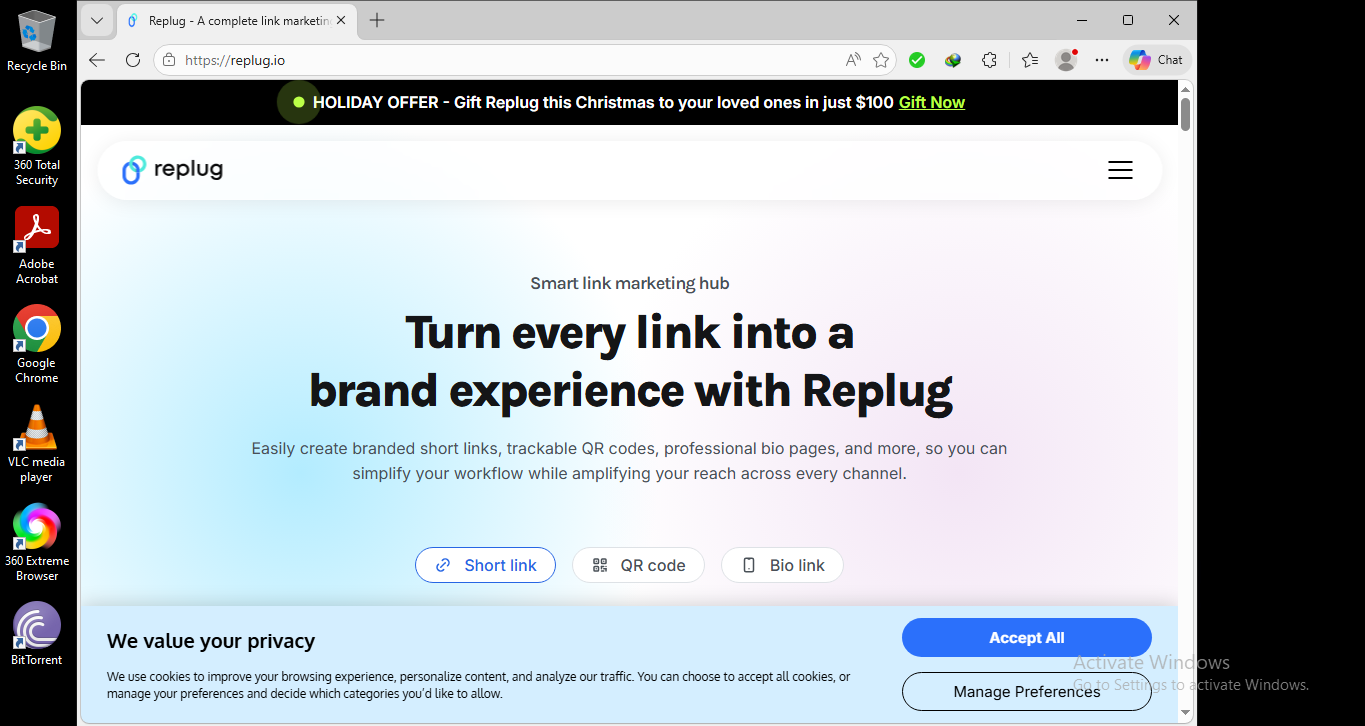
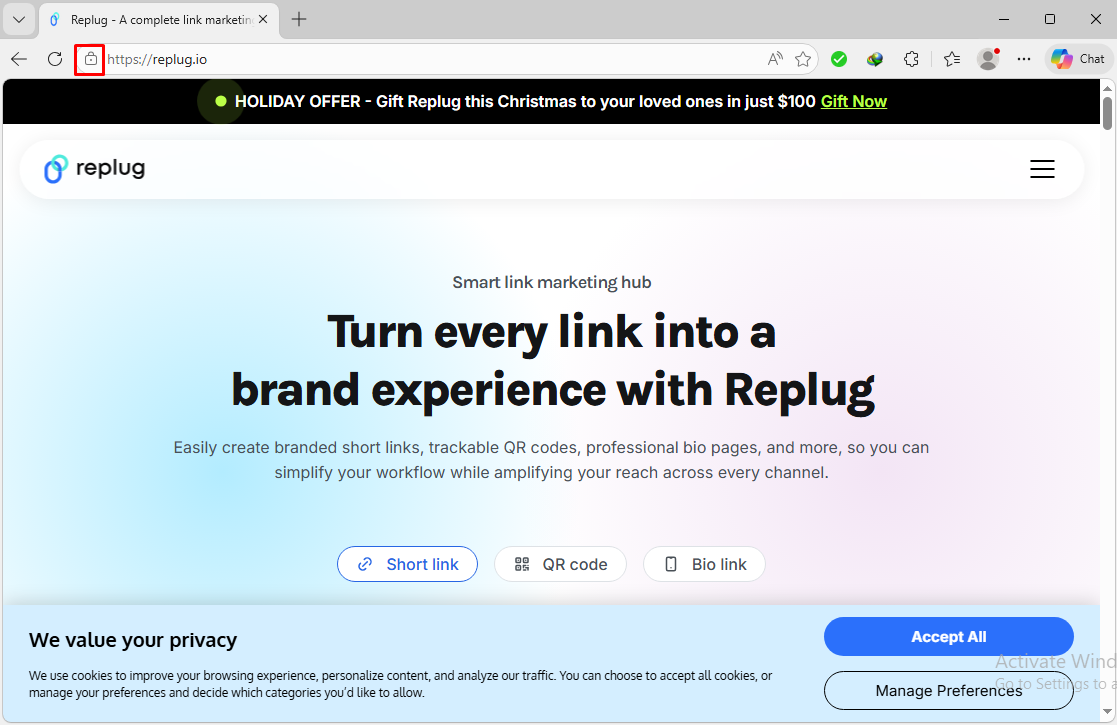
3. Look on the left side of the address bar. You’ll see a small icon (often a padlock 🔒 or a globe 🌐).
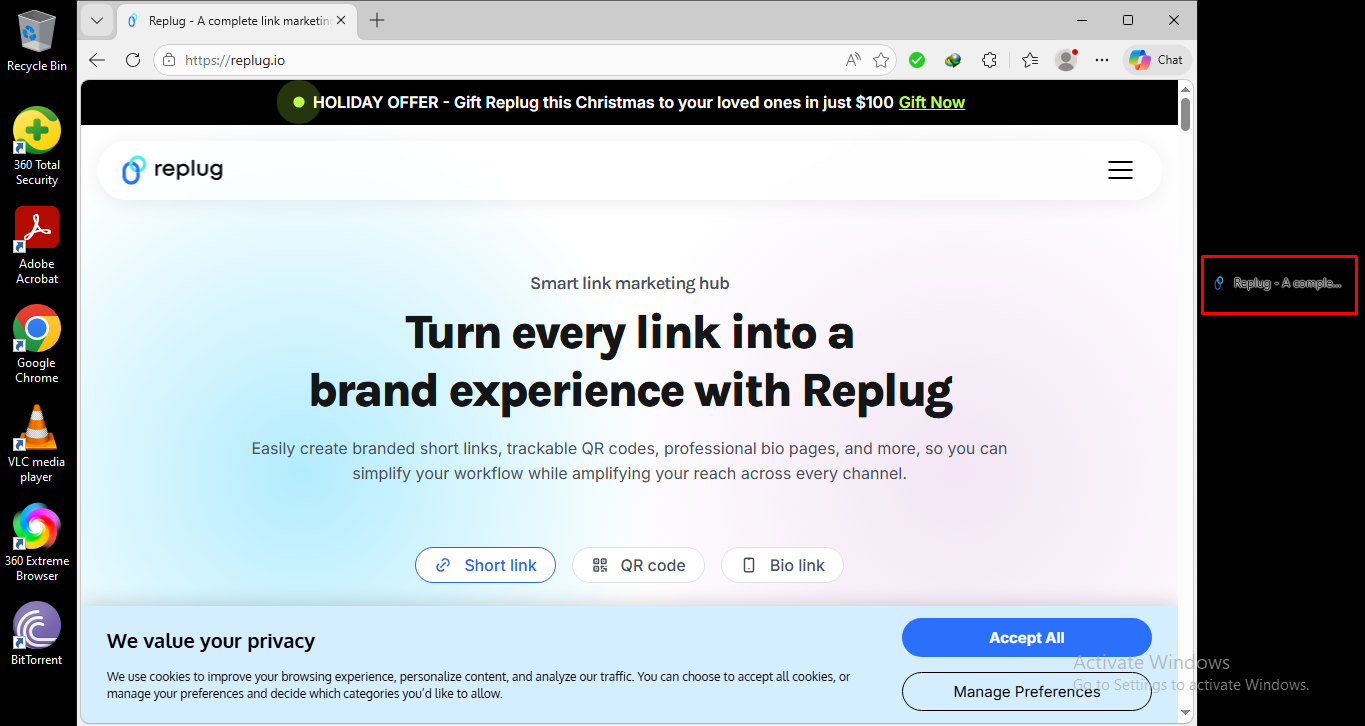
4. Click and hold that icon, then drag it onto your desktop.
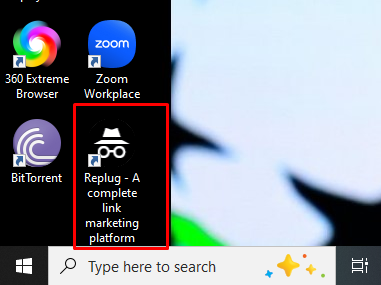
5. Release the mouse button, and boom!
A shortcut to the website now sits on your desktop.
Note: Just double-click that icon anytime you want to open the site!
Method #02: Right-click & create shortcut
If you prefer a more traditional way, or your browser doesn’t let you drag the icon (at times), this manual method works everywhere on Windows.
1. First, copy the website’s URL from the address bar at the top of your browser.
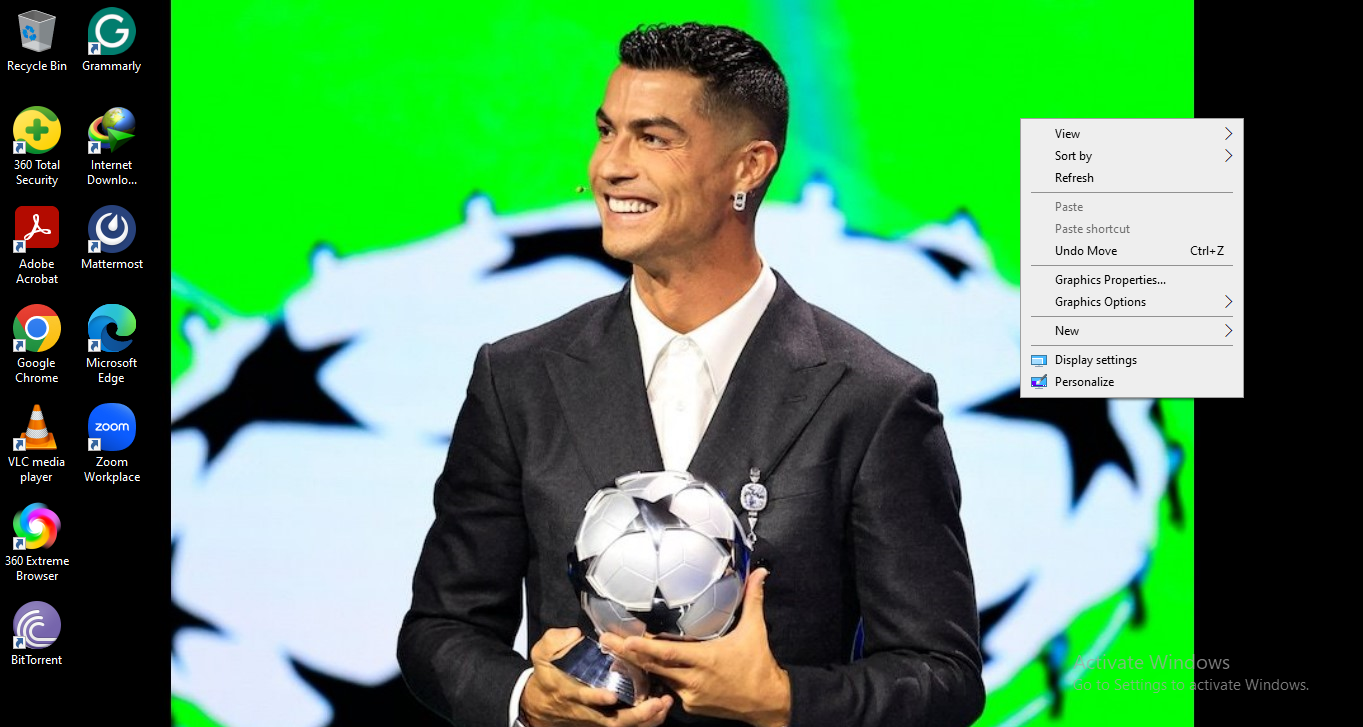
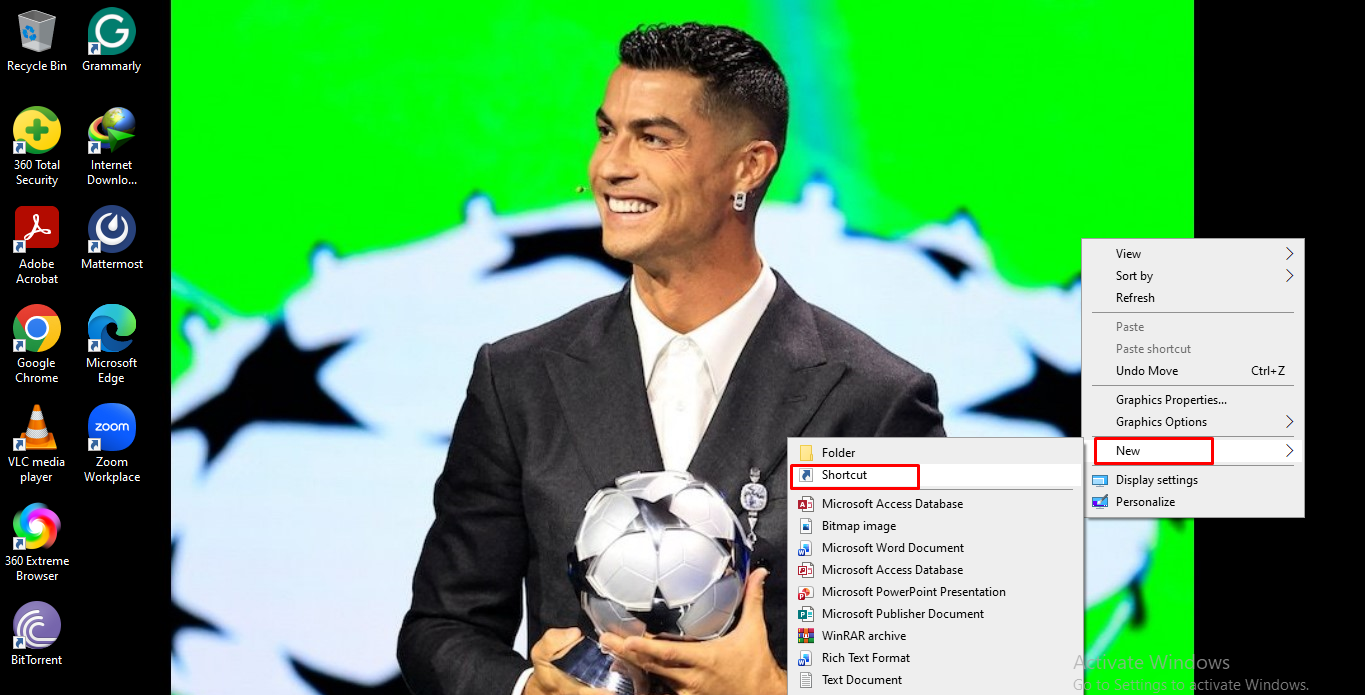
2. Then, go to your desktop and right-click on any empty space.
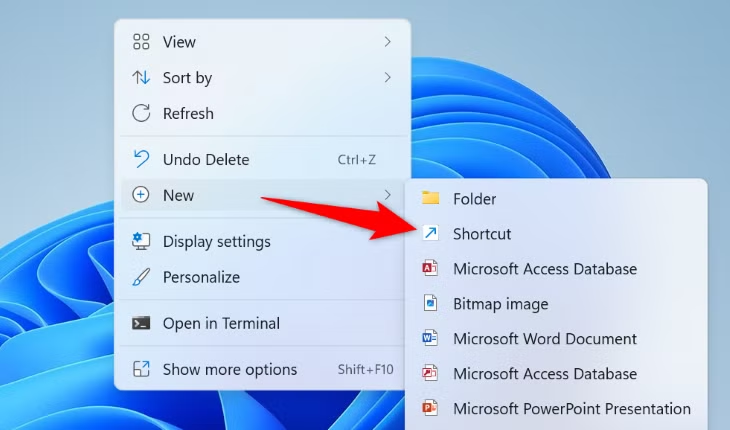
3. From the menu that appears, click New and then Shortcut.
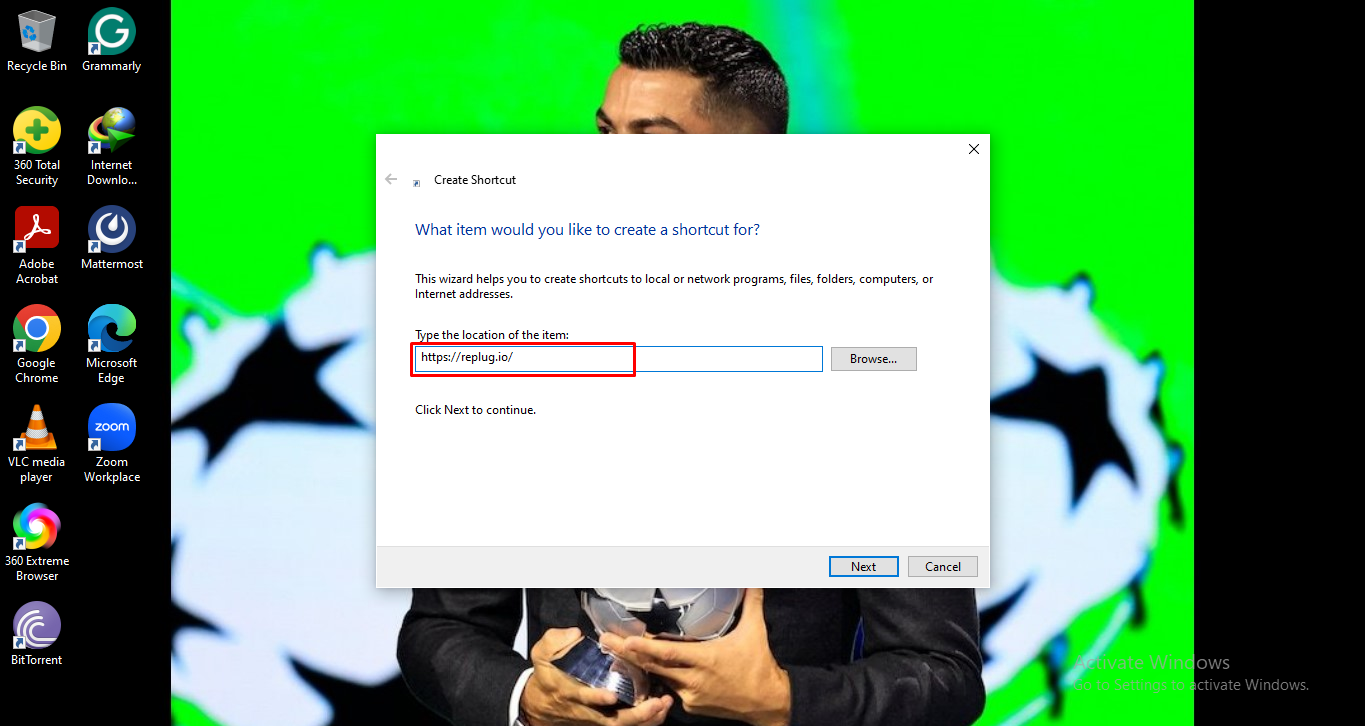
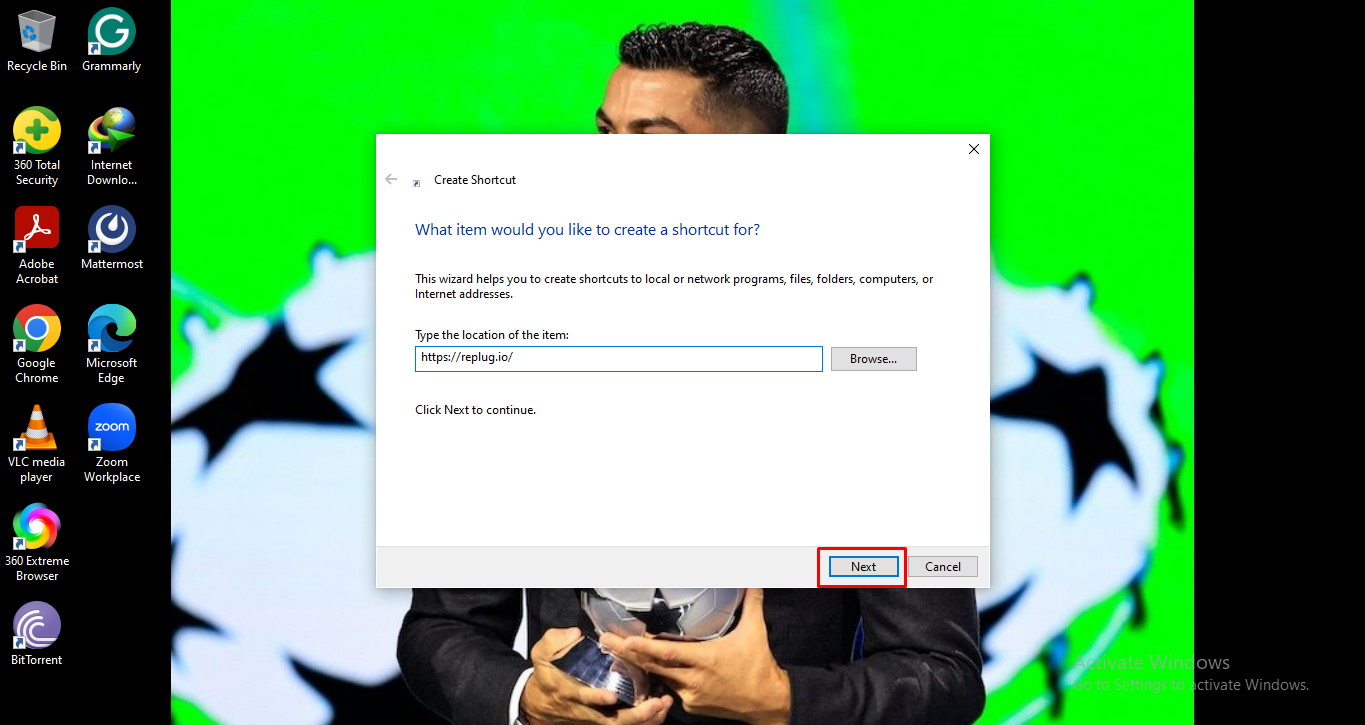
4. In the box that pops up, paste the URL you copied, then click Next.
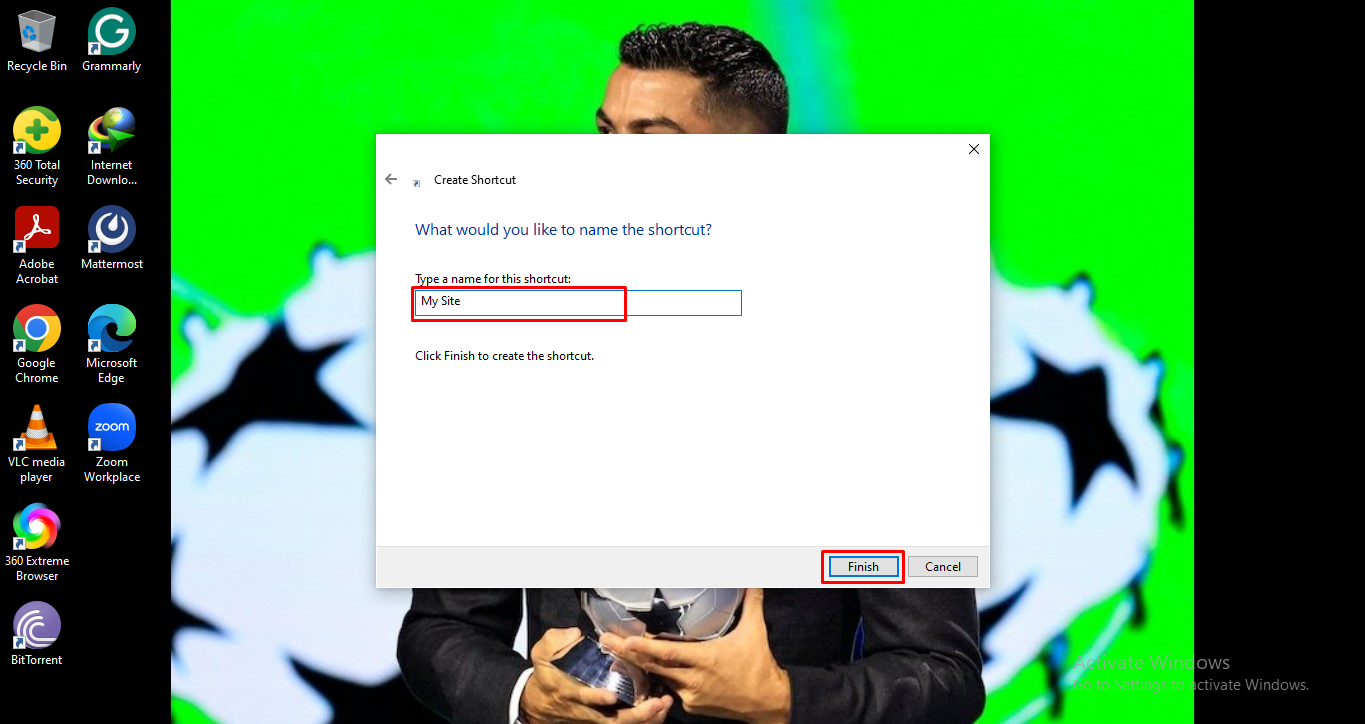
5. Type a name for your shortcut(like “My Favorite Site”), and click Finish.
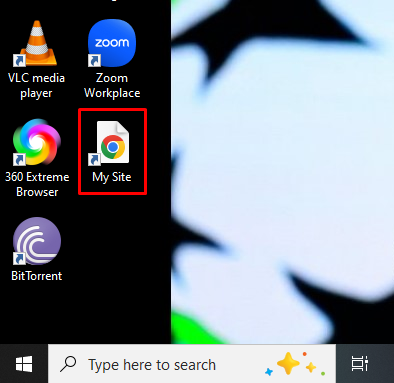
Done! You’ll now see a shortcut icon with the name you chose, and double-clicking it opens the website right away.
Note: If you want, you can also rename the shortcut later or even change its icon by right-clicking it and selecting Rename or Properties.
How to create a desktop shortcut to a website in Chrome
When you make a desktop shortcut for a website in Chrome, you’ll get an icon on your desktop that opens that site directly in Chrome. No need to open the browser and type the address or a messy, long URL first.
Let’s walk through “How to save a URL to desktop using Chrome” in easy steps!
1. Open Google Chrome on your computer: Start Chrome like you usually do. Make sure it’s up-to-date so all the settings are where they should be.
2. Go to the website you want to make a shortcut for: Just type the URL in the address bar and hit Enter so the site loads fully.
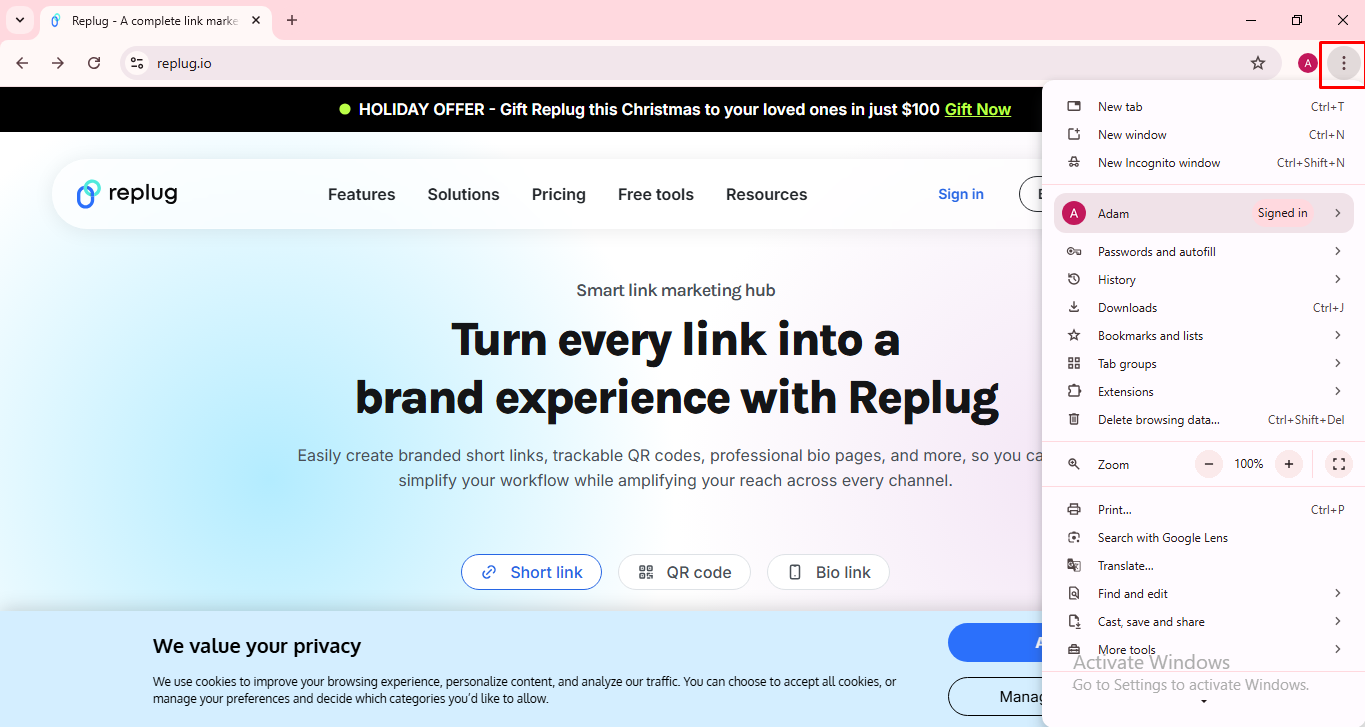
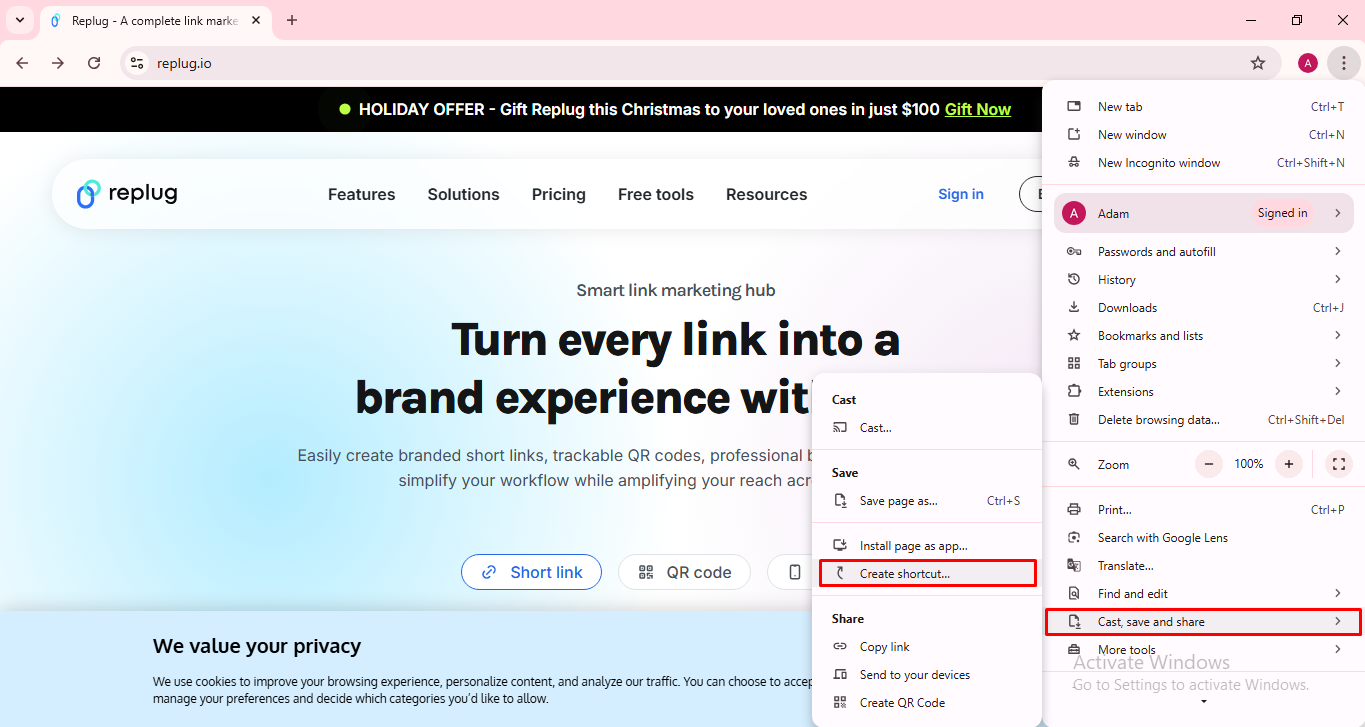
3. Click the three dots menu (⋮) in the top-right corner: That’s Chrome’s main menu button. You’ll find it on the right side of the toolbar.
4. Choose “Cast, save and share,” then click “Create shortcut…”: In some Chrome versions, the “Create shortcut…” option might be right under “More tools,” or inside a submenu called “Save and share.” Either way, just look for Create shortcut… and click it.
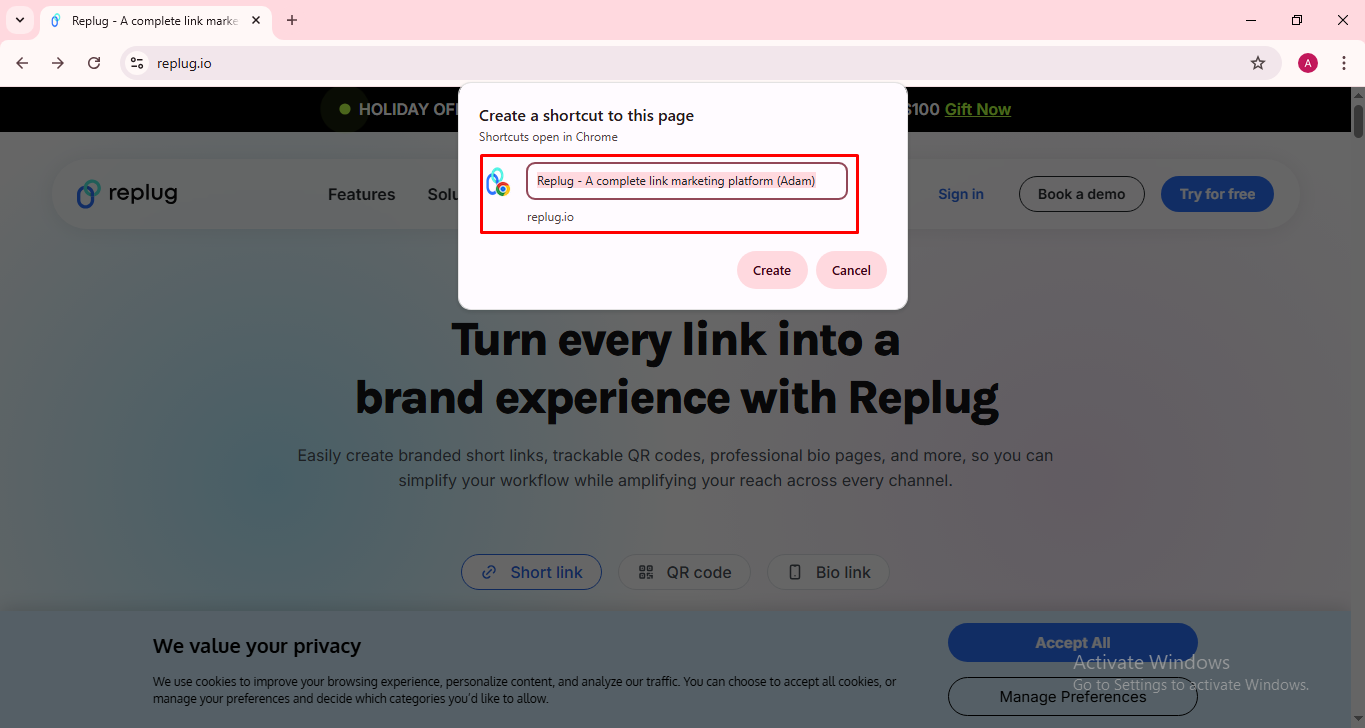
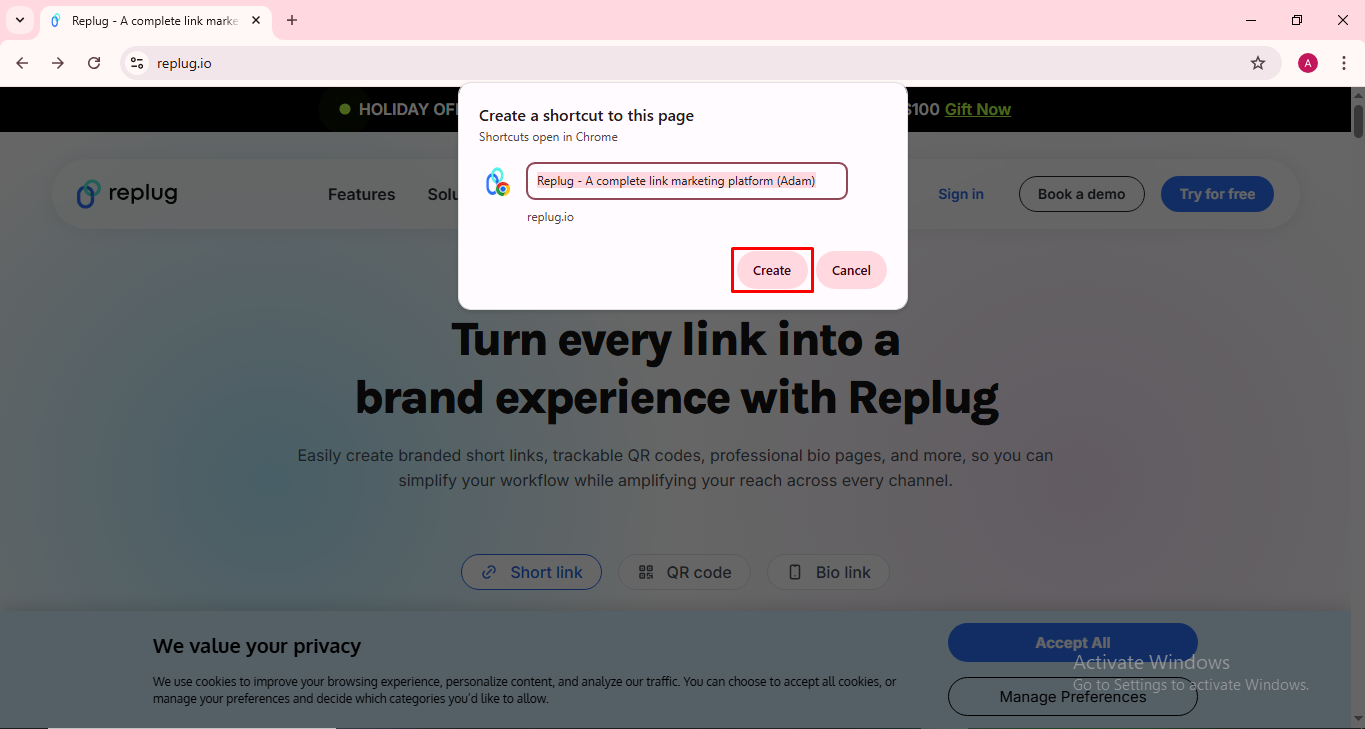
5. Name the shortcut: A small box will pop up. You’ll see a field where you can enter a name for your shortcut (something like the site’s name so you recognize it easily).
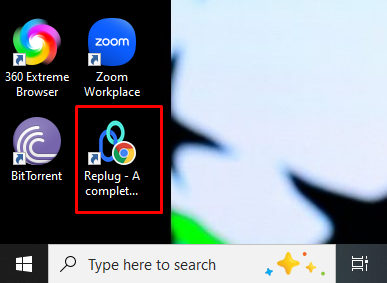
6. Click “Create”: Once you’ve named it, press Create, and Chrome will put the shortcut on your desktop.
That’s it! 🎉
You will now see a new icon on your desktop that opens the website you chose whenever you double-click it. This shortcut will open the page straight in Chrome, even if Chrome isn’t your default browser.
Note: If you ever want to remove the shortcut, just right-click it and select Delete. Super easy!
How to make a website shortcut on desktop using Microsoft Edge
If there’s a site you visit a lot, you don’t have to open Edge and type the address every time. You can put a shortcut for it right on your desktop so it opens with just a single double-click.
Below are the easiest ways to do it:
Drag & drop from the address bar (quickest way)
This is the simplest method if you wish to save a website shortcut to your desktop using Edge.
1. Open Microsoft Edge and go to the website you want.
2. Resize the Edge window so you can see your desktop behind it.
3. Look at the left side of the address bar. There, you’ll see a small icon (like a padlock or globe).
4. Click and hold that icon, then drag it onto your desktop and release.
5. A shortcut will appear on your desktop that opens the site.
That’s it!
Use Edge’s “Install as App” option (nice & clean)
This method makes the shortcut feel a bit more like an app, and opens the site in a neat window without all the browser extra fuss.
1. Open Edge and go to your chosen website.
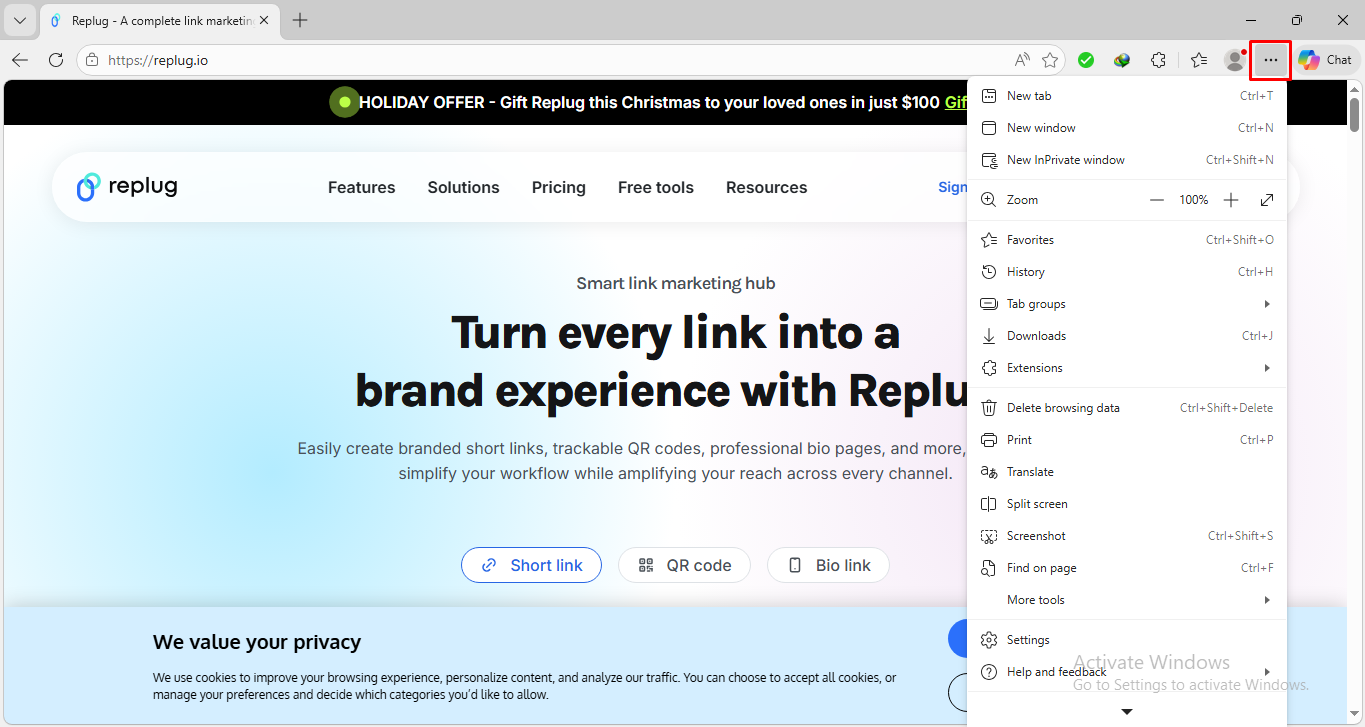
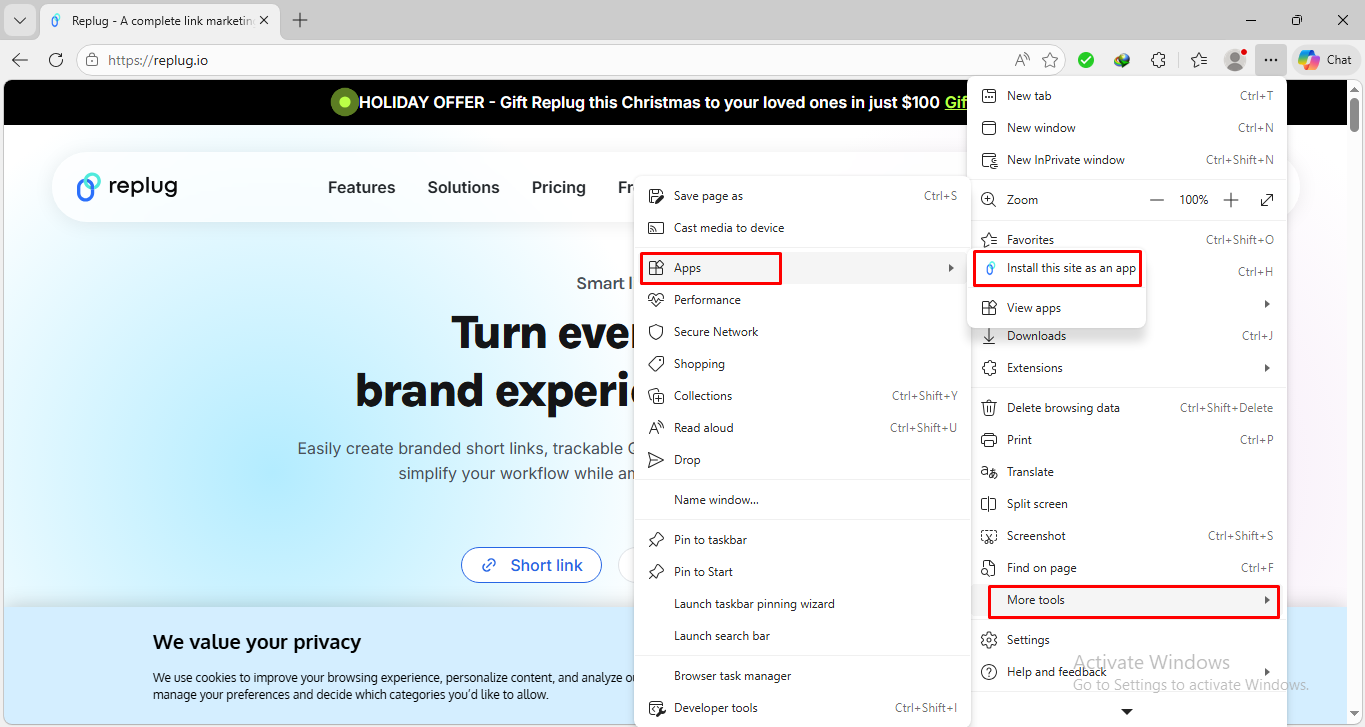
2. Click the three dots (…) in the top right corner of Edge.
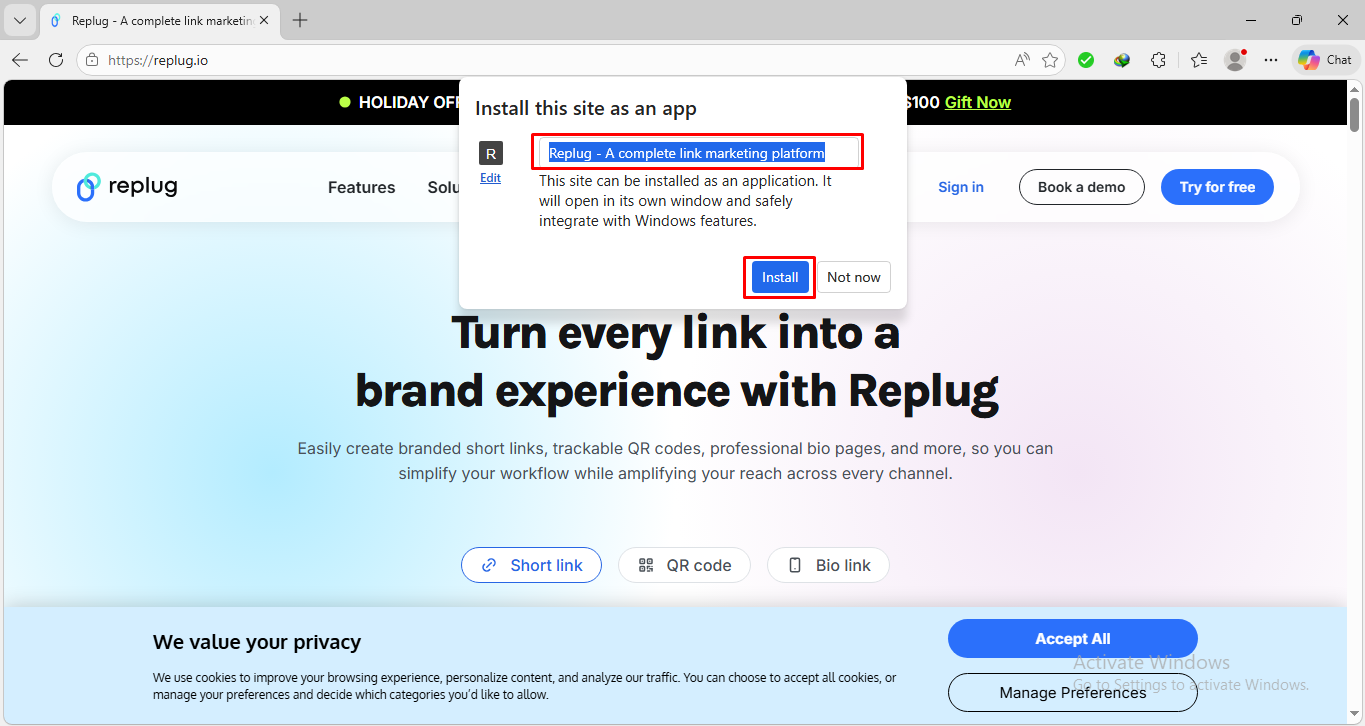
3. Hover over More tools → Apps and then click “Install this site as an app”.
4. Type a name for the site and click Install.
That’s all there is to it! Edge will now create a desktop shortcut automatically.
Note: This is great for things like email, chat portals, or tools you use all the time.
Create a shortcut using Windows’ New Shortcut option
If you want full control, this manual method works pretty well too:
1. Right-click on your desktop in an empty space.
2. Choose New → Shortcut.
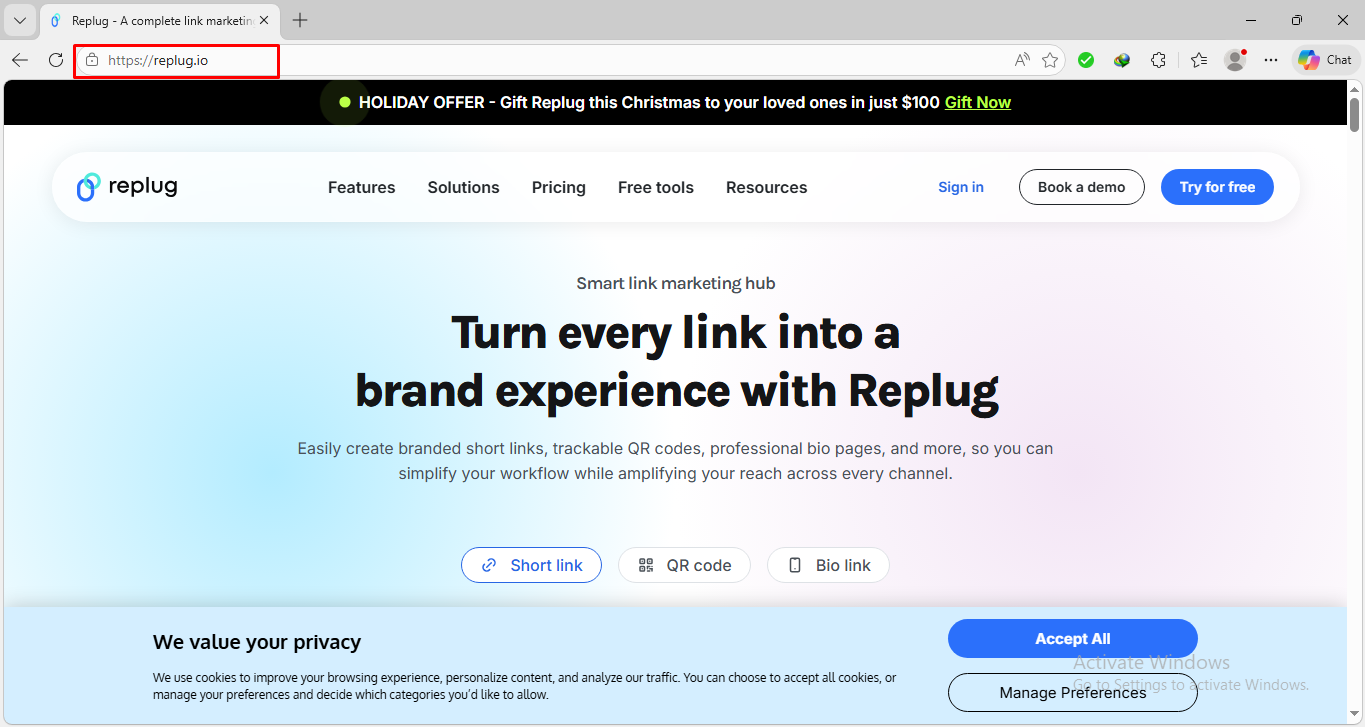
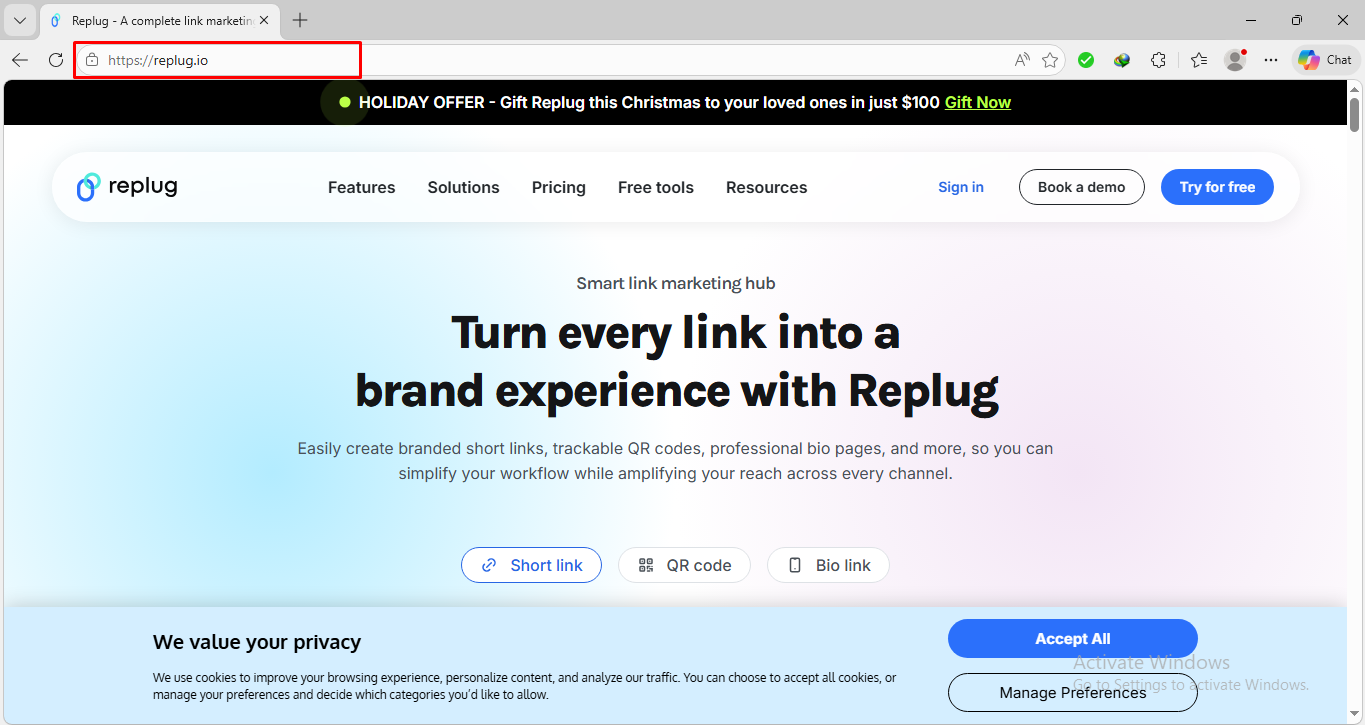
3. In the box that appears, type or paste the website’s URL (like https://replug.io/).
4. Click Next, give it a name (like “My Site”), and click Finish.
A shortcut will appear instantly!
Note: If Edge isn’t your default browser, it might open in a different browser, but you can tweak the shortcut so it opens in Edge specifically if you want.
You now have a quick way to open your favorite sites right from your desktop using Microsoft Edge.
How to save a link to desktop on Windows 11
Saving a website link to your desktop in Windows 11 is actually pretty simple.
You can do it either by dragging the link from your browser onto the desktop or by manually creating a shortcut that points to the website’s URL.
Both ways work well; choose whichever feels easier to you!
Here is how to add a website to desktop on Windows 11:
Method #01: Drag & drop the website link (already discussed above)
Method #02: Create a shortcut manually (already discussed above)
These ways make getting to your favorite sites much quicker and more convenient.
How to save a URL to desktop on Mac
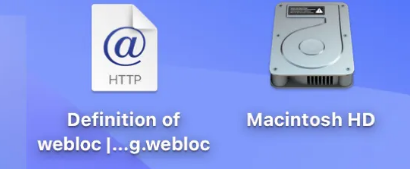
Saving a website link to your desktop on a Mac is easy and only takes a couple of minutes. When you do this, macOS creates a small file (a .webloc file) on your desktop that opens the site in your browser with a double-click.
Here’s how to save a link to desktop on a MacBook:
1. Open your web browser: Open Safari, Chrome, or any browser you like on your Mac.
2. Go to the website you want to save: Type the site address in the address bar and press Enter so the page loads fully.
3. Resize the browser window: Make sure part of your desktop is visible behind the browser. This makes it easier to drag the link.
4. Click the URL in the address bar: Click once to highlight the whole web address at the top of the browser.
5. Drag the URL to your desktop: While still holding the mouse or trackpad button, drag the highlighted web address and drop it on your desktop.
6. Check the newly created shortcut: You’ll see a file on your desktop with the website’s name and a .webloc extension.
In the end, all the methods we covered, from quick drag-and-drop tricks to browser-specific ways of making shortcuts in Chrome and Microsoft Edge, as well as saving links on Windows 11 and on a Mac, are here to make your life easier.
Whether you want one-click access to your favorite sites or prefer to organize links right on your desktop, these steps are simple to follow and work reliably for everyday use.
Now that you’re managing website shortcuts like a pro, why not take your link game even further? Give Replug a try today!
It’s a top-notch short URL generator that helps you generate branded short URLs in no time, track link analytics and performance, and share clean, trustworthy links wherever you want on the go!
Maximize marketing ROI
by transforming ordinary URLs into branded short links that convert.
Try Replug for free
Frequently asked questions
How to save a URL to desktop on a laptop?
On most laptops (Windows or Mac), you can save a website link by dragging the URL from the browser’s address bar onto your desktop. Simply click the padlock or site icon to the left of the URL, drag it down, and drop it on your desktop. You’ll see a clickable shortcut there.
How to save a link to desktop from an email?
If you want a website link you received in an email on your desktop, first open the email and copy the URL (right-click link → Copy link). Then, on your desktop, right-click → New → Shortcut (Windows), or drag a web link to the desktop (Mac). Paste the copied URL when prompted.
How to save a hyperlink to desktop?
A “hyperlink” is just a clickable web link. To save it to your desktop, copy the hyperlink URL from wherever you see it (email, document, webpage). Then, create a desktop shortcut and paste that URL into it (Windows), or drag the link from your browser address bar to the desktop (Mac).
How to save a URL shortcut to desktop easily?
The easiest way is to drag the URL (or the small icon next to it) directly from your browser’s address bar onto your desktop. This instantly creates a shortcut you can double-click to open the site at any time.
How to save a website to desktop on an iPhone?
You can’t save a website to the desktop on an iPhone like you do on a computer, but you can add it to your Home Screen so it works like a shortcut.
1. Open “Safari” and go to the website you want. 2. Tap the Share icon (square with an arrow up). 3. Scroll and tap Add to Home Screen. 4. Give it a name and tap Add.
An icon will appear on your iPhone’s home screen that opens that site.
How to save a website link to desktop on a PC?
On a Windows PC, open your browser (Chrome/Edge/Firefox), go to the site you want, then click and drag the icon from the address bar (the small padlock or globe) onto your desktop. A shortcut will be created that you can double-click to open the link at any time.
How do I save a URL to my home screen?
On most smartphones, open the website in your browser (Safari on iPhone, Chrome on Android), tap the Share or Menu button, and then hit Add to Home Screen. This creates an icon on your home screen that opens the URL with just one tap.
How to pin a website to your taskbar?
On Windows, open the website in Microsoft Edge. Then click the three dots (⋯) in the top right, go to More tools, and choose Pin to taskbar. The site’s icon will now appear on your taskbar for quick access.
Are you tired of managing bookmarks, refreshing dozens of websites, or missing out on updates because you simply forgot to check? That’s the core problem!
It’s really frustrating, especially when you know the content you care about could land in your inbox the moment it’s published.
But, here’s the good news, guys…
A vast number of sites still publish through RSS, and over 100 million websites are identified as using this technology in the tail-end of 2025.
By learning the right “RSS feed URL”, you can get those updates delivered automatically, without doing the hard work yourself; no more manual checking or refreshing.
Ready to step in? Let’s start with a quick overview: what exactly is an RSS feed URL, and why it matters.
RSS feed URL meaning
An “RSS feed URL” is simply the web address (URL) that points to a site’s feed, a kind of machine-readable summary of everything new on that website.
The feed (often in XML format) lists the latest posts, news, articles, or media, letting you know when new content is published.
The primary objective of that URL is to give you a single, reliable link that any “RSS reader” (also called a feed reader or aggregator) can visit regularly to check for new content.
Instead of you opening dozens of websites manually, the reader fetches updates automatically and compiles them into one stream, easy to browse and always up to date.
Why does this matter?
Because with an RSS feed URL, you can:
Save time, no need to manually revisit each site.
Get content delivered as soon as it’s published. Nothing gets missed!
Avoid algorithmic filters or noise that you usually get on social media. You only see what you subscribe to.
In short, grabbing a site’s RSS feed URL gives you a direct, streamlined line to all its latest content; neat, efficient, and under your control.
RSS feed URL structure
When you get hold of an RSS feed URL, it helps to know that there are some common patterns or “formats” that many websites follow. This makes it pretty easy to guess or locate the feed if it’s not obvious.
Common RSS feed URL formats
Many sites use simple, predictable URL patterns for their feeds. Some of the most common are:
https://example.com/rss.xml or https://example.com/feed.xml (especially when the feed is provided as an XML file).
For some websites structured with subfolders or sections, you might see variants like https://example.com/blog/feed/ or https://example.com/blog/rss/.
Note: These patterns aren’t universal. Some sites hide their RSS feeds, give them custom URLs, or even omit them altogether. But starting with these standard formats is often the quickest way to find a feed, especially if the site is built on a common platform (like those that auto-generate feeds).
RSS feed URL examples
Here are a few concrete examples to give you a clearer idea:
If a blog lives at https://myblog.com, its feed might be https://myblog.com/feed/
Another site might offer its feed at https://news.example.com/rss.xml
A blog’s older implementation could use https://example.com/blog/rss/ or https://example.com/blog/feed.xml
When you paste one of these into an RSS reader (or simply your browser), you’ll often see a basic XML file: with <rss> at the top, a <channel> describing the feed, and multiple <item> entries, each representing a post or article.
How to find an RSS feed URL
When you want to subscribe to a website via RSS, the tricky part is often just finding the correct link, i.e., the actual RSS feed URL. Below are four friendly, reliable ways to track it down hassle-free!
Method #01: Look for the RSS logo
Many websites still show the classic orange RSS icon (or a similar feed icon) somewhere on their pages, often in the header, footer, or sidebar. If you spot it, click on it. That almost always leads you directly to the RSS feed URL.
Method #02: Check the page source
If there’s no visible icon, you can look under the hood. Right-click on the page, choose “View page source” or “Inspect”. Then search with “Ctrl + F” or “Cmd + F” for keywords like “RSS” or “feed”. If a feed exists, you’ll likely find a <link rel=”alternate” type=”application/rss+xml” tag; the “href=” value is the feed’s URL.
Method #03: Guess common suffixes
A lot of sites, especially blogs and those built on popular platforms, use simple, predictable endings for their feed URLs. Common guesses: adding /feed, /rss, /feed.xml, or /rss.xml to the site’s base address (e.g., https://example.com/feed/).
Note: You can also try /blog/feed/ or /blog/rss/ if there’s a blog section. It doesn’t always work, but when the site follows conventions, this method often hits the mark.
Method #04: Use platform-specific methods
Depending on the platform the website runs on (e.g., WordPress, Blogger, or others), shortcuts are available.
For instance, many WordPress-powered sites make their feed available at /feed/. However, if the site is newer or uses a custom CMS, you may need a browser extension (or an RSS feed URL finder) that scans page metadata or the site’s structure to detect a feed automatically.
Using these methods, from obvious to more technical, you can usually uncover a website’s RSS feed URL within a minute or two.
How to find the RSS feed URL for the most popular websites
Now, if you are someone who wants to follow big sites, blogs, or social platforms via RSS feed URLs, it helps to know their typical feed-URL formats.
Mentioned next are many of the most popular websites, along with how you can find or build their RSS feed URL so you can subscribe easily.
YouTube RSS feed URL
For YouTube channels or users, the feed URL often uses this format:
Note: It’s not guaranteed, because Wix sites vary, but this is a typical pattern.
CNN RSS feed URL
CNN offers RSS feeds for different news categories. One common feed URL is:
http://rss.cnn.com/rss/cnn_topstories.rss
You can subscribe to this (or other category-specific feeds) to get the latest headlines directly via RSS.
RSS feed URL Spotify
For platforms like Spotify, especially if you follow artists/playlists/podcasts, there are services/tools (e.g., online RSS feed URL generators) that can convert your Spotify content into an RSS feed URL in no time at all.
RSS feed URL ESPNcricinfo
If you want updates from ESPNcricinfo, i.e., one of the top cricket news websites, there are official RSS feeds for news, live match updates, player news, series, teams, etc. Their “Cricket RSS feed URL” collection includes global news, live matches, and more.
Global news feed:https://www.espncricinfo.com/ci/content/rss/news_1.xml, this is their main “all-news” feed.
Live scores feed:https://www.espncricinfo.com/ci/engine/match/scores/rss.xml (or similar, check their RSS feed index page)
By knowing these standard feed-URL patterns, you can quickly subscribe to many big websites and stay updated without manually checking them.
How to get RSS feed URL for news
Suppose you want to stay updated with the latest news, whether world headlines, tech articles, or niche updates like sports, having the right RSS feed URL makes all the difference.
Here’s how you can easily grab feed URLs for different kinds of news.
General news RSS feed URL
Many major news sites openly provide an RSS feed for their general or “top stories”.
For example, CNN makes its feed available at: http://rss.cnn.com/rss/cnn_topstories.rss.
Similarly, BBC News offers a world news feed at: https://feeds.bbci.co.uk/news/world/rss.xml.
By subscribing to such general news RSS feed URLs, you can get updates covering all major topics (headlines, international affairs, breaking stories, etc.) in one go.
Cricket news RSS feed URL
If you follow sports, say cricket, you can look for news sites or sections that support RSS and target cricket or sports in general.
For example, if a major news publisher has a “sports” or “cricket” section, check if they publish an RSS feed for that section.
Using the term “RSS feed URL cricket news” in your search (site name + “cricket feed”) can help you locate those niche feeds more easily.
RSS feed URL for Google News
Even though platforms like Google News don’t always display a visible RSS button, you can generate a feed from a Google News search or topic page.
Tools such as feed generators let you paste the Google News page URL to produce a valid RSS feed that tracks that topic or query. This is handy if you want aggregated news across publishers, filtered by your interests.
RSS feed URL for technology news
Tech-news publishers often provide dedicated RSS feeds for their technology sections.
For instance, BBC’s technology feed is available at: https://feeds.bbci.co.uk/news/technology/rss.xml.
You can also subscribe to feeds from specialized tech platforms (blogs, gadget-review sites, IT-news outlets), usually by using standard feed URL formats or a dedicated “feed” link.
💡 Pro tip: You can also check out this RSS feed URL list if you want a quick way to subscribe to all major updates in one go!
Create & shorten your own RSS feed URL with Replug!
If you want to build a clean, easy-to-share RSS feed link, maybe for your blog, newsletter, or curated content, Replug makes it pretty simple.
With this efficient URL shortener, you can plug in an existing feed or use a feed you already have, and get a simplified, “nice and neat” version of the RSS link within seconds.
That means you get an RSS feed URL free that’s shorter, uncluttered, and often better for sharing on social media or embedding in other platforms.
Here’s how it works:
You sign in, head to Replug’s “RSS Feed” section, and enter your original feed link.
Replug then converts all the messy, long URLs inside the feed into compact, branded short links.
After that, you receive a fresh, shareable RSS feed URL, ideal if you want to distribute content without overloading readers with cluttered links or disorganized URLs.
Note: This is especially handy if you run a blog, curatorial site, or content aggregator, or just want a simple, clean feed URL to give others. With a quick setup, you get a user-friendly RSS link that’s easy to share and manage.
Maximize marketing ROI
by transforming ordinary URLs into branded short links that convert.
Try Replug for free
Summing up
All in all, finding an RSS feed URL isn’t as complicated as it seems. Once you know the common formats, where to look, and how different platforms handle feeds, staying updated becomes a whole lot easier.
No matter if it’s news, blogs, videos, or niche content, RSS gives you a simple way to pull everything into one place without chasing multiple sites every day.
And if you ever want to clean up, organize, or shorten your feed links, Replug makes the process quick and stress-free.
Give it a try now, and you might be surprised how much simpler your content routine becomes!
Frequently asked questions
What is an RSS feed, and how do I use it?
An RSS feed is a standardized file (usually in XML) that a website offers to share all its recent updates, like blog posts, news articles, or podcast episodes, in one place.
To use it, you need to copy the feed’s URL and add it to an “RSS reader”. That reader keeps checking the feed and shows you new items automatically, so you don’t have to visit each website manually.
How to add RSS feed URL?
Once you have an RSS feed URL, open an RSS reader (web-based or app) and use the “Add feed” or “Subscribe” option.
Paste the URL there and confirm. Then the reader will start pulling updates from that feed regularly. If the site offers multiple feeds (for posts, comments, categories, etc.), you can add each URL you want to follow.
Where can I find the feed URL?
You’ll often find a website’s RSS link via:
– A visible RSS icon or link on the site (often in header, footer, or sidebar). – Guessing standard URL endings like /feed/, /rss.xml, /rss/, etc. – Checking the site’s source code. Searching for <link rel=”alternate” type=”application/rss+xml”>, to discover the feed URL, even if it’s hidden visually.
How to get the RSS feed URL for a podcast?
Podcasts generally publish an RSS feed that lists episodes (with titles, descriptions, media files, etc.). If the podcast is on a hosting platform, look for a “Share,” “Subscribe,”or “RSS” link. This will usually reveal its feed URL.
Once you copy that URL into your RSS reader or podcast app, you’ll get updates whenever a new episode drops.
How to get the RSS feed URL for WordPress?
If a website runs on WordPress, you can usually get its feed by simply adding /feed/ to the end of its main URL, e.g., https://example.com/feed/. That’s the default!
However, WordPress sites often provide additional feeds too for comments, categories, tags, or authors. For instance: https://example.com/category/technology/feed/ or https://example.com/tag/health/feed/.
How to find an RSS feed URL of a website from its source code?
If the feed isn’t obvious on the page, open the page source (right-click → “View source” or “Inspect”), and search for terms like rss, feed, or application/rss+xml.
If the site supports RSS, you’ll usually find a <link> tag with the feed URL there. That URL is what you copy into the RSS reader.
How to find an RSS feed in your RSS reader?
Most RSS readers list all the feeds you’ve subscribed to, often in a sidebar or under a “Subscriptions/Feeds” menu. There you’ll see the feed names (or your custom labels).
If you want the original URL, some readers let you view feed details or feed settings that show the actual URL. Otherwise, you can right-click or view feed properties to copy it.
Are RSS feeds still relevant in 2026?
Yes, RSS feeds remain useful in 2026. Even though social media and algorithm-driven platforms dominate, RSS offers a clean, chronological, ad-free (or low-noise) stream of content from multiple sources.
It still lets you follow blogs, news sites, podcasts, or niche websites without being filtered by algorithms. It’s one of the most privacy-friendly and efficient ways to stay updated.
Provide an example of a category RSS URL and a tag RSS URL?
Using WordPress as an example:
–Category RSS URL: If your site has a category “technology”, the feed could be https://example.com/category/technology/feed/ –Tag RSS URL: If you have a tag “health”, the feed could be https://example.com/tag/health/feed/
These links pull only posts from that specific category or tag. Pretty useful when you only care about a subset of content.
Which is the best RSS feed URL extension or RSS feed URL app out there?
There’s no one-size-fits-all “best”, but what matters is a reader or tool that’s simple, reliable, and lets you manage multiple feeds easily. Good RSS readers that support standard feeds and let you organize subscriptions tend to work best.
Another helpful option: if you want custom, clean, or shareable feeds, consider a feed builder or feed shortener, especially when the original feed URL is messy or quite complicated to share.
Ever fallen down a Google rabbit hole only to end up bored out of your mind? You’re not alone!
With over 1.2 billion websites online in 2026 and counting, it’s wild how hard it can be to find fun content worth your time.
The major problem?
Most of us stick to the same top 10 sites every day, leaving millions of odd, quirky corners of the web unexplored, and honestly, half of the internet feels forgotten or weirdly mysterious.
That means you’re missing out on digital oddities and hilarious gems that make scrolling actually fun.
Lucky for you, we’ve combed through the strange, the silly, and the downright bizarre websites worth your next bored afternoon.
So… what exactly makes a website strange anyway?
Let’s break it down next!
What is a strange website?
When we talk about a “strange website,” we’re really talking about any URL that doesn’t behave or look the way you expect a normal site to.
Unlike typical websites (such as news sites, social platforms, or stores), these odd corners of the web often defy logic, purpose, and standard design.
Many people explore the “strange websites iceberg,” a popular online concept in which web oddities are ranked from mild curiosities to genuinely bizarre or unsettling sites, to find weird gems and laughable surprises.
At their core, strange websites usually have one or more of these objectives:
Entertain or amuse visitors with absurd, unexpected, or nonsensical content.
Showcase creativity or experimentation with web design or interactive elements.
Act as digital art or curios with no clear practical goal.
Direct you to collections of other weird website links just for fun.
In short, a strange website is any online space that makes you stop, stare, laugh, or wonder, “What on earth is this?”, which is precisely why they’re so fun to explore!
What makes a website “strange or weird”?
When a website breaks away from what we’re used to seeing online, i.e., the usual layout, clear menu, and obvious purpose, it starts to feel strange.
These quirky sites often surprise you with unexpected interactions, odd visuals, or completely unconventional ideas that make exploring them fun and memorable.
Here’s what usually makes a site weird or weirdly fun:
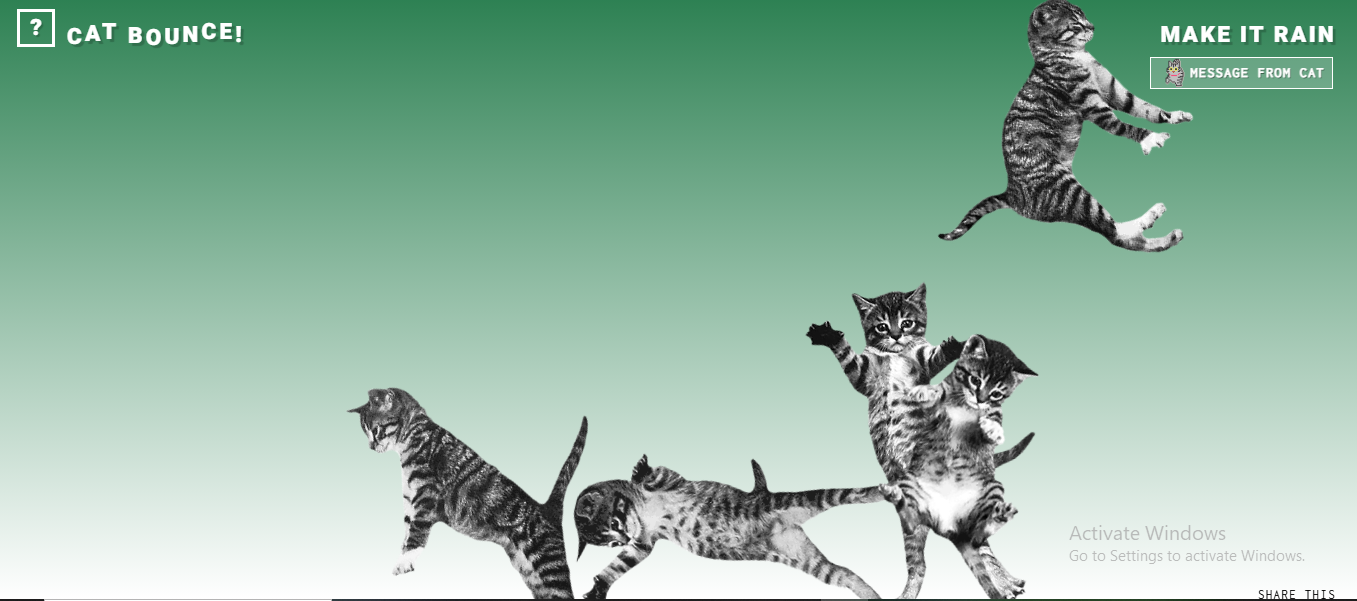
Interactivity: Sites that respond in unexpected ways when you click, drag, or move your cursor around (like bouncing cats or endless animations).
Minimalism: Some strange sites are super simple, with almost nothing on the page except an odd message or function that feels weirdly satisfying.
Artistic expression: Some are basically web art (abstract, symbolic, and more like a digital art piece than a traditional site).
A sense of humor: Humor (sometimes absurd or ironic) is a big part of weird website links that make you laugh or scratch your head.
Unique content: Content you won’t find anywhere else, like bizarre animations, strange games, or totally random ideas.
Niche appeal: Sites that seem built for a tiny group of people or a very specific interest.
Quirky web design: Unusual layouts, odd navigation, or visual chaos that feels intentional.
Distinctive purpose/functionality: Some strange URLs literally do nothing useful, and that’s the key point.
Odd interactive elements: Weird effects, unpredictable responses, or just things that make you go “huh?” when you interact.
Note: Weird sites embrace creativity over clarity, and that’s what makes browsing them so worthwhile!
List of 50+ weird websites that will blow your mind, for sure!
The internet is pretty huge, and tucked between all the blogs, online stores, and news sites lies a wild world of strange, funny, pointless, and bizarre websites that seem to exist just because.
From utterly useless pages to interactive oddities you’ll lose time playing with, these weird websites are perfect for killing boredom, laughing out loud, or simply wondering, “What did I just find?”
Ready to step into some of the weirdest URLs and strange website links the web has to offer? Below is the ultimate list, starting with one of the most classic oddballs online…
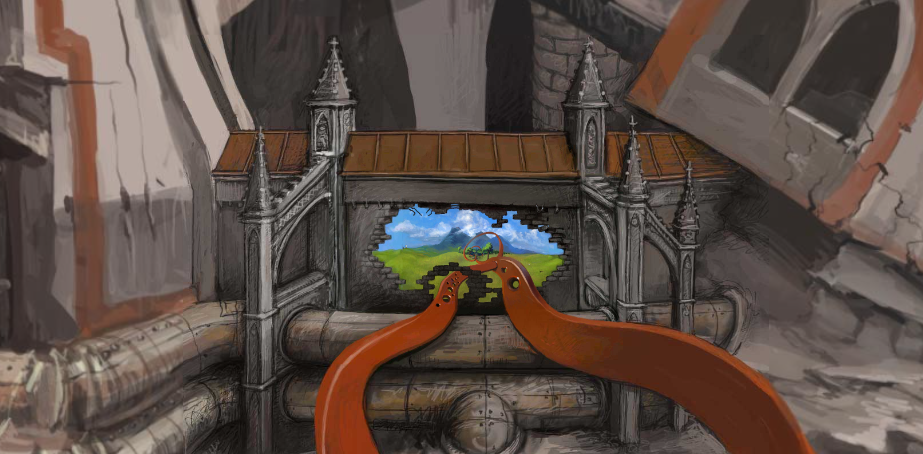
1. Zoomquilt
What it is (an overview):
Zoomquilt is a collaborative piece of digital art that feels like an endless journey. It’s an interactive, infinitely zooming painting that takes you deeper into surreal scenes the more you explore. It was created back in 2004 and has stuck around as a mesmerizing web oddity.
Why it’s strange or weird:
This site feels strange because instead of a standard page, you’re greeted with a looping zoom that never quite ends, blurring lines between art, animation, and curiosity.
Why you must visit this site:
You’ve got to visit it because it’s one of those rare web experiences that’s both relaxing and hypnotic. It is perfect for losing yourself in something entirely different and beautiful that you can’t find anywhere else.
2. THIS IS SAND
What it is (an overview):
This Is Sand is a free interactive digital sandbox where you pour virtual sand onto your screen to create layered landscapes, gradients, and abstract pieces with just clicks and drags. It started as a simple web art project in 2008 and later became a popular app too.
Why it’s strange or weird:
It feels strange because instead of menus or tasks, you’re literally playing with falling sand. No goals, no scores, just watching grains pile up in satisfying ways.
Why you must visit this site:
You’ve got to visit it because it’s oddly relaxing and creative. Ideal when you need to unwind, make something pretty, or just kill time in a fun, unexpected way.
3. WindowSwap
What it is (an overview):
WindowSwap is a simple yet magical virtual travel site that lets you open a random video from someone else’s real window, anywhere in the world. Each clip (usually about ten minutes long) shows what a person sees outside their window, from city streets to quiet countryside, complete with natural sounds.
Why it’s strange or weird:
It feels strange because it’s not about browsing content or clicking menus; you just watch the world without moving. It’s oddly calming and real, a break from typical web noise.
Why you must visit this site:
You’ve got to visit it because it’s like instant mini-travel. One click can take you from Tokyo to Tuscany and make you feel connected to everyday life across the globe.
4. Staggering Beauty
What it is (an overview):
Staggering Beauty is a quirky interactive web toy featuring a black, worm-like creature that follows your mouse movements playfully on your screen. As you move the cursor, it wiggles and reacts, and if you shake it fast enough, the site explodes into flashy colors and loud sounds, entirely different from anything you’d expect from a regular webpage.
Why it’s strange or weird:
It’s strange because it’s so unpredictable yet straightforward. There’s no particular goal to achieve, no menu, just this weird little character that surprises you.
Why you must visit this site:
You’ve got to visit it because it’s a fun, chaotic little distraction that perfectly shows how odd and playful the internet can be. A great option for a quick laugh or sharing with friends!
5. Hacker Typer
What it is (an overview):
Hacker Typer is a fun little website that makes it look like you’re typing real code just by striking your keyboard keys. It is especially designed for pretending to hack, as you see in movies.
Why it’s strange or weird:
It’s strange because the code that appears doesn’t actually do anything or make any sense, and you don’t need to know programming at all, yet it still looks dramatic and impressive.
Why you must visit this site:
You’ve got to visit it just to laugh, prank your friends, or make cool tech-style videos, especially when you want that fake hacker vibe.
6. The Useless Web
What it is (an overview):
The Useless Web is a playful website that shows one big button saying “TAKE ME TO A USELESS WEBSITE (PLEASE)”. When you click it, it instantly sends you to a random, quirky page somewhere else on the internet.
Why it’s strange or weird:
It’s weird because it doesn’t do anything useful at all. No tools, no info, just silly, pointless corners of the web.
Why you must visit this site:
You’ve got to visit it when you’re bored or curious, because you never know what odd, funny thing you’ll discover next.
7. Cat Bounce!
What it is (an overview):
Cat Bounce! is a whimsical interactive site where adorable cartoon cats bounce around your screen when you click and drag them, using simple physics that let you make them fly higher the harder you interact.
Why it’s strange or weird:
It’s strange because there’s no game, no finish line, just a bunch of virtual cats bouncing for no reason, and there’s even a “Make it Rain” button that floods your screen with them.
Why you must visit this site:
You’ve got to visit it if you are a cat lover, and when you’re bored or need a quick smile, because it’s silly, fun, and downright joyful in the weirdest way.
8. Eel slap!
What it is (an overview):
Eel slap! is a ridiculously simple and funny little website where you use your mouse or finger on mobile to swing a giant animated eel and slap a guy in the face just for laughs.
Why it’s strange or weird:
It’s weird because there’s no real game or purpose behind this activity. You’re literally just slapping someone with a fish and watching the silly animation.
Why you must visit this site:
You’ve got to visit this site when you’re bored or need a quick laugh, because it’s one of those bizarre internet gems that’s oddly fun and totally pointless in the best way.
9. Endless Horse
What it is (an overview):
Endless Horse is a quirky, one-page website that shows you a giant ASCII-art horse whose legs stretch down the page forever as you scroll.
Why it’s strange or weird:
It’s strange because there’s no real purpose. The horse just keeps going and going with no end in sight, making it a totally pointless but oddly mesmerizing internet paradox.
Why you must visit this site:
You should visit it when you’re empty-minded or just curious to experience one of those simple, weird web gems that make you cheer up for no real reason.
10. Pointer Pointer
What it is (an overview):
Pointer Pointer is a fun little site that plays a simple trick: wherever you move your mouse cursor, it finds a photo of someone pointing right at that exact spot on the screen.
Why it’s strange or weird:
It’s weird because there’s no real motive. It’s just random people in images pointing at your cursor again and again, which makes it oddly amusing and surprisingly addictive.
Why you must visit this site:
You’ve got to visit it when you’re stressed out or curious about quirky web stuff, because it’s one of those silly internet masterpieces that instantly makes you smile.
11. Heaven’s Gate
What it is (an overview):
Heaven’s Gate is the old official website of the Heaven’s Gate religious group, a UFO-focused cult most famous for the mass suicide of 39 members in 1997 after believing a comet signaled their “ascension.”
Why it’s strange or weird:
The site still exists online, looking much like it did back in the 90s, which makes it feel eerie and out of time.
Why you must visit this site:
You might visit it out of curiosity or historical interest to see a real internet memorial linked to one of the strangest moments in modern cult history. But please be aware that it reflects those original beliefs and isn’t a polished modern site.
12. Ever Dream This Man?
What it is (an overview):
Ever Dream This Man? is a strange internet page built around a simple idea. It shows a sketch of a man that, according to the story, thousands of people around the world have allegedly seen in their dreams, even though no one has ever met him in real life.
Why it’s strange or weird:
It’s weird because it feels like a mix of urban legend and dream mystery, and the site treats these dream reports seriously.
Why you must visit this site:
You should visit it if you’re passionate about internet kinks and how a simple website can turn into a global meme and mystery, even though the phenomenon was later revealed to be a hoax and viral art project.
13. The Nicest Place on the Internet
What it is (an overview):
The Nicest Place on the Internet is a feel-good website where strangers from around the world send you free, virtual video hugs set to gentle music to make you smile.
Why it’s strange or weird:
It’s a bit strange because it does nothing practical (just loops people giving hugs), but that’s exactly the point. It’s simple kindness online, something you don’t see every day.
Why you must visit this site:
You’ve got to visit it when you’re having a rough day or need a pick-me-up, because it’s one of those rare corners of the web that feels warm and human.
14. ZOMBO
What it is (an overview):
ZOMBO is one of the internet’s classic single-serving joke sites, dating back to 1999. It opens with a looping message and animation where a voice keeps welcoming you and saying, “Welcome to Zombo com, This is Zombo com,” yet nothing useful ever happens.
Why it’s strange or weird:
It’s just endless fluff with no real content. That makes it weird and funny, because the whole point is this over-the-top hype with zero payoff.
Why you must visit this site:
You should visit it at least once just to experience this piece of early web history and have a laugh at how absurdly pointless it is.
15. The Long Doge Challenge
What it is (an overview):
The Long Doge Challenge is a playful, meme-based web page built around the beloved Doge internet meme. You just scroll down forever to make a big ASCII Doge image stretch and collect “wows” as you go……….
Why it’s strange or weird:
It’s kind of strange, or you can say weird, because there’s no real goal or payoff. It’s basically a scrolling challenge that turns a silly dog meme into an endless, absurd experience.
Why you must visit this site:
You should visit it when you’re annoyed or looking for a laugh, since it’s a fun, pointless way to waste a few minutes and enjoy some classic internet humor.
Paper Toilet is a tiny, playful art website where all you do is scroll down to unroll a giant virtual toilet paper roll until it runs out, and then you can click to reset it and do it again. It was created as one of those simple, useless internet gems, meant for fun, not for any real purpose.
Why it’s strange or weird:
It’s weird because it only lets you waste virtual toilet paper, and nothing else happens. But that’s precisely what makes it oddly satisfying.
Why you must visit this site:
You’ve got to visit it when you’re out of toilet paper or need a silly distraction, because it’s a classic piece of internet art that turns something totally mundane into a tiny interactive joke.
17. Find the Invisible Cow
What it is (an overview):
Find the Invisible Cow is a simple, funny browser game where you try to find a hidden cow somewhere on a blank screen by moving your mouse and listening for audio clues. The louder the cow-shouting gets, the closer you are to finding one!
Why it’s strange or weird:
It’s weird because the cow is truly invisible until you zero in on its spot using sound alone, which feels silly and unexpected.
Why you must visit this site:
You’ve got to visit this site when you’re distressed or just want a quirky little challenge, since it’s free, goofy, and oddly satisfying to finally make that invisible cow moo.
18. A Soft Murmur
What it is (an overview):
A Soft Murmur is a simple online sound mixer that lets you blend relaxing background noises like rain, thunder, waves, birds, coffee shop buzz, and more to create a calm, custom soundscape for focus, sleep, or chill time.
Why it’s strange or weird:
It might seem a bit strange at first because it’s just sliders and noises and no flashy design or games, but that’s the main point. It only gives you peaceful ambient sound that you control.
Why you must visit this site:
You should visit it when you want help concentrating, tuning out distractions, or winding down after a long day because it’s one of those tiny tools that quietly makes life a bit nicer.
19. Is it Christmas Today?
What it is (an overview):
Is it Christmas Today? is a super simple website that tells you right away whether today is Christmas or not. Usually, it just says “NO!” unless it’s December 25.
Why it’s strange or weird:
It’s weird because that’s literally all it does: no menus, no games, no countdowns, just the answer to one very specific question.
Why you must visit this site:
You should visit it when you’re curious or joking with friends about if today is finally Christmas. It’s one of those silly, pointless pages that add no value to the internet.
20. RRR GGG BBB
What it is (an overview):
RRR GGG BBB is a weird little site that basically shows huge letters “R”, “G”, and “B” in bold red, green, and blue blocks. It doesn’t do much more than present these big colorful blocks on a blank page, and when you hover your mouse on a particular letter, the background turns to that color instantly.
Why it’s strange or weird:
It’s strange because it exists solely to show those literal color blocks with no buttons, info, or useful interaction.
Why you must visit this site:
You might visit it just for fun, curiosity, or to show a friend one of the oddest examples of useless internet art, especially if you like odd, minimalist web stuff.
21. Patatap
What it is (an overview):
Patatap is a playful, interactive sound-and-animation site that turns your browser into a creative audio-visual playground. Press any key from A to Z and watch colorful shapes dance across the screen as unique sounds play. It’s basically a portable animation and sound kit right in your web browser.
Why it’s strange or weird:
It feels weird in a good way because instead of scrolling or reading, you’re making art and music at the same time, with visuals and tones popping up in unpredictable combos.
Why you must visit this site:
You’ve got to visit it because it’s one of those sites that turns a boring moment into a fun, creative jam session. No musical skill required, just curiosity and a keyboard!
22. Koalas to the Max dot Com
What it is (an overview):
Koalas to the Max dot Com is a simple but fascinating interactive web experience. It starts with one large, colored circle, and as you hover over and click, each circle splits into smaller ones that eventually reveal a detailed image made of tiny dots. It was originally created as a fun, interactive art piece by Vadim Ogievetsky.
Why it’s strange or weird:
It feels strange because instead of text or menus, all you do is click and watch circles multiply into a picture. A completely addictive and oddly satisfying activity.
Why you must visit this site:
You’ve got to visit it because it’s one of those astonishing web treats that turns a blank screen into a surprisingly beautiful mosaic of dots. Perfect choice for killing time and sharing with pals.
23. Bury Me With My Money
What it is (an overview):
Bury Me With My Money is one of those surreal, single-page internet masterpieces that doesn’t try to be deep or useful. It just shows a looping animation inspired by the old arcade game “Sunset Riders,” where a character falls with cash, and the phrase “Bury me with my money” plays on repeat.
Why it’s strange or weird:
What makes it strange is how utterly pointless yet oddly hypnotic it is. There’s no menu, no links, no instructions, just this quirky scene that keeps going on and on.
Why you must visit this site:
You’ve got to visit it because it’s exactly the kind of unexpected, silly web relic that reminds you how wild and playful the internet can be. Ideal for a quick laugh or showing a friend to bury you with your money inside the grave.
24. He-Man Sings – What’s Going On?
What it is (an overview):
He-Man Sings – “What’s Going On?” is a random little web page that plays the infamous “HEYYEYAAEYAAAEYAEYAA” video. It is a viral clip in which He-Man from the old cartoon weirdly sings a remix of the song “What’s Up” by 4 Non Blondes. This mashup first popped up online in the mid-2000s and quickly became a classic meme and internet oddity.
Why it’s strange or weird:
It’s strange because the whole thing is just a looping, surreal animation of a cartoon hero awkwardly singing a ’90s song with no other context. It is totally pointless but oddly hilarious to watch.
Why you must visit this site:
You’ve got to visit it if you love classic internet humor or want to see one of the internet’s oldest and most bizarre meme clips that still gets people saying, “Hey… what’s going on?” years later.
25. SCREAM INTO THE VOID
What it is (an overview):
SCREAM INTO THE VOID is a simple but uniquely expressive online page that invites you to type whatever you’re feeling and scream it into the internet. There’s no menu, no ads, just a space to let out thoughts, frustrations, or random words and hit the “SCREAM” button to send them off into nowhere.
Why it’s strange or weird:
It’s weird because it doesn’t try to be useful or pretty. It’s basically a digital outlet where your words go into the void with nothing obvious happening after you submit them. You just received this message: “Glad nobody read that!”
Why you must visit this site:
You’ve got to visit it when you want a strangely satisfying way to let off steam or just play with an internet idea that’s entirely different from the usual browsing experience.
26. Shady URL
What it is (an overview):
Shady URL is a playful little web tool that takes any normal link you give it and turns it into a super-suspicious-looking URL that still points to the same place. The catch is that the new link looks sketchy on purpose. It uses a real shortening service but adds weird, edgy words so the link appears ominous or shady to anyone who sees it.
Why it’s strange or weird:
It’s strange because most URL tools try to look clean and trustworthy. However, this one does the opposite for entertaining purposes.
Why you must visit this site:
You’ve got to visit it if you love internet jokes and pranks, or want to mess with your friends by sending them links that look like total chaos (but actually aren’t).
27. Nooooooooooooooooooooooooo!
What it is (an overview):
Nooooooooooooooooooooooooo! is a classic meme-style novelty site that gives you a single big blue button inspired by Darth Vader’s dramatic scream from “Star Wars: Episode III – Revenge of the Sith”. When you click it, a loud and stretched-out “Nooooooooooooooooooooooooo!” sound blasts, and that’s literally the whole point.
Why it’s strange or weird:
It’s strange because there’s no menu, no scrolling, and no actual content; just one obnoxious button that turns your browser into a dramatic soundboard.
Why you must visit this site:
You’ve got to visit it if you want a silly, over-the-top way to react to something online, crack up with your buddies, or just experience one of the internet’s oldest pointless but hilarious one-button wonders.
28. Trashloop
What it is (an overview):
Trashloop is a crazy little interactive art site where you click and drag a crumpled piece of paper around the screen and drop it into a trash can. However, no matter how many times you throw it away, it keeps popping back up again, creating a strange loop of pointless action.
Why it’s strange or weird:
It feels odd because instead of offering information or a game with points or levels, it plays with repetition and futility in a playful way. It’s turning something as basic as tossing trash into a somewhat bizarre experience.
Why you must visit this site:
You’ve got to visit it because it’s oddly satisfying and simple. It is for sure a fun distraction that proves even pointless interactions can be entertaining when the internet gets creative.
29. The Boohbah Zone
What it is (an overview):
The Boohbah Zone is a throwback interactive Flash experience based on the early-2000s preschool series “Boohbah.” It is where you click around a colorful world of fuzzy, round characters and explore simple mini-activities, sounds, and animations. It was originally a playful Flash site filled with quirky screens and little games tied to the show’s characters and environment.
Why it’s strange or weird:
It feels strange because it mixes innocent children’s content with surreal visuals and random interactions you can’t predict. It’s like playing inside a rainbow dream that never quite makes sense.
Why you must visit this site:
You’ve got to visit it for the nostalgia and pure madness alone. It’s a bizarre slice of early internet childhood that feels both playful and wonderfully absurd.
30. Falling Falling
What it is (an overview):
Falling Falling is a minimalist digital art experience created by artist “Rafaël Rozendaal” that fills your screen with endlessly cascading colored rectangles set to calming ambient sound. Think of it as a visual meditation you watch rather than scroll or click.
Why it’s strange or weird:
It feels strange because instead of menus or text, your whole browser becomes a constant stream of falling shapes and colors with soothing audio. This makes it more of an art piece than a traditional website!
Why you must visit this site:
You’ve got to visit it when you’re unhappy or need a quick mental break. It’s hypnotic, relaxing, and one of those rare web delights that feels so simple but totally mesmerizing.
31. Electric Boogie-Woogie
What it is (an overview):
Electric Boogie-Woogie is a quirky, conservative web art piece by “Rafaël Rozendaal” that plays with animated shapes and colors reminiscent of Mondrian’s Broadway Boogie Woogie, turning simple lines into a looping visual rhythm.
Why it’s strange or weird:
It feels weird because there’s no text or obvious purpose. It’s just hypnotic moving art that looks totally random at first glance.
Why you must visit this site:
You’ve got to visit it if you like strange internet art and want something fun, odd, and relaxing to watch when you’re bored online.
32. That’s The Finger
What it is (an overview):
That’s The Finger is one of those super simple, pointless internet sites that just shows a big pixel-style middle finger on your screen, basically “The finger, deal with it.”
Why it’s strange or weird:
It’s strange because there’s no real purpose, text, links, or content besides that rude little graphic. It exists purely to be silly, and only changes color from red to white when you scroll the mouse from the middle to the index finger (forefinger).
Why you must visit this site:
You’ve got to visit it if you’re feeling too proud and want a laugh, or if you want to show a friend something totally pointless and goofy on the web.
33. You Should Have Seen This
What it is (an overview):
YouShouldHaveSeenThis.com is a simple, old-school internet site that’s basically Greg Rutter’s definitive list of the“99 Things You Should Have Already Experienced on the Internet.”It is a collection of classic websites, viral videos, and quirky links the creator thinks everyone should’ve seen at least once.
Why it’s strange or weird:
It feels weird because there’s no flashy design or modern bells and whistles. It is just a goofy, nostalgic list that only makes sense if you love internet history.
Why you must visit this site:
You’ve got to visit it if you want a fun trip down memory lane and a reminder of all the iconic online stuff you might’ve missed.
34. Please Like
What it is (an overview):
Please Like is a super compact, offbeat internet art page by artist “Rafaël Rozendaal” that just shows a tiny Facebook-style “Like” button in the middle of an otherwise blank web page. There’s nothing else going on.
Why it’s strange or weird:
It feels awkward because it doesn’t really do anything except beg you to click “Like,” with no remarks, images, or clear purpose beyond that.
Why you must visit this site:
You’ve got to visit it if you like odd corners of the web, internet art that plays with social media habits, or just something completely pointless and fun to show a colleague.
35. The Pug In A Rug
What it is (an overview):
The Pug In A Rug is one of those delightfully pointless little web experiences that just shows a pug chilling in a rug and a timer that tracks how long you’ve been honoring it. There’s no big menu, no shopping, just that useless, funny idea.
Why it’s strange or weird:
It’s strange because it doesn’t need to exist in the first place. It’s just a silly, hypnotic page that makes you say, “What the f***?”
Why you must visit this site:
You should visit it if you want to remember your dead pup, a weird internet distraction, or a tiny break from scrolling.
36. Patience is a virtue
What it is (an overview):
Patience is a virtue is an old-school minimal website that basically makes you wait all day long. All it shows is a loading spinner and forces you to sit there without explanation, so you literally experience the phrase “patience-is-a-virtue” by waiting for nothing.
Why it’s strange or weird:
It feels weird because there’s no content, no text, no buttons, or anything of value. It is just an endless wait that kind of messes with your brain in the best pointless web way.
Why you must visit this site:
You’ve got to visit it if you want an ironic laugh, a tiny internet oddity, or a reminder that sometimes the joke is the wait itself.
37. Binary Music Player
What it is (an overview):
Binary Music Player is a fun little web toy that turns binary code into music. It counts up in binary (0s and 1s) and plays a note whenever there’s a “1,” creating a looping melody right in your browser.
Why it’s strange or weird:
It’s strange because the whole concept comes from mixing basic computer numbers with sound, so you see and hear binary in action. It’s weirdly cool and hypnotic!
Why you must visit this site:
You’ve got to visit it if you like quirky web experiments, enjoy simple music creation, or want something completely different to play with online.
38. Can’t Not Tweet This
What it is (an overview):
Can’t Not Tweet This is a silly little web page that plays on the idea of you literally can’t avoid tweeting it. As you move your mouse around, a button follows you that tries to make you post a tweet linking back to the site.
Why it’s strange or weird:
It feels strange because the whole thing exists just to tease how compulsive social sharing can be, with no real content beyond that disturbing interaction.
Why you must visit this site:
You should visit it if you want to test your patience, love odd internet experiments, or want something ridiculous to show a friend.
39. Procatinator
What it is (an overview):
Procatinator is a fun, no-stress website that shows you random full-screen animated cat GIFs set to a cool music track every time you visit or click for another cat. It’s basically a mix of silly cat visuals and sound that plays right in your browser, with no sign-up or buttons to fuss with besides a single click.
Why it’s strange or weird:
It’s weird because there’s no real purpose apart from watching cute cats and hearing music, which makes it feel delightfully pointless.
Why you must visit this site:
You’ve got to visit it when you need a quick break or a smile, since it’s one of those simple, joyful internet time-killers that actually makes you feel lighter.
40. NYAN.CAT!
What it is (an overview):
NYAN.CAT! is the official website for the famous Nyan Cat internet meme. It is that flying cartoon cat with a Pop-Tarts body, trailing a rainbow and catchy music that went viral online. It basically plays the Nyan Cat animation and tracks how long you’ve nyaned.
Why it’s strange or weird:
It’s strange because it doesn’t do much except loop this silly meme over and over, but that’s exactly its charm.
Why you must visit this site:
You’ve got to visit it if you love internet culture or want a silly nostalgia hit, since it celebrates one of the most enduring memes ever.
41. BEES BEES BEES BEES
What it is (an overview):
Bees Bees Bees Bees is a hilariously pointless little website that shows a looping GIF of Oprah Winfrey shouting “Bees!!!” with bees flying around, and that’s basically it.
Why it’s strange or weird:
It’s strange because it has no buttons, no info, and no real purpose besides showing this crazy clip on repeat, which makes it feel like one of those classic, useless internet oddities.
Why you must visit this site:
You’ve got to visit it when you’re bored or curious about weird web culture, since its randomness and absurdity are surely what make it funny and memorable.
42. Bored Button
What it is (an overview):
Bored Button is a playful website built to cure boredom with just one click. When you press its big red button, it randomly takes you to a fun game, quirky activity, weird website, or surprising little online thing to explore. What’s best is that no sign-ups or downloads are needed!
Why it’s strange or weird:
It’s a bit strange because there’s no real goal or theme. Every click is a mystery, and you never quite know what you’ll get next.
Why you must visit this site:
You’ve got to visit it when you’re staring at your screen with nothing to do, because it turns boredom into a quick, fun adventure.
43. The quiet place project
What it is (an overview):
The quiet place project is a simple, calming website that invites you to take a short break from all the noise of apps, notifications, and social media and just relax for a moment. It shows gentle text, peaceful music, and asks you to breathe and clear your mind for about 90 seconds without distractions, almost like a tiny online meditation session.
Why it’s strange or weird:
It’s strange because it doesn’t try to sell you anything or entertain you with flashy stuff. It just wants you to be quiet and present, which feels almost weirdly thoughtful in a world full of noise.
Why you must visit this site:
You should visit it when you’re feeling overwhelmed or need a quick reset, because it’s a refreshing break that helps you unplug and breathe for a bit.
44. Passweird
What it is (an overview):
Passweird is a playful online tool that generates quirky, ultra-weird passwords by mixing letters, numbers, and symbols. It does so in ways that are meant to be so odd and gross that no one, not even hackers or curious partners, would want to steal or guess them.
Why it’s strange or weird:
It’s strange because besides being unusual and ironic, the site openly jokes about how strange the passwords are, and it doesn’t pretend to be a serious security tool.
Why you must visit this site:
You’ve got to visit it when you want a laugh, because seeing the ridiculously bizarre password suggestions like “h4IRYH01e2=45” is oddly entertaining. Just don’t actually use them for your real accounts!
45. Click Click Click
What it is (an overview):
Click Click Click is a wild interactive browser project that starts with a plain white page and a single green “Button,” but the fun begins when you click this button. The site tracks your every move in real time and writes humorous, judgmental remarks about your behavior, while a voice sometimes narrates what you’re doing.
Why it’s strange or weird:
It’s strange because a seemingly useless page becomes an eerie, self-aware experiment about how much our actions can be observed online.
Why you must visit this site:
You should visit it if you’re curious about internet art and privacy, or just want a bizarre, thought-provoking way to waste a few minutes.
46. Bacon Ipsum
What it is (an overview):
Bacon Ipsum is a fun twist on the classic lorem ipsum placeholder text used by designers and developers. But, instead of random Latin, it uses meaty, bacon-and-other-meat words to make the filler text sound way more playful.
Why it’s strange or weird:
It’s weird because it turns something as boring as dummy text into something goofy and meat-themed, which you don’t expect from a typical text generator.
Why you must visit this site:
You’ve got to visit it if you’re mocking up a design and want a laugh or just enjoy seeing silly, meaty text in place of the usual gibberish. It adds character and fun to an otherwise dull task.
47. ALL GLORY TO THE HYPNOTOAD!
What it is (an overview):
ALL GLORY TO THE HYPNOTOAD! is a super simple, nostalgia-style internet page that just displays the phrase “ALL GLORY TO THE HYPNOTOAD!”. It is a reference to the hypnotic toad character from the animated show Futurama, beloved by fans for its funny, trance-like scenes.
Why it’s strange or weird:
It’s strange because the site doesn’t do anything else, no menus or features, just that one hypnotoad slogan, which makes it feel like a quirky internet relic.
Why you must visit this site:
You should visit it if you love random web oddities or classic meme culture, because it’s exactly the kind of delightfully pointless link that makes browsing the internet fun.
48. FFFFidget
What it is (an overview):
FFFFidget is a simple, playful website that gives you a virtual fidget spinner right in your browser. You click or drag to spin it around, just like the real toy that was once a massive trend.
Why it’s strange or weird:
It’s weird because it doesn’t do anything beyond letting you spin and enjoy the motion, which makes it oddly pointless but strangely fun.
Why you must visit this site:
You should visit it when you’re bored or just want a quick distraction, because it’s one of those silly online time-wasters that actually feel satisfying and playful.
49. Mondrian And Me
What it is (an overview):
Mondrian And Me is a creative, playful, art-inspired website that lets you make your own compositions in the style of Dutch abstract painter named “Piet Mondrian,” using simple geometric shapes and primary colors right in your browser.
Why it’s strange or weird:
It feels a bit strange compared to regular sites because there’s no scrolling news feed or shopping cart. You just see a blank canvas that lets you build art by clicking and dragging, slowly filling space with lines and blocks like a digital paint toy.
Why you must visit this site:
You’ve got to visit it when you’re exhausted or curious about art because it’s totally hands-on, chill, and creatively satisfying. It is the most ideal and simplest way to experiment with design without pressure or rules.
50. Try PaP
What it is (an overview):
Try PaP (short for Passive Aggressive Passwords) is a fun online tool that asks you to enter a password and then gives unusual comments with a humorous, passive-aggressive twist, rather than simply agreeing with you. It turns the otherwise dull task of creating a password into something a bit cheeky and memorable.
Why it’s strange or weird:
It feels strange because rather than giving you typical responses, it offers quirky, on-point responses that feel almost real, which is totally unexpected from a password tester.
Why you must visit this site:
You’ve got to visit it if you want to mix fun with function and walk away with a password that isn’t just secure, but also kind of entertaining to read.
51. Into Time
What it is (an overview):
Into Time is one of many single-serving web artworks by digital artist “Rafaël Rozendaal.” It is a simple but visually intriguing page that fills your browser with an abstract, browser-based composition that feels more like a living painting than a normal website. It was originally created around 2011 as part of Rozendaal’s early internet art projects.
Why it’s strange or weird:
It’s strange because it doesn’t serve information, text, or links. It’s just a minimalist visual experience that makes you sit and look, not scroll or click through menus like a usual site.
Why you must visit this site:
You’ve got to visit it because it shows the internet as a canvas. It is a place where artists can turn a simple URL into moving, abstract art that’s completely unlike any normal web page you browse every day.
52. Strobe Illusion
What it is (an overview):
Strobe Illusion is a trippy optical illusion site that shows you a stroboscopic animation, i.e., a pattern of flashing shapes you stare at for about 30 seconds. Then, when you look away, your vision seems to warp, bend, or twist as if the world is melting or moving oddly.
Why it’s strange or weird:
It’s weird because instead of words and buttons, all you get is a visual effect that plays tricks on your eyes, creating a surreal, almost hallucinogenic sensation without drugs.
Why you must visit this site:
You’ve got to visit it if you’re fascinated with how simple patterns can fool your brain. It’s a wild, safe way to experience a mind-bending illusion and see how perception can be surprisingly weird.
53. Sneeze the dragon
What it is (an overview):
Sneeze the Dragon is a fun 3D interactive web experience where you’re greeted by a cute dragon. You can rotate this dragon with your mouse and make it sneeze by clicking or holding down the mouse button. The longer you click, the bigger and more dramatic the sneeze becomes, complete with fire and smoke effects.
Why it’s strange or weird:
It’s weird compared to most everyday sites because instead of usual data, it’s basically a mini interactive animation powered by 3D graphics. It reacts to how you click, turning a sneeze into a hilarious visual event.
Why you must visit this site:
You’ve got to visit it when you’re fed up. It’s a light-hearted, playful distraction that shows off what creative web animation can do in a tiny, entertaining package.
54. OMFGDOGS
What it is (an overview):
OMFGDOGS is a playful and chaotic internet anomaly that greets you with rainbow-background pixel art of dogs running endlessly across the screen while quirky chiptune music plays in a loop. Think of it as a dog-themed cousin to cult classics like Nyan Cat.
Why it’s strange or weird:
It looks strange because there’s no real purpose, text, or navigation. It is just animated pups and upbeat music with a silly, almost hypnotic feel that’s totally unlike a normal website.
Why you must visit this site:
You’ve got to visit it because it’s one of those pure internet amusements that’s oddly fun, instantly nostalgic, and perfect for sharing or zoning out to for a minute when you’re bored.
55. Make Everything OK
What it is (an overview):
Make Everything OK is a simple, one-page website built around a big magic button that claims to make everything in your life “OK” when you click it. When you press the button, a message pops up saying “Making everything OK is in progress” and then “Everything is OK now”, even if nothing in your real life has changed.
Why it’s strange or weird:
It’s weird because there’s no real functionality beyond the button and message. It’s just a whimsical digital trial that plays with the idea of instant comfort on the internet.
Why you must visit this site:
You’ve got to visit it because it’s one of those wholesome web gems that makes you smile or laugh for a second and reminds you how playful the web can be, even if you are dead inside.
56. Smash The Walls
What it is (an overview):
Smash The Walls is a simple, strangely satisfying click-based website where all you do is smash down a virtual wall with each click (no menus, no scroll, nothing else but that satisfying action). It’s become popular as a classic, useless but fun corner of the internet, with over 500 million walls reportedly broken by visitors.
Why it’s strange or weird:
It’s weird because instead of doing something practical, it turns a basic action like breaking bricks into the entire purpose of the site, which feels oddly therapeutic even though it serves no real function.
Why you must visit this site:
You’ve got to visit it when you’re stressed out and just want a purely pointless yet strangely addictive distraction. It is perfect to experience one of the internet’s lightest time-wasters.
57. The Zen Zone
What it is (an overview):
The Zen Zone is a minimalistic online space designed to help you chill out and feel calm through simple visuals and mellow interactions that create a peaceful browsing vibe. It’s more about feeling a mood than reading text or clicking menus. Think of it as a tiny digital break that nudges your brain toward relaxation.
Why it’s strange or weird:
It feels strange compared to regular sites because instead of news, links, or tools, you’re met with a quiet, almost meditative experience meant to slow you down rather than push you to do anything.
Why you must visit this site:
You’ve got to visit it when you’re devastated or just need a few moments of calm. It’s a brief digital escape that actually feels like a breather.
58. Neonflames
What it is (an overview):
Neonflames is a generative art web experiment that lets you draw your own glowing nebula-like designs right in your browser using particle effects and vibrant color choices. Instead of text or pages to click through, you simply pick a color and drag your mouse to create swirling, space-like visuals, almost like painting with digital fire and cosmic dust.
Why it’s strange or weird:
It feels strange or weird because it’s not a typical website with multiple pages or goals. It’s more like a creative toy turned into an interactive canvas that reacts to your movements.
Why you must visit this site:
You’ve got to visit it if you’re bored or craving something artistic and unique. It’s purely fun, relaxing, and oddly addictive to watch your own neon clouds take shape on screen.
Why random, strange websites are so popular in 2026
People are really into random, strange websites in 2026 because they offer something entirely different from the predictable feeds and algorithm-driven content we see everywhere else online.
With over a billion websites on the internet today, most of them follow the same formats, i.e., news, shopping, or social updates, so sites that are odd, pointless, or purely creative stand out and catch our curiosity.
Weird sites give us:
a quick break from routine,
spark laughter or surprise, and
remind us that the internet doesn’t always have to be serious or polished.
Many people share their finds with friends or online communities, which boosts their popularity even more because everyone loves showing off something unexpected or fun.
In short, these random corners of the web are popular because they’re intriguing, surprising, and refreshingly different from everyday browsing. This is precisely what we look for when we’re bored or just want to explore something new.
What is the future of weird, strange websites on Google
At present, the future of weird and strange websites on Google is a bit of a mixed bag, but there’s reason to think they’ll stick around, even as the search landscape changes.
Google’s algorithms are increasingly focused on quality, real value, and mobile-friendly pages, meaning sites that feel thin, irrelevant, or purely automated can struggle to be indexed or ranked well.
However, that doesn’t mean odd sites will disappear entirely. Many are single-serving pages or creative art pieces that don’t aim for search traffic, so they can still exist for fun, culture, and niche communities.
The key for future visibility is purpose!
If a strange site has a clear theme or offers something unique (even if odd), people will share it socially and keep it alive outside traditional search.
Overall, as Google tightens quality standards, weird sites that engage real humans (not just bots or low-value pages) will keep popping up in unexpected places online.
Amazing tips for finding more top strange websites
If you’re hungry for even more weird, random, and mind-bending corners of the web, there are some easy and fun ways to uncover them beyond just Googling.
Here’s how you can dig up more gems like the ones on this list:
Tip #01: Use website aggregators & generators
There are curated lists and random site generators that point you straight to odd corners of the internet, from simple directories of weird sites to click-to-surprise tools that take you somewhere new with each visit. These are great starting points when you’re bored and want something unexpected, without having to search for hours.
Tip #02: Explore communities & forums
Online communities love sharing strange finds. Subreddits like r/OldWebsites, r/ForgottenWebsites, or r/InternetIsBeautiful are full of people posting obscure, quirky, or nostalgic sites they’ve stumbled onto, and you can ask for recommendations too.
Tip #03: Use advanced search techniques
Instead of broad searches, try using advanced operators like site:, keyword combos, or even niche terms like “interactive art web experiment” or “odd internet projects.” These help filter out the usual results and surface smaller, stranger pages most people miss.
Tip #04: Visit web archives
Web archives like the “Wayback Machine” let you explore old or dead websites; sometimes the weirdest stuff that no longer lives but is preserved in history. Just type in a URL or keyword and scroll back in time to see sites from years past.
Tip #05: Ask your friends
Never underestimate word of mouth! Friends who love internet oddities can point you to weird URLs they’ve saved or stumbled on. Sharing discoveries is half the fun and often leads to even stranger finds.
Wrapping up
As we’ve seen from what strange websites are, what makes them weird, and a massive list of jaw-dropping odd sites, the internet still has plenty of surprising corners that break the usual mold.
In 2026, these quirky pages remain popular because they’re fun, unexpected, and give us a break from the usual algorithm-driven feed.
While Google keeps pushing quality content, weird sites that engage real people will continue popping up, shared by communities and explorers who love the unusual.
And if you ever get stuck trying to collect or share these bizarre URLs, give Replug.io a try. It’s a top-notch link management platform and branded URL shortener that helps you generate clean, memorable short links in no time.
A complete link management solution
for marketing professionals & agencies.
Try Replug for free
Go ahead and explore more weird web gems!
Frequently asked questions
What are some weird sites?
Some classic weird sites include Zombo.com (a page that promises anything is possible but does nothing when you visit it), making it a legendary useless web oddity. Staggering Beauty, Pointer Pointer, Endless Horse, and interactive art pages like Zoomquilt are all fun examples of strange, unconventional web experiences that break the stereotype of normal sites.
What are hidden websites?
“Hidden websites” usually refer to pages that aren’t easily discoverable through normal search engines. This is often because they’re not indexed or they’re part of the dark web (accessible via tools like Tor), or they’re simply deep pages with little to no linking from other sites. These can include private forums, secret creative projects, or archived pages that have never been widely shared.
What is the funniest website?
One of the standouts is ClickHole, a humor site spun off from “The Onion” that creates absurd articles, quizzes, and sketches with bizarre titles and punchlines. A perfect example for digging up funny URLs and unexpected laughs. Its humor is intentionally offbeat and satirical, making it a top pick for people looking for genuinely funny web content.
What is the most-banned website in the world?
There isn’t one single “most banned” site, but many globally popular platforms like Facebook, YouTube, Twitter (X), Reddit, and Instagram are blocked in countries such as China and Iran as part of strict internet censorship regimes. These bans are typically political or cultural and affect access to news, social media, and international sites.
What are the top 10 strange websites on Reddit?
Here is the list:
–Cat Bounce: cats bouncing around the screen –Igloo: a minimalist interactive environment –Floor 796: surreal digital art –Cameron’s World: a retro web aesthetic –Bruno Simon: a 3D automotive playground
…and similar unexpected, quirky pages that consistently show up in r/InternetIsBeautiful and related threads.
What are the strangest websites on the internet that actually exist?
A couple of real, weird websites you can visit right now include:
–Zombo.com: A site from 1999 that cheerfully promises you can do anything but does nothing else. –Superbad.com: An old web art maze of odd visuals and links.
Other strange pages people still share include interactive or pointless art pieces and single-serving oddities like these that make you go “huh?” just by opening them.
Provide a list of strange, creepy, or weird websites that I can look into in 2026?
Here are some fun and odd sites to explore:
–Zombo.com – promises everything, delivers nothing. –Staggering Beauty – a strange interactive cursor toy. –Pointer Pointer – finds an image of someone pointing at your cursor. –Find the Invisible Cow – a silly sound-based game. –Endless Horse – scrolls a horse with forever legs. –Falling Falling – hypnotic color patterns. –Zoomquilt – endless zoom art.
These run the spectrum from weird to creepy to funny, and they’re easy to visit even if you’re just browsing for something strange.
Is browsing a very strange website safe or not?
Browsing some strange websites can be perfectly safe if they’re simple art or novelty pages, but it can also be risky if a site is malicious or designed to harm your device.
Many security experts recommend looking for secure connections (HTTPS), reading site reviews, and using tools like Google Safe Browsing to flag potentially dangerous sites before you visit.
Note: Always use caution, especially with unknown, long URLs. Avoid entering personal info, and trust your instincts if a site feels sketchy.
Which is the best strange websites generator available online?
One of the most popular weird website generator tools is The Useless Web. Just click a button, and it takes you to a random, strange, or pointless site instantly.
Others, like therandomweb.com, are community-built portals for finding hundreds of bizarre sites recommended by users, making them great for discovering odd corners of the internet.
What are some of the most common features available on every strange website on the internet?
Weird websites often share a few traits:
–Pointless or playful purpose: They exist just to surprise or entertain. –Minimal navigation or content: Often one page with little else. –Unexpected interactions: Odd visuals, sounds, or movement that aren’t like typical web pages. –No clear utility: Unlike normal sites, their goal is experience, not service or information.
These make strange sites memorable and fun to explore, but always remember to stay cautious with unknown links!
Are you tired of encountering dead ends and frustrating error messages while browsing the web? Well, get ready to bid farewell to those exasperating moments because we have a game-changer for you: URL redirection. It’s like having your very own digital GPS that ensures every click you make leads you straight to your desired online destination.
In this guide, we’re going to unravel the mysteries of URL redirection and make it crystal clear why it’s a must-know concept for anyone navigating the digital realm. No jargon, no complicated technicalities – just straightforward explanations and practical tips that will empower you to redirect URLs like a pro.
Ready? Let’s dive in and discover how to redirect a URL in WordPress!
What is URL Redirection?
URL redirection, also known as URL forwarding, is the process of directing a user from one web address (URL) to another. It is a technique used to ensure that when a user clicks on a specific URL, they are automatically redirected to a different URL, typically to a new location or destination.
URL redirection serves multiple purposes in the digital landscape. It allows website owners to manage changes such as rebranding, domain changes, or restructuring their website’s content without breaking existing links or causing inconvenience to users. It also helps to maintain search engine rankings by preserving the authority and relevance associated with the original URL.
Types of URL redirects
There are two primary types of URL redirection:
Permanent redirect (HTTP 301)
This type of redirect indicates that the original URL has moved permanently to a new location. It informs search engines and web browsers that the new URL should be considered the main and preferred address for the content. Permanent redirects are commonly used for situations like domain changes or when merging multiple web pages into a single page.
Temporary redirects are used when the original URL is only temporarily unavailable or has moved to a different location for a short period. It instructs web browsers and search engines to visit the new URL temporarily, while still recognizing the original URL. Temporary redirects are often used during website maintenance or when testing new pages before making them permanent.
Other unusual redirects include:
Besides the commonly used permanent redirect (HTTP 301) and temporary redirect (HTTP 302), there are a few other types of redirects that serve specific purposes. These include:
303 see other
This redirect is similar to the temporary redirect (HTTP 302) but has a specific meaning defined in the HTTP protocol. It indicates to the browser that the requested resource can be found at a different location, and the response to the redirected request should be a GET method.
307 temporary redirect
This is another type of temporary redirect, similar to HTTP 302. It indicates to the browser that the requested resource has temporarily moved to a different location. However, unlike HTTP 302, the browser should continue to use the same HTTP method (e.g., POST) for the redirected request.
308 permanent redirect
Similar to the permanent redirect (HTTP 301), the 308 status code indicates that the requested resource has permanently moved to a new location. The key difference is that the browser should use the same HTTP method (e.g., POST) for the redirected request, whereas HTTP 301 may convert a POST request to a GET request.
These additional redirect types (303, 307, and 308) have specific use cases and are less commonly utilized compared to HTTP 301 and HTTP 302 redirects. The choice of which redirect type to use depends on the specific requirements of your website and the desired behavior for the redirected requests.
How to redirect a URL in WordPress?
To redirect a URL in WordPress, you can use either a plugin or modify the .htaccess file. Here are two methods you can follow:
Method 1: Using a WordPress redirection plugin
Step 1: Install and activate a redirection plugin
Go to your WordPress dashboard, navigate to “Plugins” > “Add New,” and search for a redirection plugin such as “Redirection“ or “Yoast SEO“. Install and activate the plugin of your choice.
Step 2: Set up the redirect
Once the plugin is activated, go to the plugin’s settings or options page (usually located under “Tools” or “SEO” in the dashboard menu). Look for a section related to URL redirection or redirects.
Step 3: Add a new redirection rule
In the plugin’s settings, you should find an option to add a new redirection rule. Enter the old URL (source) and the new URL (target) where you want the redirect to point. Choose the appropriate redirect type (301 or 302) as needed.
Step 4: Save the redirection rule
After filling in the necessary details, save the redirection rule. The plugin will handle the redirection, and when someone accesses the old URL, they will be automatically redirected to the new URL you specified.
Connect to your website’s hosting account using FTP (File Transfer Protocol) or access the file manager in your WordPress hosting control panel.
Step 2: Backup the .htaccess file
Before making any changes, it’s important to create a backup of the existing .htaccess file in case anything goes wrong. Simply download a copy of the .htaccess file to your local computer.
Step 3: Edit the .htaccess file
Open the .htaccess file using a text editor. Add the following code at the beginning or end of the file, depending on your preference:
Replace “/old-url/” with the actual URL slug or path of the old URL you want to redirect, and “http://www.example.com/new-url” with the desired destination URL.
Step 4: Save and upload the modified .htaccess file
Save the changes to the .htaccess file and upload it back to the root directory of your WordPress installation, overwriting the existing file.
Step 5: Test the redirection
Visit the old URL in your web browser and verify that it correctly redirects to the new URL you specified. If the redirection is working as expected, you have successfully redirected the URL in WordPress.
Remember, modifying the .htaccess file requires caution, as any mistakes in the code can cause issues with your website. Make sure to double-check the changes and keep a backup of the original .htaccess file for safety purposes.
Why you should create a redirect?
There are several scenarios in which you may need to create a redirect. Here are some common situations where redirects are useful:
1. Rebranding or website restructuring
If you undergo a rebranding process or make significant changes to your website’s structure, you may need to redirect old URLs to their new equivalents. This ensures that users who access the old URLs are seamlessly directed to the updated content.
2. Changing domain names
When you change your website’s domain name, it’s essential to set up redirects from the old domain to the new one. This preserves your website’s traffic, and search engine rankings, and ensures that visitors who may have bookmarked or shared your old URLs are still able to access your content.
3. Handling outdated or expired content
When you remove or archive certain pages or posts on your website, you can create redirects to guide users to relevant and up-to-date content. This prevents visitors from encountering dead ends or 404 error pages and helps maintain a positive user experience.
4. Managing affiliate or marketing campaigns
If you’re running specific marketing campaigns or affiliate programs that involve unique URLs, you might need to create redirects to track and direct visitors to the intended landing pages. This allows you to monitor campaign performance and ensure visitors land at the correct destination.
5. Correcting broken or mistyped URLs
If you discover broken or mistyped URLs on your website, creating redirects can fix these issues. By redirecting the incorrect URLs to the correct ones, you can ensure a smooth browsing experience for your users and prevent them from encountering frustrating dead ends.
Remember, redirects are powerful tools that can help you maintain website functionality, improve user experience, and preserve SEO efforts. Whenever you make changes to your website that impact URLs, consider whether a redirect is necessary to ensure a seamless transition and to guide users and search engines to the right content.
In the vast realm of the internet, URL redirection is the key to unlocking seamless navigation and preserving your online presence.
And if you want to simplify your links further, making them more shareable, memorable and trackable, a good short url tool is worth adding to your toolkit.
By mastering the art of redirection, you can ensure a flawless user experience, maintain search engine rankings, and adapt to changes with ease.
Whether you’re rebranding, restructuring, or simply seeking to enhance your website’s performance, redirecting URLs is your secret weapon.
If you’re looking for a full-service solution that combines redirects, analytics and team collaboration, you might consider a dedicated link management platform for your entire domain and marketing workflow.
So, embrace the power of redirection, navigate the digital landscape with confidence, and watch as your online presence soars to new heights. Get ready to redirect your way to success!
FAQs
What is the difference between a permanent redirect (HTTP 301) and a temporary redirect (HTTP 302)?
A permanent redirect (HTTP 301) informs search engines and browsers that the original URL has permanently moved to a new location. A temporary redirect (HTTP 302) indicates a temporary move or change. It’s important to choose the appropriate type depending on the situation.
How can URL redirection impact my website’s search engine rankings?
URL redirection can impact search engine rankings by preserving the authority and relevance associated with the original URL. If implemented correctly, redirects can transfer link equity and prevent loss of traffic and rankings when URLs change or move.
Can I implement URL redirection without a plugin?
Yes, you can implement URL redirection without a plugin by modifying the .htaccess file on your server. This method allows you to set up server-side redirects using rules defined in the .htaccess file.
Are there any SEO best practices to consider when setting up URL redirects?
Yes, when setting up URL redirects, it’s important to ensure that the redirect is a one-to-one mapping from the old URL to the new URL. Additionally, update internal links and notify relevant parties to update their references. Monitor and maintain redirects to address any issues promptly.
How do I test if my URL redirection is working correctly?
To test URL redirection, simply access the old URL and verify that you are automatically redirected to the new URL. Test on different devices and browsers to ensure compatibility and functionality.
What should I do if I encounter redirect loops or broken redirects?
If you encounter redirect loops or broken redirects, review your redirect configurations and ensure they are set up correctly. Check for any circular redirections or incorrect rules. Make necessary corrections and retest the redirects.
Is it possible to redirect multiple URLs at once?
Yes, it is possible to redirect multiple URLs at once. In WordPress, you can use a plugin that supports bulk or wildcard redirects. Alternatively, with server-side redirects, you can set up rules in the .htaccess file to redirect multiple URLs simultaneously.
Permalinks are permanent URLs that lead to specific webpages, enhancing navigation and SEO.
In the vast landscape of SEO, where digital trails intertwine and vie for attention, there emerges a significant factor known as the permalink. Permalinks give your content a digital identity, helping search engines understand what it’s all about. They’re like carefully crafted labels that can boost your website’s position in search engine rankings.
In simpler terms, permalinks are like digital fingerprints that help search engines find and rank your website. Using the right words in your permalinks can improve your website’s visibility and attract more visitors. So, let’s discover how they can boost your website’s presence online!
What are the characteristics of a Permalink?
The characteristics of a Permalink contribute to effective navigation, accessibility, and search engine optimization for web content. Here are the characteristics of a permalink:
Permanent: Designed to remain unchanged over time.
Descriptive: Includes keywords that describe the webpage’s content.
Readable: Easy to read and understand.
Consistent: Follows a consistent structure across the website.
SEO-friendly: Optimized with relevant keywords for search engine visibility.
Shareable: Allows easy sharing of specific web pages.
What is the structure and examples of a Permalink?
The structure of a permalink typically consists of the base URL of the website followed by additional elements that identify the specific webpage. Here is a common structure for permalinks:
https://www.example.com/category/post-title
In this structure, “https://www.example.com” represents the base URL of the website, “category” indicates the category or section of the webpage, and “post-title” denotes the unique title of the specific post.
Examples of permalinks based on the given structure:
https://www.example.com/events/upcoming-conference-detailsThese examples demonstrate how permalinks incorporate the website’s base URL, relevant category or section, and a descriptive element that represents the specific content of the webpage.
Why should permalinks remain unchanged?
Here are the reasons why permalinks should remain unchanged:
Consistency: Unchanged permalinks provide a consistent and reliable web address.
Accessibility: They allow users to confidently bookmark, share, and reference specific web pages.
SEO Impact: Consistent permalinks help search engines establish a historical record of the webpage and improve search engine rankings.
Backlinks: Changing permalinks can invalidate existing backlinks, leading to traffic loss and credibility.
User Experience: Unchanged permalinks improve user experience by avoiding broken links and confusion.
Why Do Permalinks Matter & How Do Permalinks Affect SEO?
Permalinks play an important role in search engine optimization (SEO) as they impact how search engines understand and rank your web pages.Here are some of the factors and tips to keep in mind for optimizing permalinks in the light of SEO:
Include relevant keywords: Incorporate keywords that accurately reflect the content of the page. This helps search engines understand the topic and improves your chances of ranking for relevant searches.
Keep it concise and readable: Create permalinks that are easy to read and understand.Use hyphens (-) to separate words and avoid using numbers or special characters. A clear and concise permalink improves user experience and SEO.
Use a hierarchical structure: Organize your permalinks in a logical and hierarchical structure that reflects the structure of your website. This helps search engines understand the relationships between different pages and sections.
Exclude stop words:Remove unnecessary words like “and,” “the,” or “of” from your permalinks. Focus on the essential keywords that convey the main topic of the page.
Avoid changing permalinks frequently:Once you set a permalink structure, try to stick with it to maintain consistency. Changing permalinks frequently can lead to broken links and negatively impact your SEO. If you need to change a permalink, set up proper redirects to maintain SEO value.
Customize permalink settings:
If you’re using a content management system (CMS) like WordPress, utilize its permalink settings to customize the URL structure. Choose a format that includes post titles or categories to optimize for SEO.
Consider user experience:Permalinks should not only be optimized for search engines but also for users. Create permalinks that are descriptive and provide a clear idea of what the page is about. This helps users understand the content before clicking.
Monitor and update:Regularly monitor your website’s performance, rankings, and user behavior. If you notice any issues or changes in search engine visibility, review and update your permalinks as needed.
Set up proper 301 redirects:
When you change the permalink, make sure to set up 301 redirects from the old URL to the new URL. This tells search engines that the content has permanently moved and preserves your SEO value.
Keep the keywords consistent:Try to include the same or similar keywords in the new permalink as in the old one. This helps search engines understand the relevance of the content and maintain your rankings.
Update internal links:Don’t forget to update any internal links within your website that point to the old permalink. Make sure they now point to the new permalink to provide a seamless user experience and maintain your SEO value.
Reach out to external websites:If you have control over external websites linking to your old permalink, it’s a good idea to contact them and ask if they can update the links. This way, you preserve the link equity and SEO value associated with those backlinks.
Submit your sitemap and fetch as Google:Update your website’s sitemap to include the new permalink and submit it to search engines. Additionally, use the “Fetch as Google” tool in Google Search Console to prompt search engines to crawl and index the new permalink.
Keep an eye on your website’s performance:Monitor your website’s rankings and performance after the permalink change. Check for any fluctuations or issues and make adjustments if necessary.
Keyword relevance:
Permalinks that include relevant keywords help search engines understand the content of a page. Including targeted keywords in the permalink can improve the page’s visibility for those specific search terms.
Click-through rates: A well-structured and descriptive permalink can attract more clicks from users in search engine results pages (SERPs). When the permalink accurately reflects the content, it provides a clear idea to users about what they can expect on the page, leading to higher click-through rates.
Backlink anchor text: When other websites link to your content, they often use the URL as the anchor text. Having relevant keywords in the permalink contributes to the anchor text of those backlinks, which can positively influence SEO and keyword rankings.
Indexing and crawling: Permalinks play a role in search engine crawling and indexing processes. Clear and logical permalink structures make it easier for search engine bots to understand the organization and hierarchy of your website, leading to better indexing and potentially improved search visibility.
URL sharing:
When people share your content via social media, email, or other platforms, they often include the URL. Having a permalink that is concise, descriptive, and visually appealing can encourage more sharing and engagement, amplifying the reach of your content.
Credibility and trust: Permalinks that are readable and consistent convey a sense of professionalism and trustworthiness to users. A clean and well-formatted URL is more likely to be clicked and shared by users, contributing to increased traffic and potential backlinks.
What are the steps to follow to create permalinks?
Following the steps given below and create effective and SEO-friendly permalinks that accurately represent your content and enhance your website’s visibility in search engine results.
Determine the permalink structure: Decide on the format and structure you want to use for your permalinks. Consider including elements such as the post title, category, or date.
Access your content management system (CMS): If you’re using a CMS like WordPress, log in to the admin panel or dashboard.
Navigate to the permalink settings: In the CMS settings, locate the section related to permalinks. This may be under the “Settings” or “Permalinks” menu.
Customize the permalink structure: Within the permalink settings, choose the desired permalink structure that aligns with your preferences and website organization. Many CMS platforms offer predefined options or allow for customization.
Incorporate relevant keywords: When creating permalinks, include relevant keywords that accurately describe the content of the page. This helps search engines understand the topic and improve your chances of ranking for relevant searches.
Ensure readability and clarity: Create permalinks that are concise, easy to read, and understand. Use hyphens (-) to separate words and avoid unnecessary characters, numbers, or special symbols. Clear and readable permalinks benefit both search engines and users. To clean up long or complex URLs even further, consider running them through a URL shortener, which can convert bulky permanent links into branded, shareable ones.
Test the permalink: Before finalizing the permalink, click on it to ensure it directs to the correct page. Verify that the URL structure accurately represents the content and is free from any errors.
Avoid frequent permalink changes: It is generally advisable to maintain a consistent permalink structure to avoid broken links and negative impacts on SEO. If you must change a permalink, set up proper redirects to preserve SEO value and user experience.
How to Change a Permalink in the WordPress Editor?
In order to change a permalink in the WordPress Editor, follow these steps:
Step 1: Log in to your WordPress dashboard.
Step 2: Navigate to the “Posts” or “Pages” section, depending on where the content with the permalink is located.
Find the specific post or page you want to edit and click on it to open it in the editor.
Step 3: In the editor, look for the section that displays the permalink. It is usually located below the title of the post or page. Click on the “Edit” button next to the permalink. This will allow you to modify the existing URL.
Make the desired changes to the permalink. You can edit the text, remove certain words, or add new keywords.
After making the changes, click on the “OK” or “Save” button to update the permalink.
Once the permalink is updated, click on the “Update” or “Publish” button to save the changes to the post or page.
Note: It’s important to note that changing the permalink will result in a new URL for that specific content. This may affect any existing links pointing to the old permalink. To mitigate this, WordPress automatically sets up redirects from the old URL to the new one.
Frequently asked questions
What is permalink or permanent link?
A permalink, or permanent link, is a stable and unique URL for a specific piece of web content, such as a blog post or page. Unlike temporary URLs that may change, a permalink is designed to be a persistent address that remains the same over time, making it reliable for sharing and indexing by search engines. The name comes from combining the words “permanent” and “hyperlink”.
If you’re managing a lot of links, especially in marketing campaigns, using a tool like Replug can help you brand, shorten, and track all your permanent URLs more effectively.
What is the difference between permalinks, slugs, and links?
– Permalinks are the permanent URLs that point to specific pages or posts on a website. – Slugs are the user-friendly and readable portion of the permalink that comes after the domain name. – Links, in general, refer to clickable URLs that direct users to web pages.
What is the difference between permalinks and dynamic links?
Permalinks are static and permanent URLs that remain constant over time and point to specific pages or posts on a website. Dynamic links, on the other hand, are generated dynamically and often include query strings or parameters that change based on user interactions or database queries.
What is a permalink in wordpress?
In WordPress, a permalink refers to the permanent URL structure assigned to each post, page, or custom post type. It is a web address that remains unchanged over time and provides a direct link to a specific piece of content on a WordPress website. Permalinks play a crucial role in identifying and accessing individual pages or posts, and they can be customized to reflect the content’s title, category, or other elements.
What Happens If I Change My WordPress Permalinks?
If you change your WordPress permalinks, it can affect your search engine rankings and lead to broken links. To mitigate this, set up proper redirects and update internal links to preserve SEO value and maintain user access to content.
In WordPress, permalinks play a crucial role in defining the structure of your website’s URLs. Changing the permalink structure can improve your site’s search engine optimization (SEO) and make your links more user-friendly.
If you want a tool that helps you brand, shorten, and track those URLs or links across your marketing efforts, Replug.io is a very strong choice.
This guide will walk you through the process of changing permalinks in WordPress by providing step-by-step instructions.
Let’s dive in!
Here’s how to change Permalink in WordPress
Step 1: Log in to your WordPress admin dashboard
To begin, log in to your WordPress admin dashboard using your credentials. Once logged in, you’ll have access to the necessary settings to modify your permalink structure.
Step 2: Access Permalink settings
From the left-hand menu, locate and click on “Settings,” and then select “Permalinks.” This action will take you to the Permalink Settings page, where you can customize your Permalink structure.
Step 3: Choose a common Permalink structure or create a custom one
On the Permalink Settings page, you’ll find various pre-defined options for permalink structures, including plain, day and name, month and name, numeric, post name, and more. Select the one that best suits your needs. If you prefer a custom permalink structure, proceed to Step 4.
Step 4: Create a custom Permalink structure (optional)
If you want a custom permalink structure, select the “Custom Structure” option on the Permalink Settings page. This will reveal a text field where you can enter your desired permalink structure using tags. Utilize tags like %year%, %monthnum%, %day%, %post_id%, %postname%, %category%, %author%, and %pagename% to craft a unique permalink structure.
Step 5: Save changes
After selecting a common or custom permalink structure, click on the “Save Changes” button located at the bottom of the Permalink Settings page. By doing so, your new permalink settings will be saved, and WordPress will automatically update the URLs accordingly.
Note: Once you’ve updated your permalinks, it’s smart to run your links through a reliable link shortener. This way, you can create clean, branded URLs and also track how often they’re clicked without any hassle!
Frequently asked questions
What is a Permalink?
A permalink, short for “permanent link,” is a URL (Uniform Resource Locator) that points to a specific web page or post on a website. It is called a “permanent” link because it is intended to remain unchanged and accessible over time, even if the content of the page or post is updated or moved.
Will changing my permalink structure affect my website’s SEO?
Yes, changing the permalink structure can impact your SEO. It’s advisable to set up redirects or use a plugin to manage redirects in order to preserve the SEO value of your URLs and prevent broken links.
Can I change the permalink structure for existing posts and pages?
Yes, when you modify the permalink structure, it will apply to all new posts and pages you create. However, for existing content, the URLs will change, which may result in broken links. Implementing redirects can help mitigate this issue.
What if I change my mind after modifying the permalink structure?
WordPress allows you to revert to your previous permalink structure. Simply revisit the Permalink Settings page, choose the desired structure, and save the changes. However, keep in mind that this will once again alter the URLs of your posts and pages.
Are there any performance implications of changing the permalink structure?
Generally, changing the permalink structure itself doesn’t have a significant impact on website performance. However, if you have a large number of posts or pages, updating the URLs may require additional server resources during the redirect process.
Can I localize my permalinks for different languages?
Yes, if you have a multilingual website, you can utilize plugins like WPML or Polylang to set up language-specific permalink structures. These plugins enable you to create separate URLs for different language versions of your content.
YouTube isn’t just the world’s biggest video platform; it’s huge!
As of 2026, more than 2.5 billion people log in every month to watch, share, and engage with content from tens of millions of creators around the world.
But ask most new content creators what the one thing is that makes their channel look more professional and memorable, and you’ll hear one answer again and again: having a clean, custom URL.
Instead of a random string of characters, a custom YouTube URL (like youtube.com/YourName) gives you something easy to share, brandable, and instantly recognizable to your audience.
In this guide, we’ll break down exactly how to create, get, change, or delete a YouTube custom URL, starting with a clear answer to the question: what a YouTube custom URL actually is!
What is a YouTube custom URL: A brief overview
A “YouTube custom URL” is simply a personalized web address for your channel that replaces the auto-generated, long link YouTube gives you by default with something memorable, like youtube.com/c/YourBrandName.
Instead of a jumble of letters and numbers, a custom URL lets viewers remember and type your channel link easily, boosting your visibility and professionalism online.
The main goal of such URLs is to make it simple for fans to find and share your content, helping your brand or name stick in people’s minds and across social platforms.
Before you can grab a custom web address for your channel, you’ve got to meet YouTube’s basic YouTube custom URL requirements.
Think of these as the platform’s way of making sure you’re serious about your channel before handing you a memorable URL that’s easy to share.
Once these are in place, YouTube will let you claim a custom link that’s cleaner and more professional than a string of random characters.
Here’s what you need:
Have 100 or more subscribers on your channel.
Your channel must be at least 30 days old.
Upload a profile picture.
Upload a banner image (channel art).
Once you’ve ticked all these boxes, YouTube will usually show the option to set your custom URL in YouTube Studio.
How to create a YouTube custom URL?
Creating a custom URL for your channel is all about giving your viewers a clean, branded link that’s easier to remember and share. Think youtube.com/c/YourName or youtube.com/@YourHandle.
Once your channel meets the eligibility criteria, YouTube makes it pretty straightforward to set one up right from your dashboard.
Here’s a simple step-by-step guide:
1. Sign in to YouTube with the Google account tied to your channel.
2. Click your profile picture at the top right and go to “YouTube Studio.”
3. From the left menu, select “Customization” → “Basic info.”
4. Scroll down to the “Channel URL” section and click “Set a custom URL for your channel”(this appears once you’re eligible).
5. You’ll see suggested URLs based on your channel name. You can tweak them if allowed, then click “Publish” and “Confirm.”
Once confirmed, your new custom URL goes live, making your channel link way more unique!
Getting a custom URL (like youtube.com/c/YourName) is all about turning your channel’s messy default URL into something easy to remember and share.
YouTube only lets channels that qualify claim one, and the platform will either offer you a suggested URL or let you pick from options once you’re eligible.
Here’s a friendly step-by-step guide to help you claim it:
1. Sign in to YouTube with the Google account that manages your channel.
2. Click your profile picture and go to “YouTube Studio.”
3. From the left menu, click “Customization,” then “Basic info.”
4. Scroll down to the “Channel URL” section. If you’re eligible, you’ll see an option like “Set a custom URL for your channel.”
5. Copy or edit the suggested custom URL that YouTube provides.
6. Click “Publish” and “Confirm” to lock it in.
After that, your channel link becomes way easier to promote and remember. A small upgrade that really helps with branding and sharing online!
Can you change a YouTube custom URL?
Yes, but with some limits!
YouTube does let you do a YouTube custom URL change, yet it isn’t as simple as typing a new one whenever you feel like it.
Once you’ve claimed a custom URL, YouTube generally doesn’t let you edit it directly. Instead, you need to remove the old one and then claim a new one if eligible.
You can change your URL by updating your YouTube handle, which creates a new youtube.com/@handle URL. The old custom URL will redirect to the new handle URL.
Here’s how it works:
You can’t edit an existing custom URL in place.
To change it, you must remove/delete your current custom URL from your channel and update the handle.
Note: You can only remove and reclaim a custom URL a limited number of times per year, so choose carefully. The handle can be changed/updated up to three times per year!
How to change a YouTube custom URL?
If you’re wondering how to change the custom URL on YouTube, there is a way, but it’s not a simple “edit” like changing your display name.
YouTube doesn’t let you rename your existing custom URL directly. Instead, you must now update your channel handle at youtube.com/handle or in YouTube Studio.
Here’s a friendly step-by-step guide:
1. Sign in to YouTube Studio with the channel you want to change.
2. From the left menu, click “Customization,” then “Basic info.”
3. Scroll to the “Handle” section. Change your current handle to your desired new URL.
4. Now, check if the handle is available.
5. If available, click “Publish” in the top right corner to save the changes.
👉 Keep in mind, on YouTube, you can change/update your handle twice every 14 days!
Why is YouTube’s custom URL not showing?
Sometimes, even when it looks like you should see the option for a custom URL in your YouTube Studio, it just doesn’t appear.
This can be confusing, but there are a few common reasons the option to claim or set a custom URL on YouTube might not show up yet, even if you think you’ve done everything right.
Here’s what might be going on:
📊 Eligibility isn’t actually processed yet: YouTube can take time to recognize your channel meets all requirements (100+ subs, 30+ days old, profile & banner added).
📨 YouTube hasn’t offered the custom URL yet: Even eligible accounts sometimes must wait for YouTube to make the option available (probably around 2 weeks).
⚙️ Temporary glitches or UI update delays: Platform updates or bugs can hide the option temporarily. Clearing the cache or checking later can help.
📍 Feature rollout changes: YouTube has been shifting toward handles (@YourHandle) as the main way channels get easy-to-share URLs, which may affect how and where custom URL options appear.
Note: If you’re sure you meet the official requirements and still don’t see anything, give it a few days. YouTube sometimes takes time to update eligibility on all accounts.
Why is YouTube’s custom URL not changing?
If you’ve tried updating your channel link and it just won’t change, don’t worry. This happens for a few solid reasons that are tied to how YouTube currently handles URLs.
YouTube’s system has changed over the years, and legacy custom URLs (the old youtube.com/c/YourName style) behave differently today than they did before.
Here’s why it might not be changing:
❌ You can’t directly edit an existing custom URL anymore: Once set, legacy custom URLs generally stay as they are, and YouTube doesn’t offer a direct change function.
🔁 YouTube now uses handles instead: The current way to get a custom-looking URL is by setting or changing your handle, not the legacy custom URL itself.
🔄 If the old URL was created under the old system, YouTube may keep it locked to maintain backward compatibility and avoid breaking existing links.
📅 Rate limits or system updates can also block changes temporarily, especially as YouTube transitions features.
In short, YouTube doesn’t let you freely edit the old custom URLs anymore. Updating your handle is the modern way to refresh your channel’s public link. Make sure your desired handle isn’t taken, so you can use it hassle-free!
How to delete a YouTube custom URL?
Sometimes you want to get rid of your current custom URL, maybe because you rebranded or want a fresh new link.
YouTube lets you delete your custom URL so that it no longer directs viewers to your channel, and then you can claim a new one if you’re still eligible.
Here’s a clear step-by-step guide you can follow:
1. Sign in to YouTube Studio with the channel that has the custom URL you want to remove.
2. Go to “Customization” → “Basic info.”
3. Under “Channel URL,” you’ll see your current custom URL. Click “DELETE.”
4. Confirm the action by clicking “Remove”(in the pop-up window) again when prompted.
Once deleted, the URL will stop directing people to your channel (this can take a couple of days).
After that, if you still meet the eligibility requirements (like having 100+ subscribers and the channel being at least 30 days old), you can go ahead and claim a new custom URL.
Note: If you cannot delete a YouTube custom URL, you may need to delete your YouTube channel permanently to remove it, or wait for the system to allow changes.
Benefits of a YouTube custom URL
A YouTube custom URL makes your channel’s web address clean, easy to remember, and aligned with your brand instead of a long string of random letters and numbers.
It helps your channel look more professional and makes it easier for people to find and share you online.
Enhanced branding & professionalism
Having a custom URL puts your channel name or brand right in the link, instead of a messy default one. This makes your channel feel more polished and established, which is great for building a serious image. People are more likely to trust a channel that looks professional at first glance.
Improved memorability & sharing
Custom URLs are short and simple, so they’re way easier for people to remember than long auto-generated ones. That means if someone wants to tell a friend about your channel, they can just say your URL without fumbling through random characters. That’s a big win when you’re trying to grow your audience.
Boosted SEO & visibility
While a custom URL won’t magically make you rank at the top of search results, having relevant words in your link can make it easier for search engines and YouTube to understand what your channel is about. This can help your channel appear more naturally in search results.
Increased trust & click-through rates (CTR)
People are more likely to click links that look clean and trustworthy. Custom URLs that clearly display your channel name signal legitimacy and can drive more clicks when you share links on social media or elsewhere.
Simplified navigation
A custom URL basically becomes your channel’s shortcut address. Instead of copying a long link every time, you’ve got a simple one to type, share, print on business cards, or post everywhere. That makes it easier for fans, old and new, to reach you quickly and effortlessly.
How to maximize the impact of a YouTube custom URL: 8 useful tips to follow!
Making the most of your YouTube custom URL is more than just claiming it. It’s about using it in smart ways so your channel gets more visibility, looks stronger, and drives real growth.
Here are a few friendly, practical tips you can start using right away:
Tip #01: Make sure it is short & memorable
Keep your custom URL as short and simple as possible so people can remember it easily and type it without thinking. A short URL also looks cleaner and feels more personal, which makes it way easier to share in conversations, emails, or on social media.
Tip #02: Ensure it is consistent with your brand across all platforms
Try matching your YouTube URL to your name or brand on Instagram, TikTok, and other sites so people instantly recognize you. This consistency helps reinforce your brand identity wherever you show up or appear online.
Tip #03: Strategic promotion
Don’t just set the URL and forget it! Use it in video descriptions, on your “About” page, in email signatures, and in all your social bios. The more places you show it, the more likely people are to click and remember it.
Tip #04: Boost subscriptions automatically
A clear, branded custom URL makes your channel look professional and trustworthy, so people are more likely to click and subscribe when they land on your page. While a custom URL alone won’t compel subscribers, it definitely makes subscribing feel simple and natural.
Tip #05: Use in collaborations
When you work with other creators, share your custom URL with them so they can link directly to your channel in their video descriptions or promotions. This makes it super easy for both audiences to find each other’s content and boosts visibility on both sides.
Collaborations like this naturally grow your reach because viewers are more likely to check out a partnership they trust.
Tip #06: Drive traffic with incentives
You can encourage people to click your custom URL by offering something valuable, like bonus content, a downloadable guide, or a contest entry, when they visit your channel.
Incentives give people a clear reason to follow your link instead of scrolling past it. Small rewards or exclusive perks make your URL feel worth clicking and help bring in more engaged viewers.
Tip #07: SEO integration
Even though the custom URL itself doesn’t directly boost rankings, using it alongside good SEO practices, like including keywords in video titles, descriptions, and tags, helps both YouTube and search engines understand what your channel is about. This means your channel is more likely to show up when people search for topics you cover.
Placing your custom URL in places such as online profiles, blog posts, or embeds also strengthens your overall online visibility.
Tip #08: Track performance
Add tracking tags (like UTM parameters) to your custom URL when you share it across different platforms so you can see which posts or platforms are driving the most clicks.
Tools like Google Analytics or Usermaven then show you where your traffic came from and which efforts are working best. This makes it easier to adjust your strategy and focus on the promotion spots that actually drive viewership.
Get your shortened YouTube custom URL with Replug!
If you want a clean, branded version of your long YouTube links, you can use Replug today!
A complete link management solution
for marketing professionals & agencies.
Try Replug for free
It helps you create branded short URLs, bio links, QR codes, track clicks, run A/B tests, and get useful analytics all from one place, so sharing and promoting your content feels smooth and professional.
Here’s a simple step-by-step guide to get your shortened YouTube custom URL with Replug within seconds:
2. Go for shortening link: In your Replug dashboard, find the section for creating short links. This is usually on the main page under something like “Quickly Shorten your link.”
3. Paste your YouTube link: Copy the long YouTube URL you want to clean up, and paste it into the field.
4. Generate the short link: Hit the blue arrow button to shorten it! Replug will create a short, easy-to-remember URL that you can tailor with a branded slug if you want.
5. Customize your new URL (optional but useful): Once the short link is created, you can edit settings like the link text (called the slug), add UTM tracking, set an expiration, or even protect it with a password.
6. Optional advanced features: Replug also lets you add link previews, run A/B tests to see which links perform better, and attach retargeting pixels to learn more about who clicks your links.
7. Copy & start sharing: After you’re happy with your new short URL, copy it and use it wherever you want (social bios, email, video descriptions, or messages) to make your YouTube connections easy to click and remember.
Over time, check Replug’s analytics dashboard to see how your shortened YouTube links are performing. How many clicks they get, where the traffic comes from, and what’s working best!
To sum up, having a YouTube custom URL makes your channel easier to find, share, and remember.
And you now know everything from eligibility and how to create or change it, to what to do when it doesn’t show up, even how to delete it if needed.
You also learned why it matters, how to make the most of it, and how tools like Replug’s short URL generator can help you shorten, customize, and track your links with ease.
Maximize marketing ROI
by transforming ordinary URLs into branded short links that convert.
Try Replug for free
No matter if you’re just starting out or looking to grow your audience, using a custom URL and smart link tools together is a simple way to look more professional and get more eyes on your content.
Frequently asked questions
Can I customize my YouTube URL?
Yes, once your channel meets YouTube’s eligibility requirements, you can replace the long default link with a custom URL that’s easier to remember and looks cleaner. YouTube offers this option in YouTube Studio under Customization > Basic info when you’re eligible.
How to create a URL link for YouTube?
Every YouTube channel automatically gets a default URL when it’s created, something like https://www.youtube.com/channel/UCxxxxxxx. You can copy this anytime from your channel page or from YouTube Studio and share it directly with viewers.
How do you rename a YouTube link?
You can’t literally “rename” the default YouTube link itself, but you can create a custom URL that replaces the long default address with a simpler version once you meet the eligibility criteria. Otherwise, the best way to make a link look nicer is to use a link shortener or a branded link/URL.
How can I create a custom URL?
If you’re eligible (100+ subscribers, channel at least 30 days old, profile picture and banner uploaded):
Go to YouTube Studio → Customization → Basic info and look for “Set a custom URL for your channel.”
Pick the suggested option or tweak it slightly if available, then confirm to create it.
How to set and get a custom URL for your YouTube channel?
To set a YouTube custom URL channel name, make sure your channel meets YouTube’s requirements (100+ subs, 30+ days old, profile pic and banner uploaded).
Then open YouTube Studio, go to Customization → Basic info, and click Set a custom URL. You’ll see options based on the channel name you can choose or adjust before publishing.
How to customize your YouTube channel URL?
You can customize your YouTube channel’s web link by setting a handle (starts with @) in YouTube Studio under Customization → Basic info. Once you pick a handle that fits your channel and meets YouTube’s rules, your new URL (like youtube.com/@YourHandle) will go live right away.
What are the standard YouTube handle naming guidelines?
Your YouTube handle must be 3–30 characters long and can include letters, numbers, underscores, hyphens, periods, and certain language scripts. You can’t mix left-to-right and right-to-left scripts in a single handle except under specific conditions, and it must follow YouTube’s community rules to be accepted.
What is the best YouTube custom URL generator online?
YouTube itself provides official URLs based on handles or past custom options. However, third-party tools and link shorteners (such as Replug, Bitly, or TinyURL) are great for creating simple, branded short links for sharing. Select one that lets you customize endings, track clicks, and works well with your promotion strategy.
How to get the YouTube custom URL from the app?
Here’s how to do it:
1. Open the YouTube app. 2. Tap your profile icon. 3. Go to YouTube Studio → Customization → Basic info. 4. Then look for the handle or custom URL section. 5. From there, you can pick or edit your handle, and YouTube will automatically update your link.
What are the different types of YouTube channel URLs?
There are a few YouTube channel link formats you might see:
– Channel URL (ID-based): The default long link using your channel’s unique ID. – Handle URL: The new youtube.com/@YourHandle format, tied to your chosen handle. – Custom URL: Older customizable version like /c/YourName (still works if you had it before). – Legacy username URL: Older formats like /user/Name from back in the day that still redirect to your channel.
Are you an avid gamer or just a casual viewer of gaming streams? Then you’ve likely come across Twitch, the popular live-streaming platform that has taken the gaming world by storm.
Whether you’re watching your favorite gamer or streaming your own gameplay, sharing your Twitch URL link is essential to getting more viewers and building your online presence.
That’s where Replug.io comes in to play. It helps you manage and brand the links you share, so every URL works harder for you.
But with all the different types of links available, from stream links to PDF links to channel URL links, it can be confusing to know which one to share and how to do it.
In this article, we’ll walk you through the process of sharing your Twitch URL link and give you some tips on how to make the most of it.
So, let’s get started and make sure your Twitch channel gets the recognition it deserves!
How to find and share your Twitch channel URL?
Your Twitch Channel URL is the link to your Twitch profile, which viewers can use to find and follow your channel. Here’s how to find and share your Twitch Channel URL:
How to find Twitch channel URL?
Step 1: Open Twitch on your preferred device and log in to your account.
Step 2: Click on your profile picture in the top right corner of the screen.
Step 3: Select “channel” from the dropdown menu.
Step 4: You can find the profile URL in the URL bar above. This is your Twitch ChannelURL.
How to share Twitch channel URL?
Step 1: Follow the above steps and copy the URL by selecting it and pressing Ctrl+C.
Step 2: Open the platform or social media where you want to share the link (e.g., Twitter, Discord, or Facebook).
Step 3: Create a new post or message and paste the copied URL into the text field.
Noteworthy Tip: Promoting your Twitch Channel URL on social media and other platforms is a great way to attract new viewers and build your audience. Consider joining Twitch communities and groups to connect with other gamers and potential viewers.
How to share a Twitch Link of a stream you’re watching?
Sharing a Twitch link of a stream you’re watching is a great way to introduce your friends and followers to new content and support your favorite streamers. Here’s how to do it:
Step 1: Open the Twitch stream you want to share on your preferred device.
Step 2: Click on the “Share” button located below the video player.
Step 3: Choose how you want to share the link. You can copy the link to share it on other platforms or share it directly to social media platforms like Twitter, Facebook, or Reddit. It’s totally up to you!
Note: To make your Twitch link even more shareable and trackable, you can utilize an efficient link shortener to brand it, shorten it, and measure clicks seamlessly.
Step 4: Add a message or comment to your post to provide context for your followers and encourage them to check out the stream.
Step 5: Publish your post and wait for your followers to start watching the stream!
Sharing Twitch links is an essential part of building an audience and connecting with other gamers on the platform. Whether you’re sharing your own stream link, your Twitch Channel URL, or a link to a stream you’re watching, it’s important to provide context and encourage viewers to tune in. By promoting your Twitch content on social media and other platforms, and by supporting other streamers in the community, you can build your audience and create a thriving Twitch channel.
So don’t be afraid to share your links and get involved in the Twitch community – the more you engage with other gamers and viewers, the more successful your channel will be!
FAQs
How to change your Twitch URL link?
Yes, Twitch allows you to change your Twitch URL (also known as your Twitch Channel URL) once every 60 days. Here’s how to do it: – Log in to your Twitch account and click on your profile picture in the top right corner. – Select “Settings” from the dropdown menu. – Scroll down to the “Profile” section and locate the “Profile URL” field. – Click on the “Edit” button next to the field. – Type in your desired username, making sure to follow Twitch’s guidelines for usernames. – Click on the “Check Availability” button to make sure the username is available. – If the username is available, click on the “Update” button to change your Twitch URL.
How do I share my Twitch stream link?
To share your Twitch stream link, navigate to your stream page and copy the URL from the address bar. Then, paste it into a post on your preferred social media platform or messaging app, along with a message encouraging viewers to tune in.
What is the best way to promote my Twitch channel?
The best way to promote your Twitch channel is to engage with your audience on social media and other platforms and to collaborate with other streamers in the community. You can also consider creating content for other platforms like YouTube or Instagram to attract new viewers.
How often should I share my Twitch links?
There’s no set rule for how often you should share your Twitch links, but it’s important to strike a balance between promoting your content and not overwhelming your followers. Aim to share your links a few times a week, and make sure to provide context and encourage viewers to tune in.